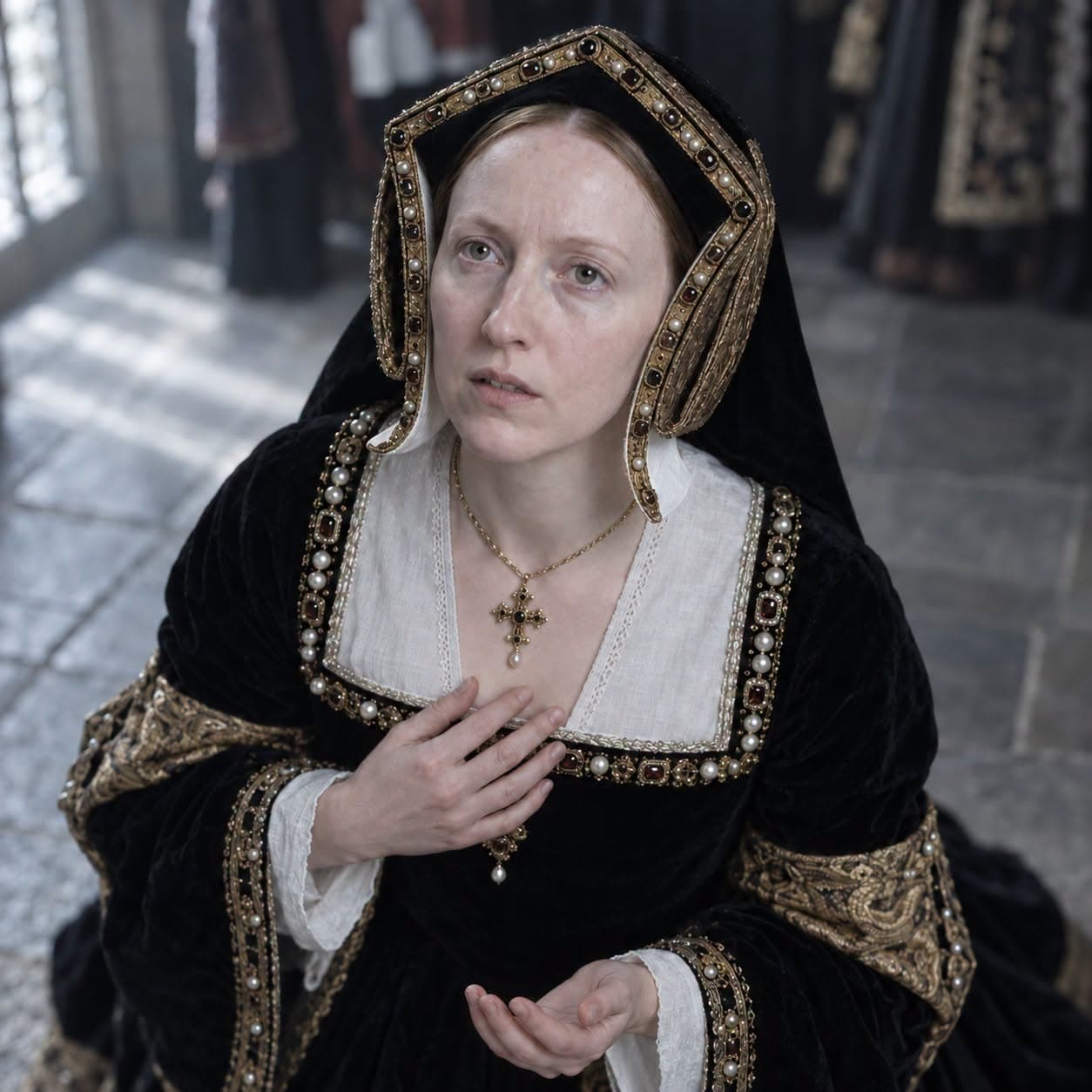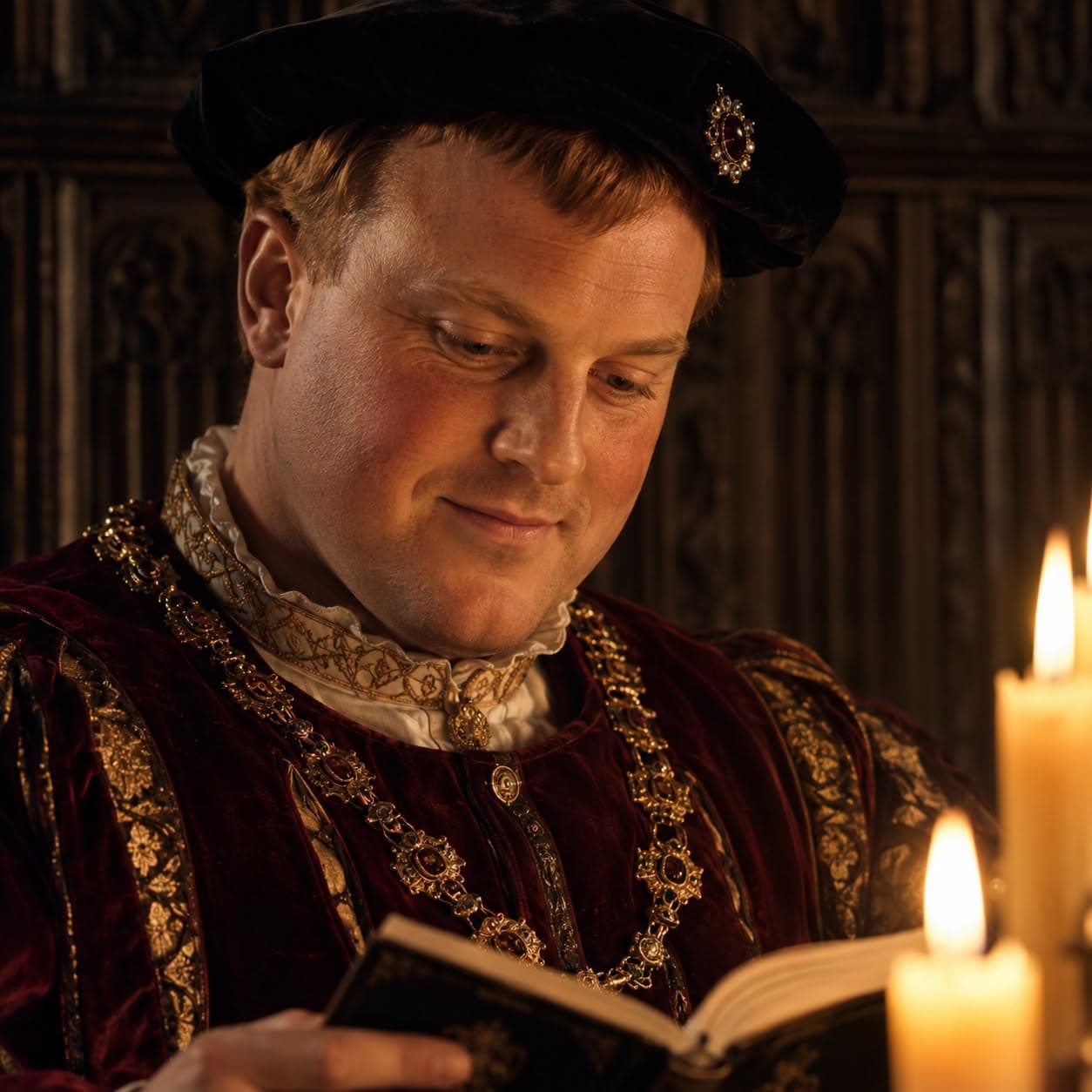
He told every court in Europe he was the son of Henry VIII. Henry VIII never said a word on the subject, which is either the most eloquent denial in Tudor history or the most expensive silence.
Thomas Stukeley was born around 1520 at Affton in Devon, the official son of Sir Hugh Stukeley and Jane Pollard, and from the beginning the official version of his parentage was the least interesting thing about him. His mother had connections to the Tudor court. She had been in proximity to Henry VIII at a moment when proximity to Henry VIII was a condition with consequences.
The rumour that followed Thomas Stukeley from Devon to London to Paris to Rome to Madrid to Lisbon to the dust of a Moroccan battlefield was never confirmed and never conclusively denied, and Stukeley himself promoted it at every court he visited with the enthusiasm of a man who had decided that a king's bastard, unacknowledged, was still closer to a crown than anything else available to him in Devon.
He was not wrong about that. He was not right about much else.
He was large. This was noted consistently and specifically by contemporaries who had also been in the same room as Henry VIII, and the noting of it had a particular quality that went beyond the ordinary observation of a tall man. He carried himself with a physical confidence that people who had seen Henry at his peak recognised as something more than bearing.
Whether this was inheritance, imitation, or the effect of a story he had told himself since childhood until it had reshaped the way he moved through rooms, nobody alive could determine. Stukeley knew the rumour served him. He repeated it until it became the wallpaper of his reputation, present in every space he entered before he arrived, so thoroughly attached to his name that Elizabeth I, who had strong opinions about men who claimed proximity to her father's blood, referred to him privately as a common liar.
She was possibly right. She was also sufficiently interested in the question to keep a file on him for thirty years.
He came to court in the 1540s and demonstrated immediately that he had inherited, from whatever source, the Tudor capacity for making himself the most compelling person in any given room. He was charming, reckless, and constitutionally incapable of operating within the limits that any situation offered him. He ran up debts. He made enemies. He was accused of piracy in the Channel and of double-dealing with the French, and the accusations were almost certainly accurate and entirely in character.
He left England under the specific pressure of a man for whom England had become temporarily uninhabitable, and he took himself to the continent with the Tudor name attached to him like a letter of introduction that nobody had authorised and nobody could quite bring themselves to confiscate.
In Spain he presented himself to Philip II as a man uniquely positioned to deliver Ireland to the Catholic cause. He was persuasive on this subject in the way that men without actual resources are sometimes persuasive, which is to say completely, and Philip listened carefully and gave him money and support and the title of Don Tomás, and Stukeley took all of it and used it for purposes that were related to the original proposal primarily in the sense that they occupied the same calendar year.
Elizabeth's spies watched him from three countries simultaneously. He was aware of this and adjusted his behaviour accordingly, which is to say he continued doing exactly what he had been doing but slightly faster. He was a double agent, or possibly a triple agent, or possibly a man who had been running his own game for so long that he had lost track of whose side he was on, which in the intelligence environment of the 1560s was either a fatal disadvantage or a considerable asset.
Pope Gregory XIII, who had his own requirements for a man willing to carry a Catholic crusade to Protestant England, named him Marquis of Ireland in 1576. Stukeley accepted the title with the ease of a man who had been accepting titles he had not quite earned since the beginning. He was given men, ships, and papal blessing for an expedition to land in Ireland and restore the old faith, and he sailed for Lisbon in 1578 with every intention of doing exactly that, and then he met King Sebastian of Portugal.
Sebastian was twenty-three years old and had decided to lead a crusade into Morocco to put a friendly claimant on the Moroccan throne, and he wanted Stukeley's men. Stukeley was fifty-eight years old and had been redirected by younger men with better resources for the entirety of his career, and he went. He abandoned Ireland, abandoned the papal mission, abandoned the role he had spent years constructing for himself, and marched into the Moroccan interior in the August heat of 1578 with a Portuguese king who had no military experience and an army that was already too small.
The Battle of Alcácer Quibir on the fourth of August 1578 destroyed the Portuguese force completely. Sebastian died. The Moroccan claimant died. Stukeley died. Three rulers ended in the same afternoon in the same desert, which is the kind of conclusion that Tudor England would have found appropriate for two of them and simply puzzling for the third.
He was buried in Morocco, as far from Devon as it is possible to get while remaining on the same planet. The claim he had carried across five decades and six countries died with him in the dust without ever receiving the answer he had been demanding since before most people at that battle had been born. Henry VIII had been dead for thirty years. He had acknowledged Henry Fitzroy, publicly and lavishly, at six months old. He had never spoken Thomas Stukeley's name in any document that survived.
There are two ways to read that silence. Stukeley spent his entire life insisting on one of them.