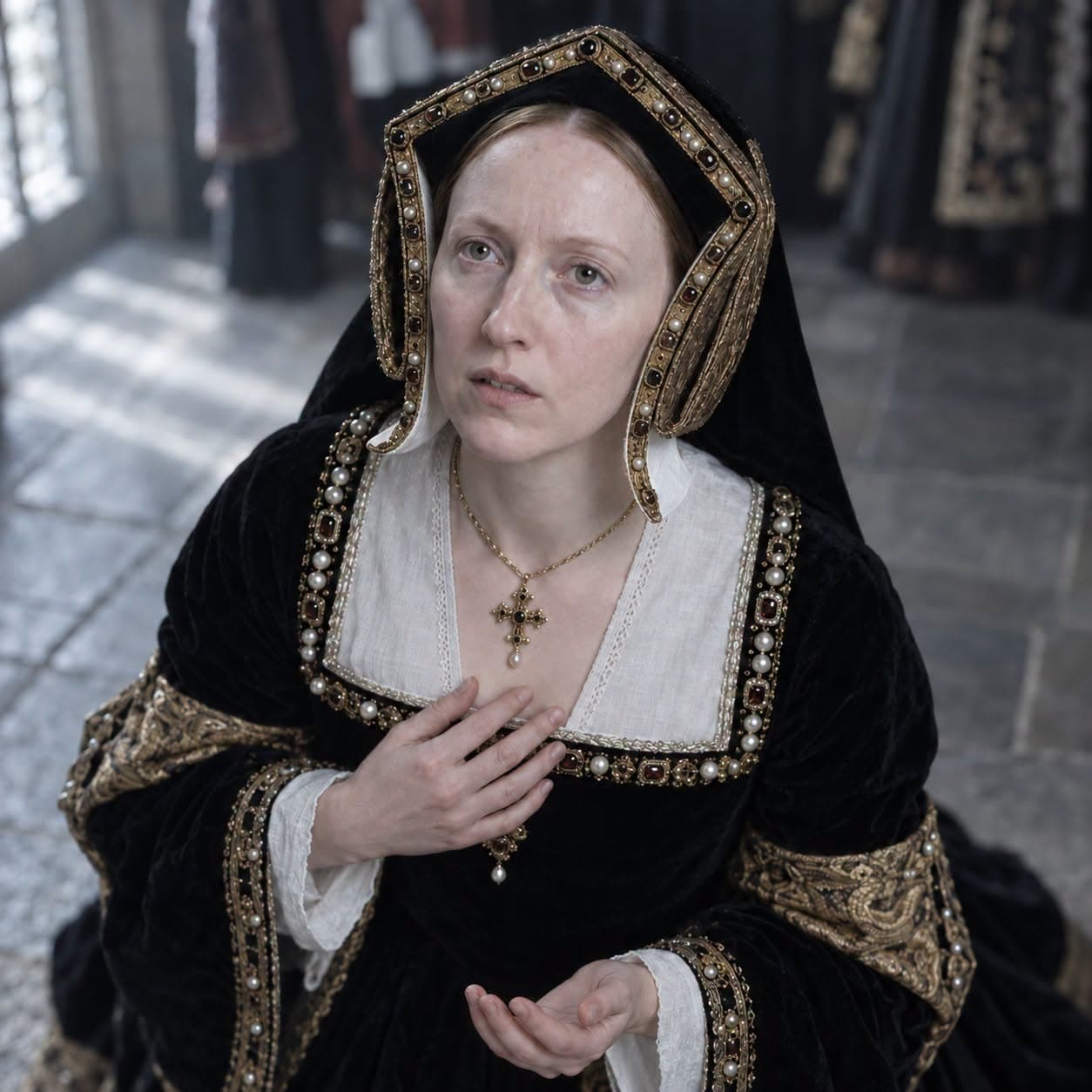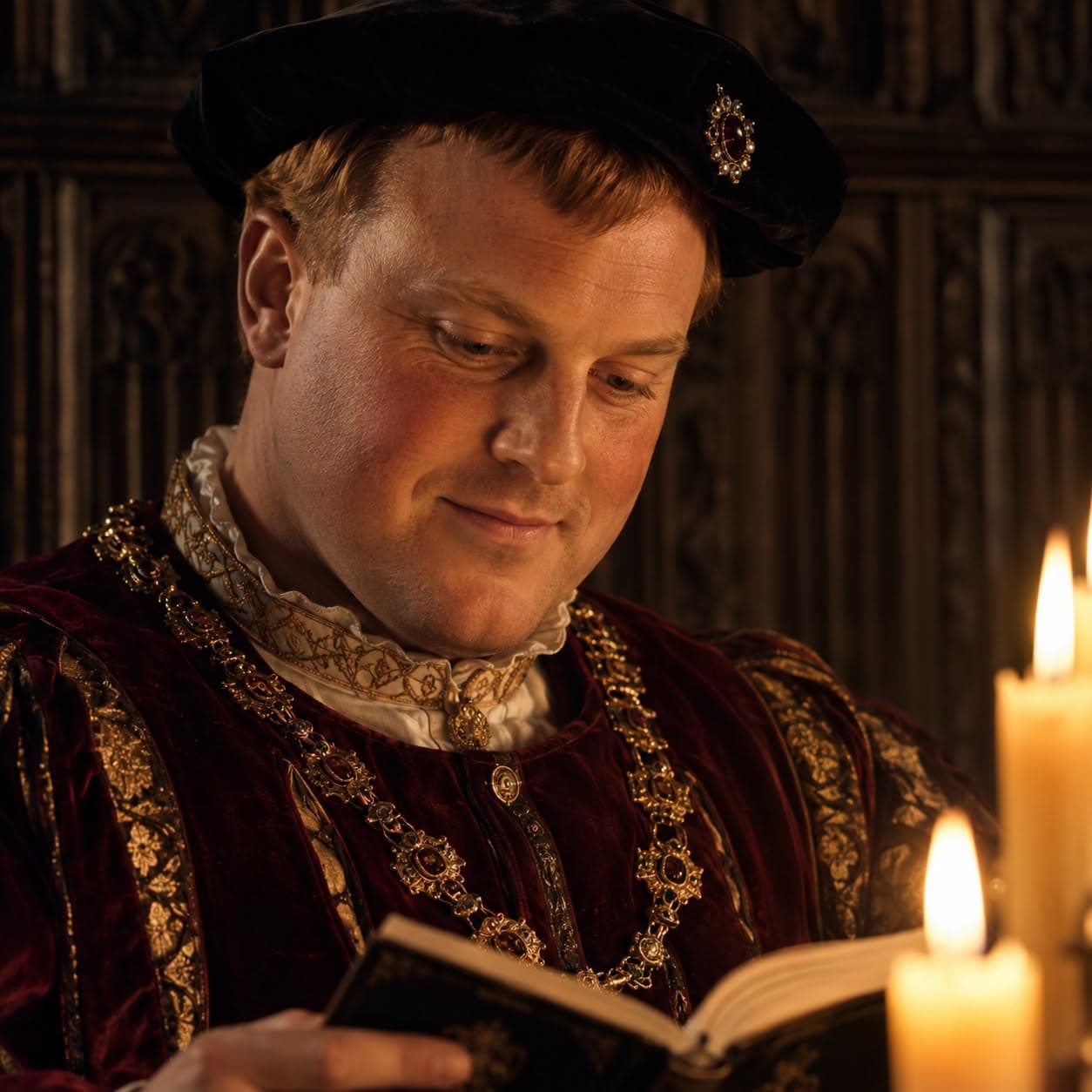
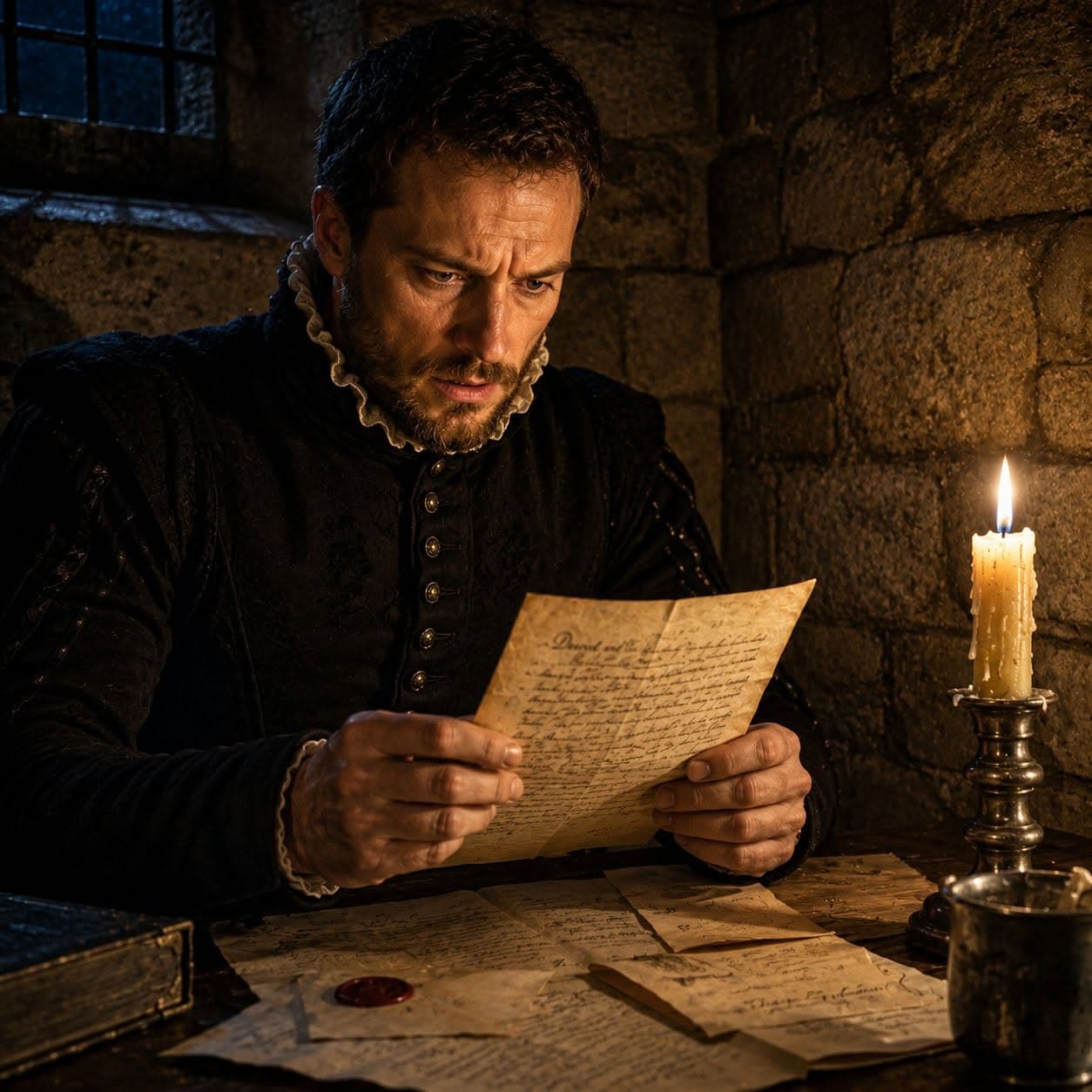
The most powerful nobleman in England raised a reasonable proposal with the Queen's own council. Elizabeth did not find it reasonable. She found it useful, which is a different thing entirely.
The Howard family had been living adjacent to the English throne for three generations by the time Thomas was born in 1536, and proximity to the throne in Tudor England was an inheritance with a specific cost attached. His grandfather was Thomas Howard, 3rd Duke of Norfolk, the most powerful nobleman of Henry VIII's reign, the man who had presided over the trials of two of his own nieces, Anne Boleyn and Catherine Howard, watched both of them go to the block, survived everything Henry could throw at the Howards, and in January 1547 came within a single night of execution himself, condemned on a bill of attainder alongside his son Henry Howard, Earl of Surrey. Surrey was executed on the nineteenth of January 1547. Henry VIII died on the twenty-eighth. The 3rd Duke's life was saved by a death that had nothing to do with mercy. He was released under Mary I and died in his bed in 1554, the last Tudor nobleman to have played the game at that level and survived it.
His son Surrey did not survive it.
Surrey was a poet and a soldier and a man whose sense of his own rank was, by any measure, excessive. He had quartered the royal arms into his own coat, a gesture of dynastic presumption that Henry VIII found intolerable. He was executed at thirty years old for heraldic ambition, leaving behind a son who would become the 4th Duke and a lesson about what happened to Howards who reached too close to the crown that his son apparently studied and then, at the critical moment, ignored entirely.
Thomas Howard inherited the dukedom from his grandfather at eighteen, his father having died before the 3rd Duke. He grew up with the full weight of the Howard history, the attainders, the executions, the narrow escapes, the specific education in survival that the family's position provided. He became Elizabeth's premier peer, the Earl Marshal of England, the highest-ranking nobleman in the kingdom, a man of enormous wealth and political consequence who had, by the late 1560s, every reason to understand exactly how much could be lost by a single miscalculation.
He made the miscalculation anyway.
The marriage proposal was not, in its original form, unreasonable. Mary Queen of Scots had arrived in England in 1568, deposed from her own throne, a Catholic queen in Protestant custody, the most destabilising presence in Elizabethan politics. She had a claim to the English throne. She had European Catholic backing. She was, as long as she remained unmarried and unresolved, a permanent invitation to conspiracy. Howard's proposal addressed the problem directly: marry her to a Protestant English duke, bring her claim inside the English political structure, remove the Catholic foreign dimension from the equation. Several members of Elizabeth's council found it genuinely persuasive.
Elizabeth found out about the discussions through her intelligence network before Howard had raised it formally with her. She confronted him. He denied it. He then continued negotiating the match in secret, which transformed a political proposal into a deception of the monarch, and deception of Elizabeth I was not a category of error she processed mildly. He was sent to the Tower in September 1569, released in August 1570 on the condition he abandon the Mary project entirely, and resumed contact with Mary's agents within months of his release.
Roberto Ridolfi was a Florentine banker operating in London, a papal agent, a man with connections to Philip II of Spain, to Mary Queen of Scots, and to the English Catholic community. In 1570 and 1571 he constructed a plot that went considerably further than a marriage negotiation. The plan involved a Spanish invasion, the assassination of Elizabeth, the liberation of Mary, and the restoration of Catholicism to England. Howard was implicated through his correspondence that was intercepted by Sir Francis Walsingham, Elizabeth's spymaster, operating under the direction of William Cecil, Lord Burghley.
What the historical case against Howard rested on was a series of letters and the testimony of his servants under torture. What those letters actually proved was contested then and has been contested ever since. Howard's involvement in the marriage negotiation was documented and real. His knowledge of the assassination element, the plan to remove Elizabeth, was never cleanly established. He denied knowing about it. His servants said otherwise under duress. The distinction between a man who agreed to a marriage plot and a man who agreed to an assassination plot was the difference between a charge that might be argued down and a charge that carried the automatic penalty of death.
Ridolfi himself is the figure the evidence points toward most uncomfortably. He was almost certainly a double agent, operating simultaneously for the conspirators and for Cecil's intelligence network. A man running a genuine plot to assassinate the English queen does not, as Ridolfi did, travel openly through Europe advertising the conspiracy to every Catholic court he visited.
He told the Duke of Alva the details. He told the Pope. He told Philip II. He was either catastrophically indiscreet or he was being indiscreet deliberately, generating documented evidence of a conspiracy for an intelligence network that needed the conspiracy to be provable in court.
Cecil had spent his career preventing the kind of rival power centre that a Howard marriage to Mary would have created. Howard was the most powerful Catholic-adjacent nobleman in England, the obvious figurehead for any Catholic resistance to Elizabeth's settlement. Whether the Ridolfi Plot was a genuine conspiracy that Cecil successfully infiltrated or a managed operation that Cecil allowed to develop because it would produce Howard's head on a documented treason charge is a question the surviving evidence does not answer cleanly. What it answers is that Cecil got what he needed. Howard was arrested in September 1571, tried in January 1572, convicted on the letters and the servant testimony, and executed on Tower Hill on the second of June 1572.
Elizabeth delayed signing the warrant three times. Her council pressed her repeatedly. She signed it and then withdrew it. She signed it again. The delays have been interpreted as reluctance, as mercy withheld at the last moment by a queen who could not quite bring herself to execute the premier peer of England. They have also been interpreted as something colder: a monarch who understood that hesitation performed in public was its own kind of power, who knew the warrant would ultimately be used, and who wished to be seen as reluctant to use it.
Thomas Howard was thirty-six years old. He had been calculating and ambitious and he had lied to the queen's face and continued negotiating a match she had expressly forbidden. None of that is in dispute. What is in dispute is whether the conspiracy that killed him was substantially his, or whether it was assembled around him by men who needed it to exist, handed to a spymaster who needed it documented, and delivered to a queen who needed it to be treason rather than politics.
He left behind four children. The eldest was Philip Howard, fourteen years old when his father was executed on Tower Hill. Philip would spend his own adult life imprisoned in the Tower of London under the same queen who had signed his father's warrant, dying there in 1595 having never been permitted to see his wife or the son born after his imprisonment.
The Howard family had now given three men to three monarchs across three reigns. The lesson that the Tudor crown consumed what came too close to it had been written in the same blood twice, and the writing was not finished.