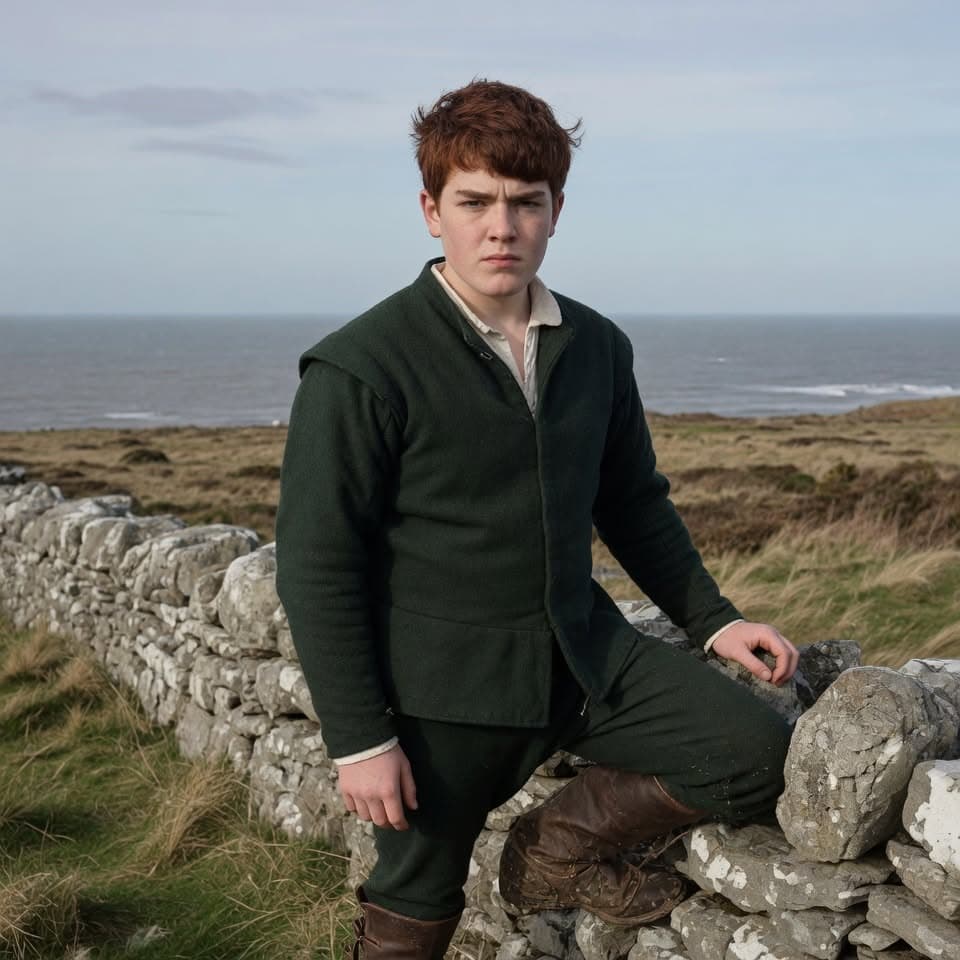
Sir John Perrot was born around 1528 in Pembrokeshire, Wales, the third child of Sir Thomas Perrot, a Welsh gentleman of some standing, and his wife Mary Berkeley. His father Sir Thomas died in 1531 when John was approximately three years old, and John grew up in Wales under his mother's care with no particular reason to be remembered by anyone outside the county.
He was not acknowledged by any king. He was not given a dukedom. He was not placed in a royal household. He grew up in Pembrokeshire, and if the story ends there it is the story of a minor Welsh gentleman's son who history would have filed and forgotten.
It does not end there.
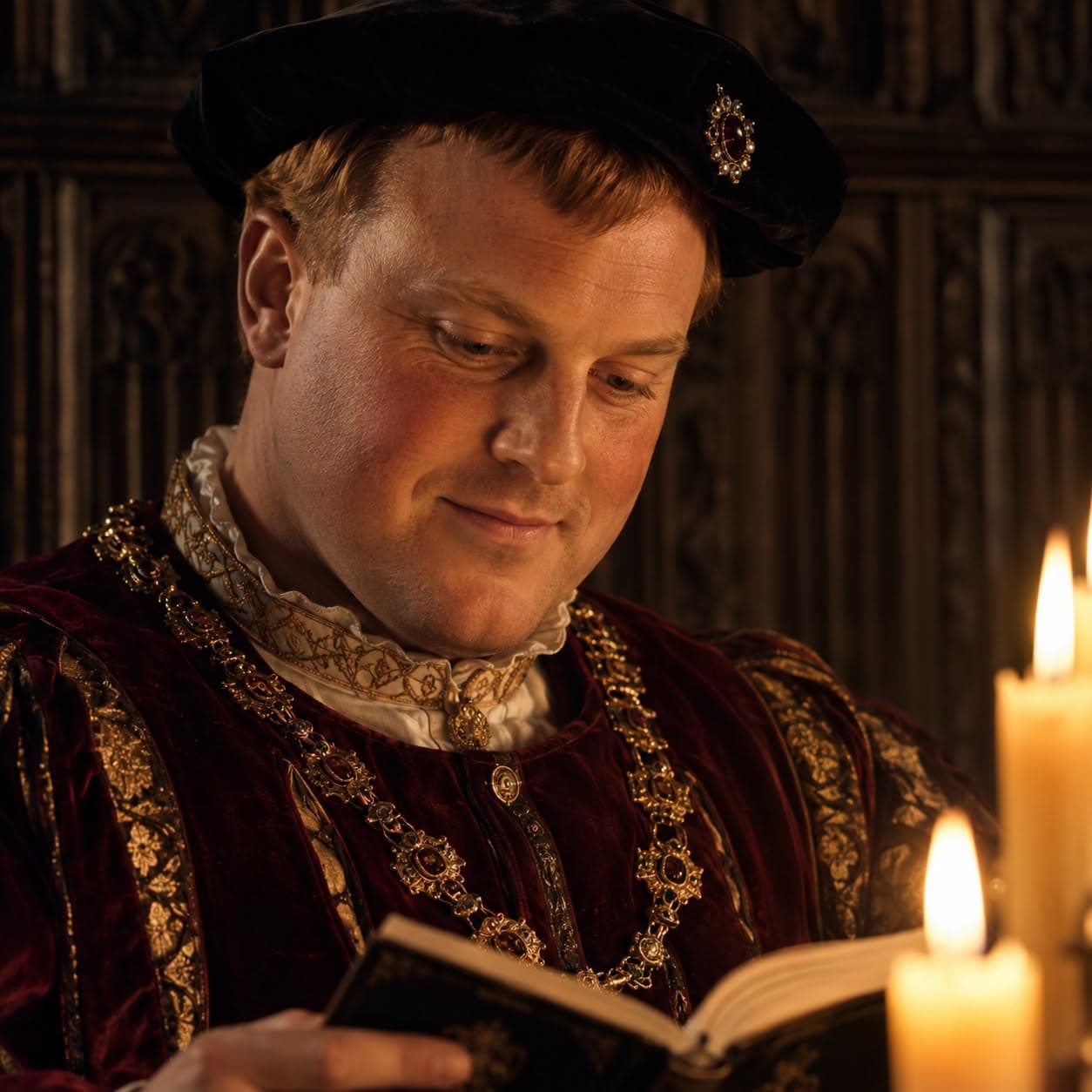
John Perrot grew up to be exceptionally tall, physically powerful, red-haired, broad across the shoulders, with a face and bearing that contemporaries described as bearing a striking resemblance to Henry VIII. Not a passing resemblance. A resemblance that people at the court of Elizabeth I, who had known Henry VIII and knew exactly what he had looked like, remarked upon openly.
The court of Elizabeth I was not a place where people said careless things out loud. If they were saying it, they had decided the observation was safe enough to make. The question of why they had decided that is the more interesting question.
The claim rested on the proposition that Henry VIII had slept with Mary Berkeley sometime around 1527 or 1528. Mary Berkeley had connections to the court and Henry VIII was known to have visited the Perrot estates in Wales to hunt, a pastime he pursued with the same consuming energy he brought to everything else.
The theory was that an affair had taken place during one of those visits and that John was the result. Sir Thomas Perrot, the argument went, had accepted the situation in the way that courtiers with royal connections tended to accept situations they had no power to refuse.
The problem is that no contemporary evidence places Mary Berkeley and Henry VIII at the same location during the relevant window. The first person to state the claim in writing was Sir Robert Naunton, decades after the fact, and Sir Robert Naunton was John Perrot's own grandson-in-law. He was not a disinterested witness.
The other significant source for the claim is John Perrot himself, who raised his possible royal parentage during his treason trial in 1592, at the point in proceedings where a man facing execution will reach for every available argument and is not under conditions that produce reliable genealogy. Elizabeth I's government heard the claim, noted it, and proceeded with the conviction regardless. If Elizabeth had believed it, or had believed it sufficiently to act on it, the outcome of that trial would have looked different. It did not look different.
What is real, and what history cannot explain away, is the physical resemblance that contemporaries saw and recorded. What is also real is that John Perrot had a career of the kind that the Tudor crown reserved for people it trusted with serious responsibility. He was appointed Lord Deputy of Ireland in 1584, one of the most demanding and dangerous offices in Elizabeth's gift, governing a country that had defeated or destroyed most of the men sent to manage it.
He held the position for four years, achieved more than most of his predecessors, and came back to England with his reputation intact. Elizabeth I gave difficult jobs to people she trusted and she did not trust people without reason.
In 1590 he was accused of treason on the basis of alleged treasonous words spoken against the queen. The evidence was thin. The conviction was secured. He died in the Tower of London on 3 November 1592, before his execution could be carried out. He was buried in the Chapel of St Peter ad Vincula within the Tower, the same chapel where Anne Boleyn lies, where Catherine Howard lies, where the crown buries the people it has decided to remove from the world and is not entirely comfortable about.
Elizabeth allowed his estate to pass to his heirs rather than forfeit it to the crown. It was the same quiet gesture she had made for Henry Carey. Whether it meant the same thing is not recorded. Elizabeth did not record things like that.
John Perrot was almost certainly not Henry VIII's son. The evidence does not support it and the people pushing the claim had obvious reasons to push it.
What the story of John Perrot tells you, stripped of the paternity question, is that in the Tudor court the rumour of royal blood was itself a kind of power. That physical resemblance to a dead king was a political fact regardless of its biological truth, and that Elizabeth I governed a court full of people who were watching her face whenever the subject came up, and drawing their own conclusions from what they saw there.