She was two years old. He was seven months old. Their marriage was meant to help keep Europe at peace.
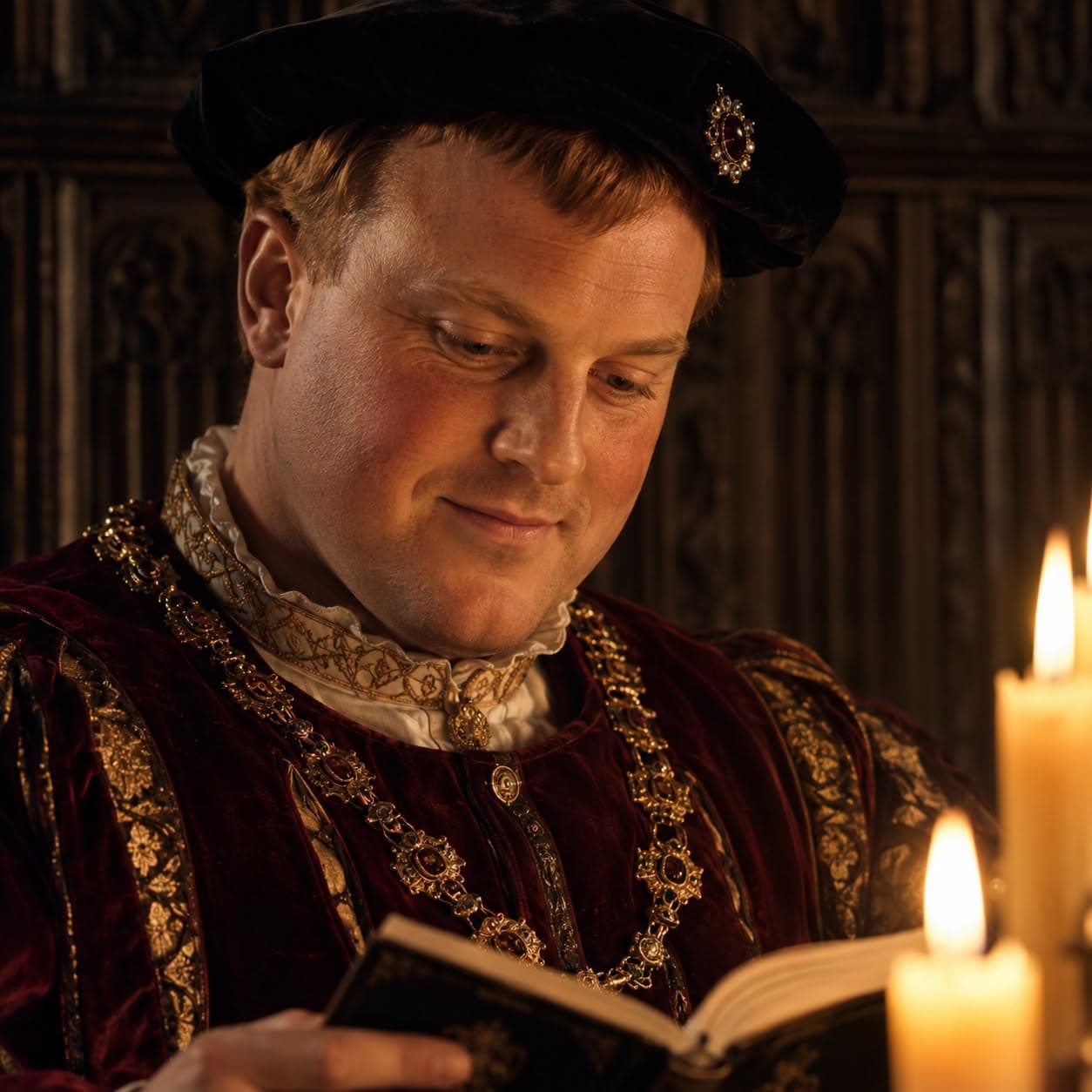
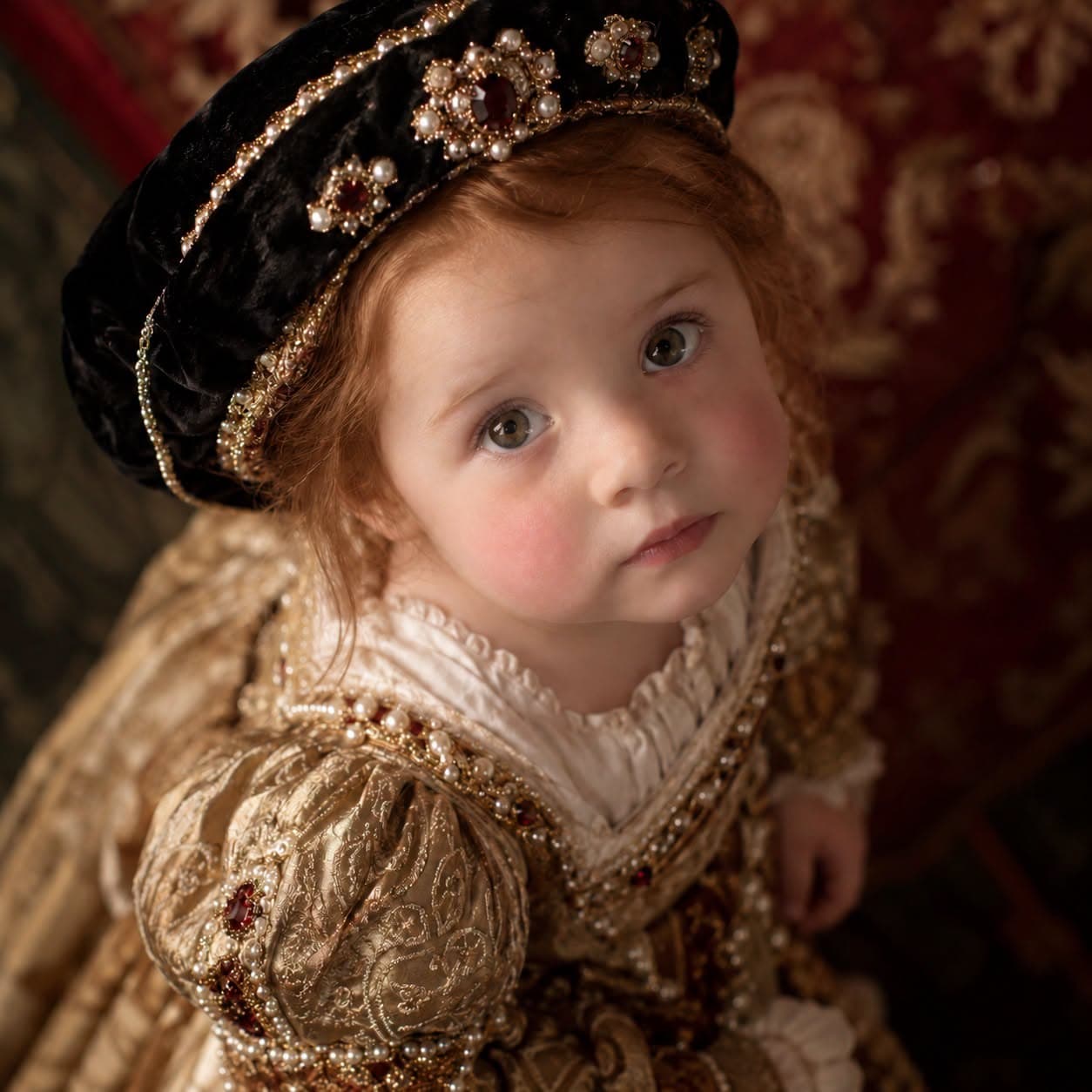
On 5 October 1518, two-year-old Princess Mary was dressed in cloth of gold, a black velvet cap glittering with jewels placed on her head, and taken into her mother’s Great Chamber at Greenwich Palace. Around her stood some of the most powerful men in Europe. Her father Henry VIII was there, Catherine of Aragon was there, Cardinal Wolsey was there, and a magnificent French embassy had crossed the Channel to witness what was about to happen. Mary was going to be formally promised in marriage.
François, Dauphin of France, was the first son of François I and Queen Claude. He had been born only that February and had not been brought to England for the ceremony. Instead, Guillaume Gouffier, Seigneur de Bonnivet and Admiral of France, stood in his place. The little bride was therefore present at her own betrothal, but the little bridegroom was represented by a grown man who would speak, promise and act for him.
It was an extraordinary amount of ceremony to construct a marriage between two children who could understand none of it. Cuthbert Tunstall delivered an oration praising matrimony before Bonnivet took Mary’s hand and formally espoused her in the Dauphin’s name. Henry and Catherine then accepted the French prince as a husband for their daughter. A ring containing a diamond was placed on Mary’s finger, and the oaths were sworn. What was happening in that room was not regarded as a charming piece of court theatre. It was serious international business.
Mary was two years and seven months old.
The marriage had been arranged as part of a much larger peace between England and France. Henry VIII and François I had recently been enemies. Henry had invaded France in 1513 and captured Tournai; now Cardinal Wolsey was constructing the Treaty of London, an ambitious agreement intended to place England at the centre of a wider European peace. England would return Tournai and receive substantial French payments in return. A marriage between the children of the two kings would make the new friendship something more tangible than signatures on parchment.
Mary and François became its human guarantee.
Their future was planned in remarkable detail. When François reached fourteen and Mary was sixteen, the marriage was to be completed. Mary’s dowry was fixed at 333,000 crowns, and arrangements were made for the position she would occupy if her infant husband eventually inherited the French throne. Diplomats were already discussing the finances of Mary’s marriage years before either child could have understood the word dowry.
There was an even larger possibility concealed inside the negotiations. Mary was Henry VIII’s only surviving legitimate child. Henry was still hoping that Catherine would give him a son, but nobody could know whether that son would ever come. Mary’s value therefore extended beyond being an English princess who might become Queen of France. She was also a child who might one day stand astonishingly close to the inheritance of England itself.
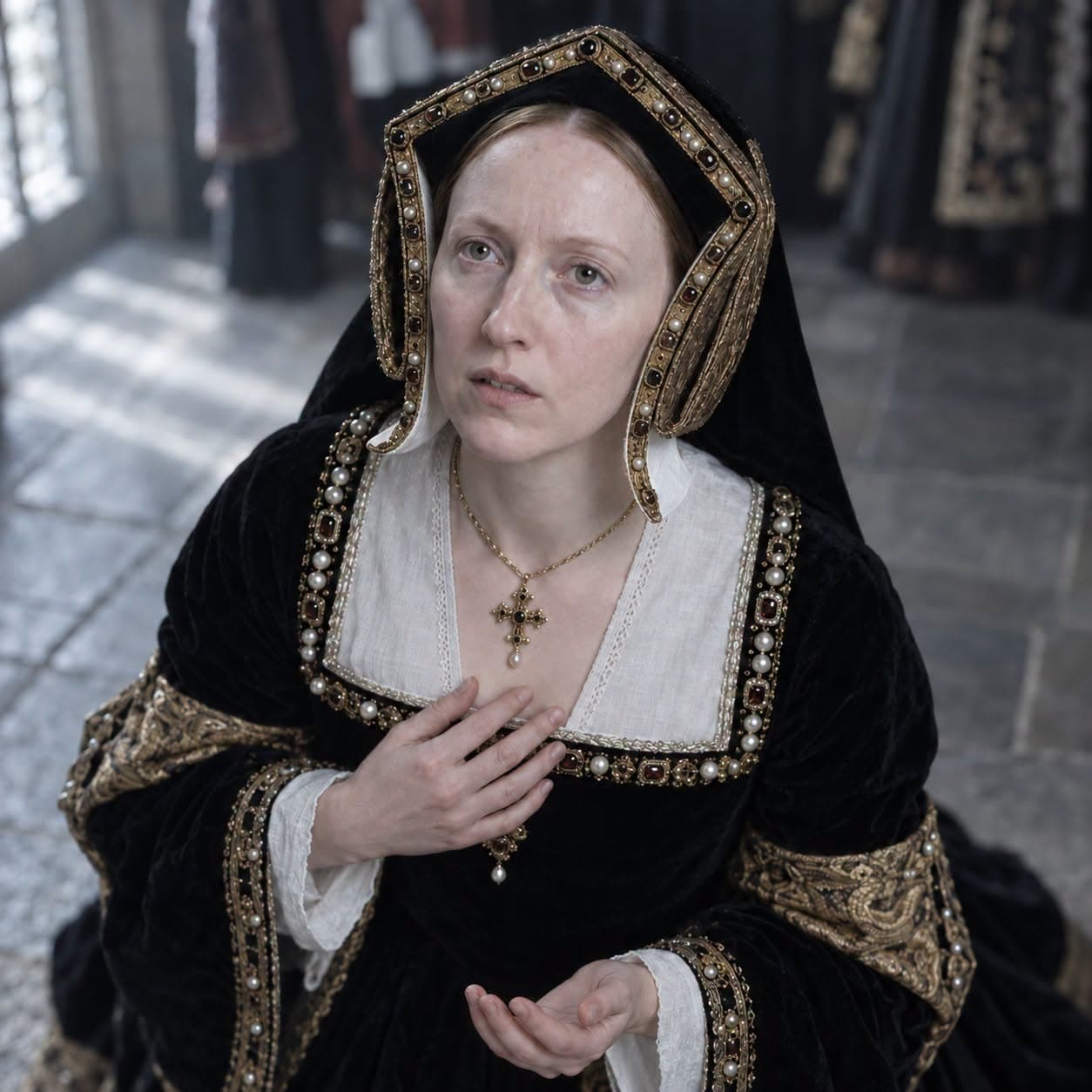
For Catherine of Aragon, the scene contained an uncomfortable symmetry. She herself had been promised across borders while still a child, her future arranged between kings long before she travelled to England to marry Arthur Tudor. Now she stood in her own chamber while the same machinery closed around her daughter. There is no evidence that Catherine objected or even regarded this as unusual. For royal daughters, this was precisely what childhood could mean.
Yet buried inside all the ceremony was one important qualification. The agreement was ultimately to become firm only if Mary and François themselves consented when they reached lawful age. The diplomats could decide where the children would live, how much money would accompany the bride and what kingdoms their marriage might unite, but canon law still left a door open for the two people concerned to speak when they were old enough to do so.
Neither of them ever got the chance.
For the next few years Mary remained the intended bride of the Dauphin. The magnificent ceremony at Greenwich had created a future in which, at sixteen, she would cross the Channel and become the wife of the heir to France. François would grow up expecting an English princess. Two royal houses would be joined. The peace constructed around their marriage would endure.
But royal marriages lasted only as long as the politics that had created them.
By 1521, France was no longer the partner Henry VIII wanted most. The balance of power in Europe had changed dramatically. Catherine’s nephew Charles had become Holy Roman Emperor Charles V, ruling an extraordinary collection of territories and emerging as the great rival of François I. An alliance with the Habsburg emperor now seemed more useful than the French friendship celebrated so lavishly at Greenwich.
Mary was therefore given a different future. Henry agreed that she should marry Charles V instead.
Nobody appears to have asked the five-year-old Mary whether she had changed her mind about the three-year-old boy in France. Nor was there any question of François rejecting her. The two children had done nothing at all. Their marriage had simply ceased to be politically useful.
What had happened at Greenwich three years earlier nevertheless had to be taken seriously. In the Treaty of Bruges of 1521, the negotiators specifically required papal dispensations because Mary had already been espoused to the Dauphin of France. The marriage of the two infants had never been consummated and neither child had reached the age at which their own consent was expected, but the promises made over Mary’s head at Greenwich could not simply be pretended away. They had to be formally undone.
And so the future prepared for Mary on 5 October 1518 disappeared almost as quickly as it had been created.
The diplomats had calculated her dowry. They had decided when she would leave England. They had imagined her as the wife of a future king of France and made provision for a life that stretched decades ahead. They had dressed her in cloth of gold, placed the diamond ring on her tiny finger and sworn solemn oaths around her.
Three years later, another group of men signed another treaty, and it was over. Mary was five. François was three. The marriage had been arranged before either of them was old enough to understand it, and abandoned again before either of them was old enough to say yes.