Charlotte went into labour, her husband stayed beside her. The child was born two days later, and by morning both mother and son were dead.
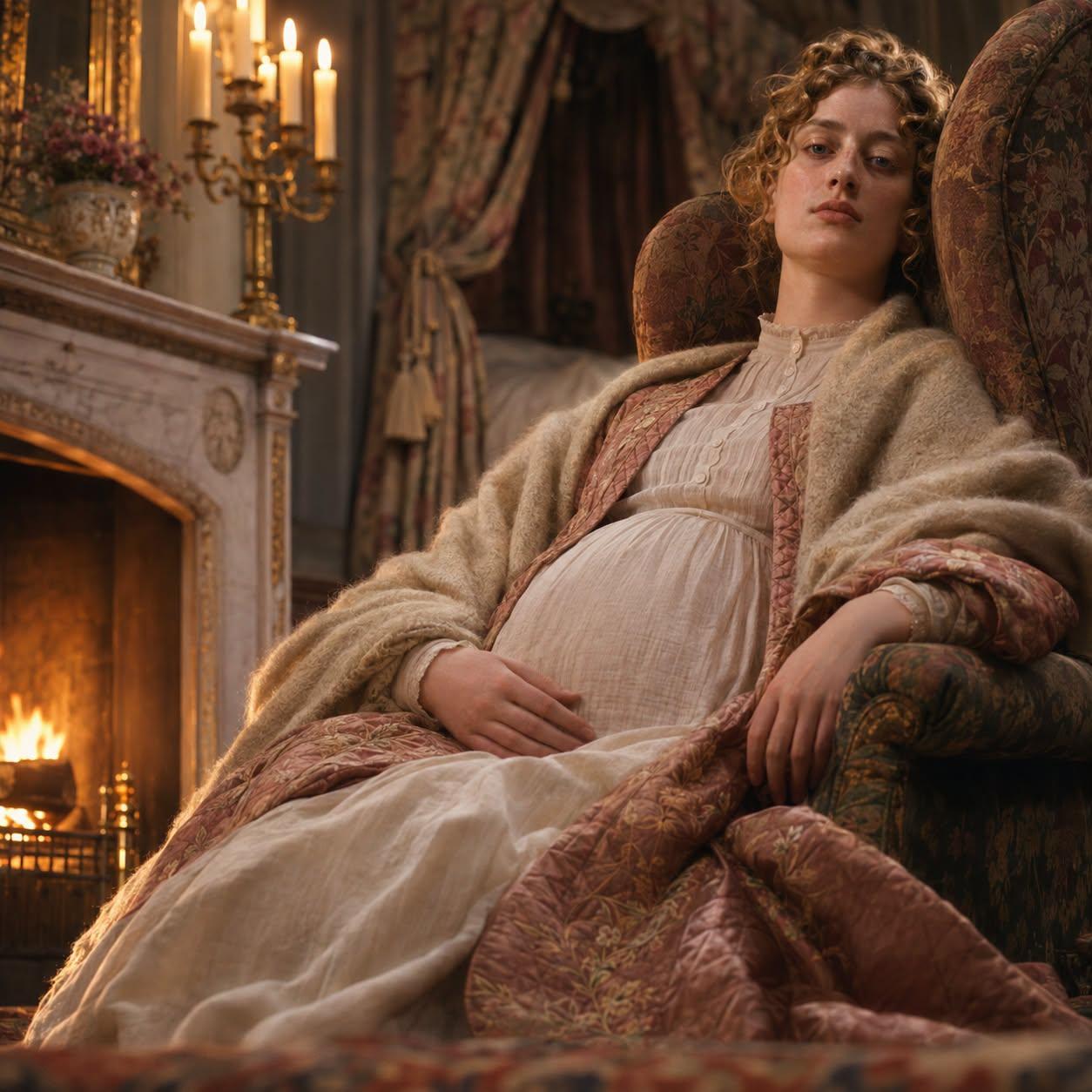
On the evening of 3 November 1817, Princess Charlotte of Wales began her labour at Claremont in Surrey. She was twenty-one, the only child of the Prince Regent and Caroline of Brunswick, and the only legitimate grandchild of George III. After her grandfather and her father, she was expected to become queen. The baby she was carrying would follow her in the succession.
For most of her life, the question of where Charlotte belonged had been settled by other people. Her parents separated soon after her birth, and her upbringing became another part of their quarrel. Her father controlled her household and restricted her contact with her mother. There were governesses, attendants and rules, but being surrounded by people was not the same thing as having a family life.
The marriage proposed for her was to William, the hereditary Prince of Orange. It made political sense. Charlotte eventually refused it. The prospect of having to leave England was among her objections, and neither her father's displeasure nor the convenience of the alliance persuaded her to go through with it. When she put forward Leopold of Saxe-Coburg as the man she wished to marry, she was making a choice that would determine more than the name beside hers in a marriage treaty.
They married at Carlton House on 2 May 1816. That August they moved to Claremont, where there was a house to put in order and a garden in which Charlotte planned a tea-house. Her delight in the place survives in a letter written that December: "We lead a very quiet and retired life here, but a very very happy one." She had spent years resisting arrangements made for her. Now she was writing about the life she and her husband were making together.
By November 1817, they were waiting for their child.
Sir Richard Croft, a fashionable accoucheur, or male midwife, had charge of the confinement. Charlotte's physician, Matthew Baillie, was also involved. There were officials to be summoned as well, because a royal birth required witnesses who could attest to the arrival of a legitimate heir. The succession had to be authenticated. It could not simply be announced by two delighted parents.
The first night brought no delivery. Through 4 November, the labour continued to advance slowly, and reports written at Claremont recorded how slowly it was progressing. What had begun as an expected birth was becoming a prolonged ordeal, with the household still waiting for the announcement it had assembled to hear.
Another night passed.
Dr John Sims was summoned for consultation. Instruments were considered and not used. That decision would be condemned afterwards, though the post-mortem examination did not settle the question. At the time, they went on waiting for the birth to come without intervention, an approach which carried its own dangers as the hours accumulated.
Leopold remained with Charlotte through the labour. He was not receiving distant bulletins about a princess whose child would secure a dynasty. His wife was in the room with him. By Wednesday evening, she had been labouring for about fifty hours, through two nights and the two days between them.
At around nine o'clock on 5 November, she gave birth to a son. He was stillborn. Attempts to revive him failed. The child whose arrival had brought doctors and officers of state to Claremont had never drawn breath.
Charlotte at first appeared to be recovering. Leopold wrote to her father from Claremont that night, reporting the birth of their stillborn son. After remaining with his wife through the ordeal, he withdrew to rest. The baby had died, but for a few hours there appeared to be a future in which Charlotte would recover.
Soon after midnight, she became seriously ill. She had difficulty breathing and deteriorated rapidly. Christian Stockmar, Leopold's physician, was called to her room. In the early hours of 6 November, roughly five hours after the delivery, Charlotte died. The young woman who had begun her labour on Monday evening had survived long enough to give birth, but not to leave her confinement.
Her death brought mourning far beyond the royal household. In London, the shops shut for a fortnight. Within the family, a different urgency followed. George III's surviving sons had no legitimate child left between them. New royal marriages would produce another generation, including the future Queen Victoria. The succession could be provided for again. Charlotte's place in her own household could not.
Her coffin and her son's remained at Claremont until the night they were taken to Windsor. Until the funeral, Leopold went to her coffin at eleven o'clock each night. The Gothic tea-house Charlotte had planned at the top of the garden was still unfinished when she died, and he had it made into a memorial to her.