
They called them “women of bad life.” Most were simply women without enough money to live.
On 4 October 1793, the men who governed revolutionary Paris turned their attention to the women in the streets. At the urging of Pierre Gaspard Chaumette, prosecutor of the Paris Commune, the General Council issued an order against those it called "women of bad life". They were forbidden to linger in the streets, promenades and public places of the city, or to approach men and incite them to what the authorities called libertinage and debauchery. The police commissioners were instructed to return to those places again and again and to arrest any woman they found defying the order.
In some respects, it was a return to an older Paris.
Under the monarchy, the police had arrested three or four hundred women every month for prostitution. Then came the Revolution, with its language of liberty and the destruction of old laws and old institutions. In 1791 prostitution disappeared from the penal code, and for a brief period selling sex was no longer itself a criminal offence. Two years later, the Commune was sending the police back into the streets to pursue the same women again.
They went first to the Palais-Égalité, which until the previous year had been known as the Palais-Royal. Its owner, the Duke of Orléans, had discarded his title and renamed himself Philippe Égalité. By October 1793 he was in prison, and within five weeks he would be dead beneath the guillotine. His old palace, however, remained one of the liveliest places in Paris.
Beneath its arcades, cafés, shops, gaming rooms and theatres filled each evening with men drinking, eating, reading newspapers and arguing over the latest news from the Convention. Among them walked women looking for customers. The police watched the galleries of the Palais-Égalité, the Place de Grève and the quays along the Seine.
The surviving records contain 784 arrests made under the order.
Most of the women were young, unmarried and poor. Many had another trade and turned to prostitution only when work failed them or when the money they earned during the day was not enough to live on. They were seamstresses, dressmakers, laundresses and servants who found that their labour could not always keep hunger away. After arrest came interrogation and often a medical examination. If a woman was found to be ill, she could be confined in the Salpêtrière, an institution that was at once a hospital and a prison.
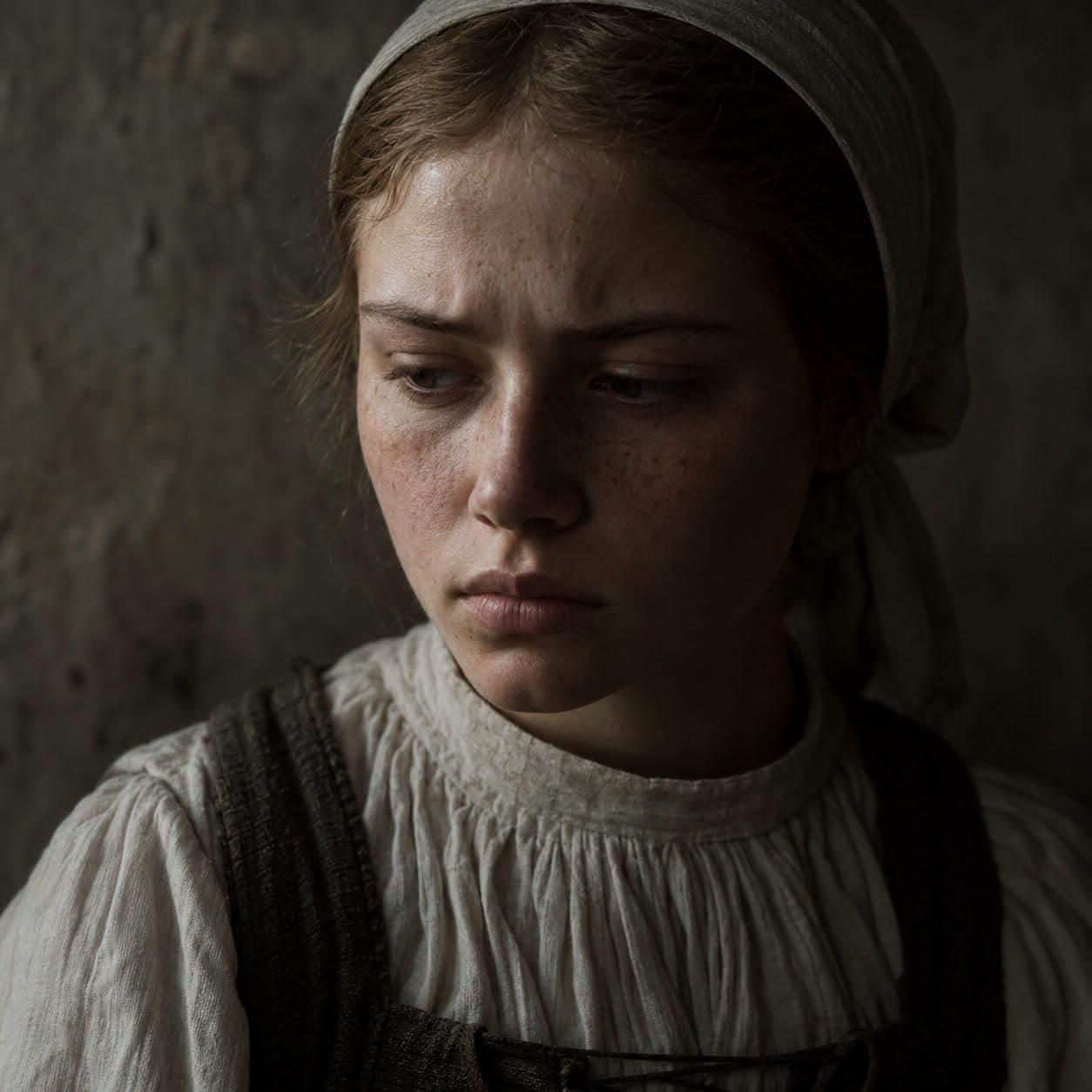
One of those women was Françoise Rousseau. On the night of 18 April 1794, six months after the Commune's order, she appeared at the guardhouse of the Arcis section and asked if she might come inside to warm herself. She was thirty-five years old and worked as a dressmaker. She had spent the night outside. When the commissioner questioned her, she described herself as a poor and unhappy prostitute. There was no work, she told him, and she had already sold everything she owned. She had to do something in order to live. Then she asked to be sent to the hospital, saying that she believed she would be better off there than continuing in prostitution.
Her explanation was not unusual. Again and again, women told the commissioners that they sold themselves because they could find no work. Some said they preferred prostitution to stealing. Others insisted that if they harmed anyone, they harmed only themselves. The records show less interest in those arguments than in the fact that the women remained visible in the streets.
Madeleine Deshayes had already become familiar with the system before the October order was even issued. She was arrested on 1 April 1793 and released on 29 June, only to be arrested again the following day. She was taken again on 1 December and once more on 26 December. By the end of the year, the records had caught her five times in nine months. The pattern was brutally simple: arrest, detention, release and then another arrest when poverty returned her to exactly the same streets.
Meanwhile, the Revolution was consuming the men who ruled it. Robespierre fell in the summer of 1794, the Terror collapsed with him, and the Commune's order against the women was eventually lifted. For Madeleine Deshayes, that political upheaval changed remarkably little. On 17 October she was arrested again. She had left the Hôtel-Dieu hospital only two days earlier.
By then France had executed its king and queen, abolished noble titles and proclaimed liberty, equality and fraternity. Yet for women such as Françoise Rousseau and Madeleine Deshayes, the grand language of revolution did not solve the simpler problem of survival. They still needed work, food and somewhere to sleep.
The law could change, governments could fall and men could lose their heads on the scaffold. Poverty would remain exactly where it had always been.
Waiting for the women in the streets.