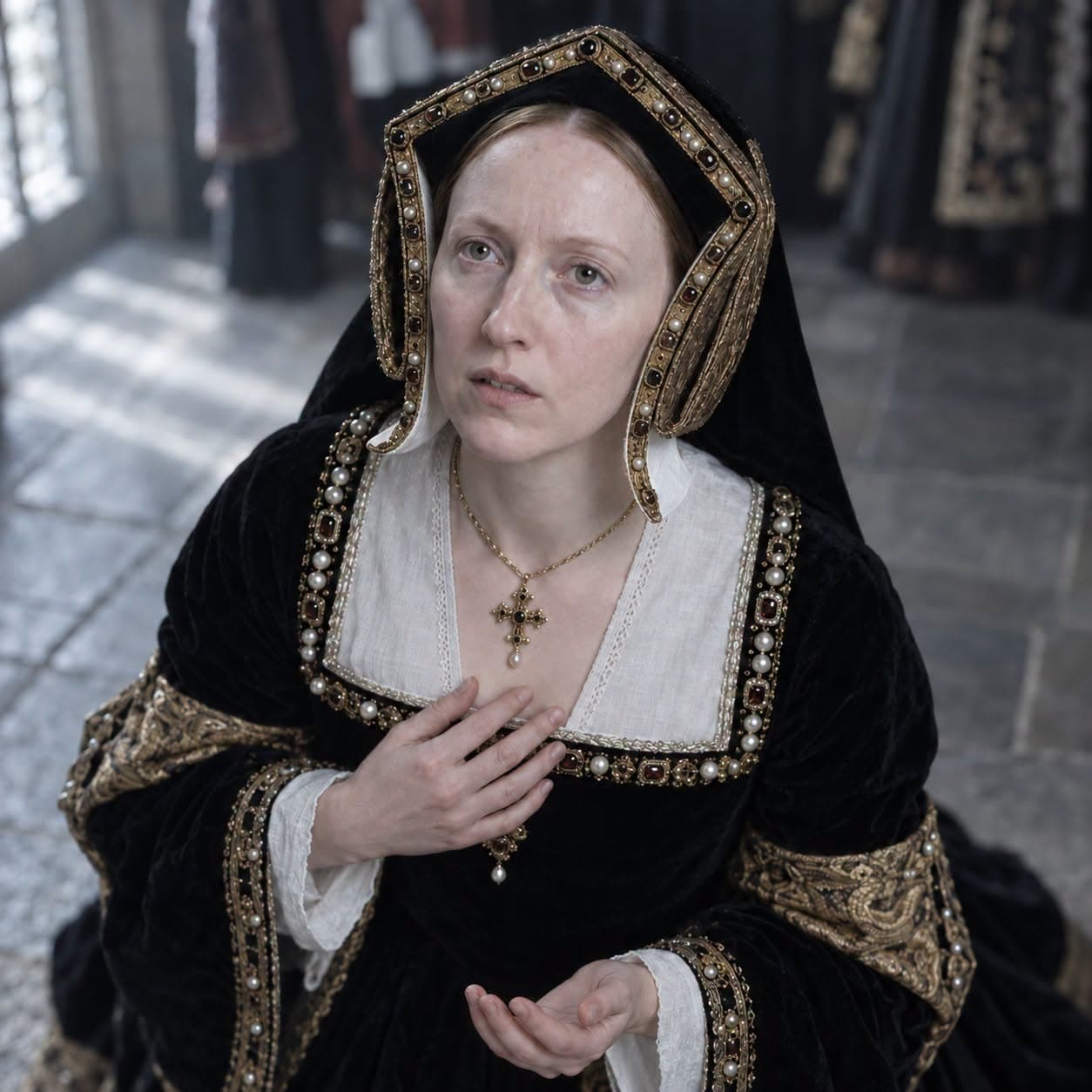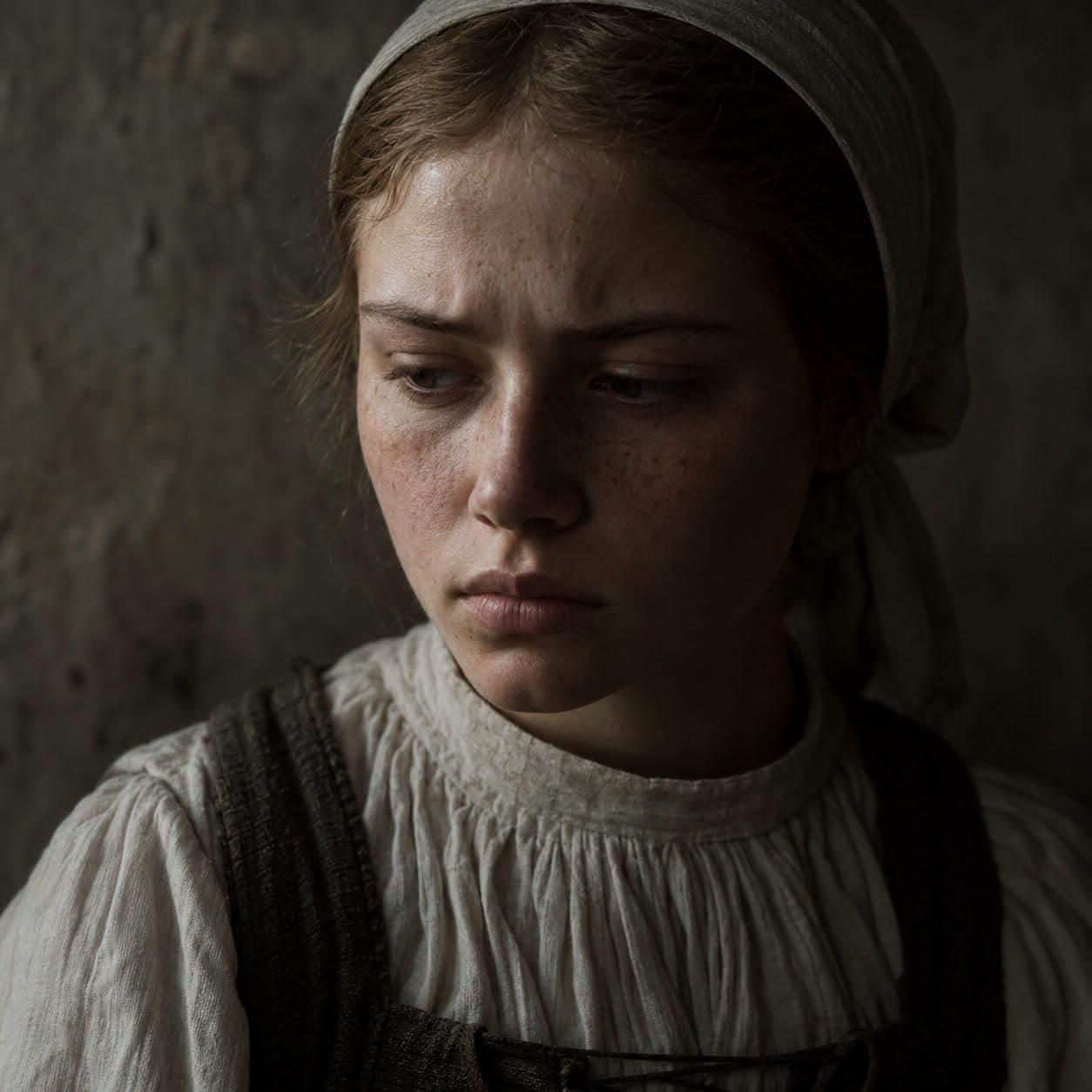
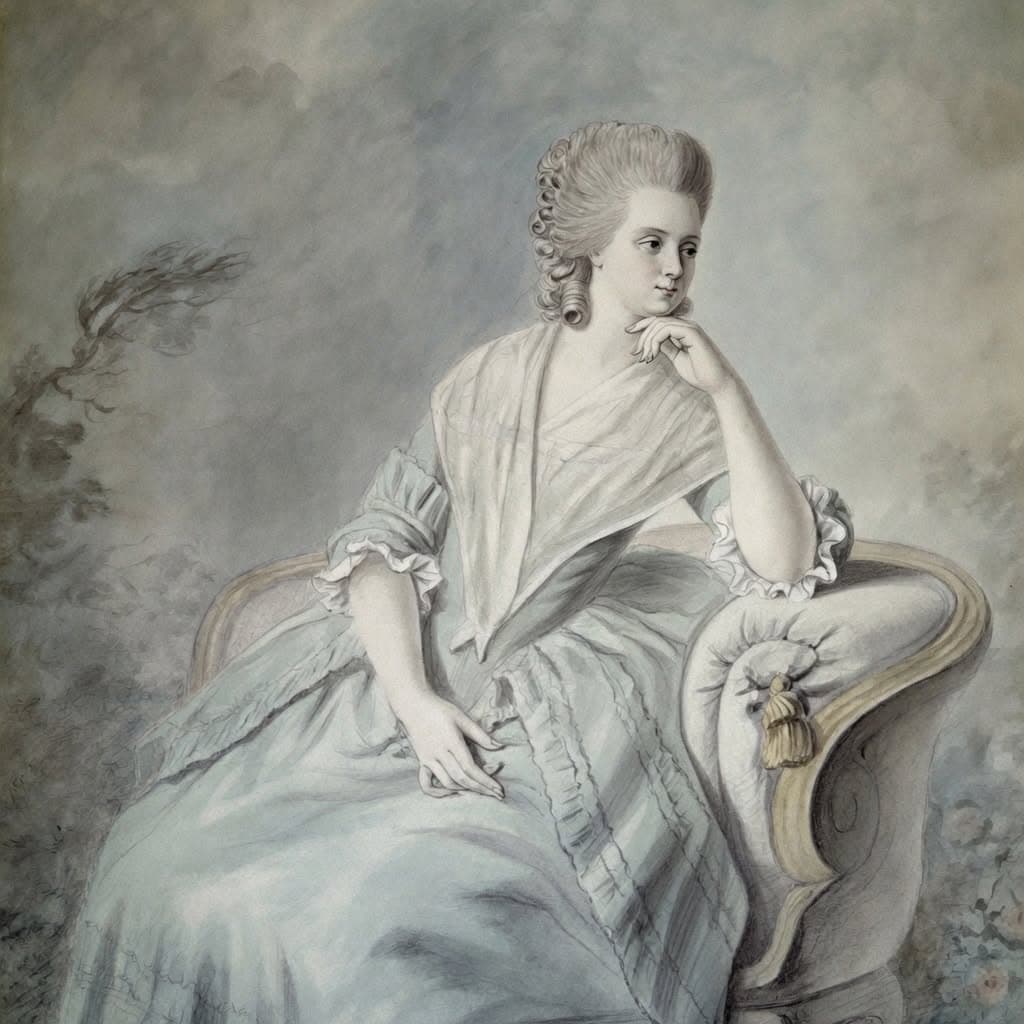
She was executed, the record states, for sedition and for having forgotten the virtues which befit her sex.
That line was written by the revolution she had given her life to. The men who wrote it had spent years calling her a patriot. They called her that right up until she became inconvenient.
This is the story of Olympe de Gouges. She was a butcher's daughter from the south of France, forty-five years old. She was the woman who wrote that women deserved the same rights as men in the same city and the same year that the men wrote that all men are created equal. She was guillotined by those same men for saying it.
She was born Marie Gouze in 1748 in Montauban. Her father may have been a nobleman, though that was never confirmed and she could never claim it. She married young, was widowed young, and moved to Paris in her twenties with a child and no money. She had no connections. She taught herself to write. She taught herself to think in public. In a city and a century that did not readily make room for women who did either, she made room anyway.
She wrote plays and pamphlets. She wrote about slavery, about poverty, and about the rights of illegitimate children. She wrote constantly and she wrote under her own name at a time when most women who wrote anything at all wrote anonymously.
In 1791, two years into the revolution she had championed publicly, she wrote the Declaration of the Rights of Woman and of the Female Citizen. It was a direct mirror of the Declaration of the Rights of Man that the revolutionary government had published in 1789. It was mirrored article by article and right by right. She held it up alongside theirs and asked a simple question. If liberty, equality, and fraternity belong to all, why do they belong only to men?
The revolutionary government did not answer her. It filed her question away and continued its work.
She kept writing. She criticised Robespierre by name. She criticised the Terror. She advocated for federalism at a time when the Jacobins had decided that anyone who did not agree with the direction of the revolution was an enemy. She was a woman who had never learned that the correct moment to stop speaking was the moment speaking became dangerous.
In July 1793, she was arrested.
She was brought to trial that November. When she asked for a lawyer, the tribunal refused. The judge ruled that because she was a writer, she was intelligent enough to defend herself. The pen she had used to build her reputation became the justification for stripping away her final protection. She claimed she was pregnant. Under French law this should have delayed the execution. The tribunal ordered a medical examination, but the execution proceeded anyway.
The night before she died, she wrote to her son. She told him she was dying a victim of her love for the people. She wrote that beneath the mask of republicanism her enemies had brought her to the scaffold without mercy. She had spent her adult life believing in the revolution. She died understanding exactly what it had become.
On 3 November 1793, Olympe de Gouges was guillotined in Paris. Her last words were addressed to the crowd. She told them that the children of the Fatherland would avenge her death. They responded with cries of Vive la République. They cheered as they killed her.
Her body was taken to the Madeleine Cemetery with no ceremony. There was no marker and no record of where exactly she was placed. The same revolution that had produced the Declaration of the Rights of Man disposed of the woman who had written its companion piece in an unmarked grave. It considered the matter closed.
Robespierre himself was guillotined eight months later. The men who killed her did not outlast her by long.
The Declaration of the Rights of Man is one of the founding documents of modern democracy. It is studied in schools across the world. The men who wrote it are on statues across Paris. The Declaration of the Rights of Woman was written in the same city and the same revolutionary moment. It was written by a woman who understood that liberty meant nothing if it only applied to half the population. It was ignored for the better part of two centuries.
France did not grant women the right to vote until 1944. That was one hundred and fifty three years after Olympe de Gouges asked why they did not already have it.
She has a street named after her now. She has a garden and a postage stamp. There are constant calls for her to be formally moved to the Panthéon, the monument in Paris where France honors its greatest citizens. She would be there among the men who once decided she had forgotten the virtues of her sex.
She was Olympe de Gouges. She was a butcher's daughter from Montauban with no title and no army. She had no protection from the men who had once called her a patriot. She asked one question and spent the rest of her life refusing to take it back.
The revolution answered her with a blade.