They had never met. He sent her a diamond. She sent him an embroidered pillow. On the first of July 1569 Norfolk wrote that he had gone too far to stop.
Thomas Howard, Duke of Norfolk, was not just another nobleman dabbling in court romance. He was the highest peer of the land, the only duke in England, Earl Marshal, Elizabeth I's second cousin, and one of the wealthiest men in the realm. Mary, Queen of Scots, was a prisoner and a claimant, a queen without a kingdom and the one woman in England whose marriage could still rearrange the succession. The two were kept apart, but distance did not prevent them from building a courtship out of letters, intermediaries, and gifts. He sent her a diamond. She sent him a pillow embroidered with the motto Virescit vulnere virtus, virtue flourishes from wounds.
By July 1569 Norfolk had already gone too far to stop. The letter survives in the Burghley Papers and is the cleanest possible anchor for the story: a man admitting, in writing, that he had passed the point of retreat. He understood that a marriage with Mary would place him at the centre of the succession question and perhaps at the centre of the kingdom. Mary understood that a great English marriage could give her cause new force and perhaps new protection. Their plans were not secret in the abstract, only in the details.
The danger became public in September 1569. Robert Dudley warned Norfolk that Elizabeth had discovered his intentions and that he risked arrest. Norfolk fled to Kenninghall and wrote to Elizabeth insisting he had declared everything to her and had no plan to marry Mary. At the same time he wrote to his allies in the North urging them not to rebel, because if they did it would cost him his head. That double pleading says almost everything about the shape of the crisis. He was trying to save himself from the very succession politics he had helped inflame.
Elizabeth arrested Norfolk in October 1569. He was released in August 1570 after promising faithfully that he would never again deal in the cause of marriage of the Queen of Scots. He then did exactly what he had promised not to do.
The plot began to unravel in 1571. Norfolk later said of Ridolfi, "I began to mislike him and sought ways to shift me from him." Mary wrote again in January 1571 renewing the marriage proposal and drawing him back in. He gave verbal approval to the plan and the wider Spanish-backed invasion scheme that would follow. In April 1571 a messenger named Charles Bailly was arrested at Dover carrying coded letters. He was tortured on the rack and gave up the cipher.
In August 1571 a draper named Thomas Browne was handed a bag supposedly containing silver coins to deliver on Norfolk's behalf. The bag felt too heavy. When he opened it he found six hundred pounds in gold from the French ambassador, together with coded correspondence. He took it to Burghley. A search of Norfolk's own house turned up another coded letter from Mary hidden beneath a doormat. The marriage plot was not brought down by genius. It was brought down by paper, gold, and a man who thought a bag of silver weighed wrong.
Norfolk was arrested again in September 1571, tried in January 1572, and beheaded on June 2 1572. Elizabeth signed the death warrant reluctantly and reportedly wept.
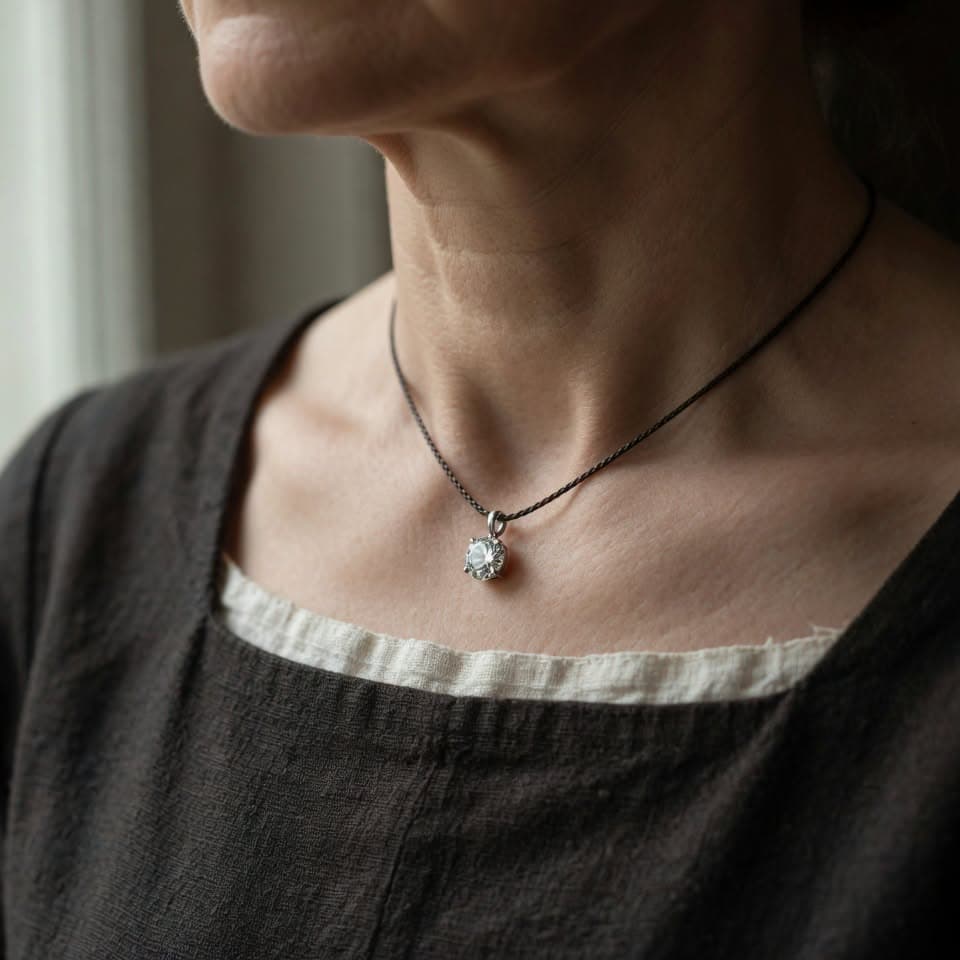
The diamond Norfolk had given her outlasted him. Mary wore it around her neck for the rest of her life, a pledge of the faith he had staked on a marriage that never happened. She was executed in 1587, fifteen years after him. Before her death she left the diamond to the Spanish ambassador. Her apothecary carried it to him.
The man who had written that he had gone too far to stop died first. The diamond outlived them both.