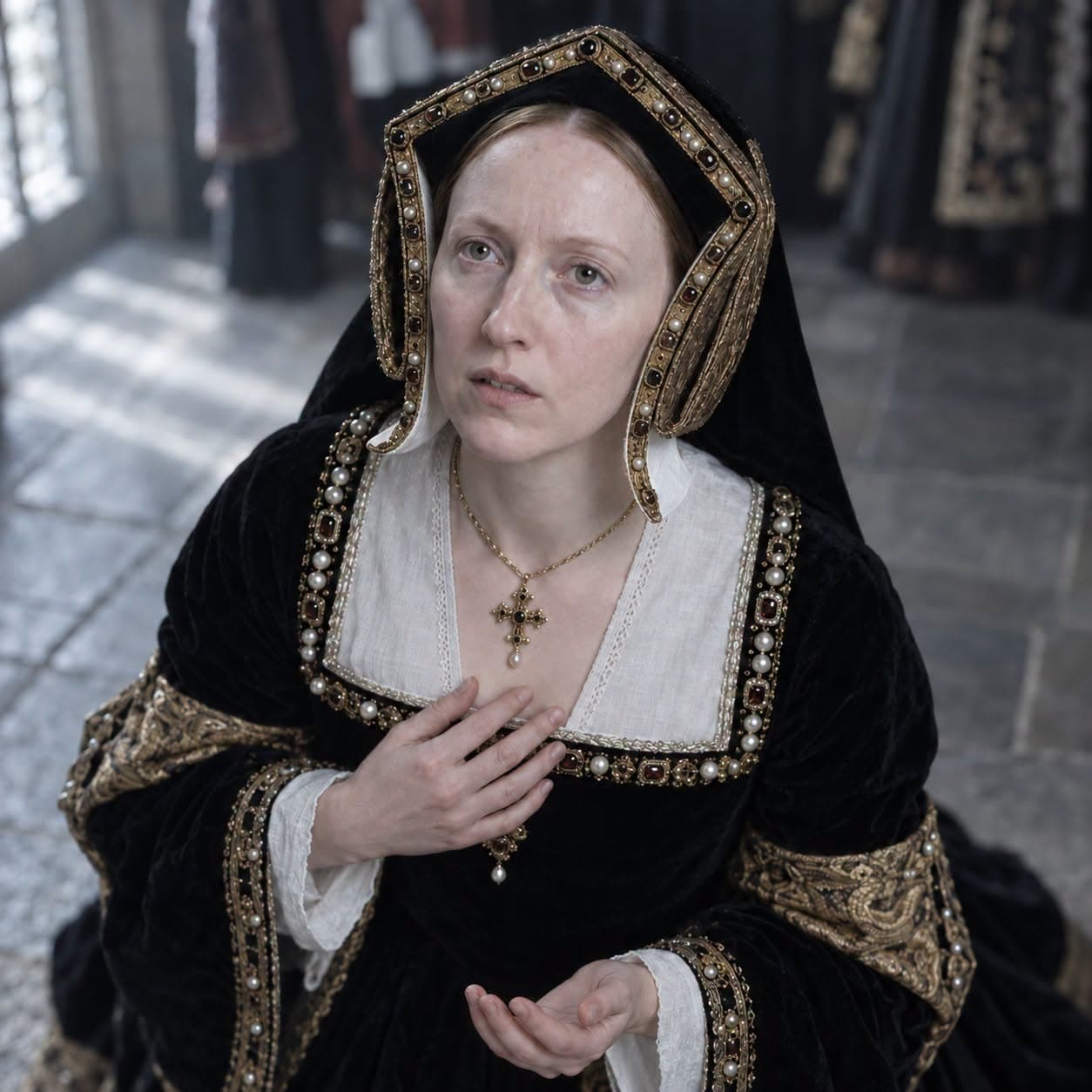

Thomas Cromwell wrote the document that called her a bastard. Mary Tudor signed it without reading a word.
The man who finally persuaded her to sign was not her father and not Cromwell. It was Eustace Chapuys, the imperial ambassador who had spent years defending her position to Charles V and who remained the closest thing she had to an ally, in a court that had been stripping her of everything since her mother's marriage was declared invalid.
By June 1536 Chapuys had done the arithmetic and found it brutal. Mary was more use to the Emperor alive and compliant than dead and consistent. He told her to sign. His reasoning was cold and practical and delivered by the one person whose counsel she trusted.
The pressure had been building for weeks. Anne Boleyn was dead by May, executed on Tower Green, and Mary might have expected her position to soften with the woman who had displaced her mother now gone. It did not soften. Henry's council made the requirement plain: she was to acknowledge her mother's marriage as invalid, herself as illegitimate, and the Pope as having no authority over the Church of England.
Refusal was treason.
The word was used explicitly. Mary was twenty years old, ill, isolated in a household that was itself under surveillance, watched by servants who feared being accused of poisoning her if she sickened further. She had no lawyer, no advocate inside the walls, and no route out except the document waiting on the table.
Cromwell had drafted it himself, in the most unsparing language available, and every phrase in it was his formulation of her degradation. The words that called her mother's marriage a sin against God and herself a bastard born outside lawful wedlock were not Mary's words. They were Cromwell's. She was required to put her name to them.
Chapuys advised her not to read the document before signing. If she had not read the words she could not be held to have personally affirmed them. On the twenty-second of June 1536, on Chapuys's specific advice, she signed without reading. Then, at the moment of signing, she made a private protestation: a formal declaration that the submission had been given under compulsion and was not binding on her conscience. The document was complete. The protestation sat beside it.
She held both things simultaneously and carried the tension of it for seventeen years. The submission was real. Her conscience required it not to be.
When Mary finally came to the throne in 1553 she restored the papal authority she had been forced to repudiate and rehabilitated her mother's memory as best the law allowed. She died still carrying the word her father's minister had made her write about herself. The document Cromwell wrote and she signed without reading is at the National Archives at Kew. Her private protestation that it was not binding on her conscience is also documented.
She put her name to it. She never accepted that it meant what it said.