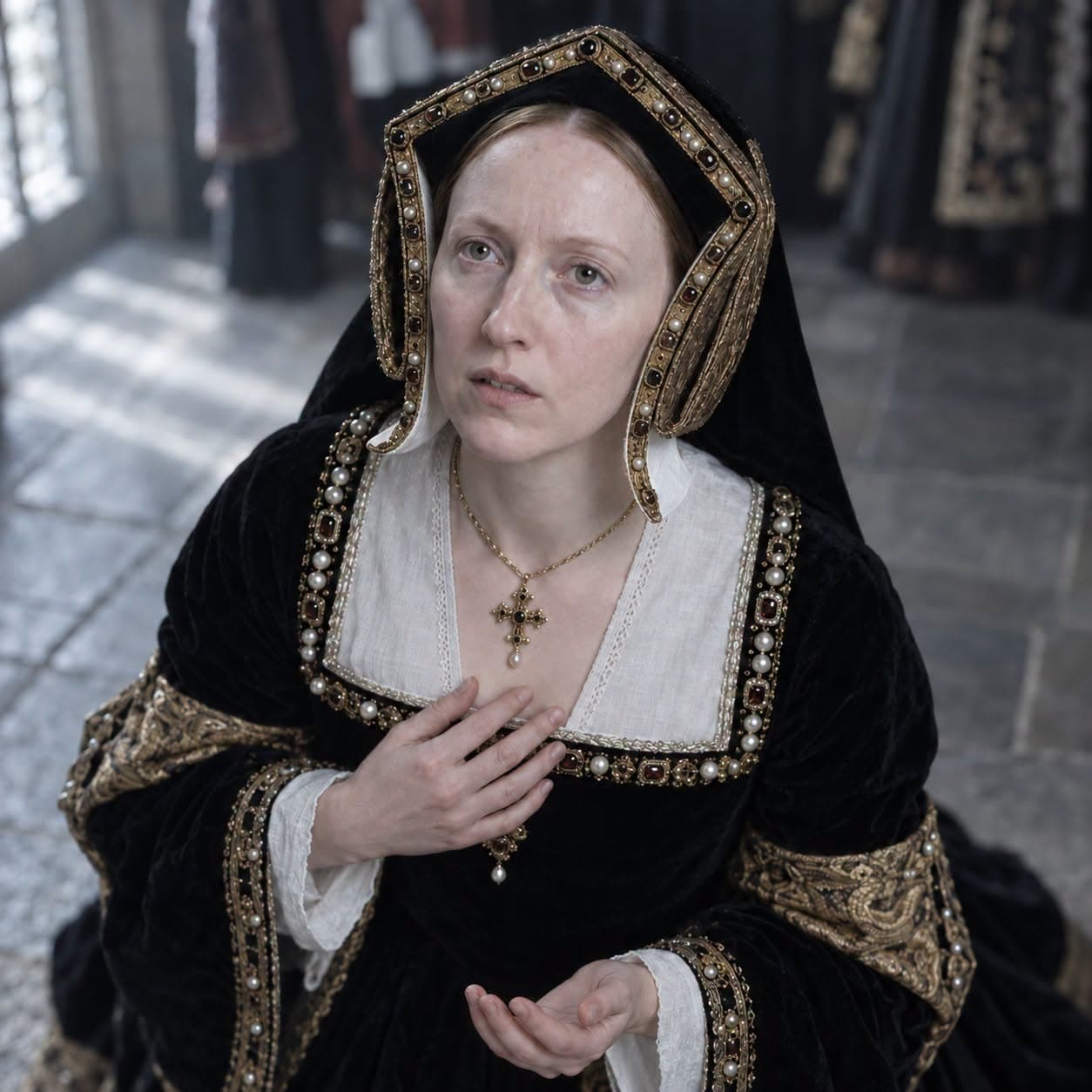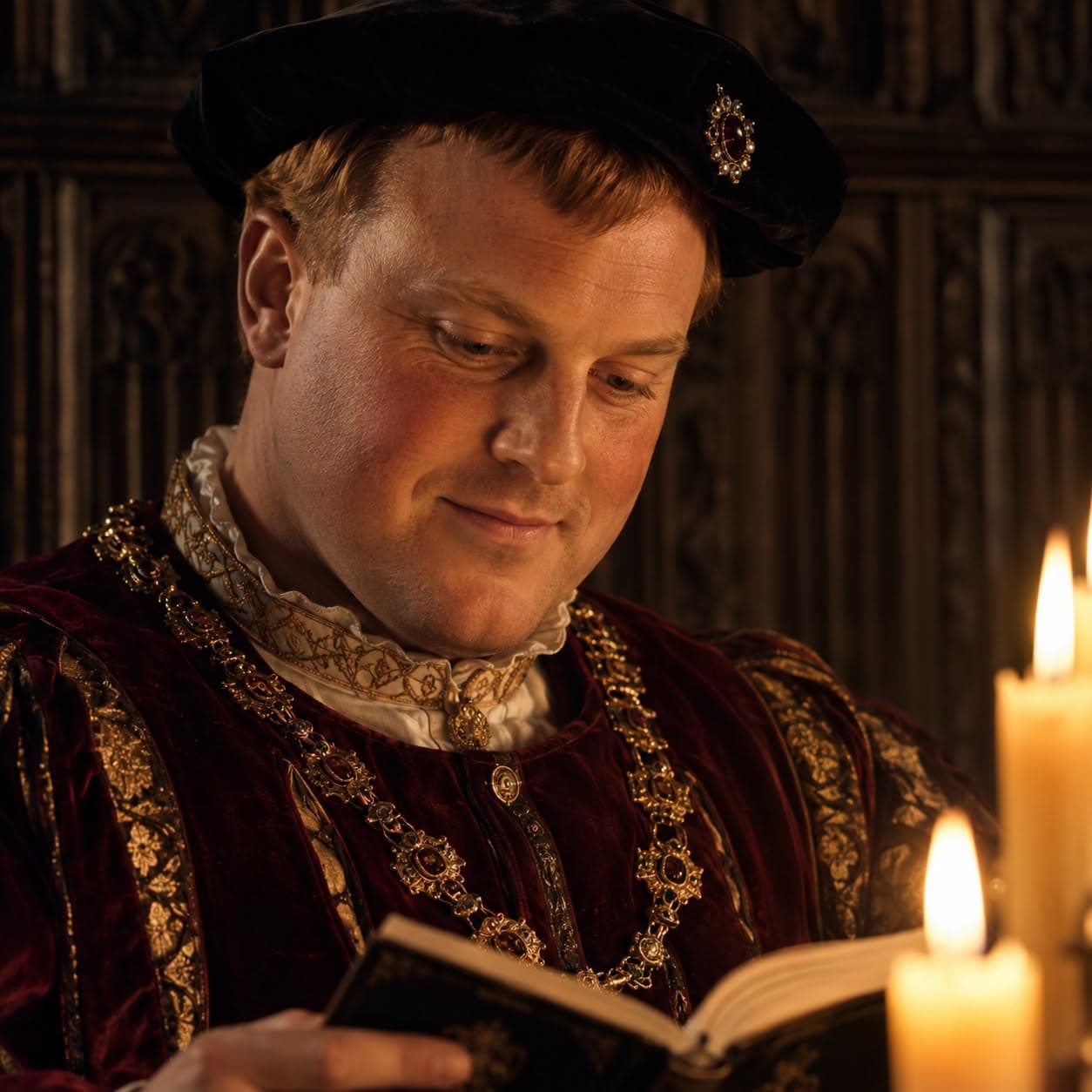
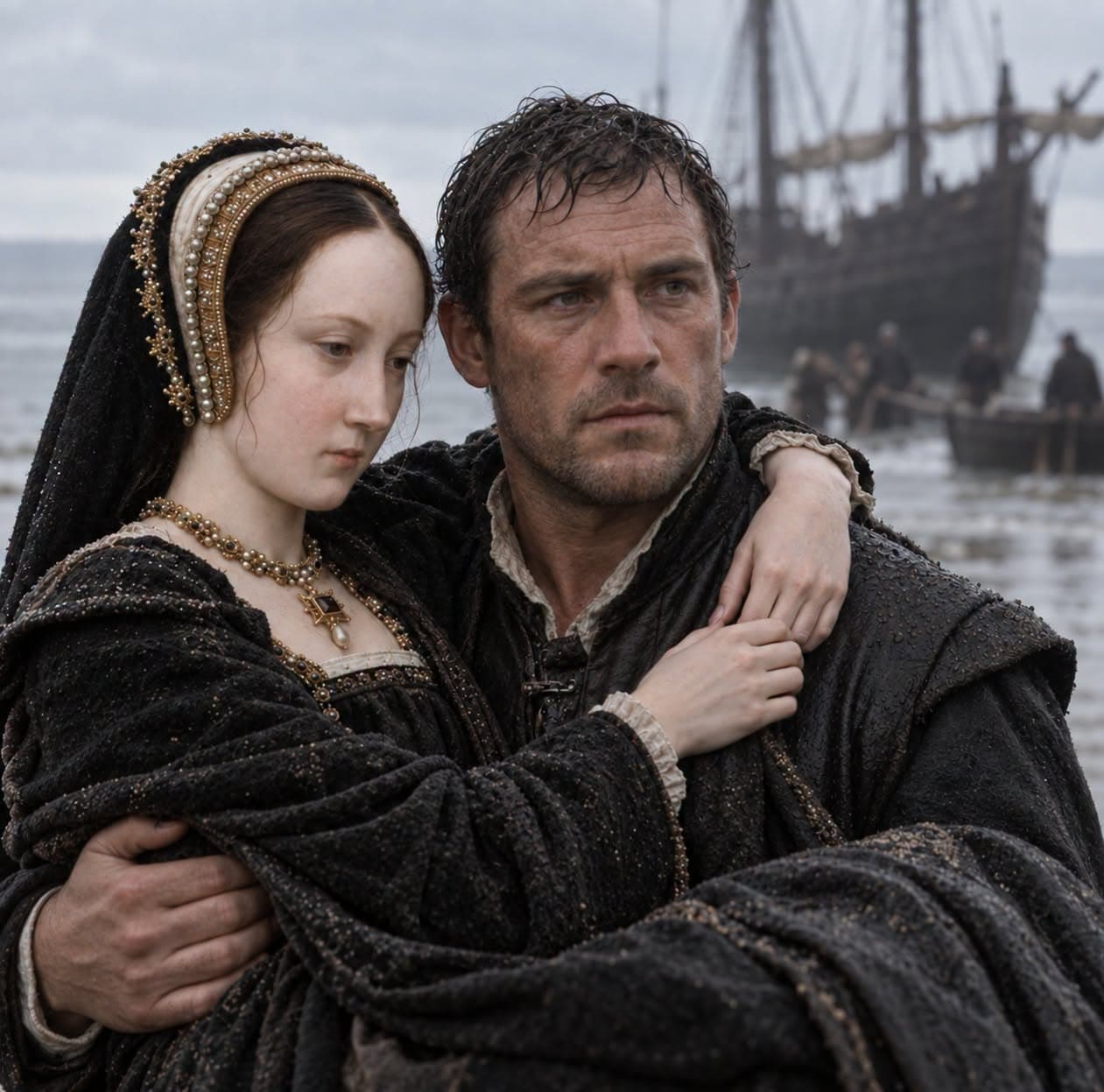
Henry had invaded France the year before. Now he was sending his 18-year-old sister to marry its 52-year-old king. She arrived soaking wet.
The ships had been waiting at Dover for days. The Channel was rough, and the wind held them in harbour. At four in the morning on 2 October 1514, Mary Tudor went down to the water anyway.
Henry went with her. He kissed her goodbye, and he gave her into the keeping of God, the fortune of the sea and the government of the King of France.
She had already been a wife for seven weeks. On 13 August, at Greenwich, she had been married by proxy to Louis XII, a man she had never seen. She was already a queen. She was about to meet her husband. Before she agreed to go, she had asked her brother for one thing. If she outlived Louis, she was to choose her next husband herself.
Henry had given his word.
She had spent most of her childhood being prepared for someone else's marriage. Her mother died before Mary was seven. Within months her sister Margaret left to marry the King of Scots, and Mary and Henry were the two royal children who remained. At eleven she was betrothed to Charles of Castile, the boy who would one day be emperor, and for years she was called the Princess of Castile. In 1514 her brother ended it.
His war in France had cost him a great deal, and his allies had begun to make their own bargains. Cardinal Wolsey made one for him. Louis had buried his queen, Anne of Brittany, in January, and he had no living son. Peace would give Henry a way out of the war. Mary would give Louis another chance at an heir.
The fleet did not get a quarter of the way across before the wind rose and scattered it. Some ships were driven towards Calais and some towards Flanders. Mary's ship made for Boulogne with a few others, and as it came into the harbour it ran hard onto the shore.
Boats came out from the land. Sir Christopher Garneys waded into the sea, lifted her into his arms and carried her to the beach. She had left England in the dark with a promise. She came into France with her clothes wet through.
Louis came out to meet her near Abbeville. He had been King of France since she was two years old, and he was ill. They were married on 9 October, and she wore cloth of gold edged with ermine.
The next morning he sent most of her English household home.
Lady Guildford, her former governess, was among them. Louis had taken a dislike to her, because she would not leave the king and his young wife alone together. On 12 October Mary wrote to Wolsey. She had not yet seen in France, she told him, any lady or gentleman "so necessary for me as she is." It made no difference. Lady Guildford went home.
Mary was crowned at Saint-Denis on 5 November, and Paris came out to see her. Louis died on 1 January 1515. They had been married for less than three months. For six weeks she was kept apart from men at the Hôtel de Cluny, until it was certain she was not carrying his child. She was eighteen. Francis I and Henry VIII could each see a use for her.
Charles Brandon, Henry's closest friend, had come to France for her coronation jousts to serve as the English champion and had left a few weeks before the king died. Now Henry sent him back to bring her home, and made him promise that he would not marry her. In early March he broke the promise. He confessed to Wolsey on 5 March, and Henry, Wolsey reported, took it "grievously and displeasantly."
Mary wrote to her brother. She reminded him of what he had promised her. She told him that she had accepted a husband she understood to be "very aged and sickly" for the advancement of the peace and the furtherance of his causes. Brandon was not to blame, she said. It had been her doing.
Henry made them pay for it. Mary gave up the jewels Louis had given her and a large part of her income. On 31 March they were married again in France, publicly this time, and then they waited for Henry's permission to come home.
On 2 May 1515 they sailed for Dover. She had left it married to a stranger. She came back to it with the husband she had chosen.