She was born a princess, declared a bastard, stripped of her title, separated from her mother, and told for twenty years that she was nothing. Then she became Queen of England. The story of Blood Mary is not a story about a monster. It is a story about what happens when you break a person slowly, carefully, and then hand them a crown.
Mary was born on the eighteenth of February 1516 at Greenwich Palace, the fifth child of Henry VIII and Catherine of Aragon and the only one who survived. Before her came a stillborn daughter, a son who lived fifty-two days and broke his father's heart, and two more sons who did not survive their births long enough to be named.
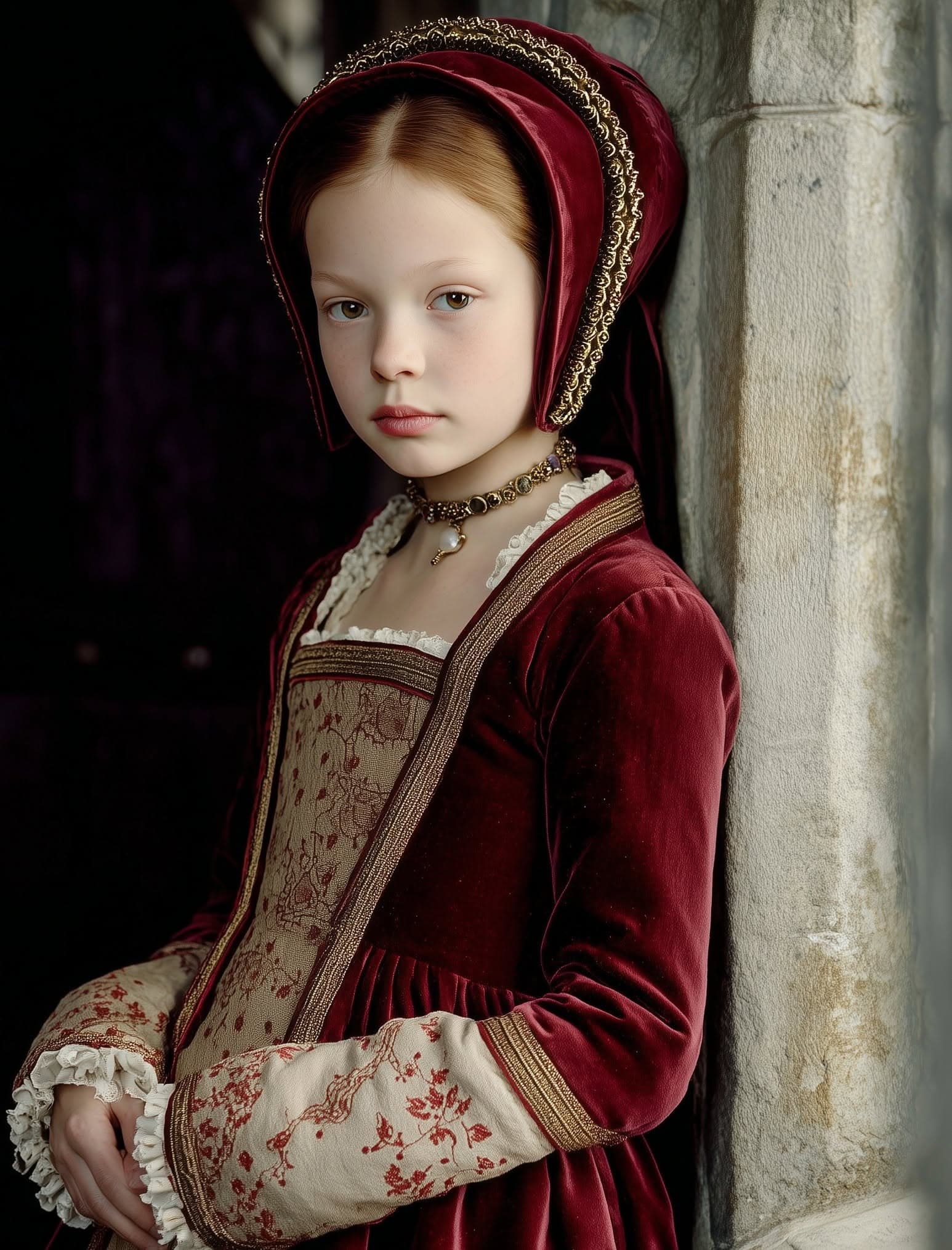
By the time Mary arrived the court had learned to moderate its celebrations for Catherine's deliveries, because celebration had a way of becoming grief before the bonfires had finished burning. But Mary lived. She was small and healthy and red-haired, with pale skin and her mother's dark eyes, and Henry held her and called her his pearl, and the court recorded his disappointment carefully in letters sent to foreign capitals and said nothing about it to his face.
She was a girl. England had never been ruled by a queen in her own right. A daughter was a diplomatic instrument, not a successor, and Henry understood this with the cold clarity of a man who had watched his own dynasty nearly extinguish itself in the previous generation for want of a male heir. But Catherine was twenty-nine and healthy and the boy would come, and in the meantime Mary was the proof of concept. Proof that Catherine's womb could produce a living child, that the Tudor line had a future, that the worst was behind them.
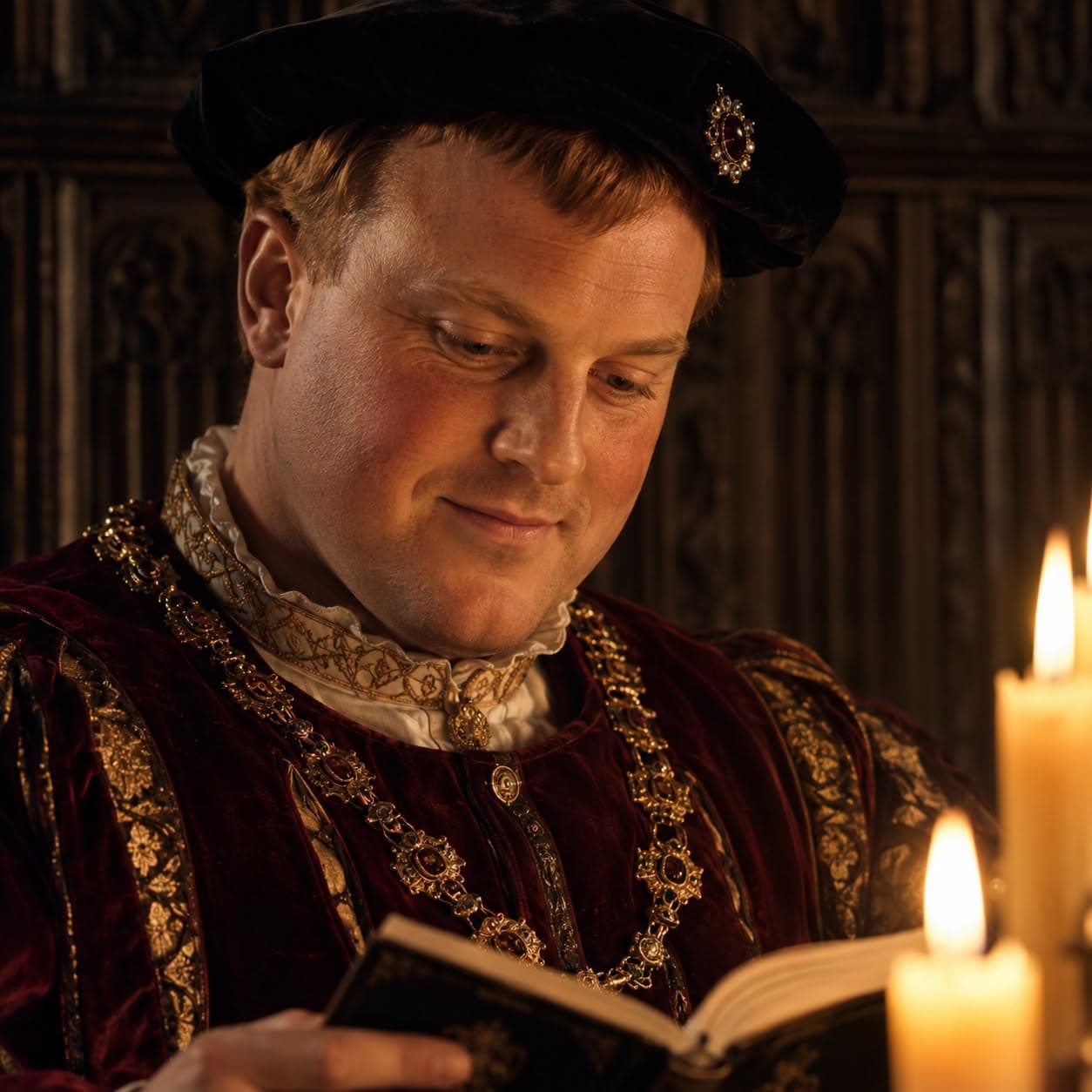
Henry showed her off to ambassadors and declared her a pearl without price. He was telling the truth, in the way that men tell the truth about things that are nearly but not quite what they wanted.
Mary's childhood was as good as it was ever going to be. She was educated with the seriousness reserved for children who might need to govern. Latin, French, Spanish, music, theology, the accomplishments of a Renaissance princess prepared for a great European marriage. She was betrothed before she could walk: to the French Dauphin, then to her own first cousin the Holy Roman Emperor Charles V, then to others.
Her whole early life was a preparation for leaving England. She was raised to be the queen of somewhere else. Then Anne Boleyn arrived, and the world rearranged itself around a single devastating fact: Henry wanted a son, Anne might provide one, and Catherine and Mary stood in the way.
What followed was not quick. It took seven years, from the first serious discussion of the annulment in 1527 to the final break with Rome in 1534, and for most of those seven years Mary watched her mother be systematically dismantled. Her title had been stripped, her household reduced, her access to her daughter curtailed, her marriage declared invalid by an English court that had no authority to do so.
In 1531 Henry separated them. Catherine went to one house and Mary went to another and they were not permitted to meet again. They wrote letters under supervision. They sent messages through trusted servants who understood the risks of trusted servants in a court run by Thomas Cromwell. They never saw each other again.
In 1533 Henry married Anne Boleyn. In 1534 Mary was declared a bastard by Act of Parliament. She was seventeen years old. Her title of Princess was removed. She was redesignated the Lady Mary, and sent to serve as a lady-in-waiting in the household of her infant half-sister Elizabeth, Anne's daughter, who was now the Princess of Wales in her place.
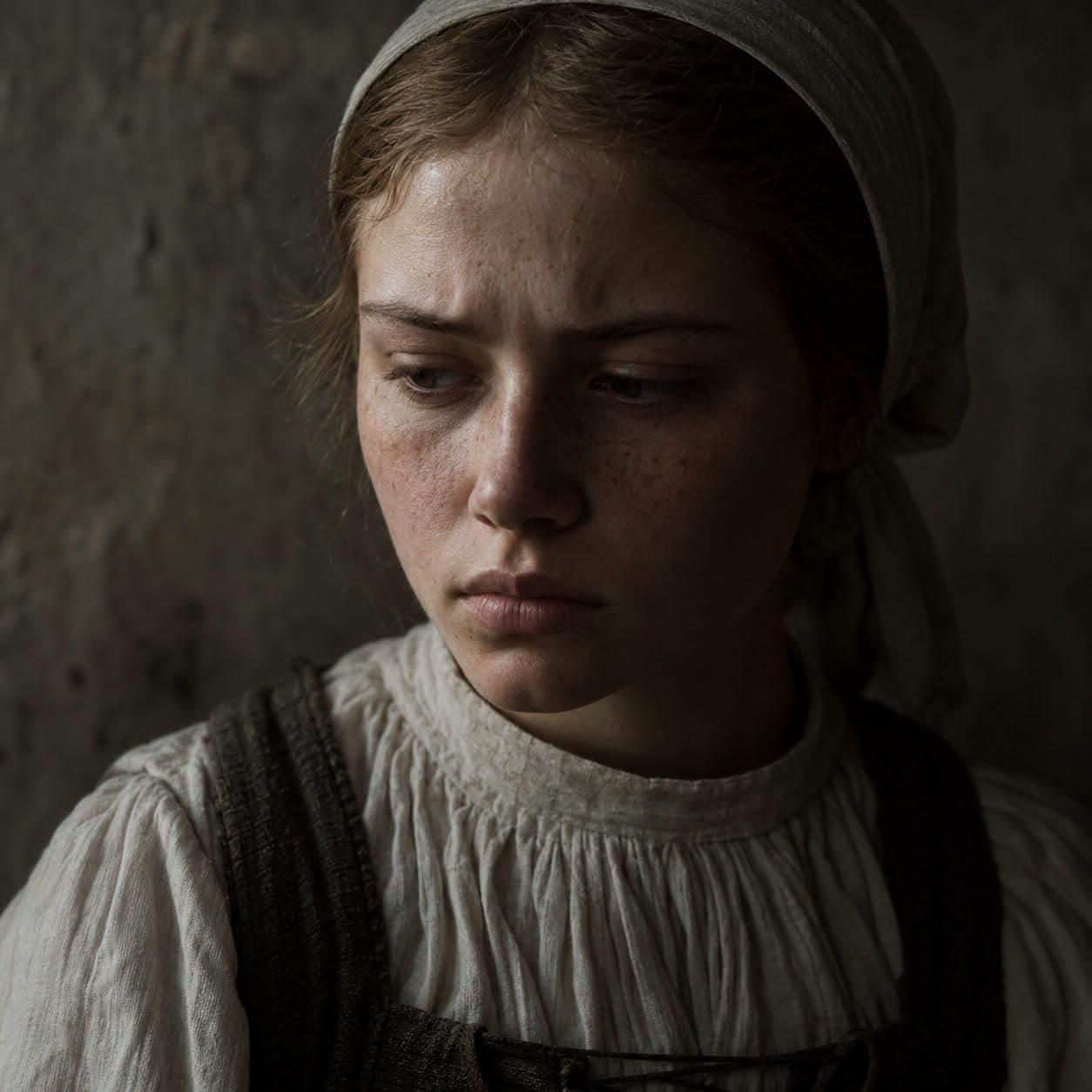
The women appointed to run that household were instructed to ensure Mary understood her position. They ensured it with a thoroughness that the records make uncomfortable reading. She was refused a fire in her room. She was refused the right to eat with the household. She was told, repeatedly and in detail, that she was nothing, that her mother's marriage had been invalid, that she herself was illegitimate, and that the sooner she accepted this the better it would go for her.
Mary was seventeen, then eighteen, then nineteen, alone in a house full of enemies, separated from her mother, watched by Cromwell's people, and she refused. She refused to sign the oath acknowledging her own illegitimacy. She refused to acknowledge her mother's marriage as invalid. She was ill repeatedly. Stress, almost certainly, manifesting in the specific physical language available to Tudor women, and she refused anyway. She wrote to Cromwell begging him not to let her father destroy her. She wrote to her mother in secret. She held on.
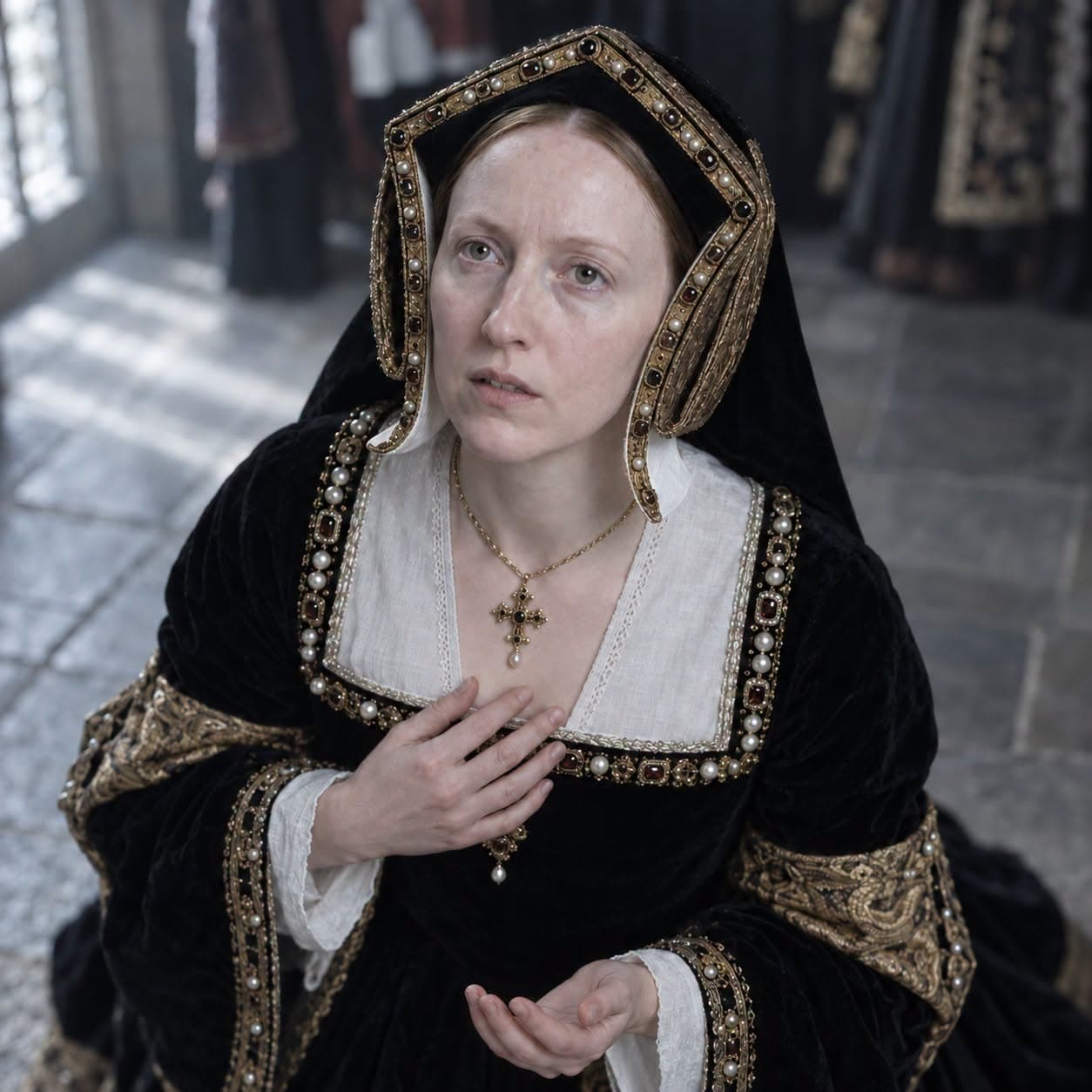
Catherine of Aragon died on the seventh of January 1536 at Kimbolton Castle, alone except for her servants, having been denied her daughter's presence to the end. Mary was not permitted to go to her. She received the news in the house where she had been placed and she was not permitted to grieve publicly because public grief for Catherine would have implied that Catherine's marriage had been valid, which implied that Mary was legitimate, which implied that the last ten years of English history had been an enormity committed by the king for nothing.
She was twenty years old. She had lost her mother without being allowed to say goodbye, and the man who had prevented it was her father, and he was the King of England, and there was nothing she could do.
Anne Boleyn was executed four months later and Henry married Jane Seymour within eleven days. Mary was required to sign a document acknowledging that her mother's marriage had been invalid and that she herself was illegitimate. She signed it. She had held out for years and she signed it in the end, under the specific pressure that Cromwell had been applying, because the alternative was a treason charge and she had a confessor who was allowed to remind her periodically that dead women could not restore the Catholic faith to England.
She signed it and she never forgave herself for it and she spent the rest of her life trying to make it right, which is perhaps the most important sentence in understanding everything that came after.
Jane Seymour gave Henry his son in October 1537 and died twelve days later of puerperal fever, and the succession was secure, and Mary was welcomed back to court with the warmth of a man who had got what he wanted and could now afford to be generous. She was twenty-one. She was technically still a bastard.
The signature she had given Cromwell had no legal effect that Henry had reversed — but she was back in favour, given household and income and a place at court, and she was expected to be grateful, and she was expected to have forgotten, and she was expected to perform the cheerful rehabilitation of a woman who understands that the past is the past and the king is the king and things are better now. She performed it. She had been performing things since she was nine years old. She was very good at it.
Henry VIII died in January 1547. Edward VI, the longed-for son, the boy for whom all of it had been done, reigned for six years and died of tuberculosis at fifteen without an heir. The machinery of Protestant England that Edward's regents had constructed came for Mary immediately. There was a plot to put Lady Jane Grey, a Protestant great-niece of Henry VIII, on the throne instead. It lasted nine days.
Mary rode into London with an army raised from the people of East Anglia who had decided, with the specific stubbornness of ordinary people watching a principle be violated, that the king's legitimate daughter was the rightful queen of England. She was thirty-seven years old. She had been waiting for this since she was born.
She was the first queen regnant in English history. There was no template. There was no precedent for how a woman exercised royal authority, how she commanded armies, how she managed a Privy Council full of men who had spent their careers deciding things without asking women.
She managed it by being, in every sense that mattered, exactly what her father had tried to prevent: a legitimate monarch with an unshakeable belief in her own divine right, a ferocious intelligence trained since childhood on exactly the education a ruler required, and the specific inflexibility of a person who had been told for twenty years that she was wrong about everything and had been proved right in the end.
She burned two hundred and eighty people at the stake in four years. This is the fact that has defined her in history, the name Bloody Mary applied with a consistency that has made it almost impossible to see anything else. It should not be minimised. Two hundred and eighty people is two hundred and eighty people, and the burnings were not the acts of a court that had lost control, they were deliberate policy, endorsed by Mary personally, carried out with the full machinery of a Tudor state that had been burning heretics before Henry's reign and would burn them after.
She believed she was saving souls. She believed that the Protestant faith was a cancer in the body of England that her father had introduced and that she had been placed on the throne by God specifically to excise it. She believed it with the absolute certainty of a woman who had held one fixed thing, her Catholic faith, through everything that had been done to her, and who had watched that fixed thing be the only thing that had never been taken away.
Her faith had been the proof that she existed when everything else said she did not. Of course she burned for it. Of course she could not understand why others would not simply see.
That is not an excuse. It is an explanation, and the difference matters. The woman who burned Protestant martyrs at Smithfield was made, carefully and deliberately, by a man who separated her from her mother, stripped her of her title, declared her illegitimate, and spent a decade teaching her that the world was a place where power was exercised without mercy on people who refused to comply.
She learned the lesson. She learned it so thoroughly that when she finally held the power she applied it with the same remorseless pressure that had been applied to her. The capacity for it had always been in her. The question is who taught her that this was what power looked like.
She died on the seventeenth of November 1558, aged forty-two, probably of uterine or ovarian cancer. She had been ill for two years. Her husband Philip of Spain, eleven years younger, had returned to Spain and shown little inclination to come back. She had suffered two phantom pregnancies — her body, which had been taught since childhood that its failure to produce was a catastrophe, producing every symptom of pregnancy in the absence of a child, twice, in front of a court that watched and waited and said nothing useful.
She had lost Calais, England's last territory in France, the wound of which she reportedly said she would be found written on her heart. She died believing she had failed: no heir, no lasting Catholic settlement, no legacy that would hold past her last breath. Elizabeth was proclaimed queen within hours. The Protestant settlement was restored within months.
Everything Mary had spent her reign building was dismantled by the sister she had been sent to serve as a lady-in-waiting at seventeen.
She was right that she had failed, by the measures she had set for herself. What she could not see and what the history written by Protestant England made sure she would not see, was that she had done something that no English person had ever done before. She had taken a throne that the entire political establishment had tried to give to someone else, by the force of her own legitimacy and the loyalty of ordinary people who recognised injustice when they saw it, and she had ruled.
She had ruled for five years as an anointed queen in a country that had no language for what she was, and she had held it together, and she had made decisions, wrong ones, terrible ones, ones that cost two hundred and eighty lives, but they were her decisions, made by a queen who answered to God and no one else.
Her father had spent twenty years trying to make her nothing. He did not manage it. He made her instead into a woman who could not be unmade, which is a different thing entirely, and the distinction is the whole of her.