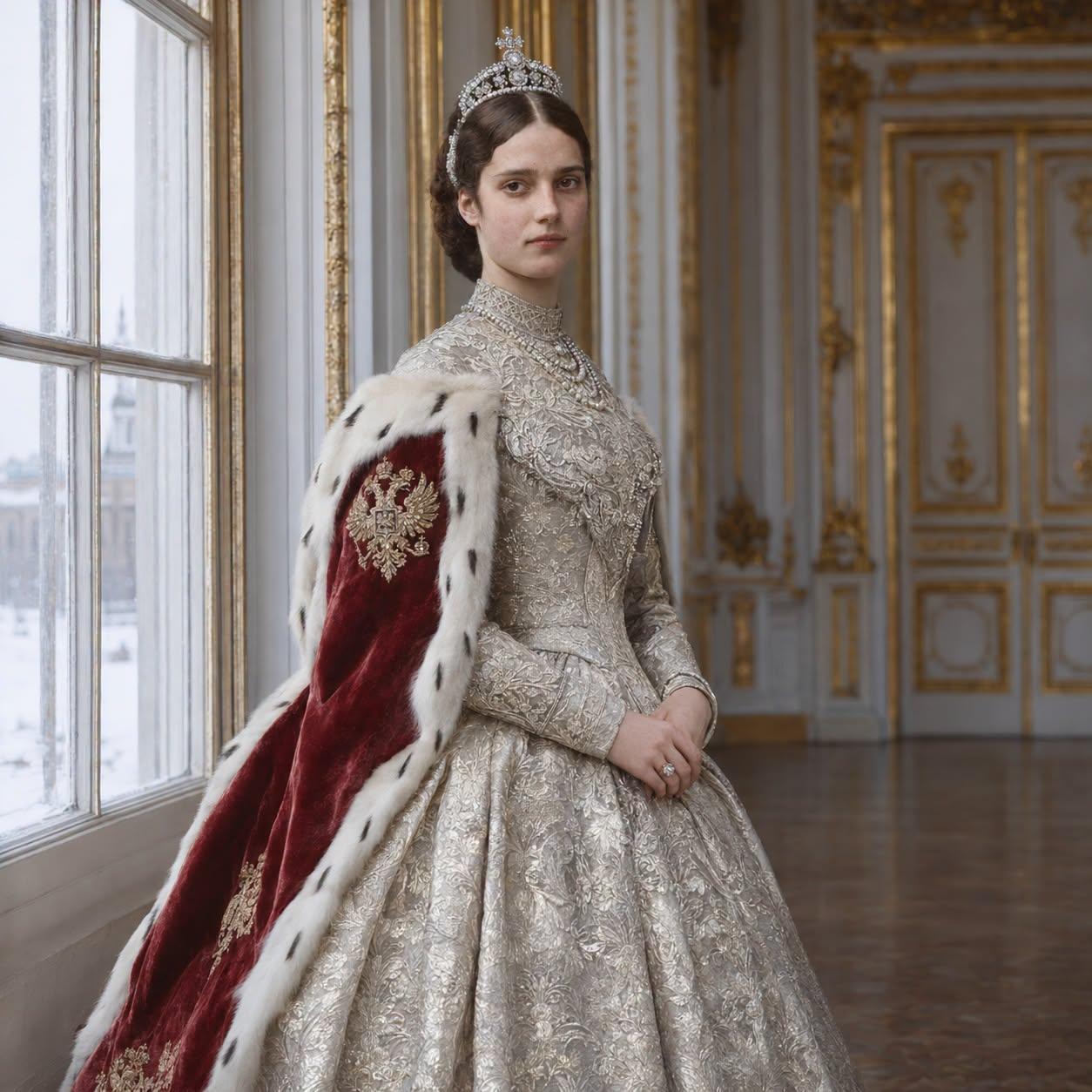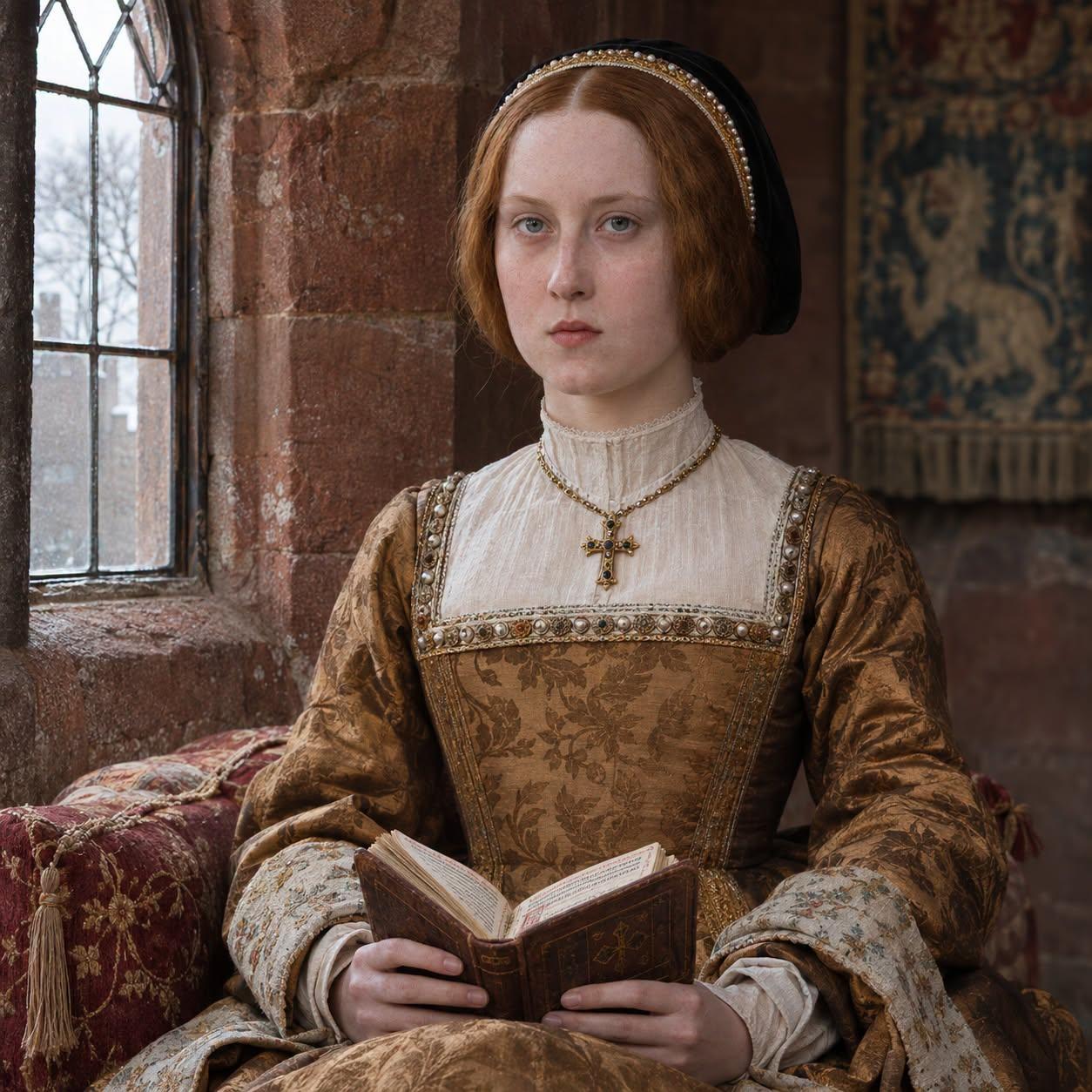
A rosebud opened in a Paris street, and a richly dressed young woman appeared inside it. The real queen was eighteen. Paris had built her a welcome that was also a set of instructions.
On 6 November 1514, Mary Tudor, the younger sister of Henry VIII, made her ceremonial entry into Paris as Queen of France. She had been crowned at Saint-Denis the day before. Now the capital welcomed the English princess whose marriage to Louis XII had helped turn two rival kingdoms towards peace.
Mary was eighteen and Louis was fifty-two. They had married in October, and the difference in their ages had a practical importance that no amount of wedding splendour could disguise. Louis had no surviving son. His previous queen, Anne of Brittany, had left him two daughters, and neither could inherit the French crown. A boy born to Mary would keep the throne in Louis's direct line.
The marriage had already given the two kings something they wanted. What it might give France next depended on Mary.
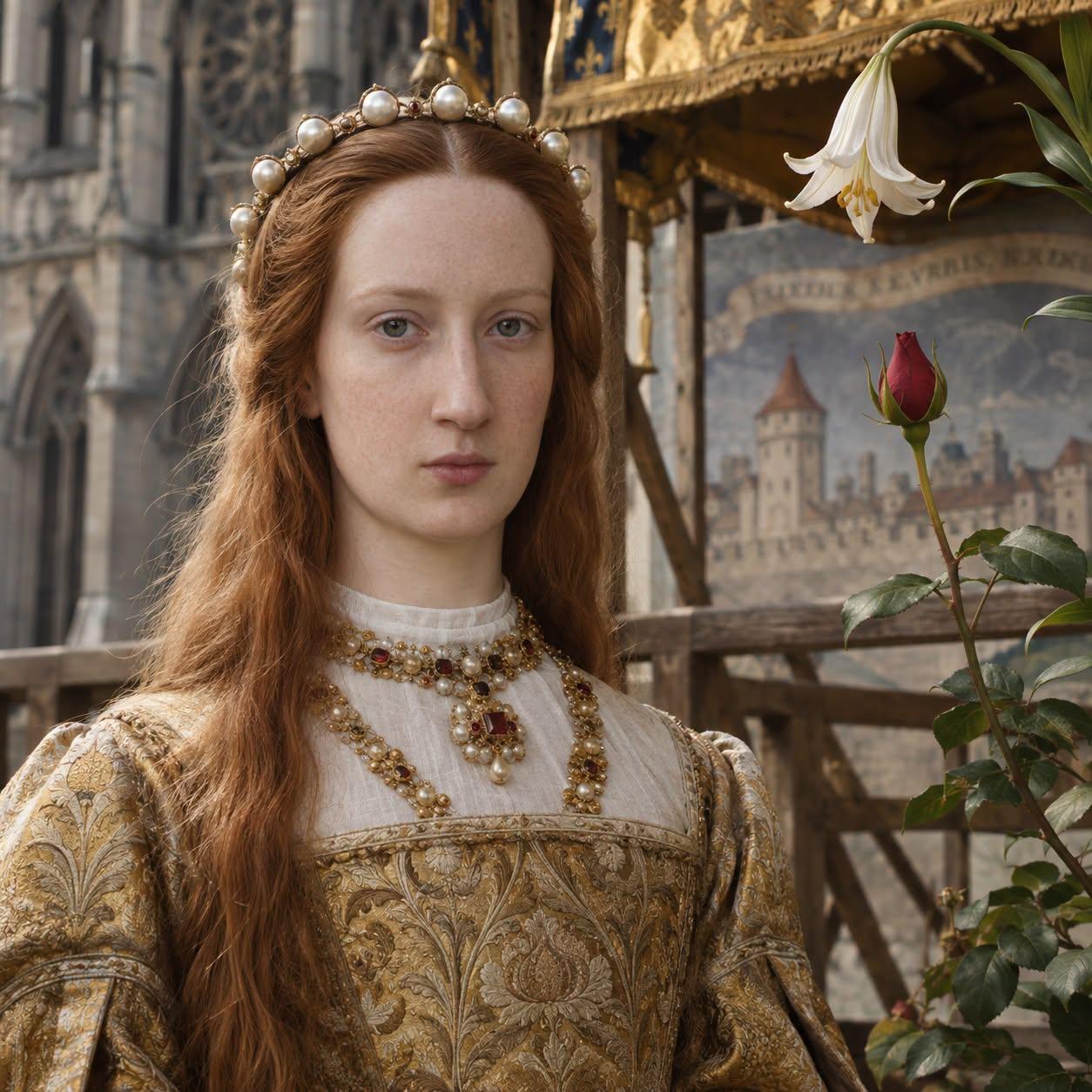
She entered the city in a chair covered in white cloth of gold. A coronet of large pearls rested on her head, and her neck and breast were full of jewels. Beside her rode Francis, Louis's son-in-law, who had stood at her coronation the day before holding the crown above her head because it was too heavy for her. If Mary gave Louis no son, the throne would pass to Francis. No one in that procession had more to lose from the future being celebrated around him. The two of them talked often along the way.
Paris had prepared its own ways of explaining what her arrival meant. At a fountain with three jets, a lily and a red rose were watered together, while three magnificently dressed ladies stood by as the Graces who had united them. The French lily and the English rose belonged together now. The welcome made that union look as natural as two plants sharing a garden.
Further on, peace was given a human shape. At the Painters' Gate, a figure of God the Father stood on a cloud, holding a great heart in one hand and the lily and rose twined together in the other. Beneath him appeared a king and queen. Below them, England and France sat in chairs as women, with Peace, Amity and Confederation standing between them. Paris supplied the virtues, the flowers and the assurance that this was how the marriage ought to work.
At the Church of the Holy Innocents, the pageant grew more elaborate. On a raised platform stood a gold-painted tent called the throne of honour, and inside it a lily was planted in an orchard representing France. Below was an enclosure built like a walled town, complete with towers and a gate. Inside grew a rosebush.
From that bush, a stalk bearing a bud rose towards the throne, helped upward by a figure representing the Pope. The lily came down to meet it. Then the two rose together.
The bud opened.
Inside was a richly dressed maiden, who delivered an oration. It was an ingenious way to congratulate a queen. The towers of the little town carried something plainer, in Latin, from the Song of Songs: your belly is like a heap of wheat, set about with lilies. Then, from the Psalms: let there be peace in your strength, and abundance in your towers. Anyone in the street with Latin could read what the city hoped for from the young woman passing beneath it.
It also left very little of her marriage private.
A royal son would give the celebrations a future beyond the procession itself. He could bind the English marriage to the French succession, turning a peace negotiated by his elders into a family connection that might outlast them. Mary had been married for exactly four weeks. The city was celebrating what she might become.
At Notre-Dame, cardinals, archbishops and other clergy received her, and a service followed. The last scaffold waited at the Palais, where the angel Gabriel greeted the Virgin across a lily with the words of the Annunciation. It was the most famous announcement of a coming child in Christendom, and the queen arriving beneath it was also called Mary. Inside, a banquet brought the day to its close. She had been crowned, welcomed and praised. The public work of making her Queen of France had been performed with extraordinary care.
Eight weeks after Paris welcomed her, on 1 January 1515, Louis XII died. The son had not come, and Francis was king. Still eighteen, Mary was dressed in the white worn by a French king's widow and kept secluded for about six weeks, in curtained rooms at the Hôtel de Cluny, by candlelight. The seclusion had a practical purpose too. Before Francis could be sure of his crown, it had to be known whether she was carrying Louis's child. The question on the towers was still being asked.
She was not. Later in 1515 she secretly married Charles Brandon, Duke of Suffolk, without her brother's consent. There was anger in England and a pardon to obtain. It was a very different wedding from the union celebrated in the streets of Paris.
The bud in that Paris street had opened exactly as the pageant required. The wheat took longer. Mary had four children in the years that followed, their father was an English duke, and they had nothing to do with the French crown at all.