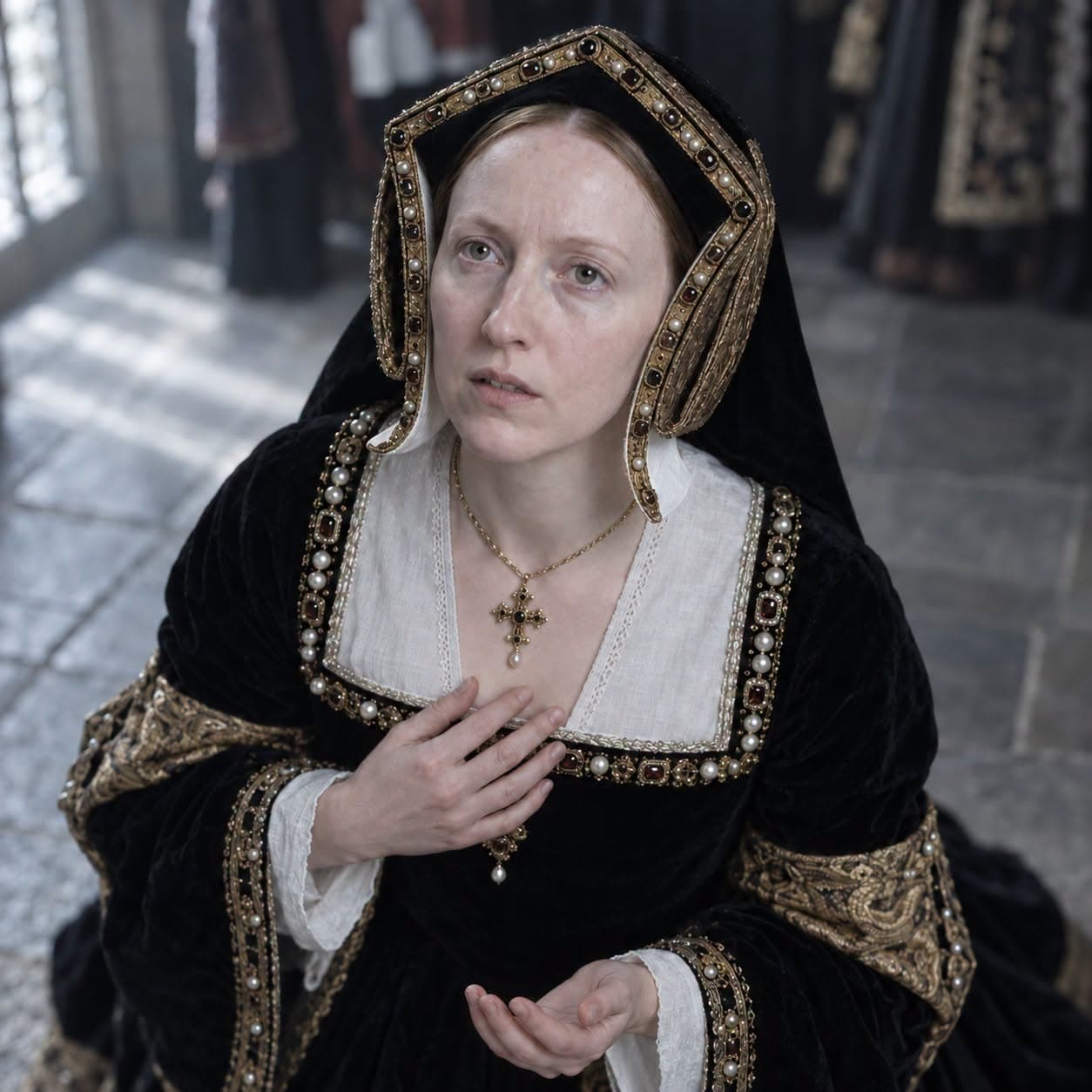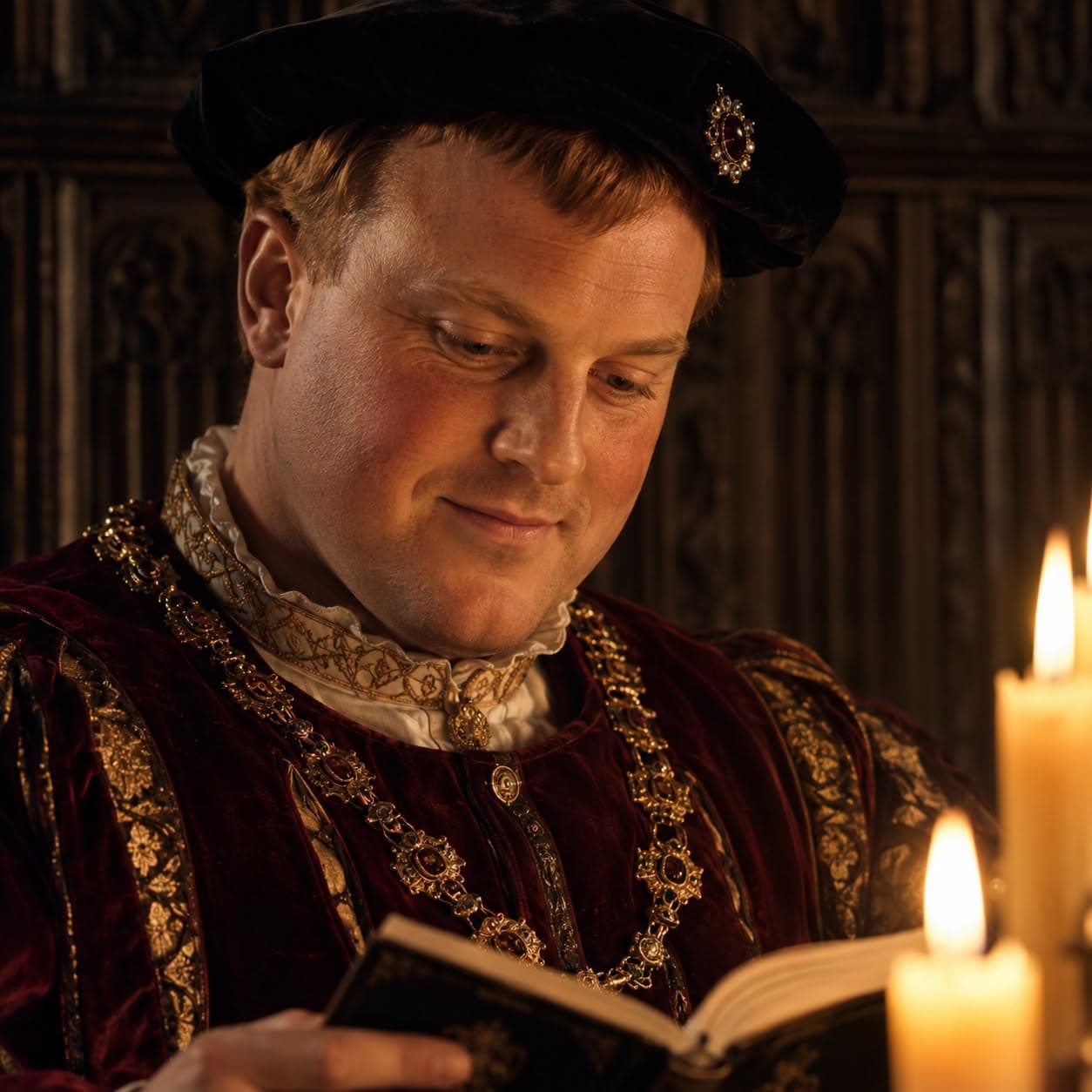
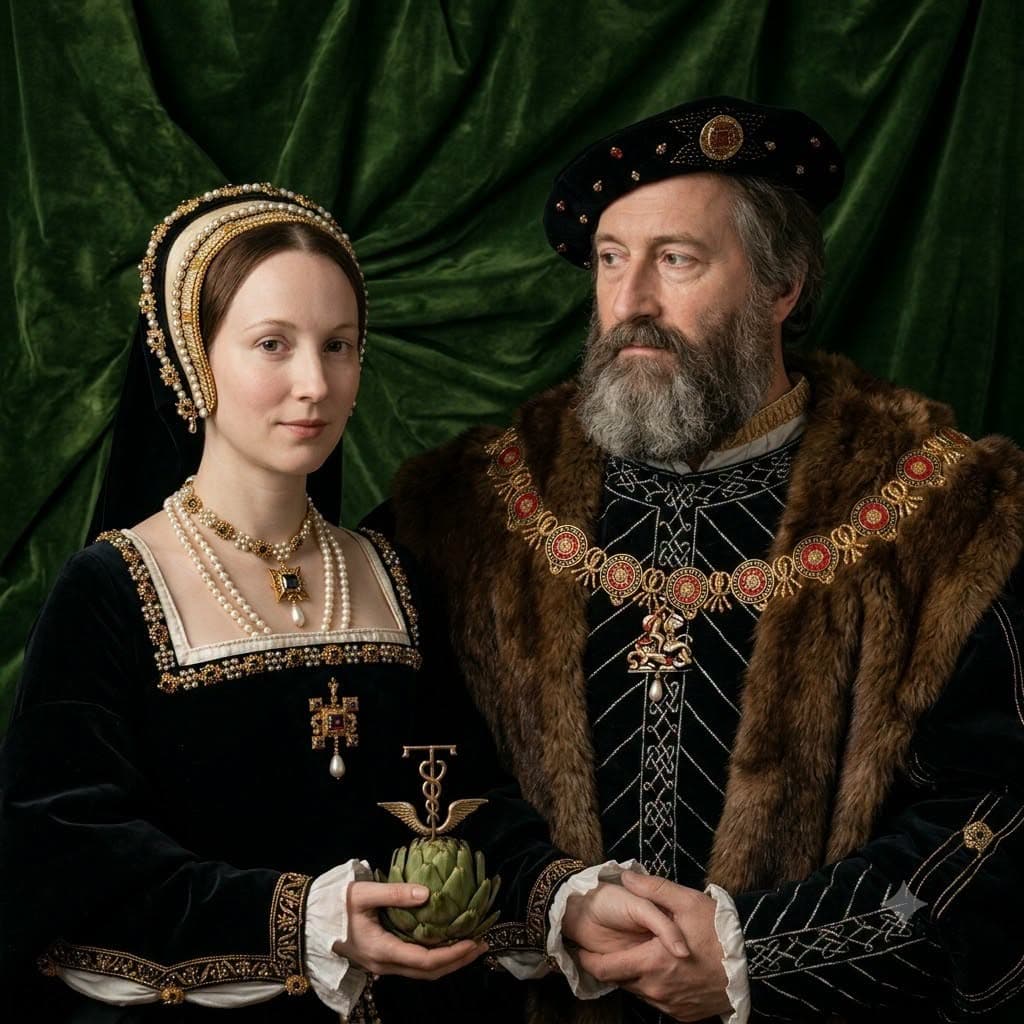
She told her brother she would marry the old French king if he gave her one promise. He promised. She sailed. She kept her word. The question was whether he would keep his.
Mary Tudor was born in 1496, the youngest surviving daughter of Henry VII, and she grew up in the court of her brother Henry VIII with the specific combination of advantages and liabilities that attached to Tudor princesses: beauty that was noted by everyone who described her, intelligence that was noted by fewer, and a body that belonged to the diplomatic requirements of the English crown before it belonged to her. She was described as the most beautiful princess in Christendom. She was also a diplomatic instrument, available for marriage to whoever England most needed as an ally, and in 1514 England needed France.
Louis XII was fifty-two years old. Mary was eighteen. The age gap was the least of it. Louis was gouty, ailing, and had already buried two wives, and the French alliance required an English princess in his bed before winter. Henry VIII agreed. Mary agreed, but she did not agree quietly. Before she left England she stood before her brother and extracted a promise: she would do this for him, she would cross to France and marry Louis and be a French queen, but if Louis died before her she would be free to choose her next husband herself. Henry gave his word. Mary sailed.
The wedding was held on the ninth of October 1514 in Abbeville. Louis was enchanted with his bride. Mary was composed and cordial and gave nothing of what she thought away, which was already a more sophisticated performance than most women twice her age could have managed. She had crossed to France with a household of English ladies around her, familiar faces, the women who had attended her since girlhood, and among them Lady Guilford, who had been her companion and guardian for as long as she could remember.
The morning after the wedding Louis dismissed them. Almost all of them, sent back across the Channel to England on the direct order of the French king, who wanted French ladies around his English wife and not English ones. Mary wept. She wrote to Henry within three days of her wedding, distressed and alone, asking him to send at least some of her women back. Henry did not send them back. He wrote instead with advice about how to manage her new husband.
She was eighteen years old, in a foreign country, married to a man she had not chosen, and the familiar faces were gone. What remained was the French court and its women and a king who was old and unwell and besotted with her, and on the edge of it all the new Dauphin Francis, twenty years old, watching.
Francis became Francis I of France on New Year's Day 1515. He became it sooner than anyone anticipated because Louis XII died on New Year's Day 1515, less than three months after the wedding. The accounts say he danced himself to death trying to keep pace with his young wife. Louis had been dying for years before she arrived. The accounts found it easier to give her the credit.
The French court moved her to the Hotel de Cluny in Paris and dressed her in white from head to toe, the French colour of royal mourning, and there she waited. The waiting was formal and regulated and had a specific purpose: to establish whether the Queen Dowager was carrying the dead king's heir. She had to remain in isolation for the prescribed period, her body once again the property of the diplomatic calculation, this time the French one rather than the English.
Francis came to her. He came more than once, and his visits were not the visits of a new king discharging a duty of care to his predecessor's widow. He replaced what remained of her English household with French women of his own choosing, consolidating the isolation Louis had begun. He raised the question of her remarriage, pressing her toward candidates of his selection, making clear that a beautiful English queen dowager was too valuable a diplomatic asset to be left to her own preferences. He was twenty years old and recently crowned and already understood that Mary in that white room was a piece on a board, and he intended to move her. She received him with the same composure she had shown Louis at Abbeville, gave nothing away, and waited. She had learned, across the months in France, to make patience into a weapon, and she was waiting for a letter from England to tell her whether the weapon she had carried from the dock was still loaded.
From the Hotel de Cluny she wrote Henry. She reminded him of his promise. She had married Louis as he asked and had been a good and loyal wife to a man she had not wanted and had endured the French court alone and had not complained, or had complained only in private, and now Louis was dead and she was sitting in a white room in Paris and she was calling the promise in. She told Henry she had married once for his pleasure and trusted he would now fulfil his promise to her. She told him that if he did not she would enter a religious house and no man would ever have cause to joy of her. It was not a request. It was an ultimatum delivered by an eighteen-year-old widow in mourning white from the Hotel de Cluny, and it had the cold precision of a woman who had planned it from the dock in England and had been waiting three months to deploy it.
Henry sent Charles Brandon.
Brandon was Henry's closest friend, the most accomplished jouster at the English court, a man of spectacular physical gifts and limited caution and almost no legitimate claim to the woman he was being sent to retrieve. He and Mary had almost certainly been in love before she left for France. The promise she had extracted from Henry was almost certainly about Brandon specifically, though neither of them said so directly because saying so directly would have ended the negotiation before it began. Brandon was sent to bring the Dowager Queen of France home to England. He was given specific instructions not to allow personal feeling to complicate the diplomacy. He arrived in Paris in February 1515.
They married in secret at the Hotel de Cluny in March, before ten witnesses, in direct violation of the law that required the king's permission before any marriage to a royal widow could take place. Brandon had been Henry's friend for twenty years and he knew exactly what he was risking. Mary knew exactly what she was risking. They married anyway.
Henry's reaction was fury. The letters he sent to Brandon are the letters of a man who felt genuinely betrayed by someone he loved, which made them more dangerous rather than less. Brandon was threatened with the Tower. The threat was real. Mary wrote to Henry herself, taking responsibility, reminding him of his promise, working the correspondence with the same precision she had worked everything since Abbeville. Henry eventually relented. The price was an enormous fine, thousands of pounds, paid back over years from Brandon's income, a financial penalty that followed them across the next decade. They paid it. They returned to England in May 1515 and were married again publicly at Greenwich, with Henry's blessing, which had been purchased rather than freely given but was his blessing nonetheless.
She had kept her word, crossed to France and married Louis and been a queen for eighty-two days. She had sat in a white room in Paris and written the letter that called the promise in. She had married the man she wanted in secret and paid the fine for it across the next ten years and died in 1533 at thirty-seven years old, at the house in Suffolk where she had lived quietly with Brandon since Henry's patience for their presence at court had worn thin.
She had sailed to France because Henry asked her to and come home because she demanded it, and the difference between those two journeys is the whole of what she managed, in eighteen months, before she was nineteen years old.