Less than a month earlier, she had been godmother to a woman's baby. Now Mary was chief mourner.
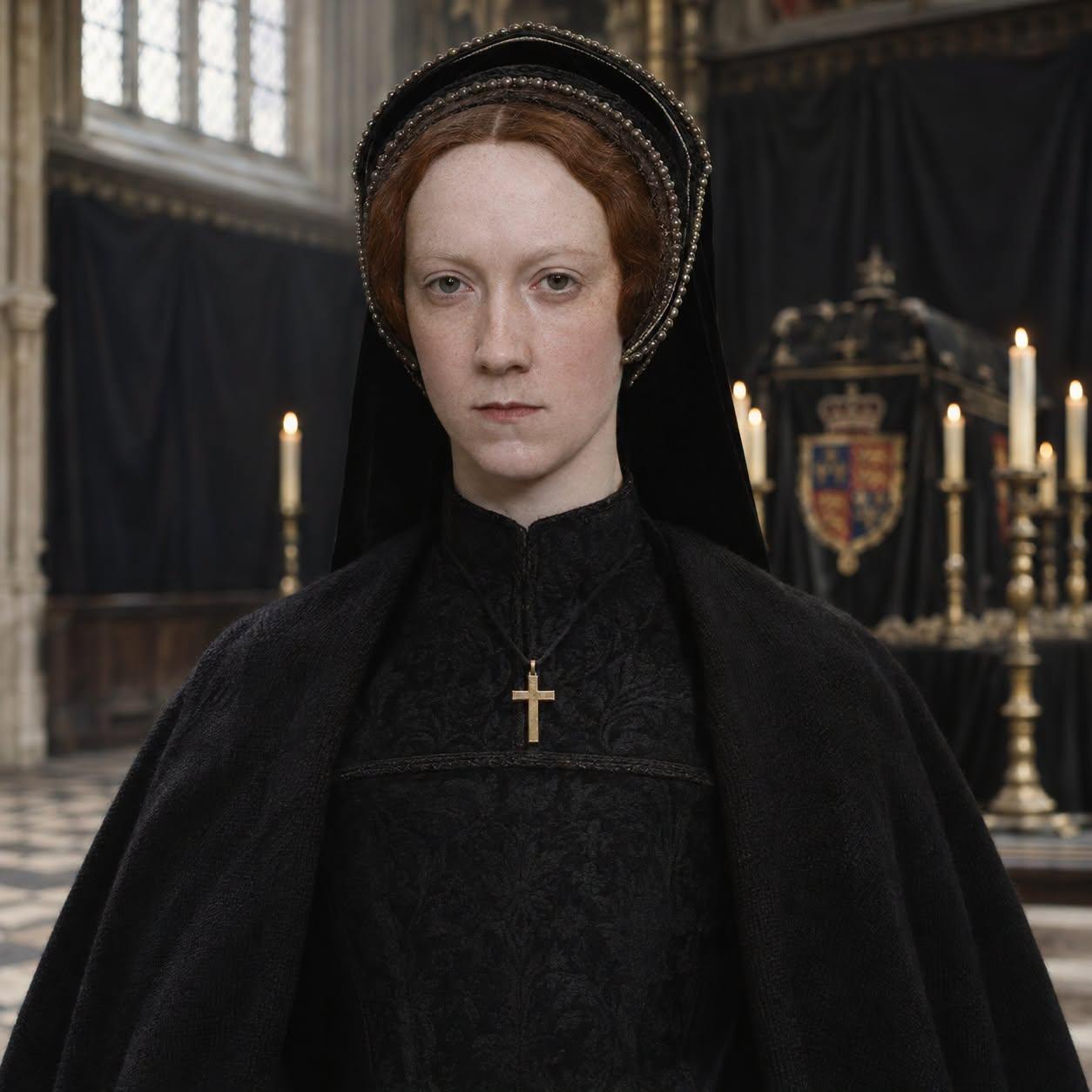
On 8 November 1537, the Bishop of Lincoln officiated in the funeral observances for Jane Seymour at Hampton Court Palace. The queen had died after giving birth to Henry VIII's son, Edward. Jane's coffin lay in the chapel while the services went on, and the king's eldest daughter was her chief mourner. Mary was twenty-one.
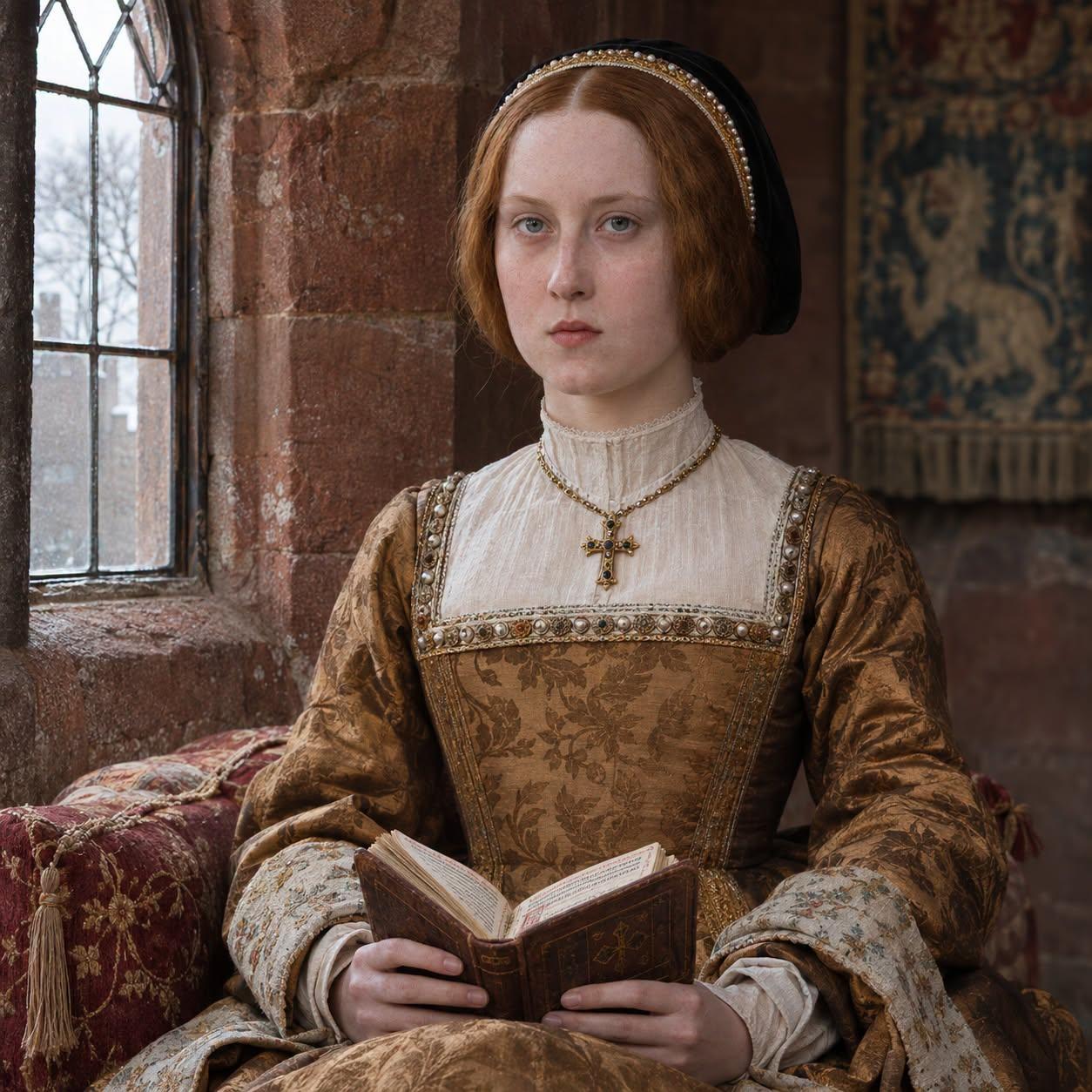
She had not always been welcome in her father's household. She was the daughter of Katherine of Aragon, the wife Henry had set aside to marry Anne Boleyn. When he had his first marriage declared invalid, Mary's position went with it. The princess became the Lady Mary, declared illegitimate and excluded from the succession. She was separated from her mother, and her refusal to accept what had been done to their family became an act of disobedience against the king.
By the summer of 1536, Katherine was dead, Anne had been executed and Henry had married Jane. But the removal of one queen did not mean that Mary could simply return to her father. He required her submission. In June she accepted his supremacy over the English Church and acknowledged the invalidity of her parents' marriage. Reconciliation came at the price of signing away the position she had spent years defending.
Jane supported bringing her back. When she spoke to Henry on Mary's behalf, he warned her to concern herself with the children they would have together, rather than his daughter. The new queen had married a man who could make a family matter into a question of obedience to the crown. She could ask him to be kinder. She could not compel him.
In July, Mary was reunited with her father. Jane gave her a diamond. It was a small, personal welcome after a submission that had been anything but personal. Mary had been received into the family again, although she had not been restored to the succession. There was room for her at court, provided the terms remained her father's.
There was also a friendship with Jane. During the queen's pregnancy, Mary sent her cucumbers, one of the foods she wanted. Jane had once served Katherine of Aragon; now Katherine's daughter was sending something for her table. The relationship had ordinary gestures in it, alongside the negotiations over Mary's place in the royal family.
Then, on 12 October 1537, Jane gave birth to a son at Hampton Court. Three days later, Edward was carried to the Chapel Royal for his christening. A raised font had been prepared for the ceremony. Mary stood as his godmother, with her younger half-sister Elizabeth also present. Neither Henry nor Jane attended, as was customary. Afterwards, the child was taken back to his mother's apartments.
Mary had a brother, and the queen who had welcomed her had a son. For Henry, the succession at last had the male heir he had wanted.
Jane died on 24 October, twelve days after the birth.
The preparations at Hampton Court changed. Two days after her death, the queen's ladies put aside their rich clothes and put on mourning, with white kerchiefs hanging over their heads and shoulders, and knelt about the hearse in the presence chamber through the masses and the dirges. On 31 October her body was carried to the chapel. Black cloth had been hung through the great chamber, the galleries leading to the chapel and the chapel itself. The rooms in which the court had celebrated Edward's birth were being prepared for his mother's departure.
Mary was unwell on the day of that procession, and the Marchioness of Exeter walked in her place. Even illness had to be accommodated within the order of the ceremony. Mary's duties extended through the days of waiting that followed. Priests, gentlemen ushers and officers of arms kept watch in the chapel at night; early in the morning, ladies relieved them. Being chief mourner was a place of honour, but it also meant repeated attendance upon the dead queen.
The services continued under a succession of bishops and abbots. Masses were said and prayers offered for Jane's soul. Henry had broken with Rome, but the queen's death was still marked by the familiar observances of prayer, watching and offerings. Mary, whose resistance to her father's religious changes had helped estrange them, was now publicly serving his dead wife.
Jane had not undone the conditions of Mary's return. What she had done was speak for her, welcome her and make a place for affection inside those conditions.
On 12 November the procession finally left for Windsor. Jane's coffin travelled in a chariot covered in black velvet and drawn by six horses, with a figure of the queen in her robes and a gold crown lying on it. Mary followed on horseback, her horse draped in black velvet. Less than a month earlier she had stood godmother to Jane's child in the Chapel Royal. Now she rode behind his mother's coffin. Edward was one month old that day.