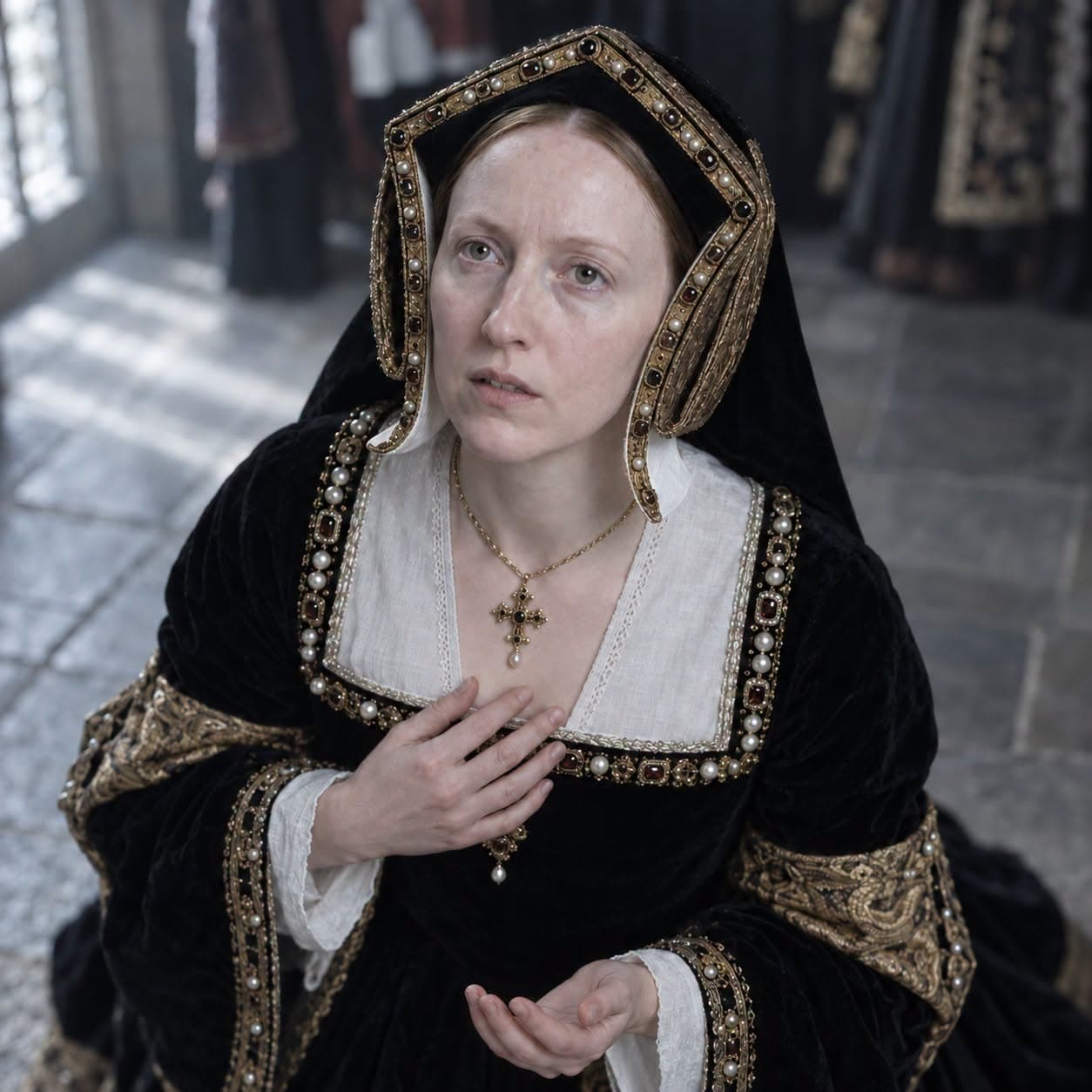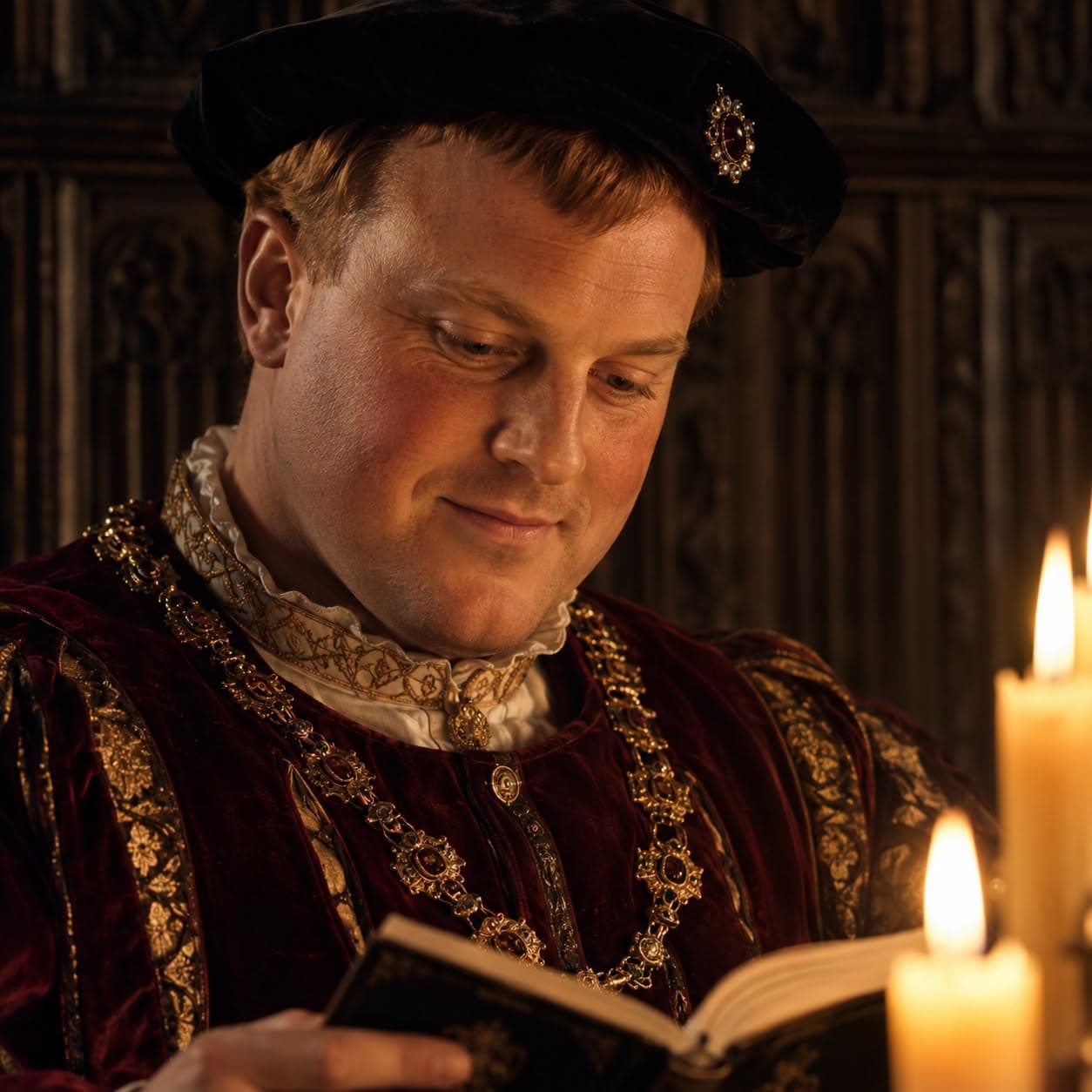
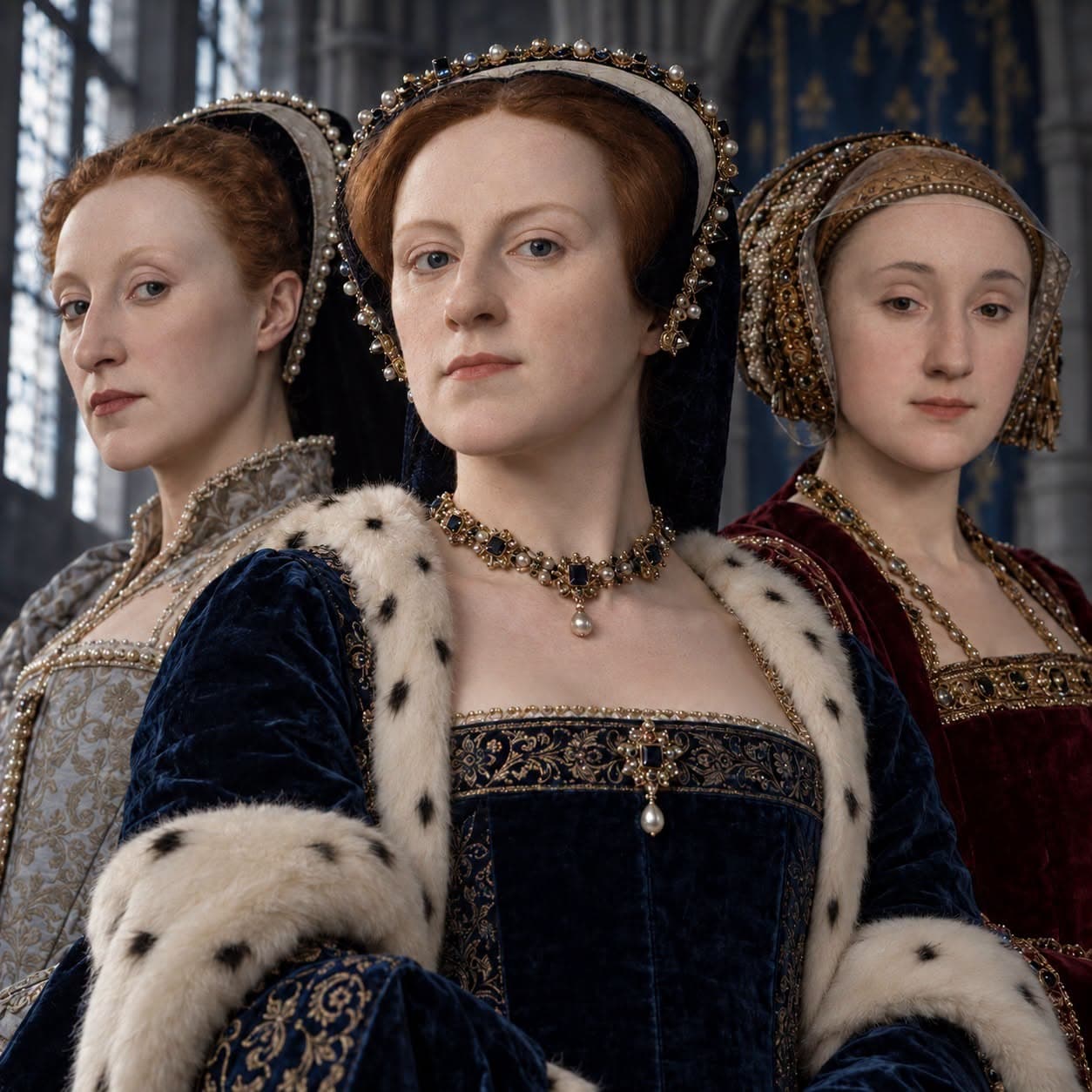
Two illegitimate daughters and an ex-wife arrived at the abbey to do something that had never been done before: crown a woman who would rule in her own right.
At about eleven o'clock on Sunday, 1 October 1553, Mary Tudor left the old Palace of Westminster and began the walk towards the abbey. Blue cloth had been laid beneath her feet and railed off on either side. She wore blue velvet lined with powdered ermine, with a jewelled circlet upon her head. Ahead of her went the swords, sceptres and other objects through which England represented royal authority. Behind her came two women who understood how suddenly that authority could alter a life.
The first was Mary's younger half-sister Elizabeth, the daughter of Anne Boleyn. The second was Anne of Cleves, Henry VIII's repudiated fourth wife.
Mary and Elizabeth had both been declared illegitimate during their father's reign. Parliament had restored them to the succession, but not to legitimacy. Anne had arrived in England as a foreign princess chosen to become queen, only to have her marriage annulled after six months. She had retained wealth, precedence and the title of the king's "beloved sister", but she had never been crowned.
Now Anne walked into Westminster Abbey to witness the ceremony she had never received. Beside her was Elizabeth, who had no reason to know that she would return to the same church for her own coronation little more than five years later.
Ahead of them walked the woman who had changed what was possible for both.
England had crowned many queens before Mary, but always as the wives of kings. Their authority came through marriage, and their ceremonies were designed to make them companions to male sovereigns. The fourteenth-century Liber Regalis, which supplied the order for Tudor coronations, explained how to crown a king and how to crown his consort. It contained no separate order devised for a woman who possessed the powers of the Crown herself.
Mary was not a consort. There would be no king beside her from whom her title could be derived. The swords carried before her, the oath she would swear and the homage she would receive all belonged to her.
Parliament would not meet until 5 October, four days after the coronation, and would then pass an act declaring that Mary had been born in a lawful marriage. She claimed the throne by hereditary right, and the coronation went ahead before Parliament met.
The woman who entered the abbey was therefore still illegitimate in English law. That law had not prevented her from inheriting the Crown. Nor would it prevent the Church from anointing her.
The first crucial moment came through sound.
Mary was presented to those assembled inside the abbey, and the question was asked whether any man could show cause why she should not be crowned. The answer rose around her from every part of the church:
"Queen Mary!"
Only weeks earlier, councillors and nobles had attempted to divert the succession away from her. Mary had responded by gathering supporters and asserting her claim. Towns opened their gates to her. Men came to her with weapons, horses and money. The government assembled against her collapsed, and London proclaimed her queen. Now the recognition was repeated inside the coronation church, not as a hurried proclamation in a moment of crisis but as part of the sacred ritual of monarchy.
Stephen Gardiner, Bishop of Winchester, officiated. He too embodied the reversal that had carried Mary to the altar. Imprisoned during Edward VI's reign, Gardiner had been released after Mary's accession and restored to prominence. The bishop whom the previous government had confined now stood ready to anoint the woman it had tried to exclude.
Mary had taken particular care over the oil. She considered the existing supply religiously compromised because it had been consecrated under the Protestant order of Edward VI. Fresh oil was brought from the Bishop of Arras in the Low Countries. England was about to anoint its first reigning queen, and Mary insisted that the sacrament should be valid according to the faith in which she understood monarchy itself.
She withdrew with her ladies and changed into a purple velvet petticoat. Before the altar she was anointed on her body as well as her head. The ceremony did not merely place ornaments around her. Sacred oil touched the woman whom her father had once ordered to acknowledge that she was not his lawful daughter.
Mary received the spurs and sword associated with kingship. The coronation ring was placed upon her finger. She received the sceptre and the orb. The objects placed into her hands reflected the problem the ceremony was solving. She was both a woman and the sovereign.
Then came the crowns.
Three crowns were brought to Mary. The first was associated with Edward the Confessor and connected her to the sacred line of English kings. The second was the imperial crown of the realm, expressing the independence and completeness of English sovereignty. The third was a rich new crown made specifically for her.
Gardiner placed them upon Mary's head one after another.
The sequence joined old monarchy to a new reality. Edward the Confessor's crown carried the authority of the past. The imperial crown declared that Mary possessed the whole power of the realm. The crown made for her acknowledged that England had never performed this act for anyone quite like her.
Elizabeth watched her sister receive all three.
Five years later, Elizabeth would face the same fundamental question. She too would rule without inheriting authority through a husband. She too would need councillors, clergy and subjects to accept that the powers exercised by kings could reside entire in a woman. When Elizabeth entered Westminster Abbey for her own coronation in January 1559, she did not enter an untouched field. Mary had already established that a woman could be recognised, anointed and invested with the full regalia of English sovereignty.
Anne of Cleves was watching something different.
She had once been called Queen of England, but her queenship had ended before any coronation took place. Henry VIII had discarded her, yet she had remained in the country and built a secure position within the royal family that replaced marriage with survival. On 1 October, she saw her former stepdaughter crowned not as the wife of a ruler but as the ruler herself.
Anne and Elizabeth remained prominent when the abbey ceremony ended late in the afternoon. Mary proceeded into Westminster Hall wearing her robes of state and a crown, followed by earls and countesses in their own coronets.
The coronation banquet transformed the hall into a theatre of government. Great officers moved through it on horseback. The Duke of Norfolk rode up and down beneath the vast timber roof. The Earl of Arundel also remained mounted while the Knights of the Bath carried the dishes. Mary sat beneath the cloth of state at the high table.
Elizabeth and Anne of Cleves dined together at the same table, a respectful distance from the queen.
They were not hidden among the lesser guests. The queen's heir and the former wife of Henry VIII occupied a visible place within Mary's new court. For that day at least, Henry's divided family had been rearranged around female authority. A discarded wife sat beside one illegitimate daughter while the other presided over England.
When the banquet was ending, the doors opened for another ceremony.
An armed knight entered Westminster Hall upon a Spanish horse. This was Edward Dymoke, the Queen's Champion. He rode into the hall in full armour and cast down his gauntlet. A herald proclaimed a challenge to anyone who denied Mary's right to the Crown. Whoever disputed it could pick up the glove and meet the champion in single combat.
No one moved.
The challenge transformed the uncertainties of the preceding months into a physical object lying upon the floor. Mary had been declared illegitimate. Her place in the succession had been disputed. Her sex had forced England to reconsider the forms through which monarchy was expressed. Yet in Westminster Hall, before the queen, her sister, Anne of Cleves, the nobility and the officers of the realm, no one accepted the invitation to deny her.
Mary rewarded Dymoke with a gold cup.
Mary could not know what her reign would bring. She did not know whether she would marry, whether she would bear a child or whether Elizabeth would eventually inherit what had been created that day. Anne did not know that she would be given an honourable burial in Westminster Abbey nearly four years later.
What had been settled was Mary's possession of the Crown. England had found a way to place the sword in a woman's hands, anoint her body, crown her three times and receive her as its sovereign. The ceremony designed for kings had not diminished her into a consort. It had expanded around her.
On the floor of Westminster Hall, the Champion's challenge lay unanswered.