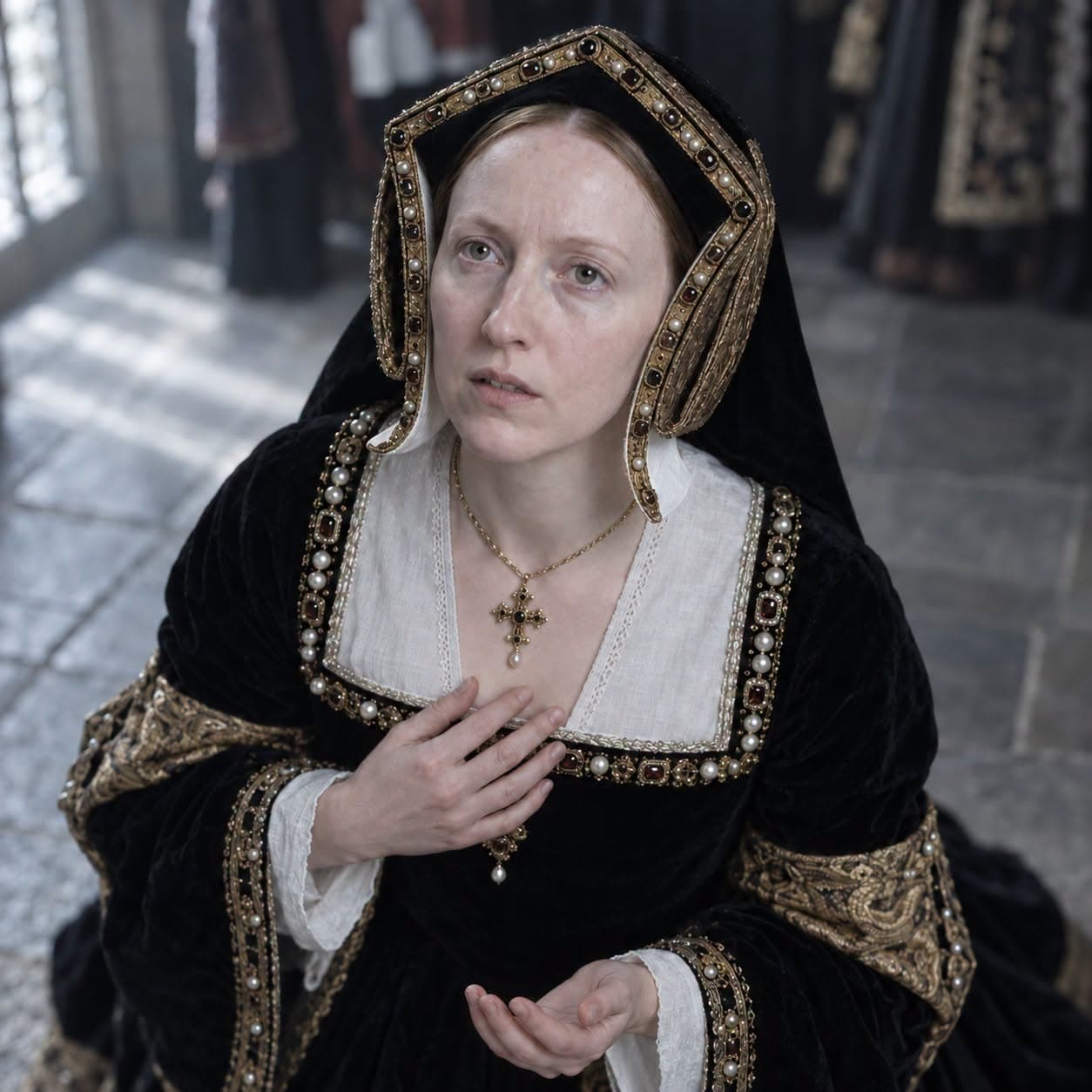
They promised her honour, then locked the Queen of Scotland on an island. She had not abdicated. The boat returned to the mainland without her.
On the morning of the fifteenth of June 1567, Mary Stuart rode out with an army and a husband whose presence beside her had made almost every powerful man in Scotland her enemy. Four months earlier, her second husband Henry Stuart, Lord Darnley, had been found dead in a garden at Kirk o’ Field after the house in which he had been sleeping was destroyed by an explosion. Suspicion had gathered around James Hepburn, Earl of Bothwell, with a speed that his acquittal in April did nothing to slow. Mary married him on the fifteenth of May.
Whether she had been abducted and coerced, had consented under pressure, or had chosen the marriage more freely than her defenders later wished to admit has never been resolved. What the marriage did politically is considerably clearer. It gave the men already hostile to Bothwell a cause large enough to raise an army around.
They called themselves the Confederate Lords. They claimed to be acting for the safety of Mary’s infant son James and to avenge the murder of his father. Their standard carried the argument before them wherever they went: Darnley’s dead body lying beneath a tree, the child James kneeling nearby, and words issuing from the infant prince asking God to judge and avenge his father’s death.
Mary’s own son had been placed on a banner and made to accuse his mother before he was old enough to speak.
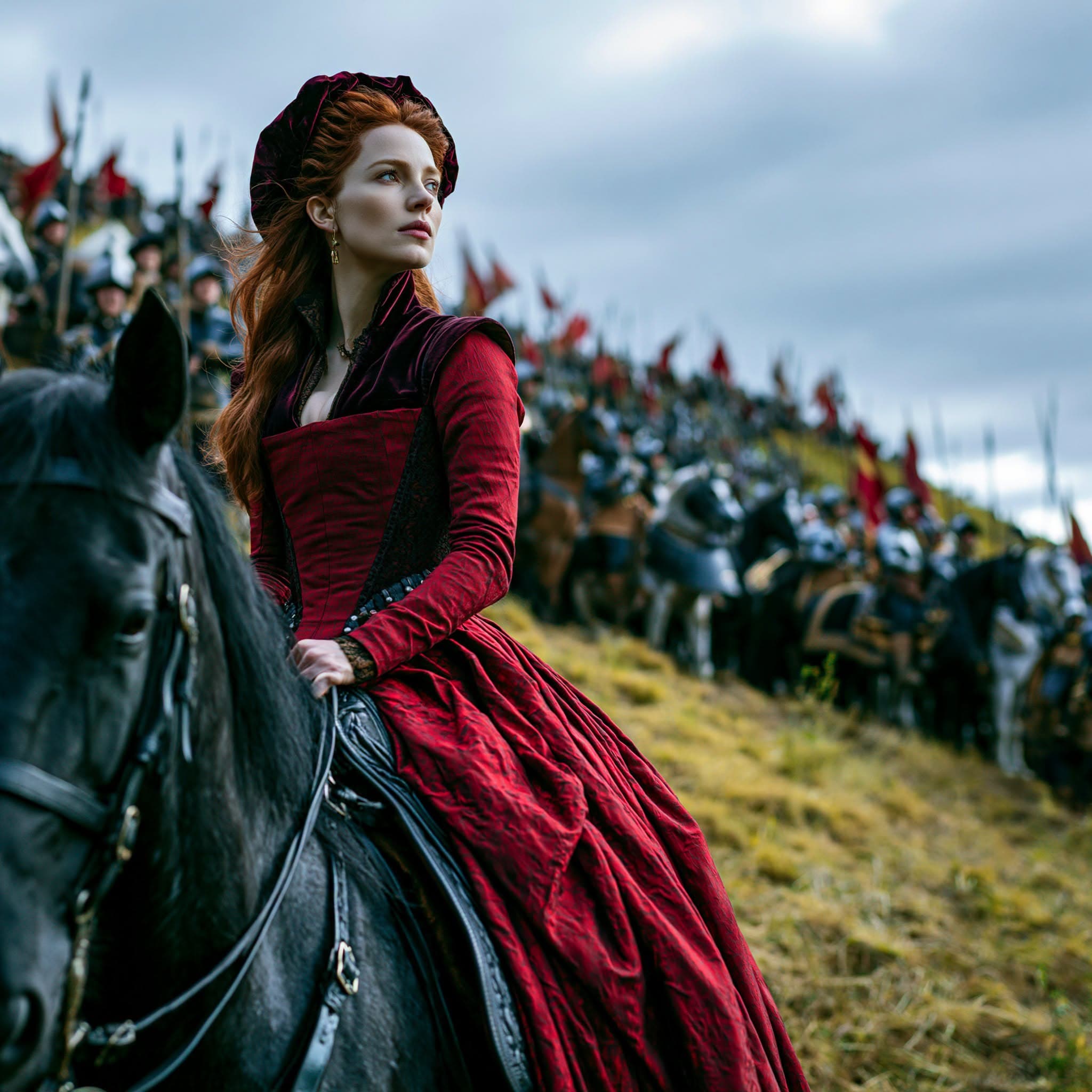
Mary and Bothwell left Fa’side Castle and took their position at Carberry Hill, a few miles east of Edinburgh. Her force numbered approximately two thousand men, with cannon, pikes and arquebusiers brought from Dunbar. William Drury, Marshal of Berwick, reported that the queen was dressed after the fashion of the women of Edinburgh, in a red petticoat, sleeves tied with points, a partlet, velvet hat and muffler. She had ridden out to preserve a crown, but there was little royal pageantry left in the appearance of the woman waiting on the hill.
The battle did not begin. The two forces faced one another through the heat while negotiations passed between them and the hours wore down the loyalty of the men surrounding Mary. She urged her soldiers to fight, but the army below was not moving and the army beside her was beginning to dissolve.
Men left the hill. Some asked forgiveness before riding away. Others simply adjusted themselves to the conclusion becoming visible around them. Mary could still give orders, but an order becomes something different when the people expected to obey it have started calculating how they will explain their obedience afterward.
William Kirkcaldy of Grange came forward to negotiate. He had opposed Bothwell, but he represented assurances that if Bothwell were allowed to depart and Mary placed herself in the hands of the lords, she would be treated with the honour owed to her as queen. Mary agreed. Bothwell rode towards Dunbar with a small company of horsemen. She remained behind with the men who had risen against them.
She never saw Bothwell again.
Kirkcaldy took her horse by the bridle and led her down from Carberry Hill. The Confederate Lords received her beneath the banner depicting Darnley’s corpse and her kneeling child. Mary had surrendered her army in exchange for assurances concerning her person and authority. The lords accepted the surrender and began deciding what those assurances would mean now that the soldiers behind her were gone.
They brought her into Edinburgh at approximately ten that night. She had returned to her capital many times through streets prepared to receive a queen, with bells, torches, household officers and the formal movement of a royal retinue. This time she entered among armed men while hostile voices rose around her.
She was taken not to Holyrood Palace, where her household and the physical machinery of monarchy waited, but to the town residence of Sir Simon Preston, Provost of Edinburgh, on the north side of the High Street opposite the Mercat Cross. Guards controlled the doors. Mary was denied ordinary access to her attendants, while the men directing events elsewhere in the city no longer required her presence or consent.
She had surrendered herself to nobles who had promised to honour their queen. Within hours they were treating queenship as a title she possessed and authority as something they possessed separately from it.
The banner followed her into Edinburgh. It had confronted her at Carberry and was now displayed near the house in which she was held, where the people of the capital could see it. The image supplied a complete political story before any hearing had taken place. Darnley was the murdered father. James was the injured son. The lords were the instruments of vengeance. Mary occupied the only position the picture had left available to her.
The most immediate surviving description of the hours that followed came from John Beaton, one of Mary’s supporters, writing on the seventeenth of June while the events were still unfolding. According to Beaton, Mary came repeatedly to a window overlooking the High Street and cried out that she was being held prisoner by her own subjects, who had betrayed her. Her hair hung loose around her. Her clothing was so disordered that much of her upper body was uncovered. Beaton wrote that the sight moved those who witnessed it to pity and compassion, and that he could not bring himself to go and look.
Mary had spent much of her life understanding that sovereignty was performed through controlled entrances, measured gestures, magnificent clothing and the physical distance maintained between the monarch and everyone watching. At the window of the Provost’s house, that distance had collapsed. She was visible to the people of Edinburgh but could not reach them. She could call herself their queen, and the armed men inside the house could decide whether anyone was permitted to answer.
The lords had not deposed her. They had not convened a trial over Darnley’s death or presented evidence upon which a legal judgement might rest. Mary remained the crowned and anointed monarch of Scotland, yet her own attendants were kept from her and no visitor was permitted to speak with her. The title remained intact while the powers attached to it were removed one by one.
Mary continued trying to use what authority remained available. Shortly before she was taken from the house, she managed to call one of her maids while attending to her private needs. She instructed the woman to send a secure message to James Balfour, captain of Edinburgh Castle, ordering him to remain faithful and not surrender the fortress to the Confederate Lords wherever they might take her. She also asked that Maitland of Lethington be urged to show her pity and not remain so extreme against her.
Even in a guarded room, denied access to her household and displayed beneath a banner that had already judged her, Mary was attempting to hold the principal fortress of her capital in the name of the crown. The men around her were treating her reign as finished. She had not accepted that it was.
At approximately nine on the evening of the sixteenth of June, after almost a day inside the Provost’s lodging, Mary was brought back into the High Street. The Earl of Atholl was on one side of her and the Earl of Morton on the other, with several hundred armed men surrounding them. Approximately eighty arquebusiers marched ahead. Among them was carried the same banner showing Darnley beneath the tree and the infant James demanding vengeance.
Her son’s painted accusation went before her as she was escorted through her own capital.
They took Mary down the High Street to Holyrood. It had been the centre of her court and government. She was permitted to enter her own palace for approximately an hour, but she was not permitted to remain.
Afterward they placed her on horseback and took her out of Edinburgh. She was moved through the night towards Loch Leven in Kinross-shire. The surviving account does not preserve what she said on the road, whether she was told precisely where she was being taken, or when she understood that the assurances given at Carberry had ceased to protect her.
By the seventeenth of June, Mary had reached Lochleven Castle. She had visited the Douglas stronghold before as a guest. She now arrived as the prisoner of Sir William Douglas, whose family connections placed the castle firmly within the political network of the men who had removed her.
The distinction between guest and prisoner did not depend on the rooms she occupied. It depended on who controlled the boat.
In Mary’s time the island was much smaller than it appears today, little more than the castle enclosure and a narrow garden rising from the water. No army could ride directly to its gates. No crowd could gather beneath its windows. Every message, visitor, servant and attempt at departure had to cross the loch under the eyes of the people holding her.
At Carberry Hill, Kirkcaldy had taken her horse by the bridle under assurances that she would be treated with honour. In Edinburgh, the lords had placed her infant son’s painted accusation beneath her window. At Lochleven, the boat returned to the mainland without her.
She was still Queen of Scotland. There was still no road off the island.