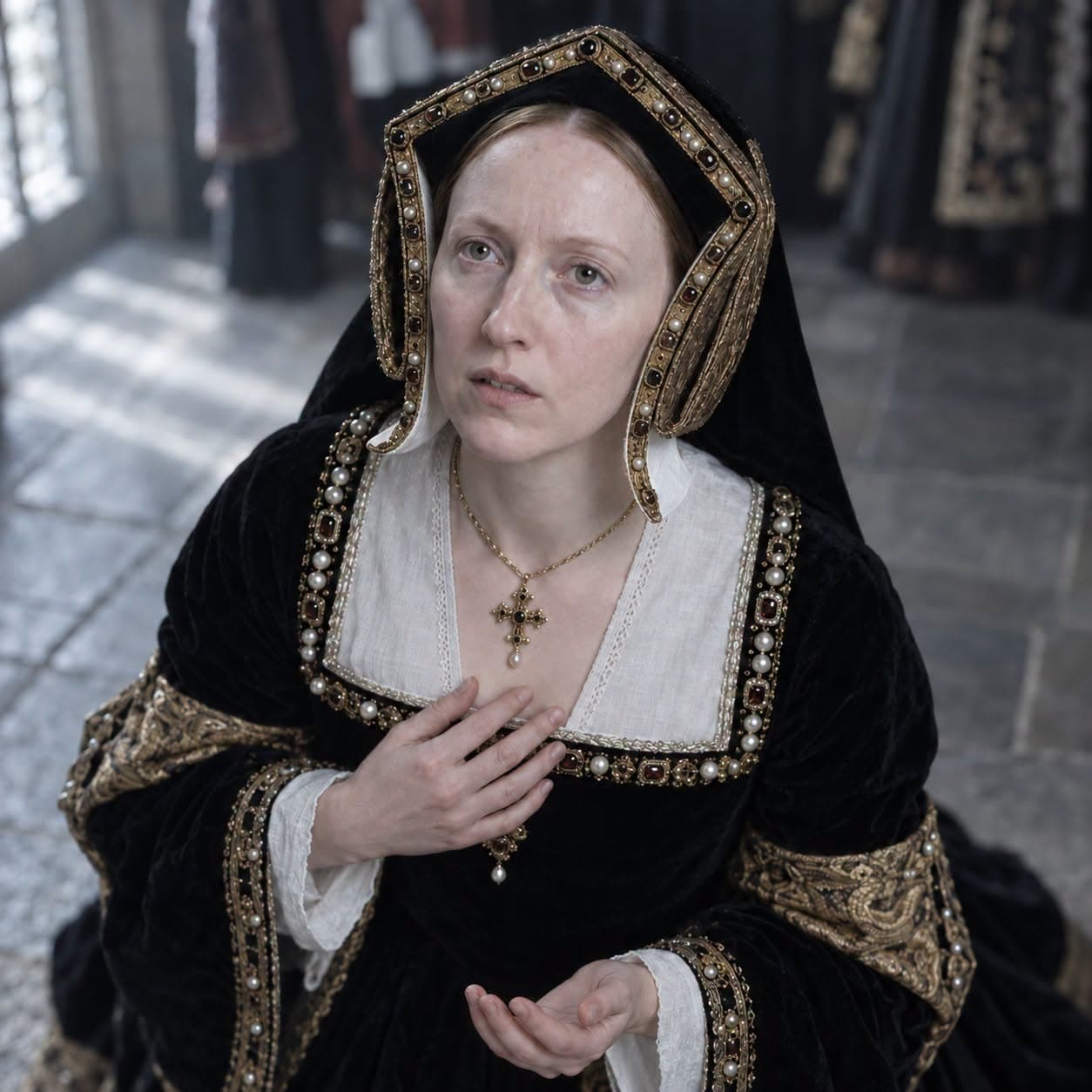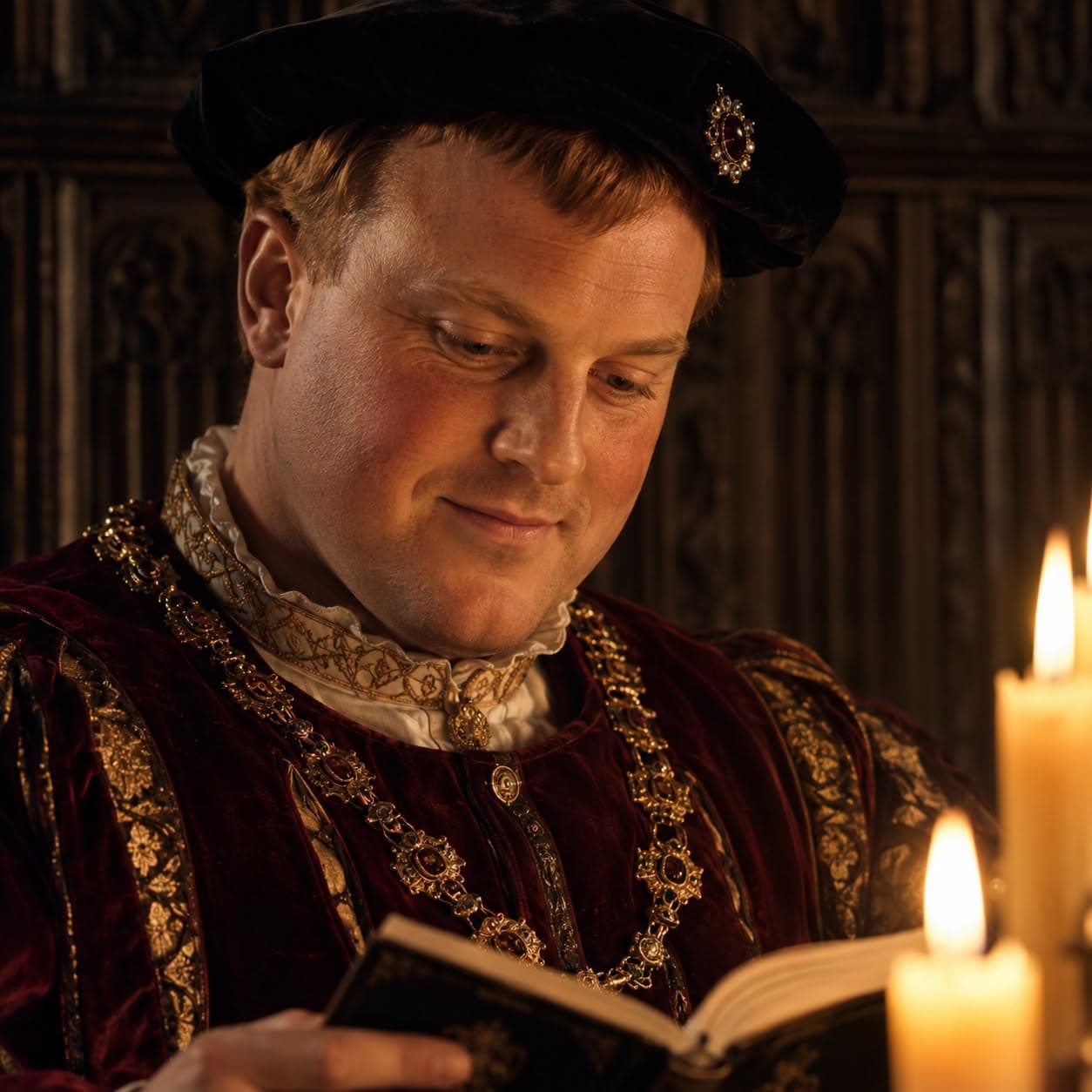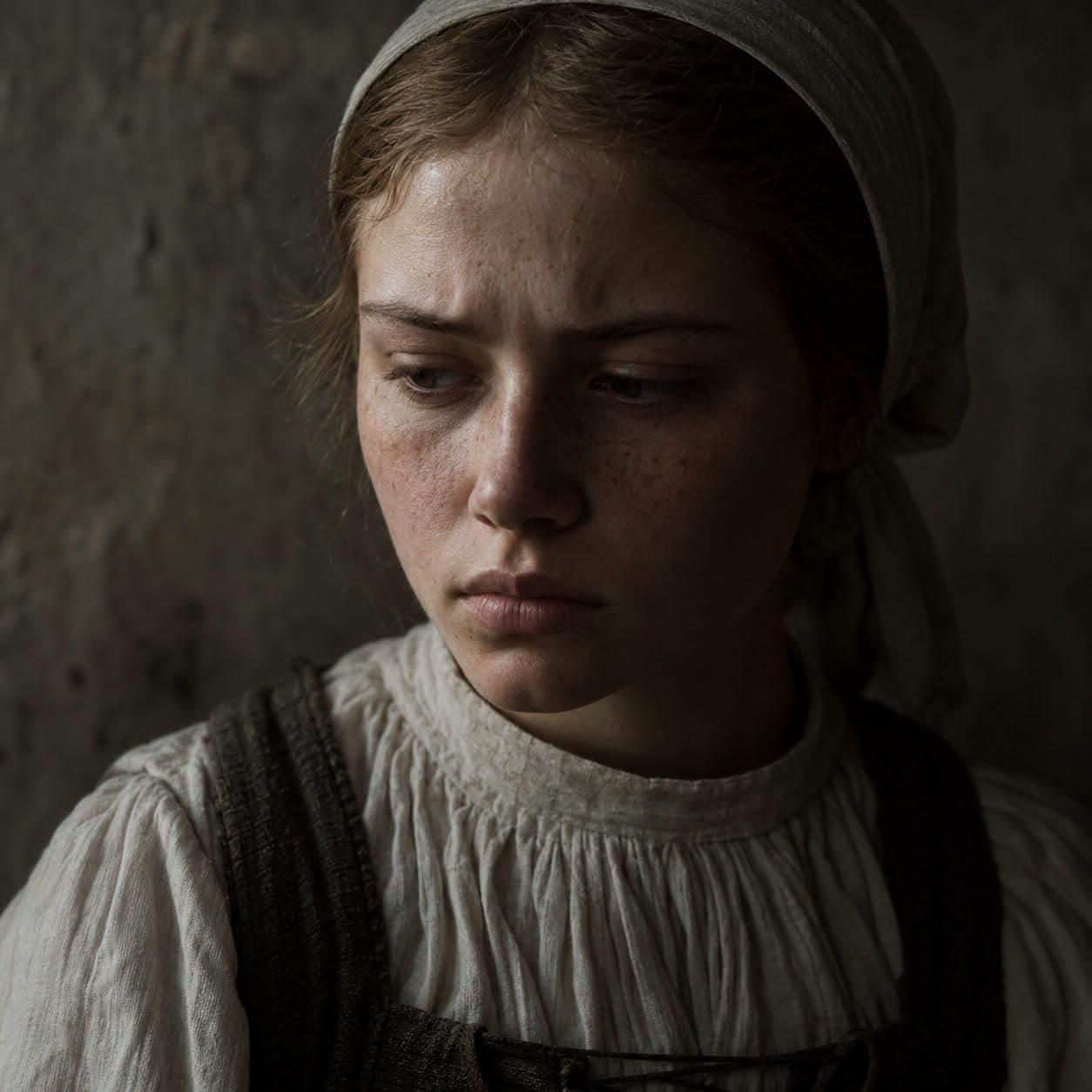
She crossed into England in a fishing boat at twenty-five and wrote to her cousin asking for help. She would not leave for nineteen years. She would not leave alive.
Mary Stuart was born on the eighth of December 1542 at Linlithgow Palace, the daughter of James V of Scotland and Mary of Guise. Her father died six days later. She was Queen of Scotland before she could lift her own head. She was sent to France at five years old for her own safety, raised at the French court, educated as a future queen consort, and in 1558 married Francis, the Dauphin of France, who became Francis II in 1559 and died in 1560, leaving Mary a widow at eighteen with a kingdom she had not grown up in waiting for her return.
She went back to Scotland in 1561 and found a country transformed. The Reformation had arrived in her absence. Scotland was now Protestant, its nobility hostile to her Catholicism, its most powerful preacher John Knox openly contemptuous of female rule and Catholic queens specifically. She governed with more skill and more restraint than the situation deserved, but the situation did not reward skill or restraint. In 1565 she married Henry Stuart, Lord Darnley, vain and violent and politically catastrophic, a choice made for dynastic reasons that rapidly became personal disaster. Darnley participated in the murder of her secretary David Rizzio in front of her while she was pregnant. In 1567 Darnley was found dead in the garden of Kirk o' Field, the house he had been sleeping in having been destroyed by an explosion. Mary married James Hepburn, Earl of Bothwell, three months later, a man implicated in Darnley's death, whether by compulsion or complicity the record does not resolve. The Scottish nobility rose against her. She was imprisoned at Lochleven Castle, forced to abdicate in favour of her infant son James, and escaped in 1568 to cross the border into England and write the letter that changed nothing.
Elizabeth's response to that letter was immediate and careful and entirely consistent with the nineteen years that followed. She did not receive Mary. She did not grant the asylum Mary had asked for. She convened a tribunal to examine the charges the Scottish lords had brought against Mary, the murder of Darnley, the marriage to Bothwell, and then suspended the tribunal without reaching a verdict, which meant Mary was neither cleared nor convicted and could therefore be held indefinitely without either justification or resolution. It was a mechanism, not a judgement. Elizabeth had found the legal posture that allowed her to do what she had already decided to do, and she held it for nineteen years.
Mary was moved between houses and castles and custodians for nearly two decades, Bolton Castle, Tutbury, Wingfield Manor, Sheffield Castle, Chartley. The conditions varied. The principle did not. She was a queen without a country, a prisoner without a charge, a woman whose continued existence was a political problem Elizabeth had decided to manage rather than resolve.
Every proposal that might have ended the situation was raised and blocked. A negotiated return to Scotland was proposed and refused. A joint rule with her son James was discussed and withdrawn. Catholic Europe petitioned for her release and was ignored. Mary herself wrote hundreds of letters, negotiated through intermediaries, involved herself in plots both real and invented, because involvement in plots was the only agency available to a woman who had been given no legitimate route to freedom and had been waiting for nineteen years.
The plots gave Elizabeth what she needed. The Babington Plot of 1586 provided documented evidence of Mary's involvement in a scheme to assassinate Elizabeth and place Mary on the English throne. Elizabeth's spymaster Francis Walsingham had controlled Mary's letters in and out of Chartley throughout, and what the letters were made to show and what Mary actually directed are questions the evidence does not answer cleanly.
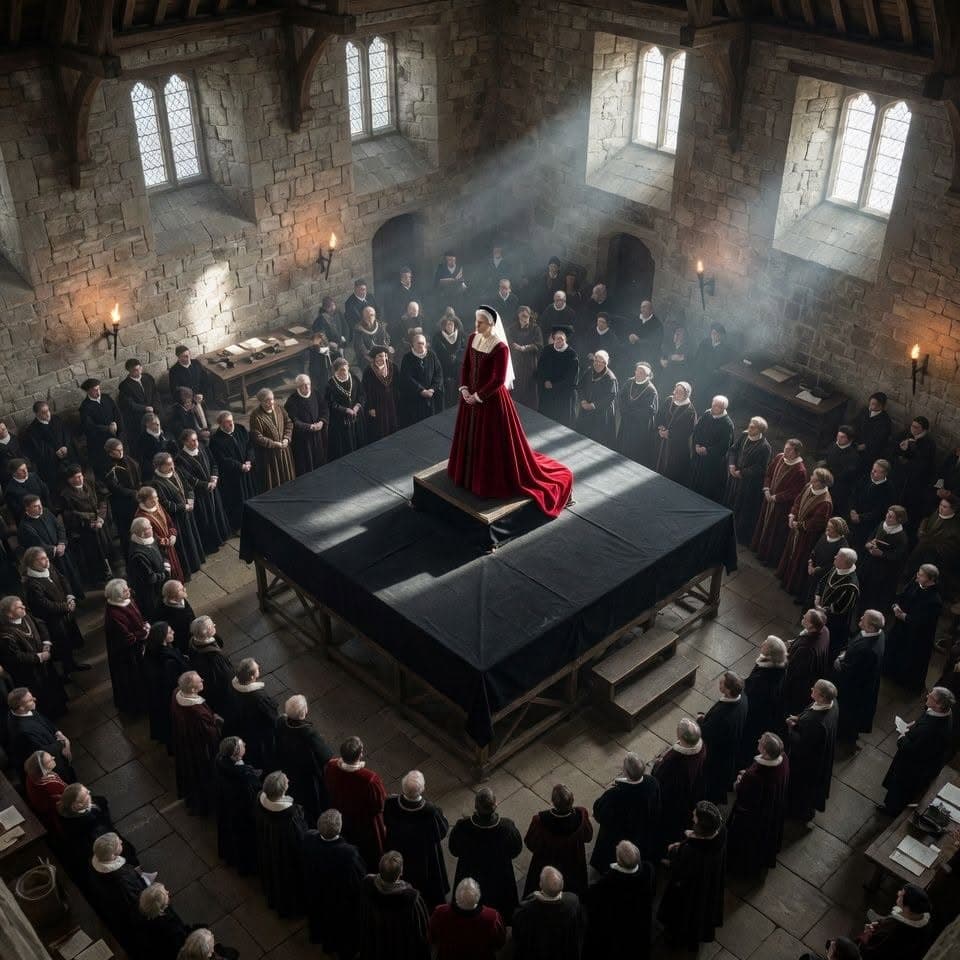
Elizabeth had the warrant drawn up. She signed it. She then gave it to her secretary William Davison with instructions that what Elizabeth said to Davison about when and whether to use it is not cleanly documented, and her subsequent claim that she had not intended it to be acted upon sits against the fact that she had signed it and held the situation for nineteen years before doing so. The warrant was used. Mary was executed at Fotheringhay Castle on the eighth of February 1587. Elizabeth imprisoned Davison for acting on the warrant she had signed.
Mary died with a composure that her executioners found unsettling. She dressed in crimson, the Catholic colour of martyrdom. She prayed aloud. The first blow of the axe missed cleanly and struck the back of her head. It took three blows. She was forty-four years old and she had been a prisoner for nineteen years and she died as she had lived in England, which is to say without the resolution of anything.
Elizabeth wept when she heard the news. Her court did not believe the tears, or believed them and found them insufficient, because whatever Elizabeth felt about Mary's death she had signed the warrant and held it for nineteen years before using it and the feelings she displayed afterward did not change the sequence of those facts.
And then there was James.
James VI of Scotland was fourteen months old when his mother abdicated and he became king. He had been raised by regents, educated by George Buchanan who despised his mother, taught from infancy to understand his throne as something he held separately from her rather than through her. He had not grown up with Mary. He had grown up with the version of Mary his regents needed him to believe in, which was the version that justified everything they had done in her name and at her expense.
When James was nineteen years old, in July 1586, he signed the Treaty of Berwick with England. The treaty was a defensive alliance. It also came with a pension of four thousand pounds a year from Elizabeth. Seven months later his mother was executed. James had been negotiating with Elizabeth throughout the months the warrant was being prepared, and what he demanded for his mother's life, what he accepted in exchange for not demanding more, sits in the record as a series of diplomatic letters that resolved quickly into the same functional relationship with Elizabeth he had maintained before her death. He accepted the pension. He continued to receive it. His formal protests after the execution were brief and diplomatic and resolved within months.
Mary wrote to her son in the weeks before her death. She asked him to avenge her. She told him she was dying for her religion and her God. She addressed him as her son and wrote to him with the intimacy of a mother who had spent nineteen years hoping the relationship was real. James did not reply before her execution. He was pursuing a negotiation with Elizabeth about his own position in the English succession and he did not allow his mother's death to interrupt it for long.
He became James I of England in 1603, inheriting the throne Elizabeth had held while his mother died waiting for its resolution. Nine years later he had Mary's body exhumed from Peterborough Cathedral, where she had been buried after her execution, and moved to Westminster Abbey. He commissioned an elaborate marble tomb, one of the finest in the Abbey, and had her effigy carved in white marble with her arms at her sides and her eyes closed and her face at rest in the specific peace of a woman who in life had not been permitted any. Then he commissioned Elizabeth's monument and placed it in the opposite aisle of the same chapel, the two queens facing each other across Henry VII's Lady Chapel for eternity, the woman who held the warrant and the woman who died on it, separated by the width of a room neither of them had ever shared in life.
The tomb is magnificent. It cost him nothing that mattered. The mother inside it had written him letters he had not answered and asked for an intervention he had not made and died in a great hall at Fotheringhay while he was managing his relationship with the queen who signed the warrant.
Mary had crossed the Solway Firth in a fishing boat at twenty-five years old asking for help from her cousin and her son, and neither of them, in the end, had been willing to pay what helping her would have cost.
The Abbey does not explain the irony to anyone who does not already know it.