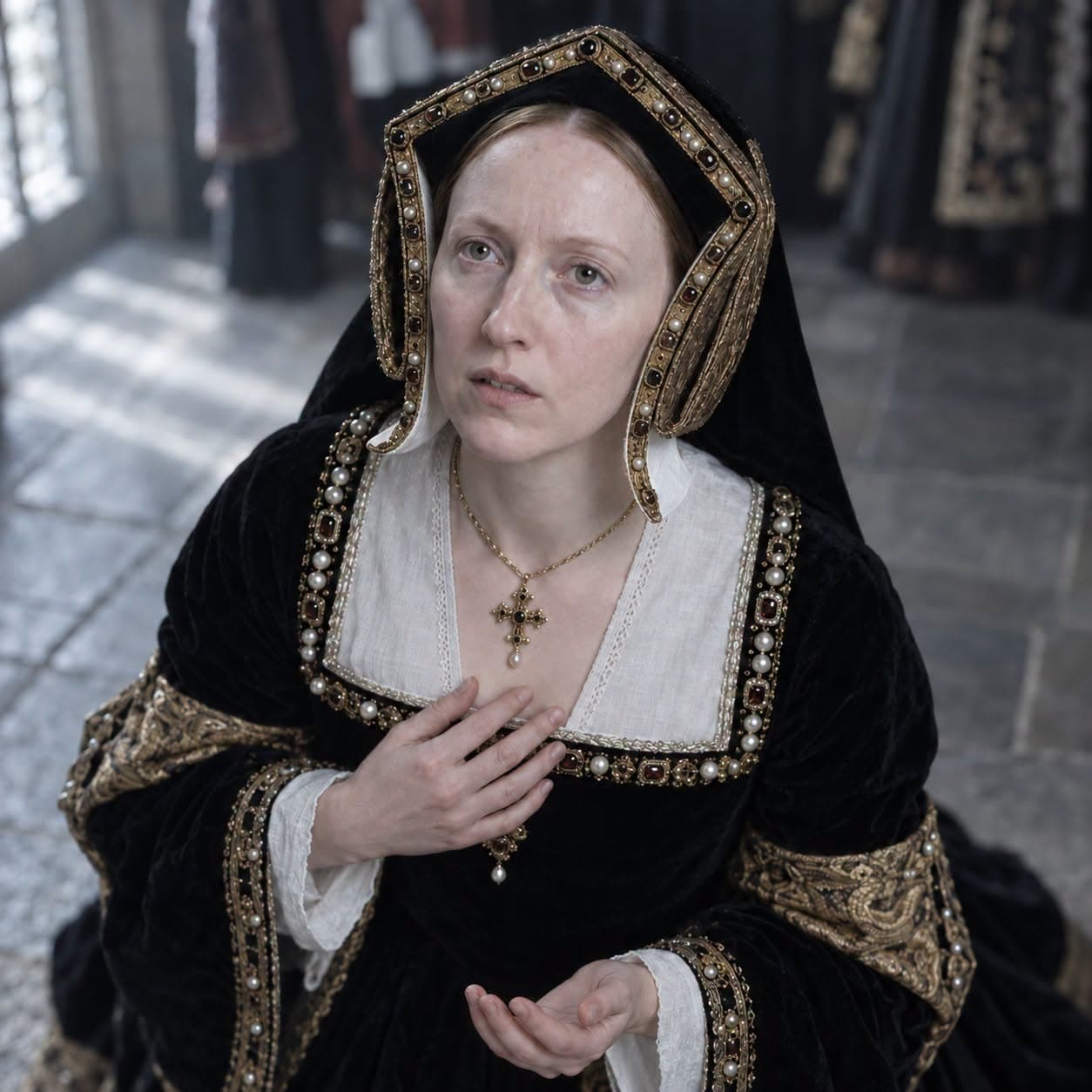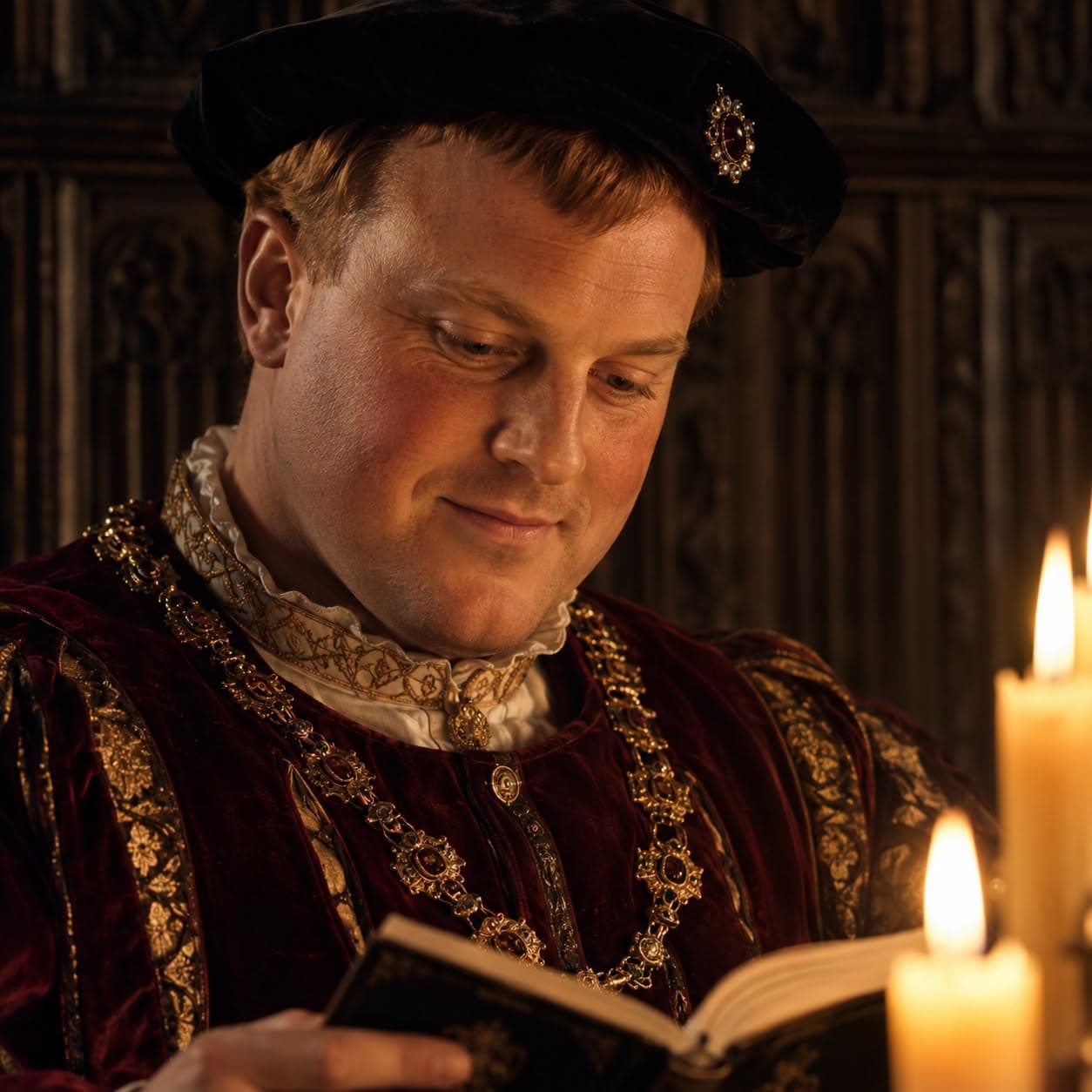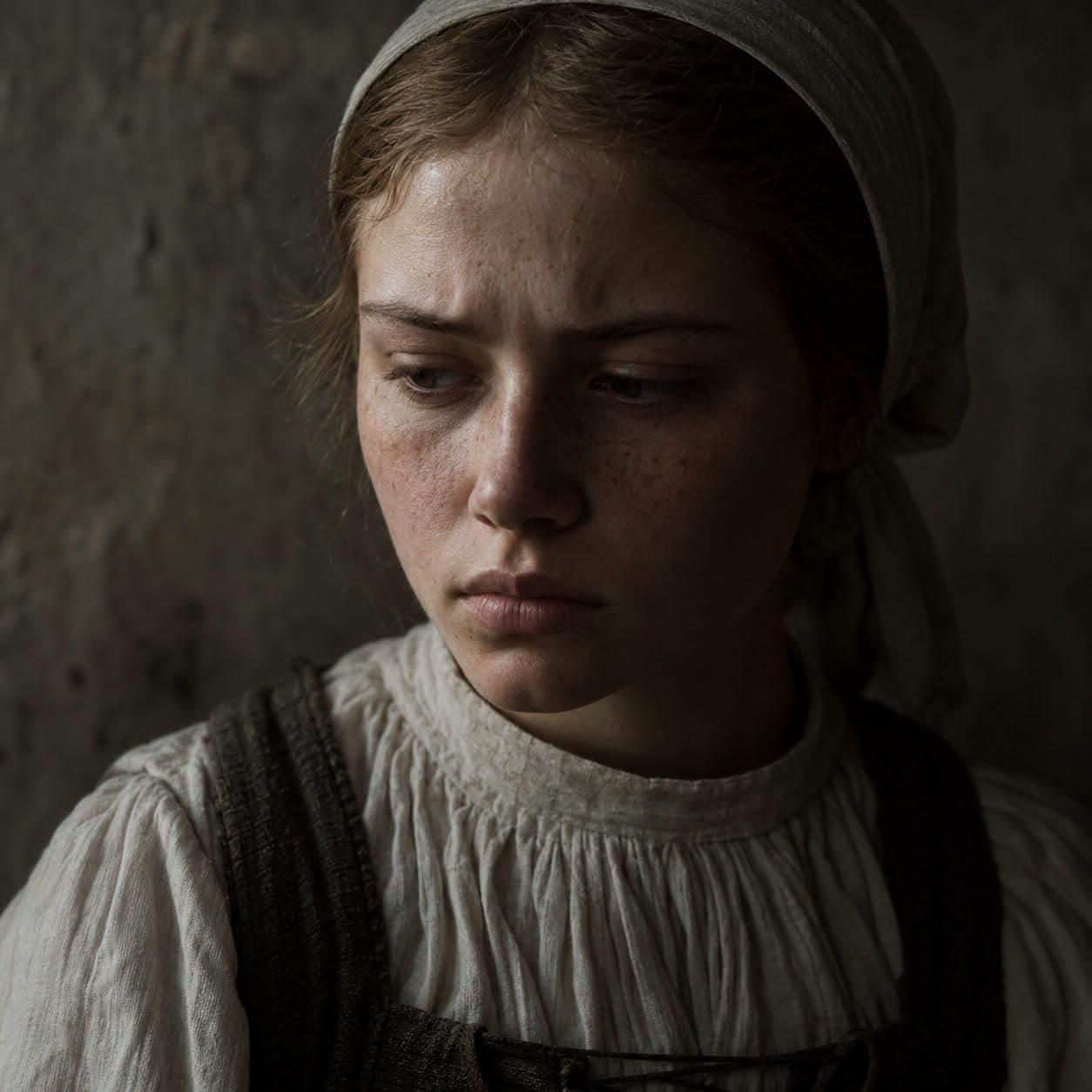
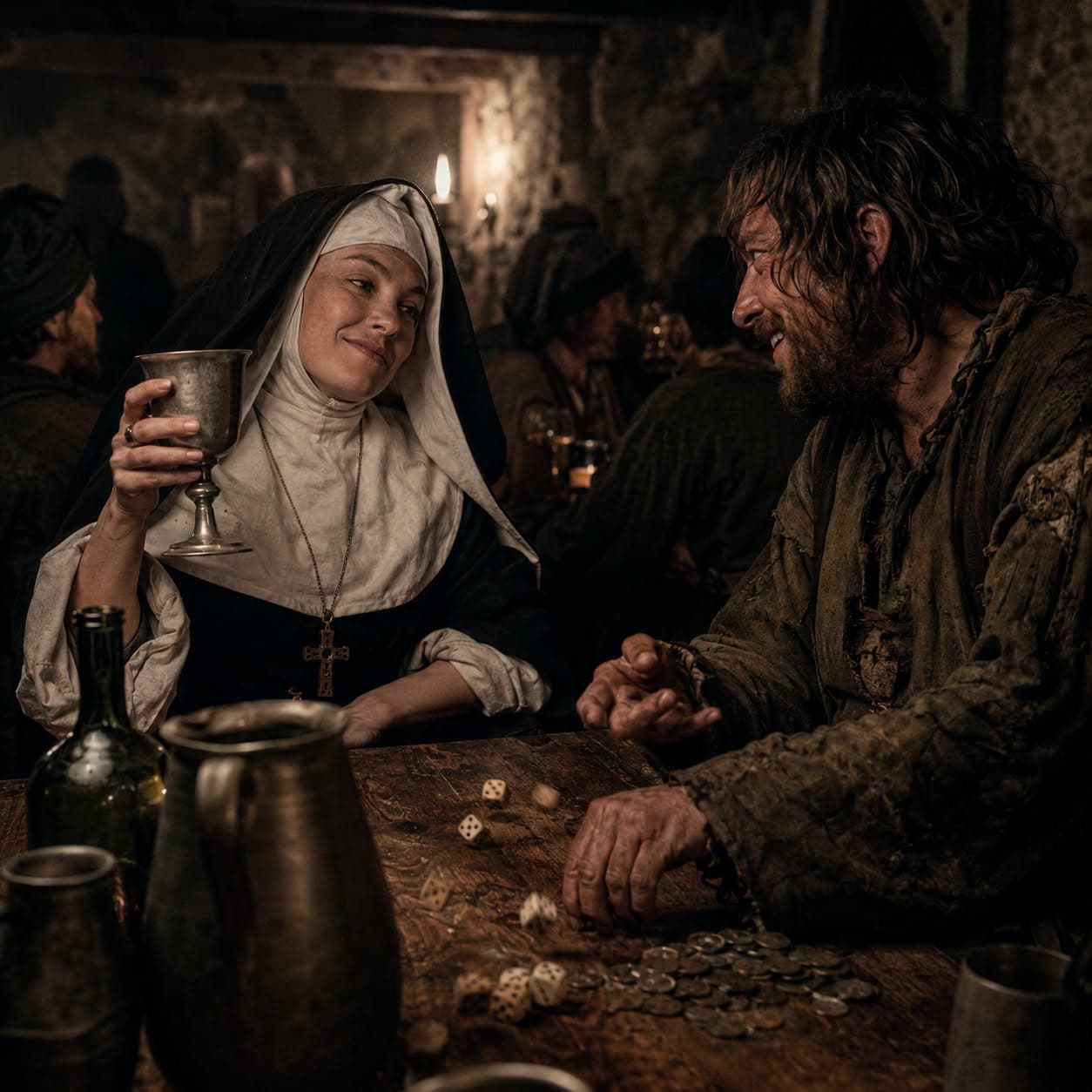
At six years old, Longshanks' daughter was given to God. She kept dice, wine, and a stable of twenty-four horses instead.
Mary of Woodstock was one of the many children of Edward I, the king later remembered as Longshanks, hammer of the Scots, and his queen Eleanor of Castile. In the 1280s her grandmother, Eleanor of Provence, chose Amesbury Priory in Wiltshire as the place she would grow old, and had private quarters there fitted out in a style befitting a queen. She then lobbied for two of her granddaughters, Mary and Eleanor of Brittany, to join her as Benedictine nuns. The other nuns lived in shared dormitories and ate in the refectory. Mary grew up in a suite of chambers built for a dowager queen.
She was formally veiled as a nun around 1291, when she was twelve or thirteen. By then Eleanor of Provence was dead and buried in the priory church, and Mary was left with vows of poverty, chastity, and obedience and a royal bloodline that did not seem to recognise any of them. Where most nuns at Amesbury depended on the convent's lands and careful management of their small common income, Mary received a cash pension from her parents that was later converted into rights over several manors and the whole borough of Wilton. She also receieved rights to forty oaks a year and an annual allowance of twenty tuns of wine from Southampton. Each tun contained roughly 954 litres of wine.
Her share of the world was bigger than many lay lords outside the cloister. She did not stay put.
In 1298 the Pope ordered that nuns were to remain inside their convents. Mary treated this as a suggestion. She kept a travelling household large enough that twenty-four horses were needed to move it from place to place. She went on pilgrimages. She spent weeks at court. Sometimes she brought other nuns with her. The women in the main house at Amesbury followed set hours of prayer and work inside the enclosure.
Longshanks' daughter rode in and out with a retinue.
Her money did not stretch as far as she wanted it to. Around 1302 her original allowance was exchanged for those manors and Wilton, on the condition she remain in England. Even that did not cover her spending. By 1305 she had accumulated considerable debts, not only from maintaining her horses and servants but from gambling at dice for money while at her father's court. Edward I, who had spent his reign fighting rebels and enforcing royal justice with a fearsome reputation, sent his nun daughter two hundred pounds to clear her gaming losses. It was more than some knights would see in years.
The abbey itself could not always restrain her. Mary held an office that involved overseeing the movement of nuns between houses, a position that gave her influence over women who had far less freedom than she did. When the Abbess of Fontevraud in France tried to remove her from it, and her brother, now King Edward II, failed to get her reinstated, Mary appealed to Rome. A papal mandate forced the abbess to restore her. A woman who had entered the cloister as a child outmanoeuvred both a king and her superior to keep a job inside the church.
She had scholars writing for her as well as priests. Nicholas Trevet, a Dominican friar and chronicler, composed his Cronicles for Mary and dedicated them to her, identifying her as Mary, daughter of King Edward, son of Henry. The work treated her as a patron and great lady of the royal house. The other nuns of Amesbury read prayers copied for the community. Mary had a personal history of the world dedicated to her name.
Her life did not end with a neat date in the records. Most sources say only that she died before the eighth of July 1332, a formula that usually means her death is inferred from the date when her lands reverted rather than from a note of the day she died. One modern account places her death on the twenty-ninth of May that year. She was buried in the priory church at Amesbury, near the grandmother who had first brought her there. The nuns went on singing the offices in the choir stalls and living on the convent's careful accounts. Mary's estates and pensions passed elsewhere.
After she was gone, her name surfaced one last time in a way no one at Amesbury could have predicted. John de Warenne, Earl of Surrey, attempted to have his own marriage annulled by claiming under papal investigation that he had another lover and could not validly have been married. One of the women he named was Mary of Woodstock. The enquiry never established whether he was telling the truth.
The daughter Longshanks had given to God at six was last recorded in a legal case built on the possibility that she had not kept her vows.