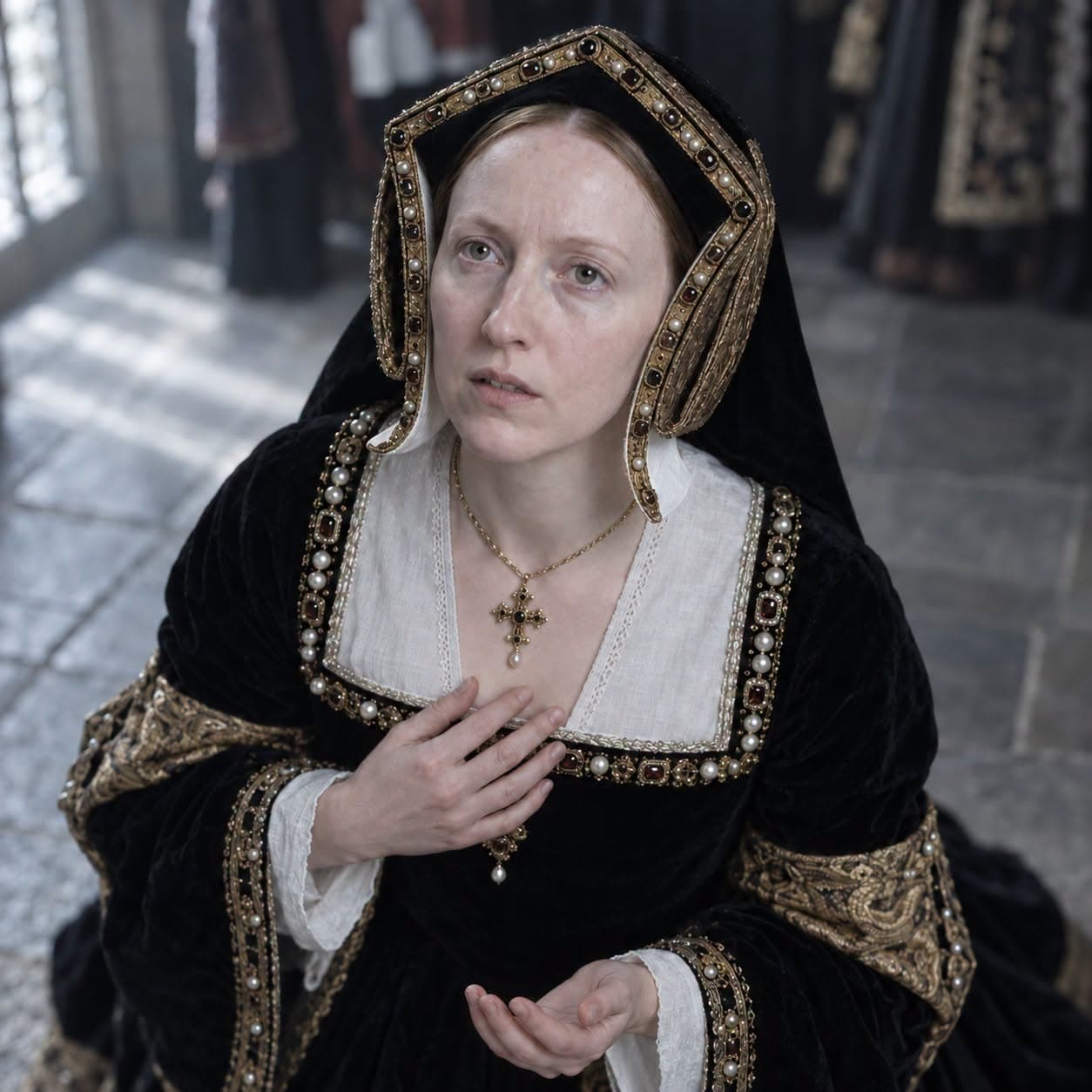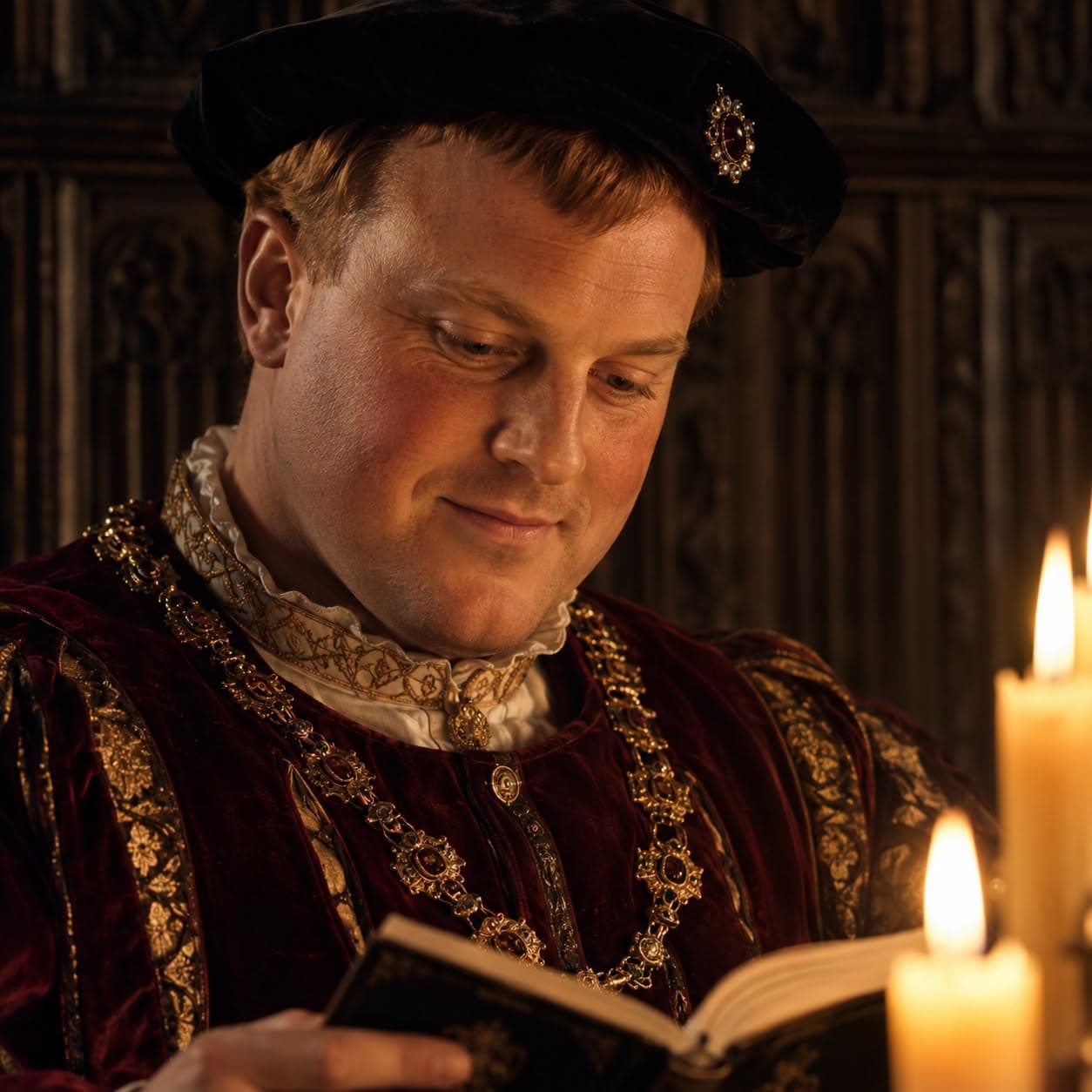
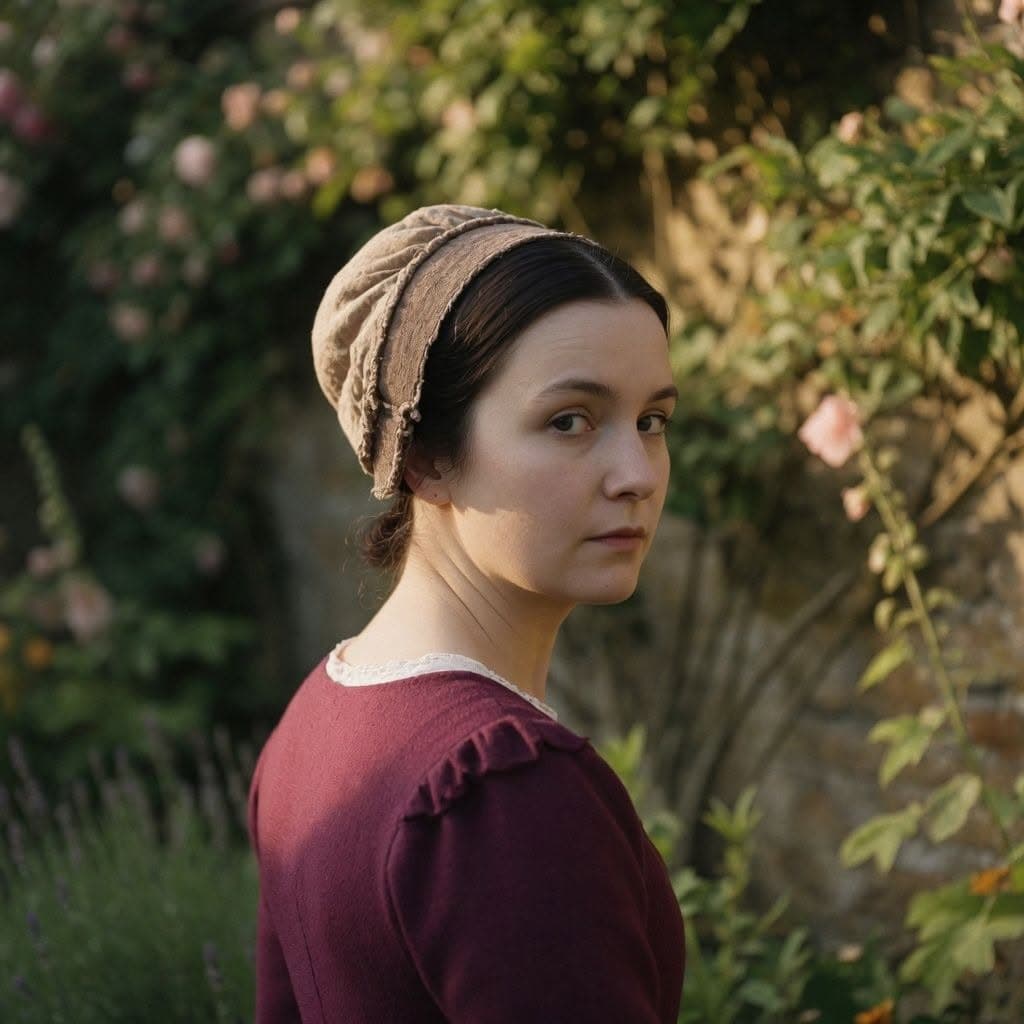
Her sisters had aimed at thrones and died for it. Mary Grey aimed at a palace gatekeeper and a quiet life. Elizabeth imprisoned them both anyway.
Mary Grey was born in April 1545. She was the youngest daughter of Henry Grey, Duke of Suffolk, and Frances Brandon, granddaughter of Henry VII. Her eldest sister Jane was placed on the throne in 1553, held it for nine days, and was executed at sixteen or seventeen years old in February 1554. Her father was executed the same month. Her sister Katherine secretly married Edward Seymour, Earl of Hertford, in 1560, was imprisoned in the Tower, had her marriage annulled and her sons declared illegitimate, and died in custody in 1568 aged twenty-seven.
Mary had watched all of it. She understood, with the specific clarity of a woman who had watched her family consumed one by one, exactly what the Tudor court did to Grey women who drew attention to themselves.
By the time Elizabeth came to the throne in 1558, Mary was the least attended person at court. Contemporaries described her as very small, with a crooked spine. This was a physical description her world used as a social and political verdict. She was considered unmarriageable. She was considered dynastically negligible. She had royal blood through her mother's line and sat in the succession under Henry VIII's will. She was regarded by everyone around her, including Elizabeth's council, as too insignificant to require serious management. She was at court, visible and present, and nobody was watching her.
She watched them instead.
In 1565 Mary Grey married Thomas Keyes in a secret ceremony. Keyes was the Sergeant Porter. He was the man responsible for the palace gates at Greenwich and the largest, most physically conspicuous man at court by most contemporary accounts. He was a widower with children and a man of no political consequence. He had no dynastic connection and no possible strategic value to anyone seeking the throne. He had nothing to offer a woman of royal blood except himself. Mary had chosen him anyway. She chose him quietly and over a sufficient period of time that the ceremony, when it came, was not impulsive. She had watched what happened to Katherine. She had chosen a man Elizabeth could not possibly regard as a political threat.
It did not work.
Elizabeth's reaction when the marriage was discovered was immediate, total, and disproportionate to any rational security concern. Keyes was imprisoned in the Fleet in conditions far harsher than his offence. He had married without royal permission, which was the same offence as Hertford, but he was treated with greater severity.
Mary was placed in the custody of her step-grandmother Katherine Willoughby, Duchess of Suffolk. She was then passed to Sir William Hawtrey at Chequers and later to Sir Thomas Gresham. She remained under house arrest for years. The marriage was never formally annulled. Unlike Katherine's, it could not be unprovable because the witnesses were alive and available and the clergyman was identified. However, it was never acknowledged either. Mary and Keyes were simply kept apart in separate custodies, indefinitely, without charge and without trial.
The security argument for this treatment had collapsed before it began. Mary Grey had no army. She had no foreign backing. She had no political allies at court willing to support a claim on her behalf. She had no sons and the marriage produced no children. She was the least powerful person her blood entitled her to be. She had married a man chosen with the specific intention of presenting Elizabeth with nothing to fear. Elizabeth imprisoned him anyway. Elizabeth placed Mary under house arrest anyway. The justification that had at least the appearance of plausibility with Katherine was entirely absent here. There were no potentially legitimate sons and no politically connected husband. There was no threat.
There was only the principle.
The principle was this: a woman of royal blood existed at Elizabeth's discretion and not her own. She did not choose her husband. She did not conduct a private life. She did not make decisions about her own body and her own future without the crown's permission. If she did, the crown removed those decisions from her regardless of whether removing them served any purpose beyond the removal itself. Katherine Grey had tested that principle and lost everything. Mary Grey had attempted to route around it by making herself as unthreatening as possible and had discovered that the principle was not about threat. It had never been about threat.
Thomas Keyes died in 1571. He was still imprisoned and still not formally charged with anything that warranted six years of confinement. Mary was released into her own custody after his death. She lived in reduced circumstances with her inheritance diminished and her position at court gone. She was twenty-six years old and a widow. She had outlived her husband's imprisonment and her own house arrest. She was free in the specific, diminished way of a person who has had everything taken and given back in smaller measure.
She lived quietly for seven more years.
She died on the twentieth of April 1578, aged thirty-three. She was the last of the Grey sisters. Jane had been executed at sixteen. Katherine had died in custody at twenty-seven. Mary had survived them both. She survived the court that consumed them, Elizabeth's fury, the years of house arrest, and the death of the husband she had chosen for his inconsequence.
She left no children. She left no political legacy. She left no record of complaint or bitterness that the sources have preserved. What she left was the fact of her survival. She left the fact of a marriage Elizabeth could never quite bring herself to annul because the witnesses were too alive and the legal foundation was too solid to dissolve without revealing the mechanism too plainly.
The marriage was never declared valid in her lifetime. It was never declared invalid either. Elizabeth held it in suspension for as long as Mary lived. This is the precise legal posture of a crown that knows it cannot win the argument and has decided to make the argument unnecessary by making the person irrelevant instead.
Mary Grey had read the room correctly. She had made herself as small a target as the room allowed. She had chosen the most politically inconsequential man she could find and married him with witnesses present and a clergyman identified. She had done everything right by the logic of survival she had learned watching her sisters.
Elizabeth punished her anyway, because the point had never been the threat. The point had been the choice.