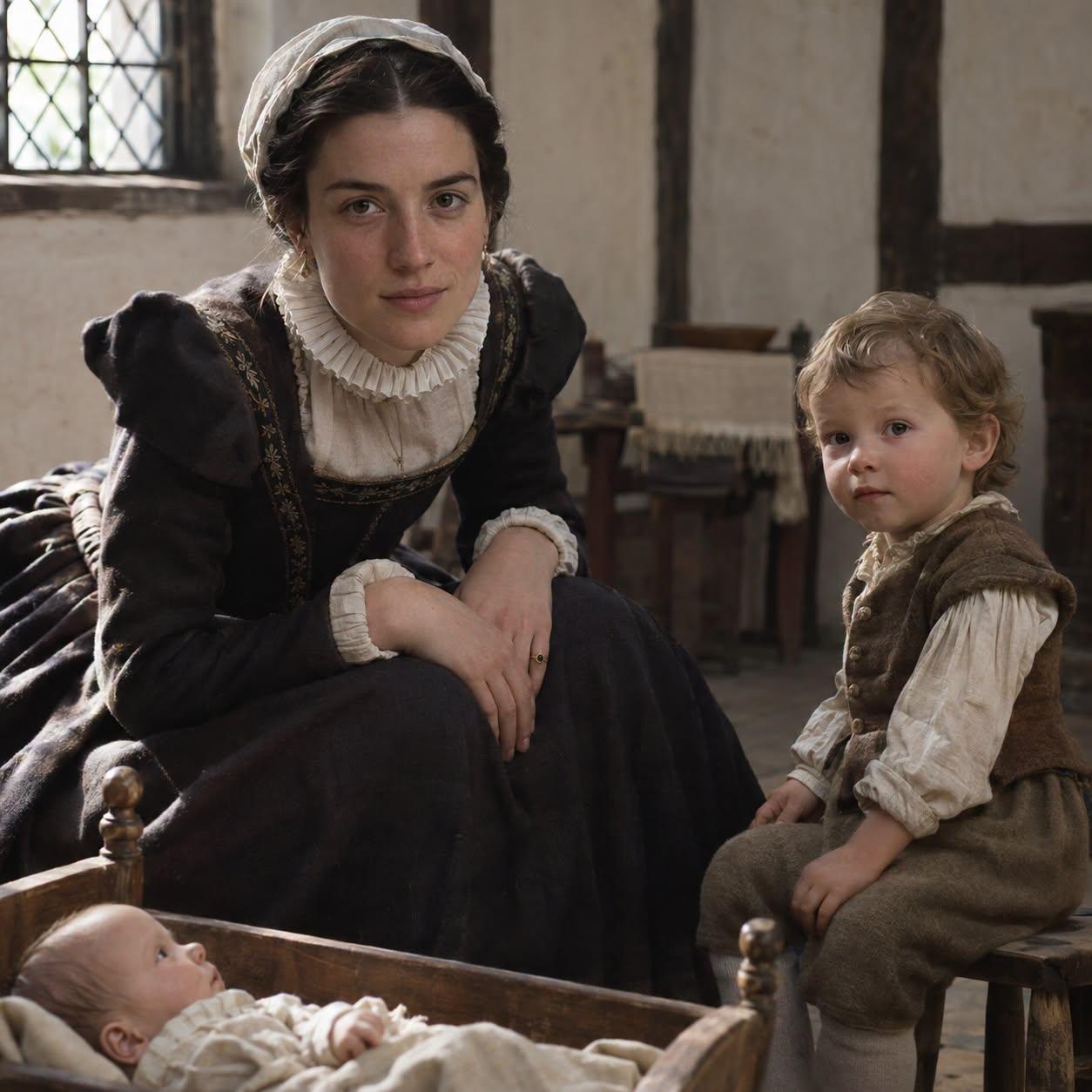
Mary had brought a manor into her marriage. Now she was borrowing money for necessities. Her husband was in the Tower. Their elder son was two.
On 5 November 1605, the discovery of the Gunpowder Plot saved James I and Parliament from an explosion intended to destroy them. For Mary Digby, wife of one of the conspirators, the consequences reached far beyond Westminster. She had two small sons, a family home in Buckinghamshire and a husband whose part in the conspiracy would bring him to the scaffold.
Mary was at Coughton Court in Warwickshire when the plot failed. Everard had rented the house and was involved in preparations for a Midlands rising. A gathering presented as a hunting party would provide the men around whom an uprising could form. The destruction of Parliament was to be the beginning, not the end.
Early on 6 November, Thomas Bates, servant to the plot’s leader Robert Catesby, arrived at Coughton with the news. Mary was among those who received him, along with the Jesuit priest Henry Garnet. The attempt had failed. The conspirators were fugitives.
The discovery belonged to the fifth. Its consequences reached the household at Coughton the following morning.
Everard had been drawn into the conspiracy only weeks earlier, in October. He was a wealthy gentleman, knighted by the king whose death the plotters intended. His money and connections made him useful to Catesby. He belonged to the world of country houses, servants and landed estates, a world with much to lose. It had not kept him out of the plot.
Mary was an heiress herself, the daughter of William Mulsho. Gayhurst, their Buckinghamshire home, had come through her. Her elder boy, Kenelm, was two; John was a baby, born that year. The property that had helped establish their married household would now become part of the question of what the family could keep.
Everard was captured and imprisoned in the Tower of London. Mary had to deal with the consequences outside it.
She wrote to Robert Cecil, Earl of Salisbury, seeking relief. Orders had been issued in her favour, but, she complained, the sheriff had still not made household goods available to her. Even a warrant for necessities had failed to secure their delivery. She said she had been “forced to borrow”, both for her own expenses and to supply things Everard needed in prison. The money would have to be repaid.
Permission on paper had not put necessities into her hands.
Her appeal was careful. She thanked Salisbury for his assistance before explaining that it had brought her no practical relief. She was asking a powerful minister to make his instructions work. In a postscript, she asked for something greater: his help in obtaining mercy for her husband. The household complaint and the plea for his life occupied the same letter.
The distinction between land and immediate need mattered. Everard had settled the manors of Stoke Dry and Tilton on Kenelm, and Gayhurst was held by trustees. Those arrangements protected the estates from permanent confiscation. They did not give Mary immediate access to the goods and money she was seeking. A family could have land secured for its future and still have to borrow in the present.
Mercy did not come for Everard. On 30 January 1606, he was executed at St Paul’s Churchyard. Kenelm was still two. His mother was now a widow with two young sons.
While Everard was held in the Tower, Mary had written about both his needs and her own, and sought help for both. His execution ended the possibility of bringing him home. The children and the household remained.
Mary did not marry again. She remained Catholic and lived at Gayhurst with a companion, Dorothy Habington. Kenelm and John grew up there, taught mainly by Jesuits. Their childhood continued beyond their father’s conviction, in a household with other people to help bring them up. Mary had borrowed for necessities while Everard’s life was still in the balance. The sons he left behind grew up at Gayhurst, the home she had brought into their marriage.