She was now seventy-two, and she had not seen France for twenty-one years. Twice she had come home. Neither homecoming had lasted.
On 19 October 1851, Marie-Thérèse of France died at Frohsdorf in Austria. The daughter of Louis XVI and Marie Antoinette, the only one of their four children to reach adulthood, had survived long enough to see her family restored to the French throne and driven from it again.
In her final year, she spent nearly the whole day beside a particular window. Beyond it were trees that reminded her a little of the gardens of the Tuileries. Visitors could please her by noticing the resemblance. She kept closely informed about the families of the French people she had known. France still reached her through its people, even when it could no longer be reached by going home.
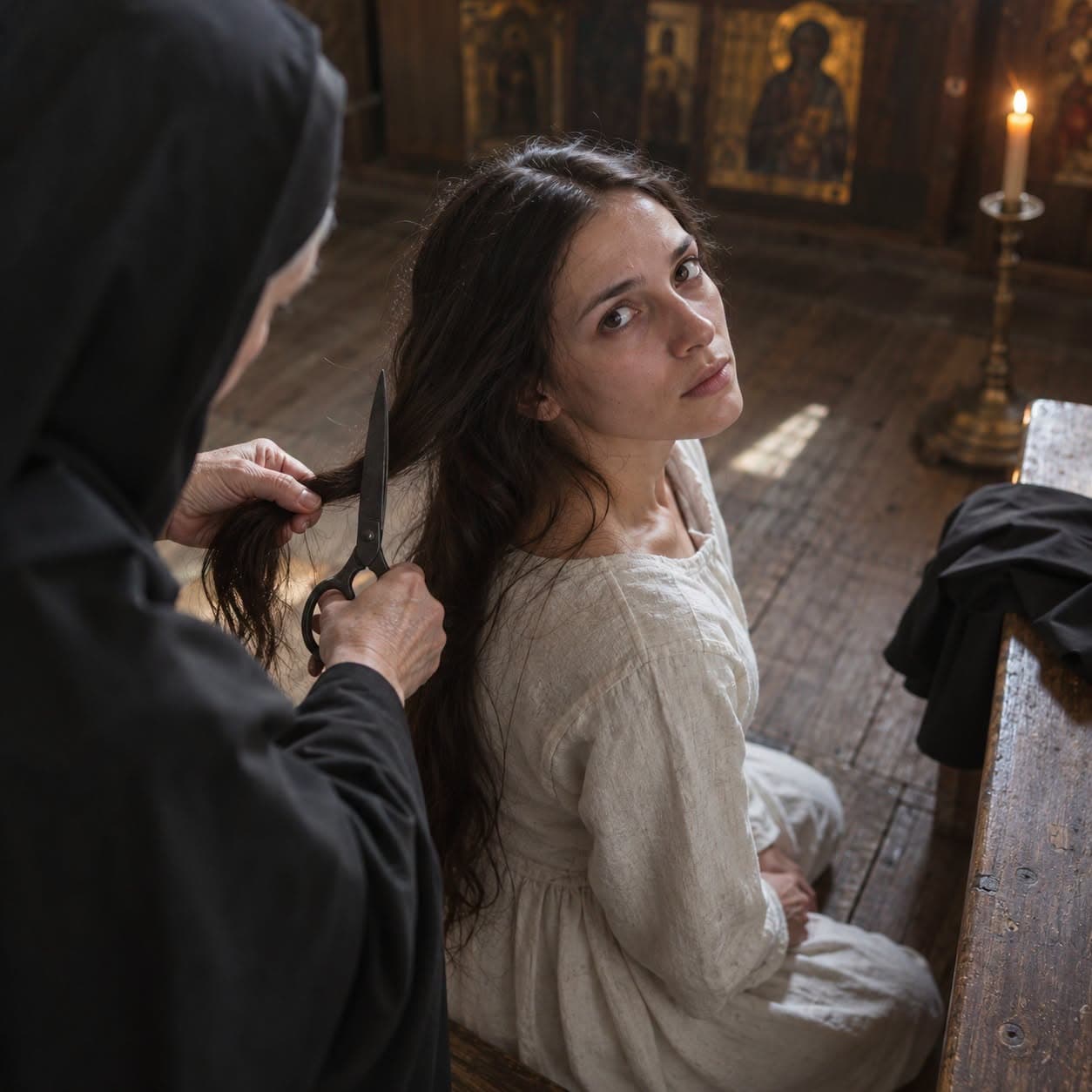
The Tuileries had been her family's home after they were forced to leave Versailles. Then came the Temple prison, where she lost her parents, her aunt Élisabeth and her younger brother. She was not told of her mother's death, or her brother's, until 1795. That December she left captivity through an exchange of prisoners and went to Vienna. She had just turned seventeen. More than half a century of life remained.
In 1799 she married Louis-Antoine, Duke of Angoulême, her cousin and the son of her father's younger brother, the future Charles X. The wedding took place in exile, at Mitau, in what is now Latvia. Their marriage produced no children. Her husband's family became the family with whom she would return to France, share the restored court and eventually leave again.
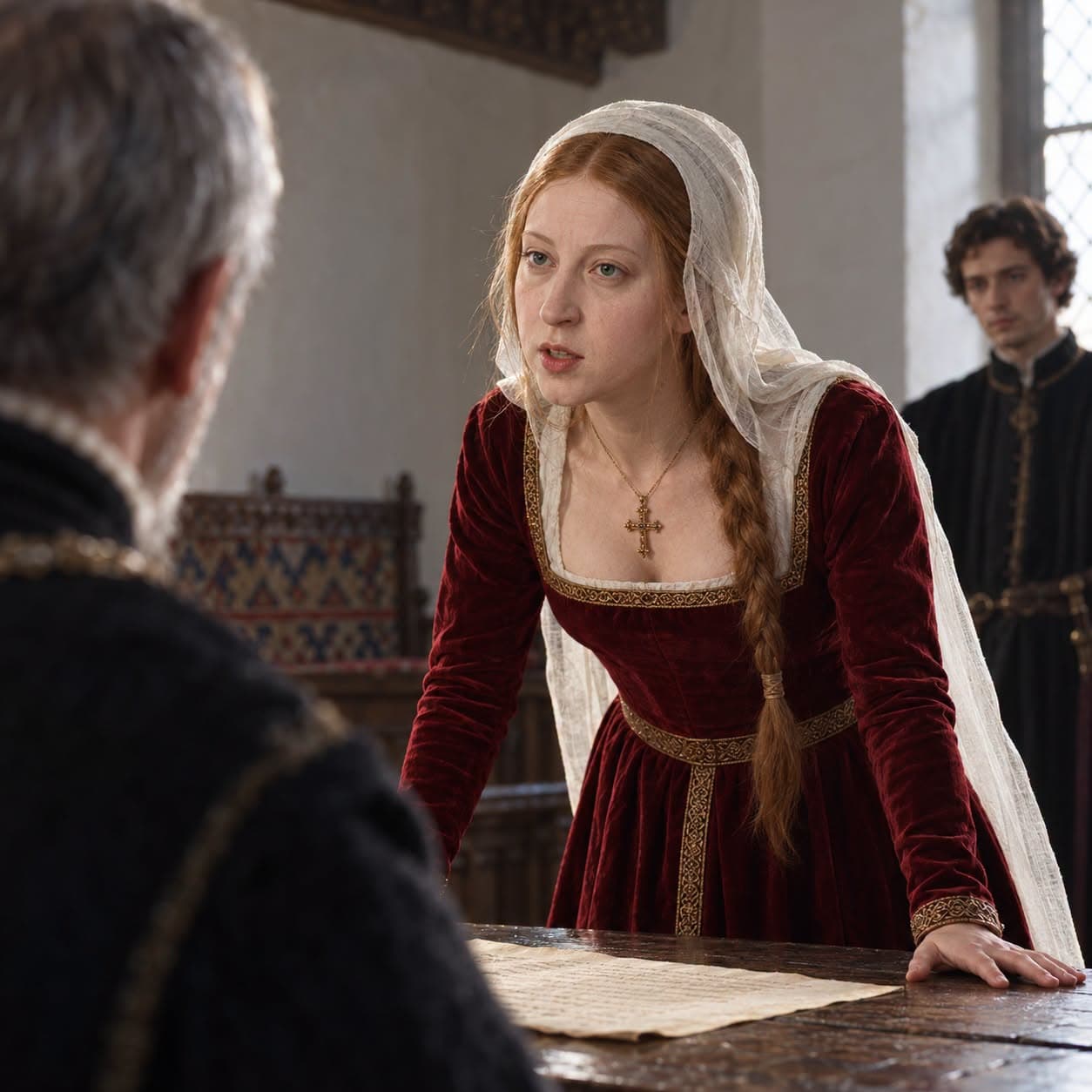
The first homecoming came in 1814, after Napoleon's fall. Her uncle Louis XVIII became king, and the woman who had left France as a prisoner released into exile returned as the Duchess of Angoulême. At thirty-five, she occupied a leading place at a court ruled by her father's brother. A throne could be restored much more readily than a family.
The following March, she and her husband went to Bordeaux to celebrate the city's loyalty to the Bourbons. They came down the Garonne in a decorated boat, transferred to an open carriage and were welcomed with festivities. In the Place de la Comédie they stopped to hear an air from Iphigénie, music Marie Antoinette had loved.
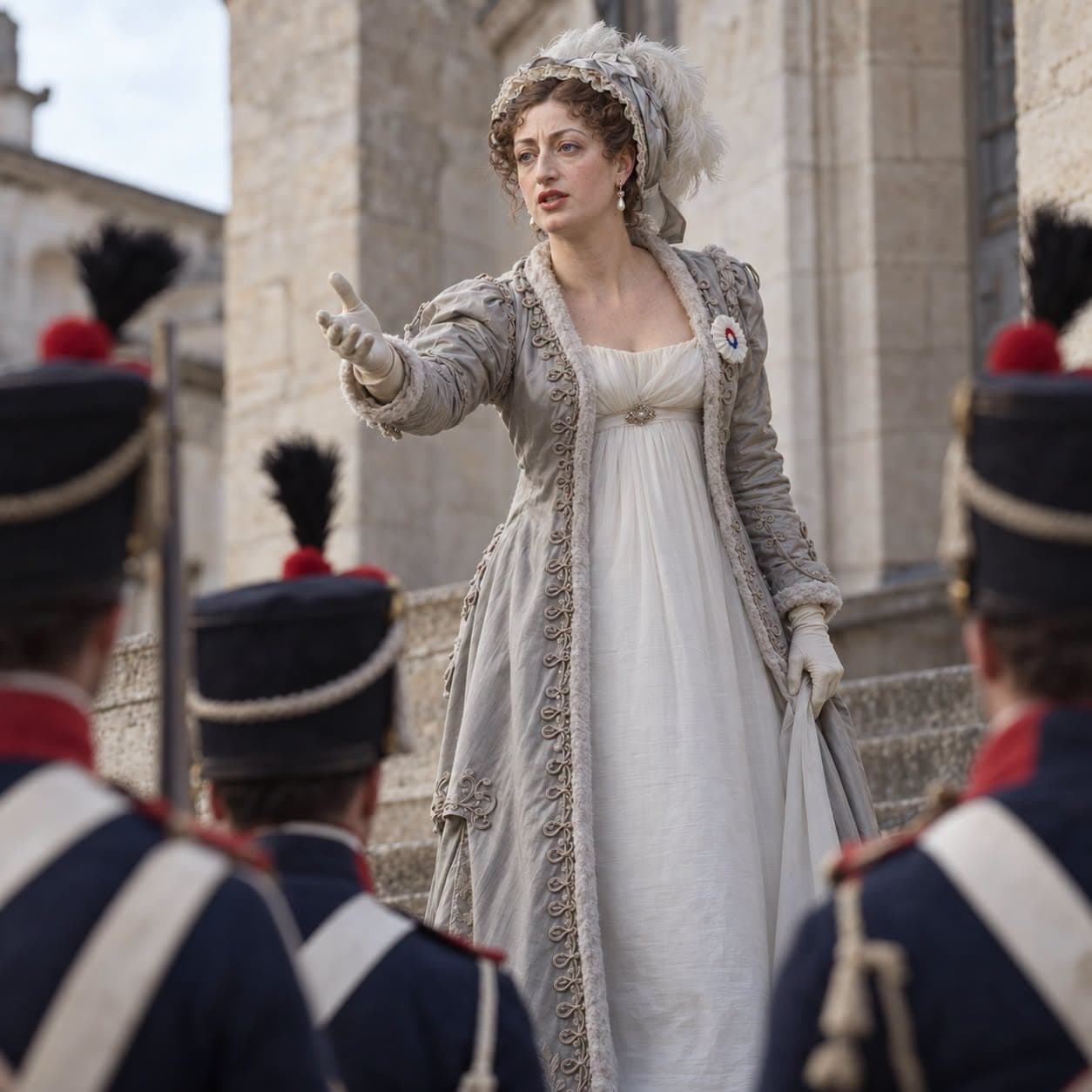
Then, during a ball on the evening of 9 March, news arrived that Napoleon had landed in France. Her husband left Bordeaux to take command of troops. Marie-Thérèse stayed to organise resistance. She was thirty-six, defending the monarchy whose return had made her own homecoming possible. She went to the barracks herself to ask the soldiers whether they would defend the city. They answered that they would not fight their own countrymen. The ceremonial visit had become a struggle to hold the city, and it was lost. In early April she sailed from Pauillac into exile.
She had come home. She was leaving again.
Napoleon's defeat allowed another return later in 1815, and this time the Bourbons remained on the throne for fifteen years. Marie-Thérèse supported the restoration of royal authority with a firmness that put her closer to her father-in-law than to the more accommodating Louis XVIII. Her attachment to France carried a political conviction with it: her family had a right to rule there. She could be an object of royalist devotion and a demanding political presence in the same court.
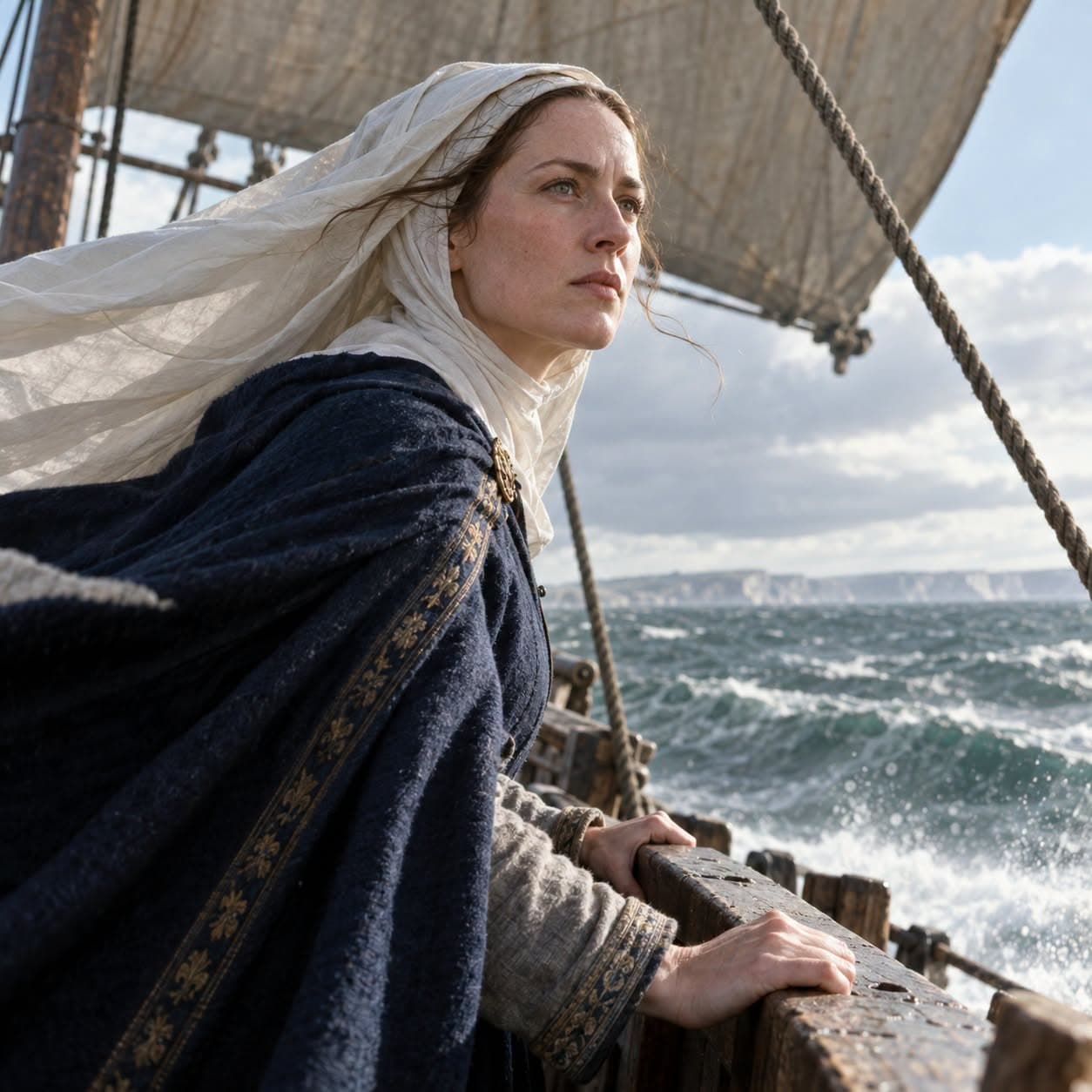
When Charles X succeeded his brother in 1824, her husband became heir to the throne and she became dauphine. Six years later, revolution brought down Charles. The crown passed to Louis-Philippe of the Orléans branch, and the elder Bourbons left France. Marie-Thérèse was fifty-one. This departure would be the last.
Exile took the family through Scotland and Prague before they reached Gorizia. There were younger people to bring up: Henri, later known as the Count of Chambord, and his sister Louise, the children of her husband's brother. Marie-Thérèse took a substantial part in their upbringing. Henri also carried the family's claim to the French throne. Within that small displaced court, the care of children and the preservation of a dynasty belonged to the same household.
Charles X died at Gorizia in 1836. Her husband followed in 1844. He was buried at the Franciscan monastery of Kostanjevica, where his father already lay. For Marie-Thérèse, the years of exile had become years of bereavement as well. After his death she moved to Frohsdorf, south of Vienna, with Henri and Louise.
In her will she gave them her maternal blessing, explaining that she had always regarded them as her children. She asked Henri never to depart from moderation, justice and truth. The woman whose marriage had produced no child left final instructions for the nephew she had helped to raise.
She also thanked the French people who had remained faithful to her family, acknowledging the suffering their loyalty had cost them. She forgave those who had harmed or offended her and asked forgiveness for herself. Her prayer for France was a blessing upon the country she said she had always loved, even through her bitterest afflictions.
She died at Frohsdorf two months before her seventy-third birthday. Her burial was at Kostanjevica, alongside the family whose exile she had shared. The trees outside her window had offered a resemblance to a French garden. Her grave, like the last twenty-one years of her life, was outside France.