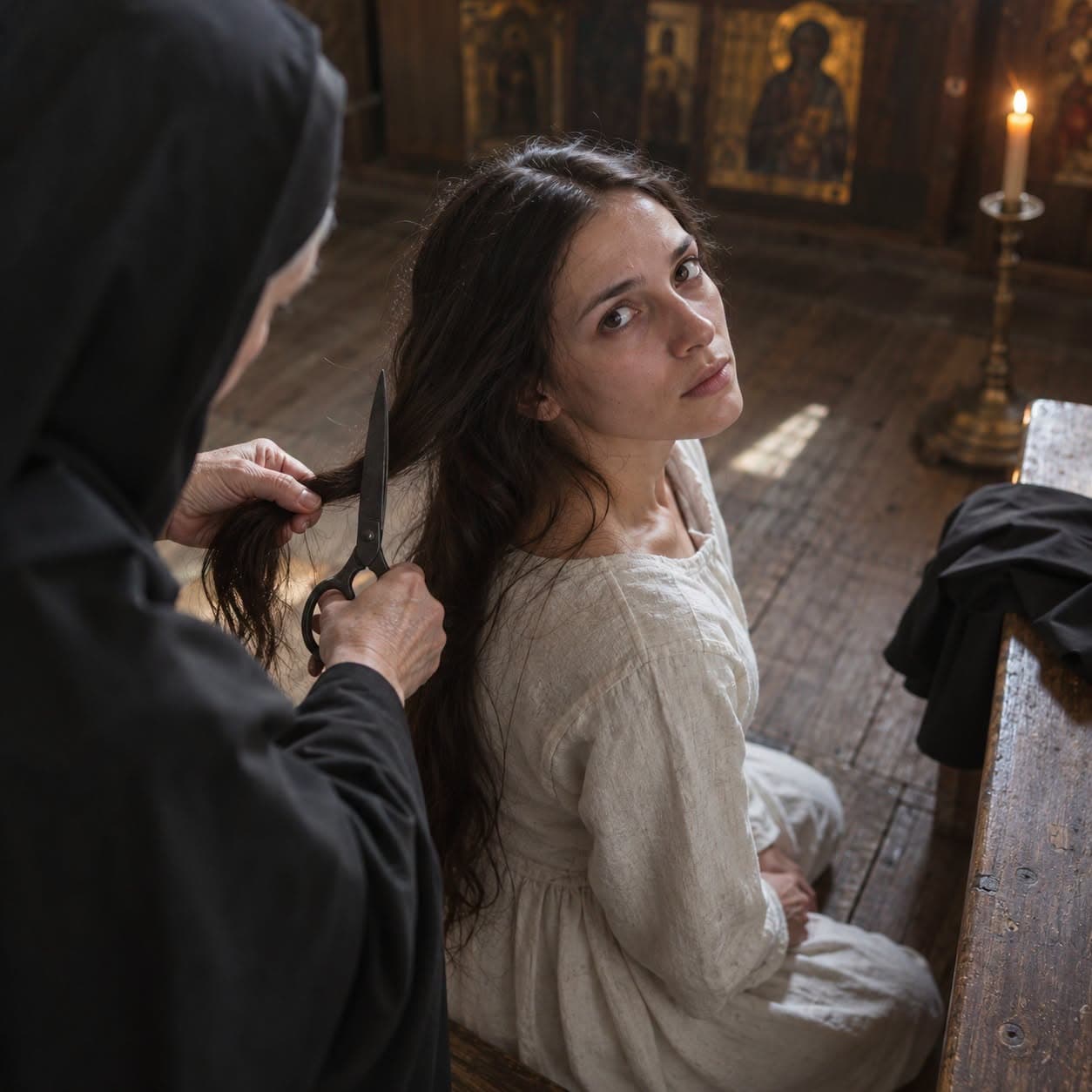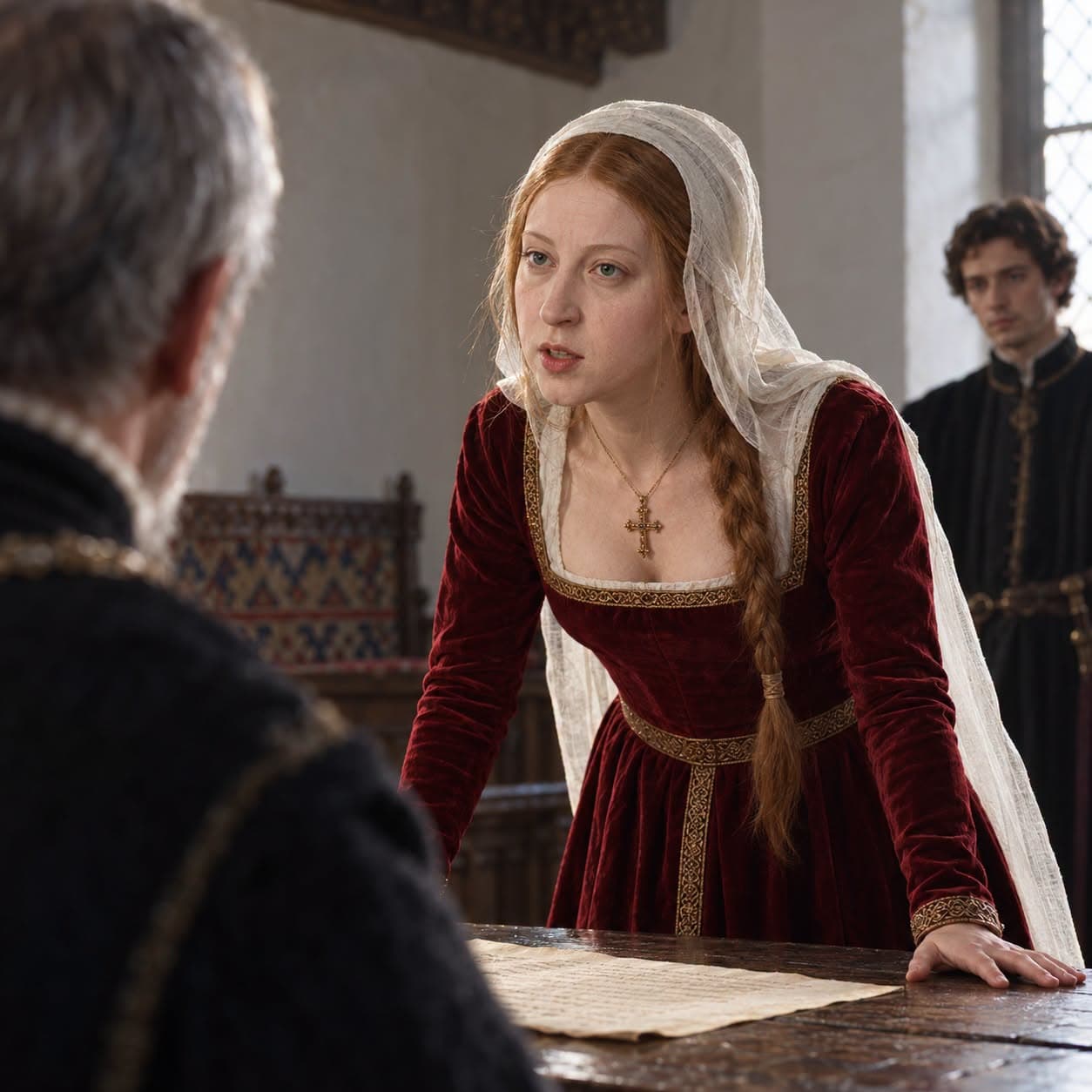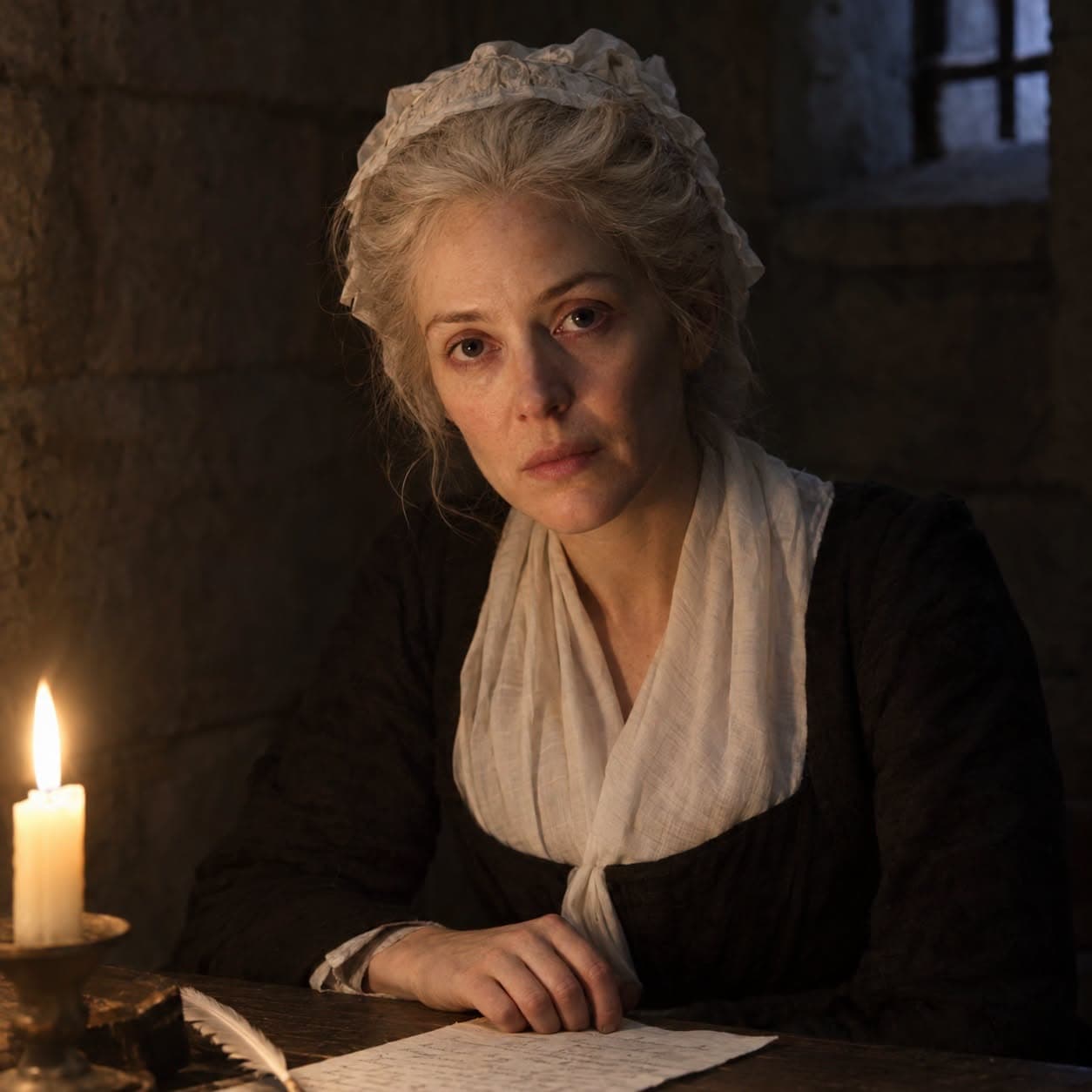
Her daughter must advise her younger brother she wrote. Her son must return his sister's care. She was still arranging their upbringing, though she would never see them again. Hours before her execution she was still focussed on being their mother.
Marie-Antoinette was guillotined in Paris on 16 October 1793, aged thirty-seven. A few hours earlier, back in her cell at the Conciergerie prison after her sentence, she wrote to Madame Élisabeth. Élisabeth was her husband's younger sister and had shared the royal family's imprisonment. At the top of the letter she put the time: half past four in the morning.
She had come to France at fourteen, an Austrian archduchess married to the future Louis XVI to secure an alliance between two dynasties. At Versailles, marriage, dressing and dining belonged to the business of monarchy. So did children. A queen was expected to produce an heir. The court had more than eight years to discuss her failure to do so before her first child, Marie-Thérèse Charlotte, was born in 1778.
Three more children followed: Louis-Joseph, the heir, in 1781; Louis-Charles in 1785; and Sophie-Béatrice in 1786, who died before her first birthday. In June 1789 Louis-Joseph died, aged seven, and his little brother became dauphin. Before the monarchy fell, the family had already lost two of its four children.
Marie-Antoinette involved herself in her children's care and education. At the Petit Trianon, her retreat in the grounds of Versailles, she had an apartment fitted out for her four-year-old daughter. It was close to the rooms of the girl's governess and of her aunt, Élisabeth. The succession mattered to Europe; she also had a little girl to bring up.
She had also fought to preserve the monarchy. She opposed the Revolution, kept up a secret political correspondence and looked abroad for support. Her Austrian connections, once the reason for her marriage, became grounds for suspicion in a country at war. She took part in that struggle, with choices and loyalties of her own. At her trial, however, political hostility would reach well beyond anything she had actually done.
The family was imprisoned in the Temple in August 1792. For a time they were still together: the king and queen, their two surviving children, and Élisabeth. On 21 January 1793, Louis XVI was executed. His son was now the king the royalists recognised, a title that made an imprisoned child a political danger.
In July, the boy was taken from his mother's care. She stayed with her daughter and Élisabeth until early August, when she too was removed and transferred to the Conciergerie to await trial. Her daughter and sister-in-law stayed at the Temple. The family that had entered prison together was being divided among the living and the dead.
At the Conciergerie, two gendarmes kept watch over her day and night. Writing was restricted. The woman who had sought private rooms away from the ceremonies of Versailles was now watched in prison, with no child beside her and no husband to whom she could speak.
Her trial opened on 14 October. Her lawyers had been named at the last minute and scarcely had time to read the papers. She faced accusations of draining the treasury, corresponding with the enemy and conspiring against the state. Then the proceedings turned to her son. A statement obtained from the eight-year-old boy in the Temple was used to bring a false accusation of incest against her.
She did not answer it at first. Pressed to respond, she said: "If I have not answered, it is because nature itself refuses to answer such a charge made against a mother." Then she appealed to the mothers present. A child had been taken from her; now words obtained from him were being used against her. The proceedings continued. In the early hours of 16 October, she was sentenced to die.
She had one more thing to arrange.
"It is to you, my sister, that I write for the last time," she began. She regretted leaving the children and thanked Élisabeth for giving up everything to remain with the family. She hoped that one day, when they were older, the children could be reunited with their aunt and enjoy her care in full. She did not dare write directly to her daughter, believing the girl would never receive it. She was not certain that this letter would reach Élisabeth either.
For the children, she set out duties that reached into a future she would not share. The elder must guide the younger with her advice; the younger must care for his sister in return. Whatever their circumstances became, they would only be truly happy if they stayed united. Their family's affection had consoled them in misfortune. She wanted them to keep it.
Then she returned to what had been said at the trial. She asked Élisabeth to forgive the boy. "Think of his age," she wrote, and of how easily a child could be made to say whatever was wanted, even things he did not understand. She gave him no blame to carry. For him she repeated his father's last instruction: "Let him never seek to avenge our death."
She declared that she would die in the Catholic faith in which she had been raised, and asked God's pardon for her faults. "I forgive all my enemies the harm they have done me." Her farewells extended to her aunts, her brothers and sisters, and her friends. At the end she returned to Élisabeth and the children, sending an embrace that could only be written down. "Adieu, my good and tender sister. May this letter reach you!"
Later that day she was taken to the Place de la Révolution and guillotined. Her two surviving children were still prisoners in the Temple. The letter setting out how they should care for one another passed into the hands of revolutionary officials and was not made public until 1816. Élisabeth never read it.