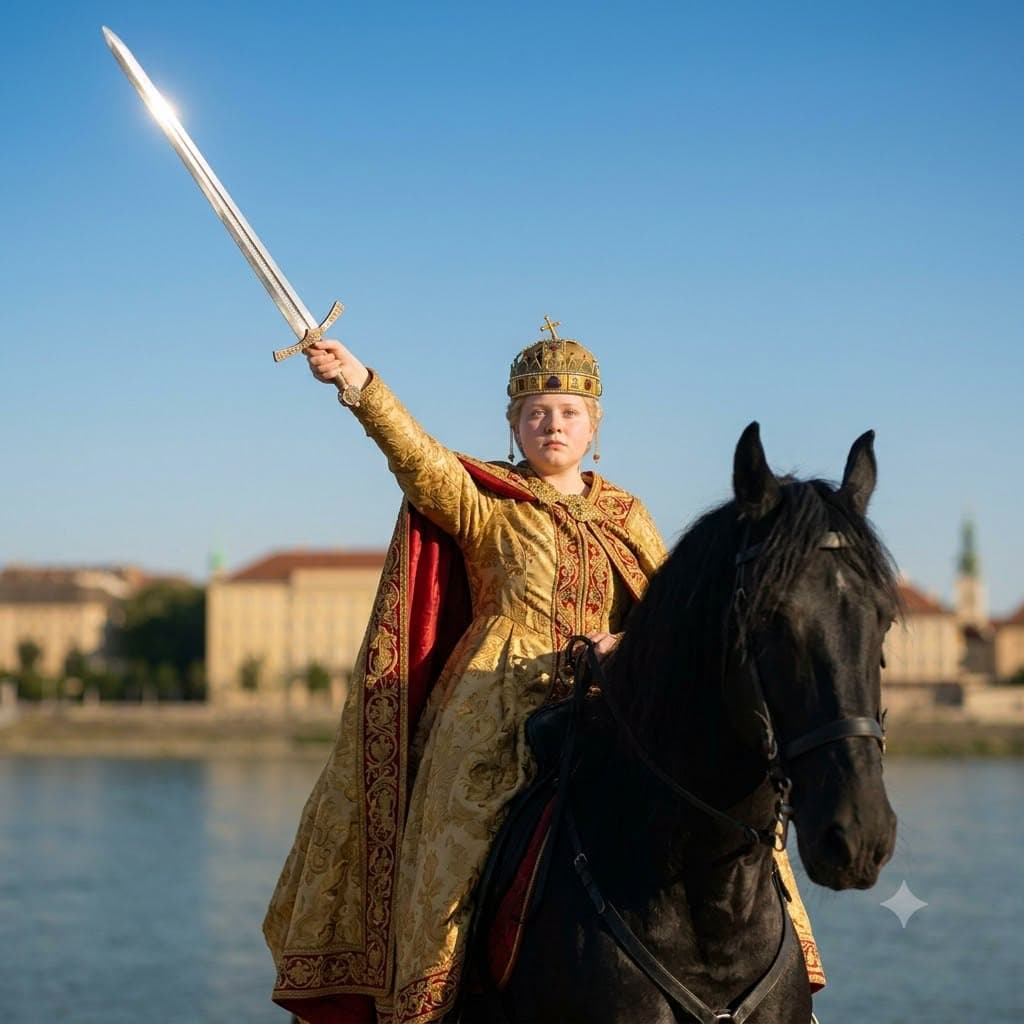
Hungary had no provision for a female ruler. They crowned her King instead. She rode up the coronation hill three months after giving birth, holding herself with such superb military precision that from a distance she looked like a man, and swung a sword at the four corners of the earth.
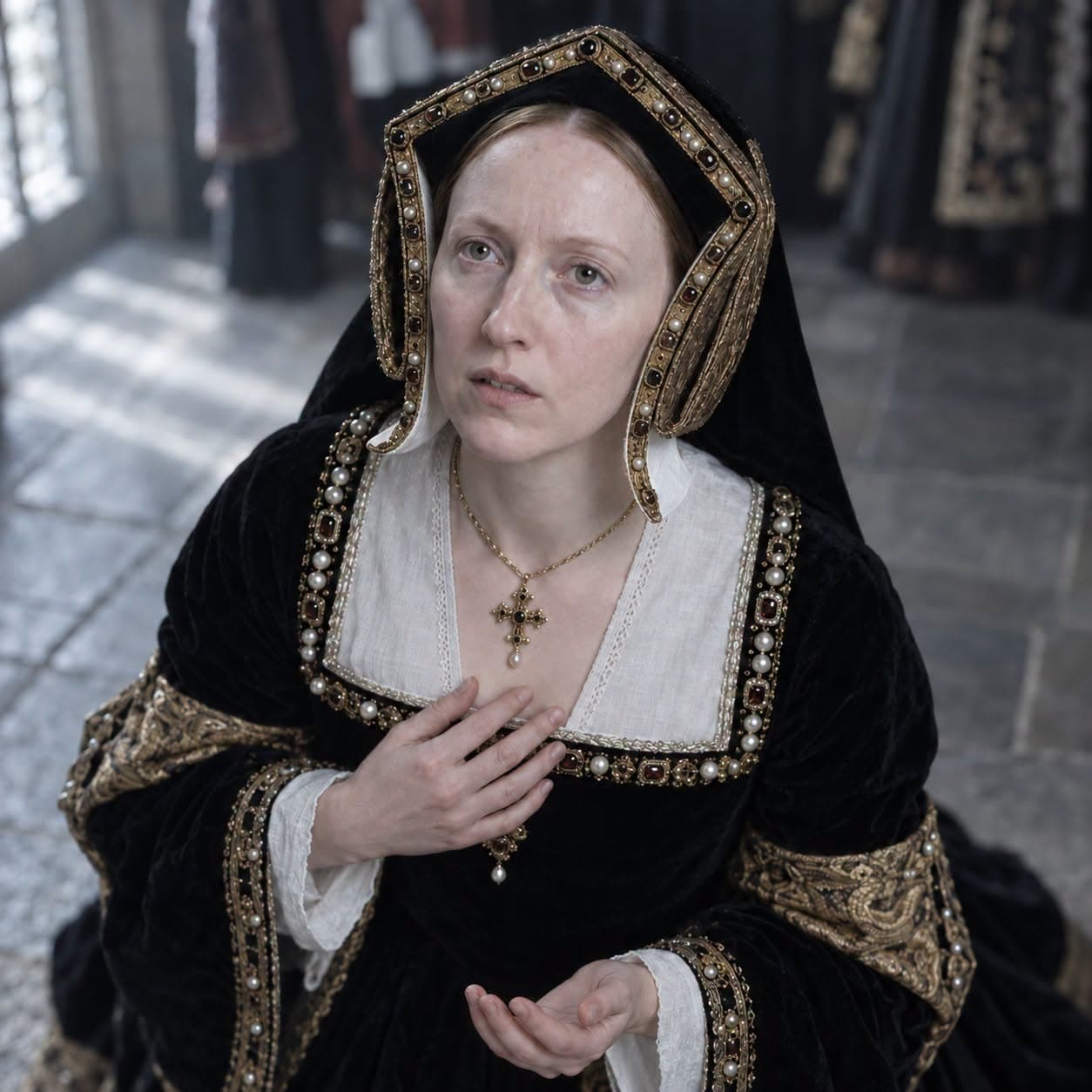
Maria Theresa had inherited the Habsburg lands in October 1740 when her father Emperor Charles VI died. He had spent years constructing the Pragmatic Sanction, a legal instrument to ensure a daughter could inherit, and had extracted signatures from every major European power. Within weeks of his death, Prussia, France, and Bavaria repudiated the sanction they had signed and invaded. She was twenty-three years old, had given birth to the future Emperor Joseph II in March 1741, and had almost no treasury and almost no army.
Of all her dominions, Hungary was the one that had agreed to her accession and seemed secure. But securing it meant confronting its Diet, the parliament of senior clergy and nobility, which had its own demands and no obligation to supply soldiers without concessions. Negotiations grew tense. She agreed to write into her coronation oath that she would continue negotiating their liberties. The ceremony was set for the twenty-fifth of June 1741 at Pressburg.
She left Vienna on the nineteenth of June, taking a flotilla down the Danube. At the border two pavilions had been erected: she changed into her gold-embroidered dress in one and received the representatives of the Diet in the other. On the morning of the twenty-fifth she entered St Martin's Cathedral, knelt, kissed the cross, and swore to uphold the laws of the land. The Archbishop anointed her and placed on her head the Crown of St Stephen, altered before the ceremony because it had been made for a man. He named her Rex Hungariae. King of Hungary. The constitution had no category for a queen. They used the one they had. When the crown was placed on her head the assembly cried Vivat Domina et Rex Noster. Long live our Lady and our King. Both words in the same breath.
Then came the ride. A hill had been constructed on the Danube riverfront from soil brought from every county of Hungary, so that the new sovereign would stand on the whole kingdom at once. She had been practising her equestrian skills for weeks. She mounted a black charger wearing the ancient crown and mantle. Though eighteenth-century propriety required her to ride side-saddle, she sat with such an imposing, masculine posture that onlookers easily mistook her for a male monarch from afar. She rode to the summit, drew the sword of St Stephen, and turned to face each of the four compass points in turn, vowing to defend Hungary against all enemies from every direction. She had given birth to her first son three months before. The crowds below roared.
By September of that year, the crisis deepened into desperation as a combined Franco-Bavarian army invaded Austria and advanced toward Vienna. She returned to the Diet in Pressburg and asked for an army to save her realm. The Diet which had negotiated so hard over the coronation oath rose and shouted Vitam et sanguinem pro rege nostro Maria Theresia. Our life and blood for our King Maria Theresa. She had her army.
The War of the Austrian Succession ran for eight years. She fought it while continuing to give birth. Maria Christina arrived in 1742, four days before the Austrian defeat at Chotusitz. Maria Amalia followed in 1746, Leopold in 1747. The war and the childbirths proceeded together, from the same body, in the same years, without pause. Frederick of Prussia took Silesia and kept it despite everything she brought against him, and that loss stayed with her for the rest of her reign. But she held Austria, Hungary, and Bohemia.
The powers that had partitioned her inheritance on paper in 1741 had not accounted for what she would actually do. The Treaty of Aix-la-Chapelle ended the war in 1748. She had been fighting it since the year she rode up the coronation hill. She governed the Habsburg empire for forty years. She gave birth sixteen times. She outlived three of the major powers who had thought a young woman could not hold what her father had built.
The woman Hungary had no constitutional category for became the category. They wrote the law around her afterward.