Every dynasty in Europe practised strategic marriage. The Habsburgs practised it on themselves. Maria Antonia of Austria was the result.
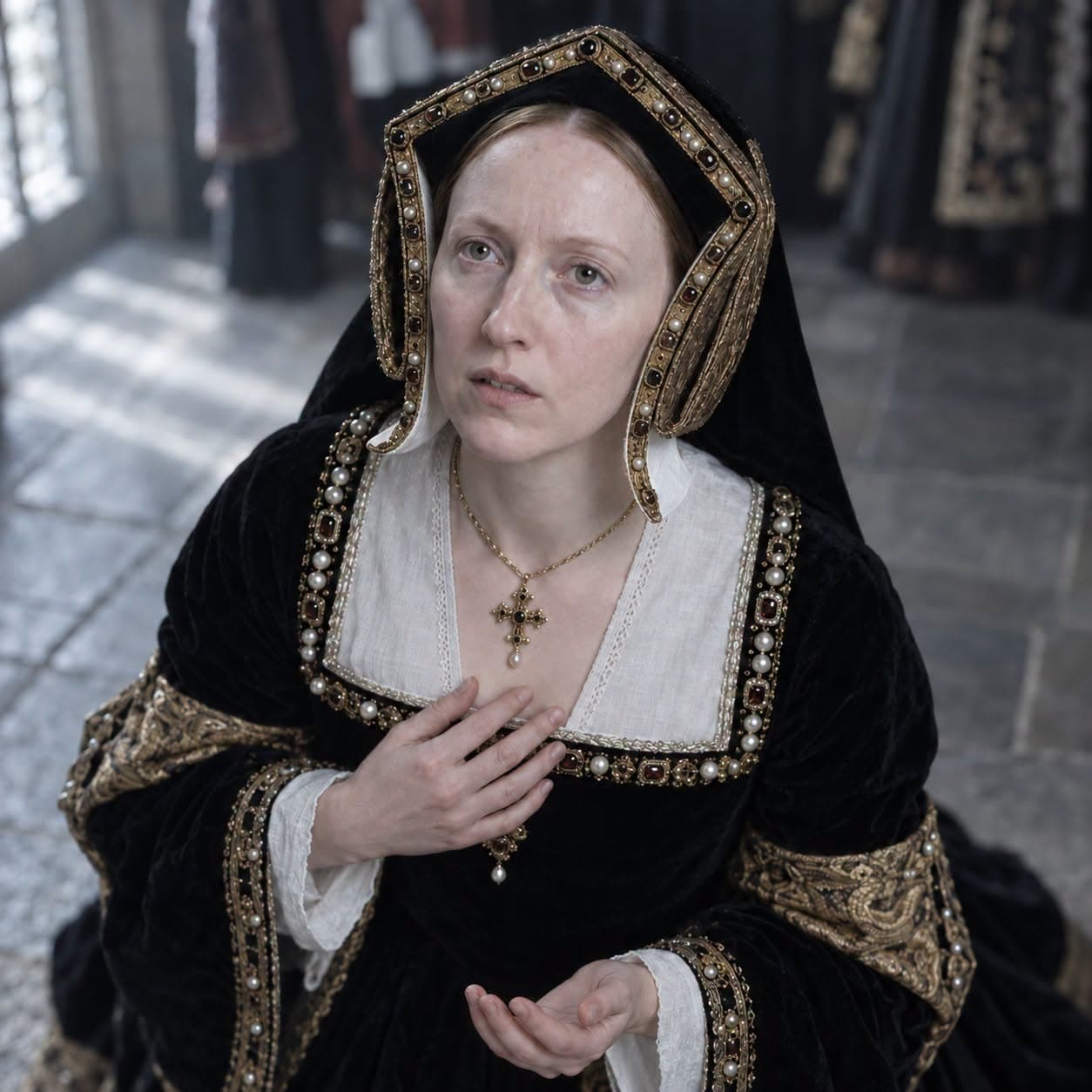
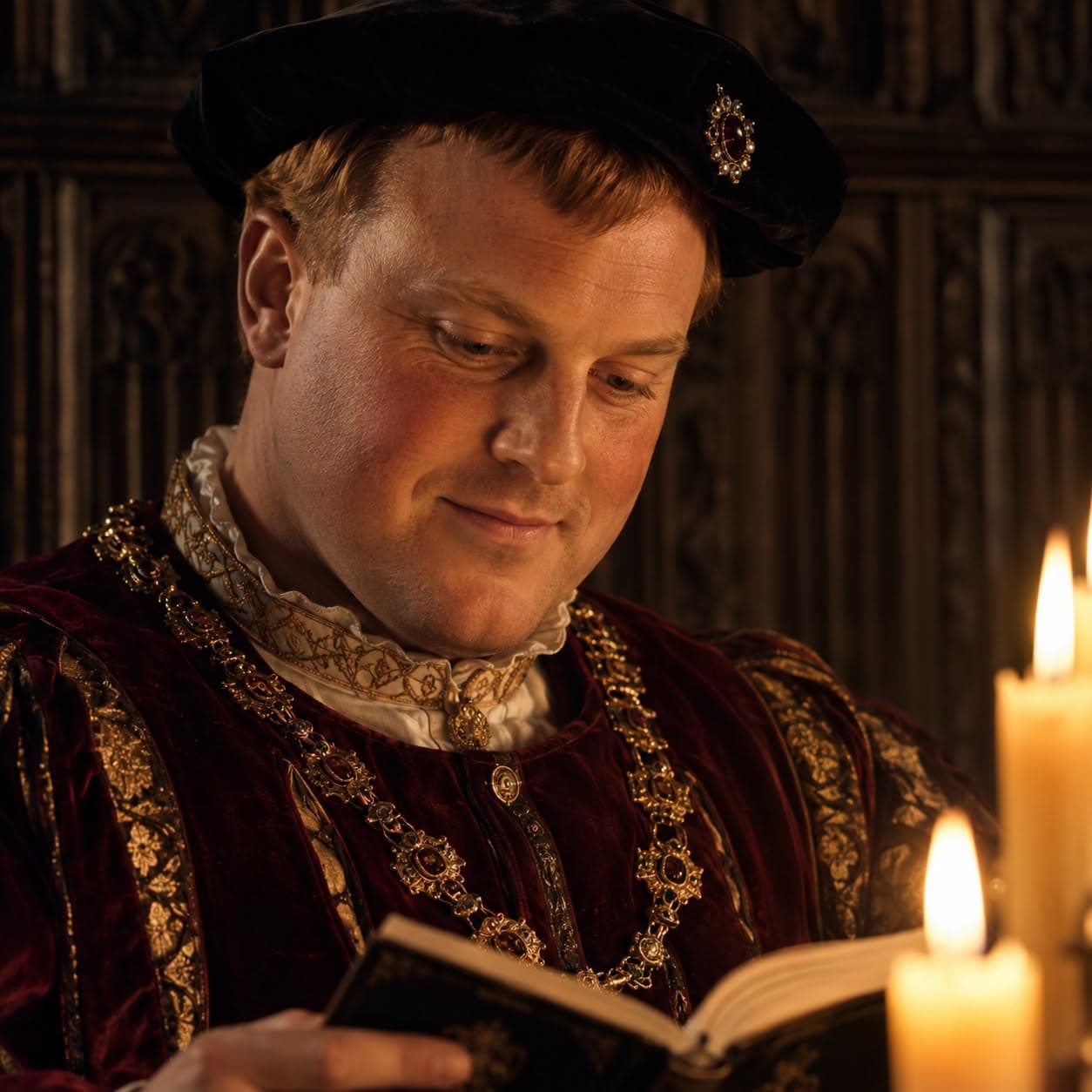
Her mother was Margaret Theresa of Spain. You have seen her. She is the small blonde girl at the centre of Las Meninas, the Velázquez painting from 1656, standing in a shaft of light in the Madrid palace while her ladies arrange themselves around her. She was five years old when that portrait was made. Her father, Philip IV of Spain, sent copies of her image to the Habsburg court in Vienna at regular intervals as she grew, at five, at eight, at nine, so that her future husband could inspect his intended bride from a distance and satisfy himself that she was developing adequately. Her future husband was Leopold I, Holy Roman Emperor. He was also her mother's brother. Margaret Theresa's uncle was watching her grow up in oil paint and deciding when she was ready.
She arrived in Vienna in 1666 at fifteen years old and married him. The match had been arranged because the Habsburgs had spent two centuries ensuring that the inheritance of their empire passed between Habsburg hands, which meant marrying Habsburgs to Habsburgs until the family tree had ceased to branch outward in the way that family trees are supposed to and had begun instead to fold back on itself. Leopold was not simply Margaret Theresa's uncle. He was also her first cousin once removed through a separate line of descent. Two blood relationships between the same two people, running through different branches of the same family, arriving at the same marriage. The Habsburgs did not regard this as a problem. They regarded it as a solution.
Margaret Theresa bore six children in six years. Four died in infancy or childhood. She died herself in 1673 at twenty-one years old, worn through by the relentless pregnancies the court required of her. Maria Antonia was four years old. She had already outlived three of her siblings. She had just lost her mother. What she understood of this in the way that four year olds understand loss, the record does not say. What the record shows is that her father remarried within the year, because emperors required heirs and sentiment was a secondary consideration, and Maria Antonia grew up in a court that had absorbed her mother's death as a logistical problem and moved on.
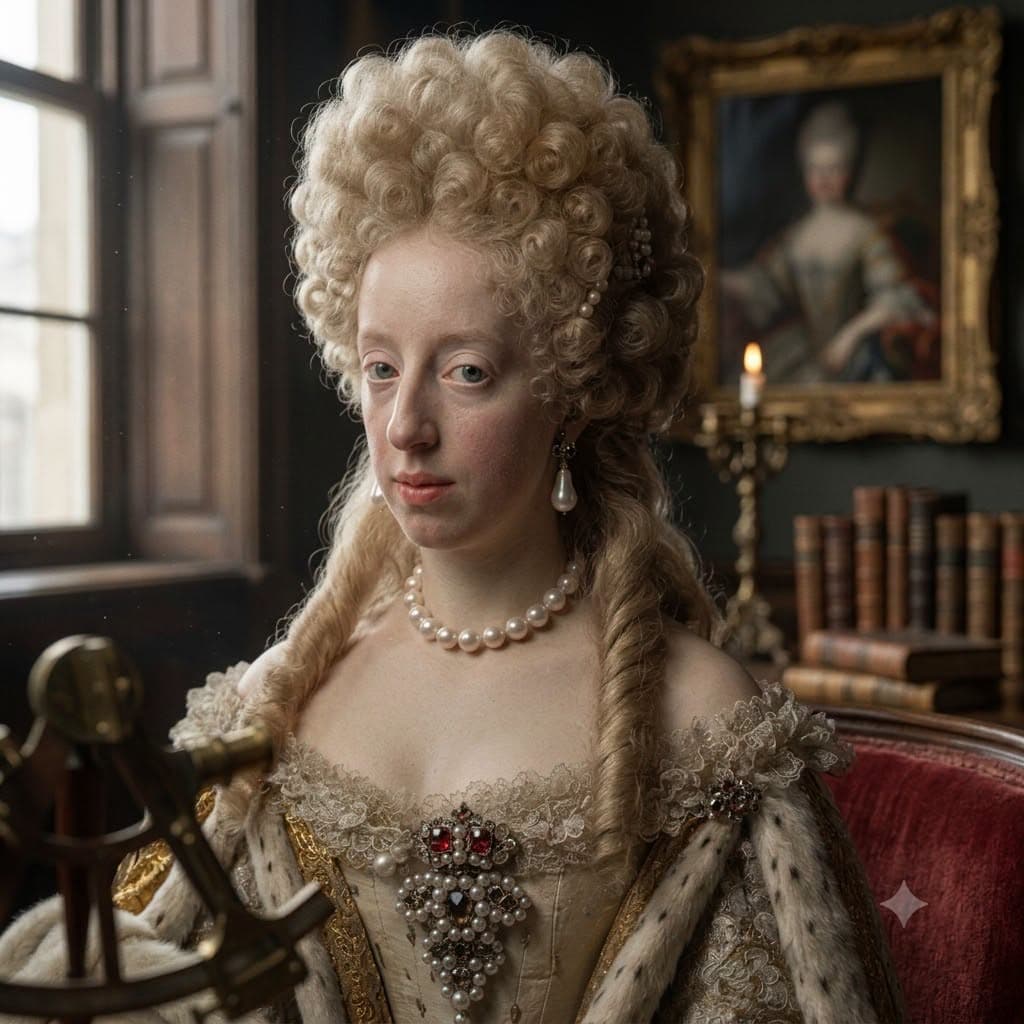
She was the most extreme product of what the Habsburgs had been building for generations. Her mother's parents had been uncle and niece. Her father's parents had been first cousins. Her father was her mother's uncle. When Maria Antonia was born she carried the same ancestral lines not as separate inheritances from separate people but folded together, the same blood appearing where different blood should have been. Genetic analysis of the Habsburg dynasty conducted across sixteen generations and more than three thousand individuals has established that Maria Antonia exceeded even Charles II of Spain by every measure available. Charles II is the name history reaches for when it wants to illustrate what Habsburg inbreeding produced. The portraits, the jaw, the catalogue of physical and cognitive damage. He is the cautionary tale. Maria Antonia was more extreme than him and history has almost entirely forgotten she existed.
She did not look like Charles II. She appears in her portraits as a young woman of ordinary Habsburg features, the jaw present but not catastrophic, the bearing composed and correct. The damage she carried was internal and would make itself known not in her face but in her children and in the childbed that killed her.
She married Maximilian Emanuel, Elector of Bavaria, in 1685. She was sixteen. He was known as the Blue Elector, a soldier and a politician of considerable ambition, and he had not married Maria Antonia for Maria Antonia. He had married her for what she carried, which was her mother's retained succession rights to the Spanish throne. The Habsburgs had forced her to sign those rights away before the wedding as a condition of the match. She signed. The rights passed out of her hands and the marriage proceeded and she began the work the marriage required of her.
Two sons were born and died. Leopold Ferdinand in 1689. Anton in 1690. Each pregnancy was a negotiation between a body that had been genetically compromised before it drew its first breath and the dynastic necessity that required it to keep trying. Maximilian Emanuel took the Countess Caunitz as his mistress while Maria Antonia was pregnant, conducting the affair with the openness of a man who saw no reason for discretion, and the court accommodated this because courts accommodated this.
She became pregnant a third time. On the twenty-eighth of October 1692 she gave birth to a son who lived. They named him Joseph Ferdinand. He was healthy. He was Habsburg and Bavarian and he carried through his mother's blood the compressed inheritance of everything the dynasty had spent two centuries constructing. Maria Antonia had done what she had been made to do.
She died eight weeks later. It was Christmas Eve, 1692. She was twenty-three years old. The cause was almost certainly puerperal sepsis, the infection that killed so many women in the weeks after childbirth in an era that did not understand what was killing them. She died at five-thirty in the morning in the Hofburg Palace in Vienna, in the same building where she had been born, having spent her twenty-three years producing the heir the dynasty needed and received from it a faithless husband, two dead infants, and a Christmas Eve death before she had reached twenty-four.
Joseph Ferdinand was six years old when the diplomats of Europe named him heir to the entire Spanish Empire. The Treaty of The Hague in 1698 and the will of Charles II of Spain both designated him the solution to the succession crisis that had consumed European politics for decades. He died in Brussels in February 1699 at the age of six. The cause was never established with certainty and the poisoning rumours that followed were never proven and were never fully dismissed. The War of the Spanish Succession began in 1701. It lasted thirteen years. It killed approximately seven hundred thousand people. It reshaped the political map of Europe.
Maria Antonia of Austria is buried in the Imperial Crypt beneath the Capuchin Church in Vienna. She has been there since Christmas Eve, 1692. Her mother is buried nearby. Margaret Theresa died at twenty-one. Maria Antonia died at twenty-three. Between them they had done everything the dynasty asked and none of what the dynasty asked had kept either of them alive.