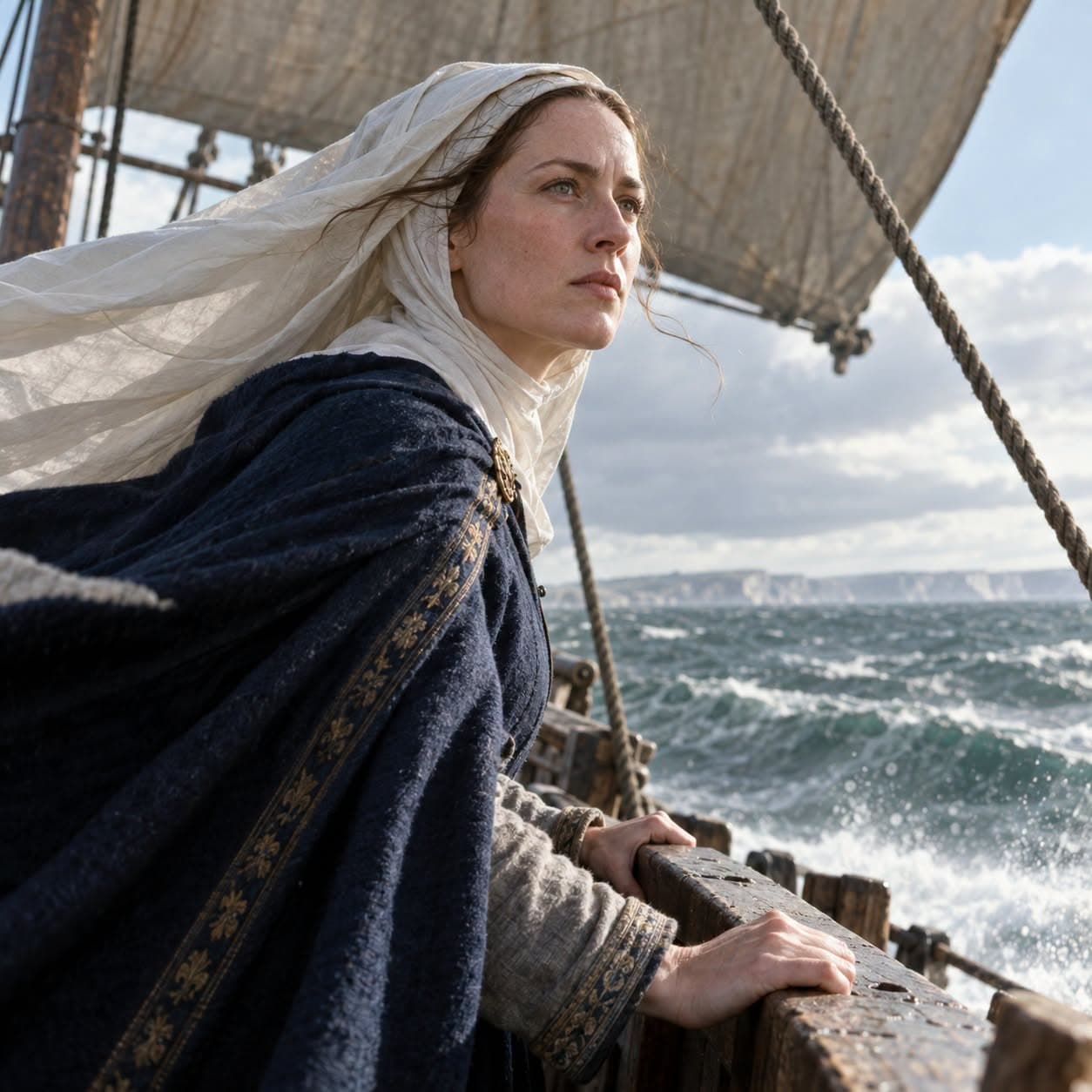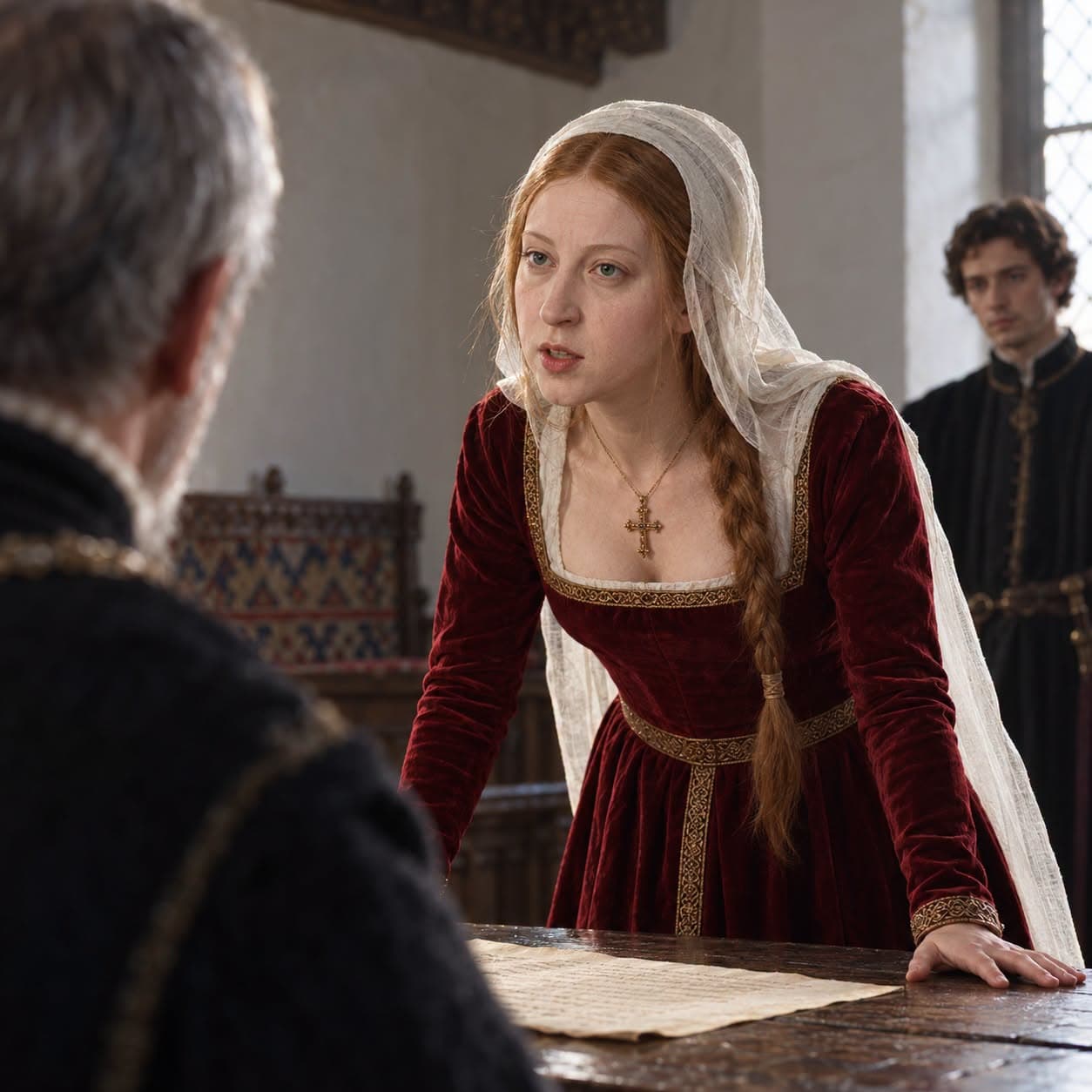
She was the daughter of the Emperor of Russia. In England she was expected to come second to the daughter of the King of Denmark.
Grand Duchess Maria Alexandrovna was born on 17 October 1853 at the Alexander Palace at Tsarskoye Selo, outside St Petersburg. Her father, the future Alexander II of Russia, was still heir to the throne. Her mother, also Maria Alexandrovna, had already lost one little daughter, Alexandra, before this second girl arrived. Maria grew up among six brothers, the only surviving daughter in a household that made a great deal of her.
There were the palaces, certainly, but there were also the smaller privileges of being a beloved child. In the park at the Alexander Palace, she and her brothers had a little house on an island where adults were not admitted. Her father was said to regard her as his favourite child. His accession in 1855 made her the daughter of the reigning emperor, but within the family she already held a place no one else could fill.
The man she married belonged to another large royal household. Prince Alfred, Duke of Edinburgh, was Queen Victoria's second son. The match joined the daughter of the Russian emperor to the son of the British queen, and both families were used to deciding how things should be done. Neither had much practice at being overruled.
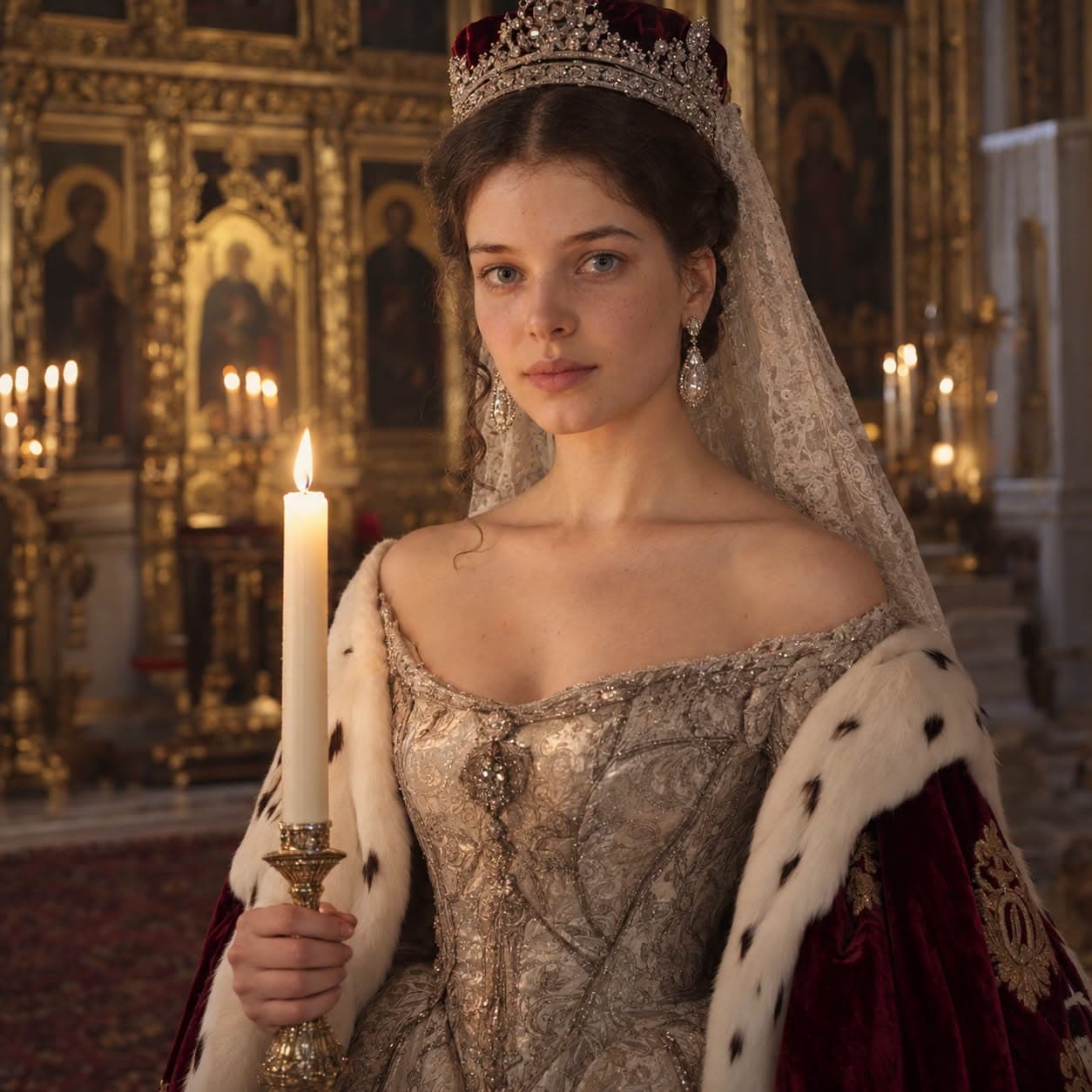
On 23 January 1874, twenty-year-old Maria married Alfred at the Winter Palace in St Petersburg. During the Orthodox service her brothers Vladimir, Alexei and Sergei took turns with Alfred's brother Arthur holding the golden crowns above the couple's heads. Bride and bridegroom carried lighted candles in a procession around the lectern. An Anglican service followed, performed by the Dean of Westminster. Two churches, two families, two ways of making the same marriage.
Victoria had not travelled to Russia, but she sent prayer books for the couple and myrtle for the bride's bouquet. The myrtle came from the bush at Osborne that had supplied sprigs for the weddings of her own children. Maria carried a piece of her new family's tradition alongside the splendour of her old one.
Finding her place in Britain proved less straightforward. At home she was an Imperial Highness. In her husband's country she was the wife of the queen's second son, and court order was not sentimental about whose daughter anyone had been. The Princess of Wales, married to the heir, came first. She was the daughter of the King of Denmark. At court, distinctions like these decided who went in first and who sat where on every formal occasion. A family disagreement could therefore be performed in public without anyone saying a word.
Maria thought she had the right to come before the Princess of Wales. Her father took up the question of her standing, and there was argument over her title as well as her place. Victoria said she did not mind the imperial style, as long as royal came first. Even the adjectives had to know their places.
During Alexander's visit to Britain in May 1874, the Court Circular began to call her Her Royal and Imperial Highness and placed her immediately after the Princess of Wales. She had gained ground. She would not displace the wife of the future king. Her father's position could carry her only so far.
Later that year Maria gave birth to a son at Buckingham Palace. He was called Alfred, after his father. A daughter followed at Eastwell Park in Kent in October 1875, and this time the first name came from Maria's side of the family. The little girl was Marie, the name her mother shared with the empress in Russia. Victoria was included among the baby's other names. She was not first.
In the nursery the two grandmothers became Grandmamma Queen and Grandmamma Empress. It was a tidier settlement than the adults had managed. Three more daughters followed: Victoria Melita, Alexandra and Beatrice.
The empress whose name she had passed on died in June 1880. Maria had gone back to Russia to be with her. The following March, Alexander II was killed by a bomb in St Petersburg. Maria was in England when her father was assassinated and hurried back to Russia for his funeral. She was twenty-seven. The father who had argued over her place at the British court was gone, and her mother had been dead less than a year.
Her own family continued across borders. In 1893 Alfred inherited the duchy of Saxe-Coburg and Gotha from his uncle, and Maria became its duchess. Young Alfred carried his father's name and the expectation that he would one day succeed him. His four sisters were growing up into lives that would take them, or had already taken them, into other European royal families, just as marriage had taken their mother into this one.
On 23 January 1899, Maria and Alfred marked their silver wedding at Friedenstein Palace in Gotha. There was a reception in the throne room, where diplomats, officials and representatives of public bodies offered their congratulations, with a state banquet and a gala performance planned for the evening. Twenty-five years after her brothers had held crowns above her head, another court gathered to honour the marriage. Two weeks later, on 6 February, the son who was to inherit that court died at Meran. He was twenty-four. Maria was forty-five.