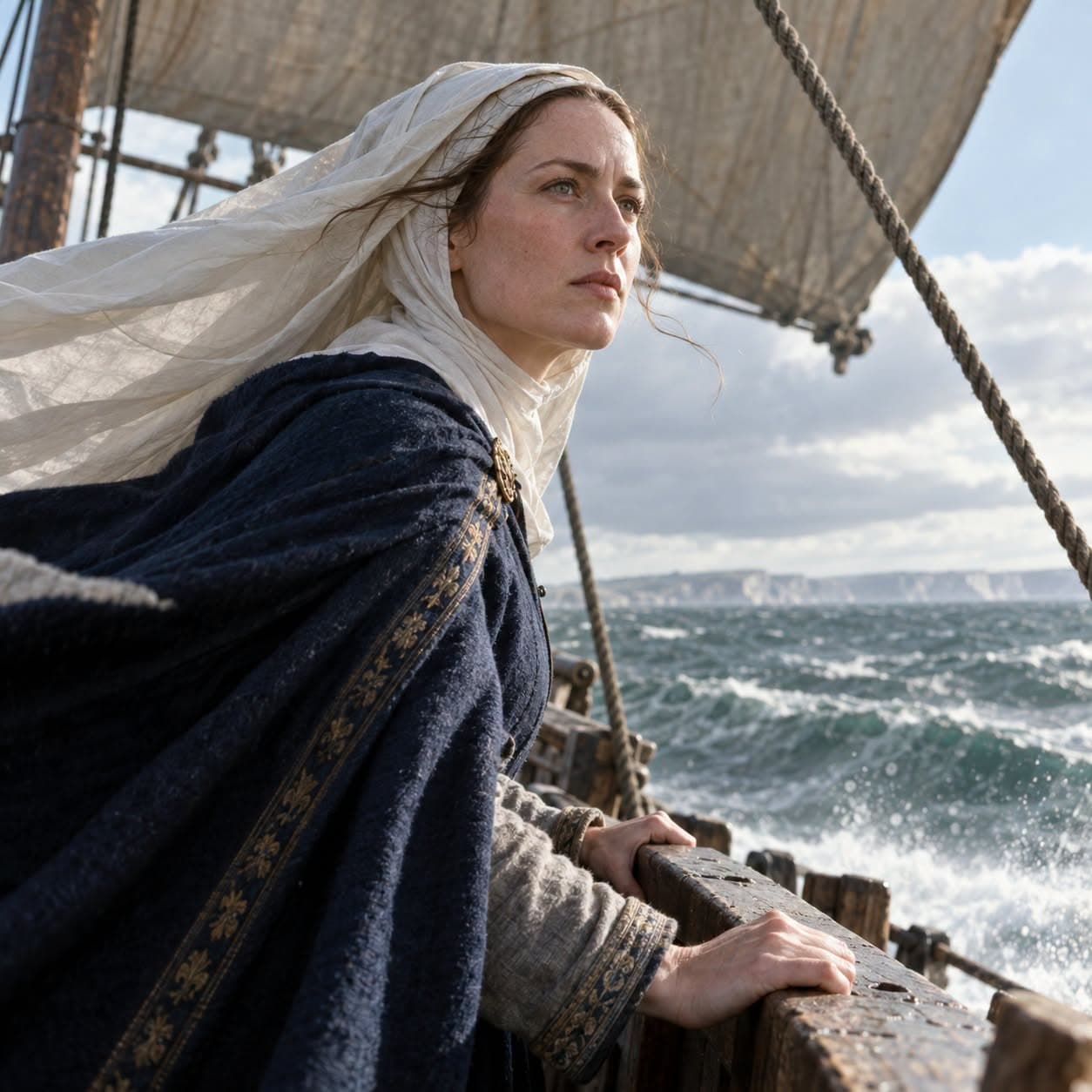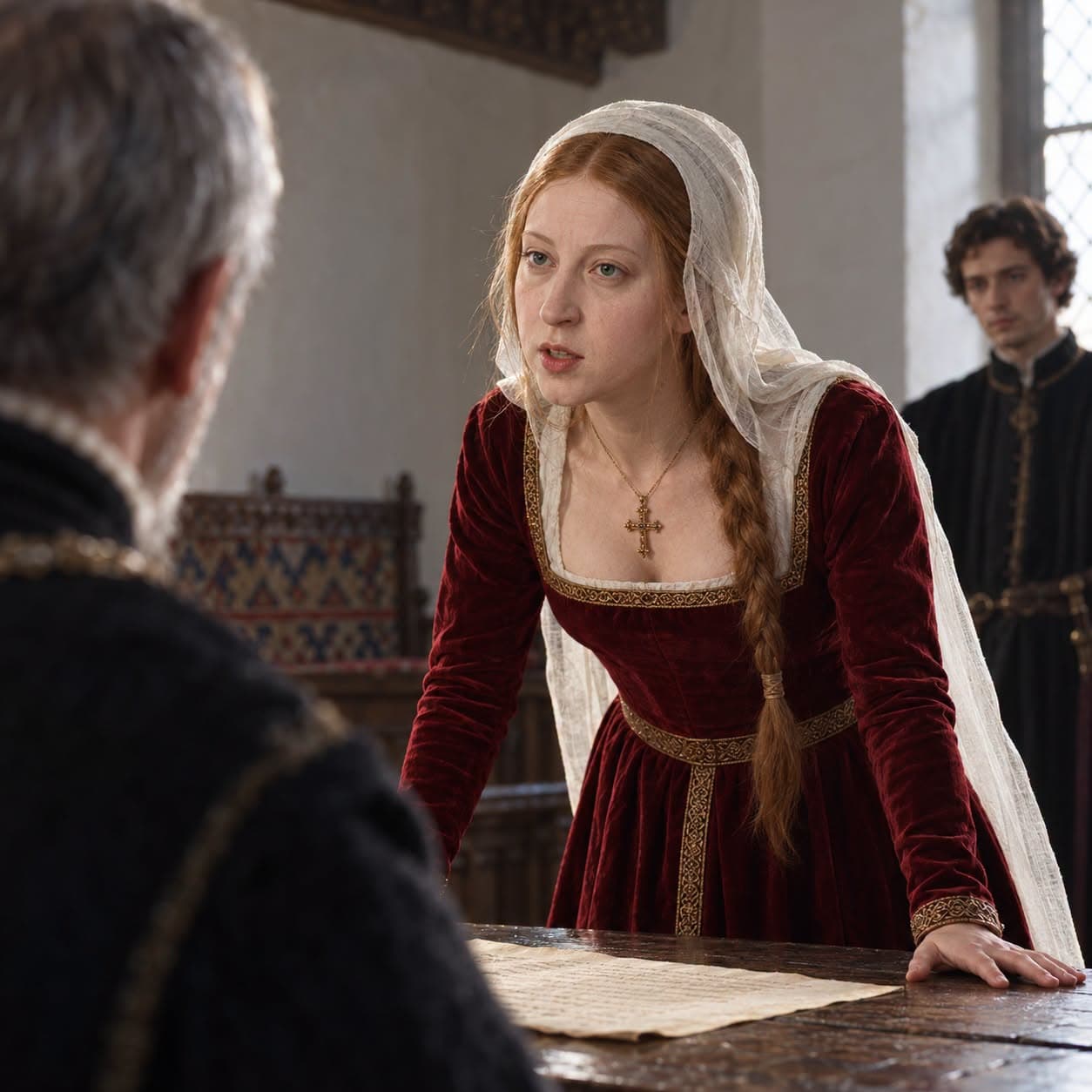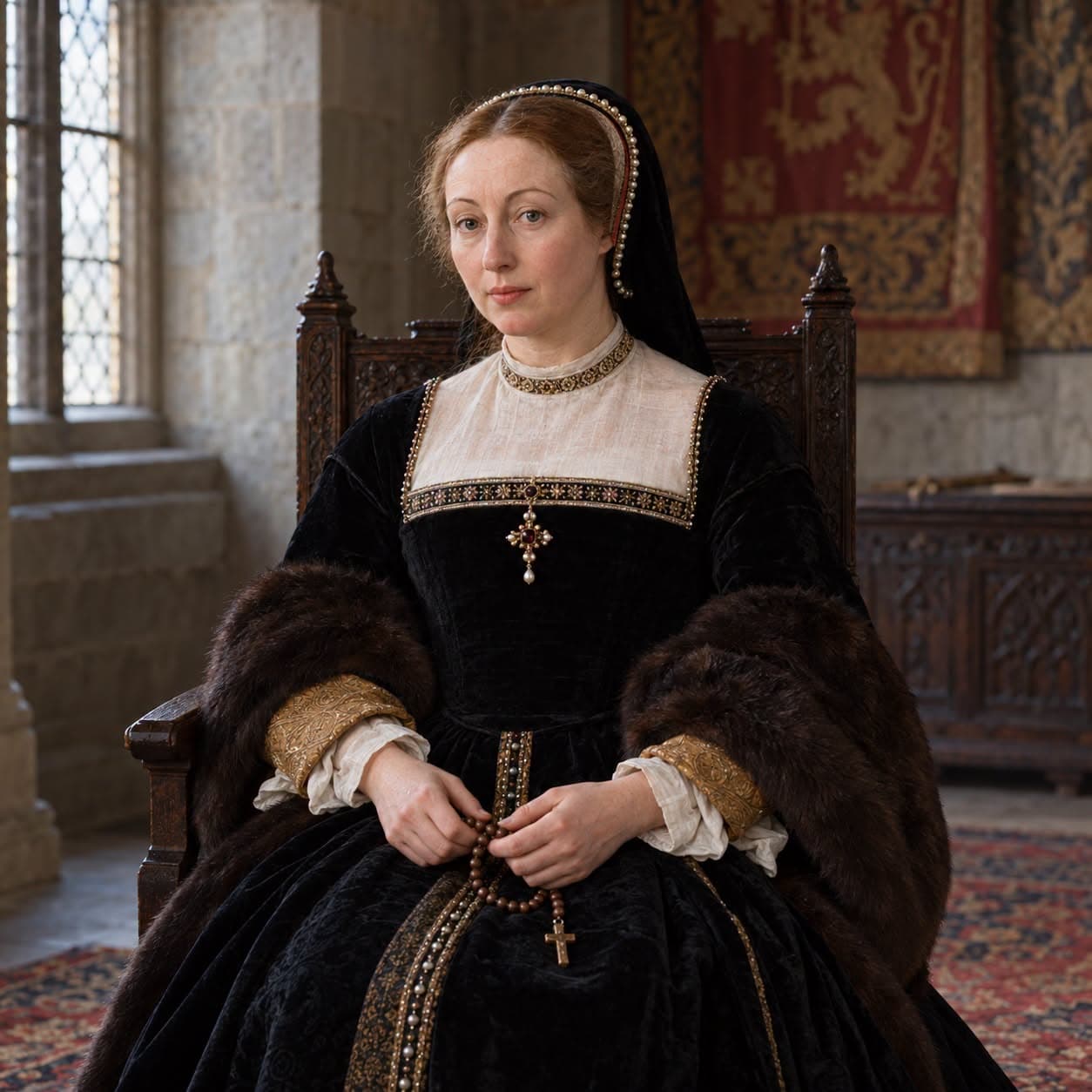
Margaret Tudor was fifty-one when she sent for her son to come to Methven. He arrived too late.
Margaret Tudor died at Methven Castle on 18 October 1541. She was Henry VIII's elder sister and the mother of James V of Scotland, a queen whose last requests had to be carried to the king by the friars who heard her confession. Only months earlier, she had stayed at his side through the loss of his two sons.
Her dealings with James had not always been gentle. Nearly four years before her death, Margaret had written to Henry about her third husband, Henry Stewart, Lord Methven, and her efforts to divorce him. She complained that Methven kept her from enjoying her lands, with James supporting him in possession of them. For twenty weeks, she said, she had followed her son from place to place seeking redress. Being the king's mother gave her someone to appeal to. It did not guarantee the answer.
In April 1541 James and his wife, Mary of Guise, lost both their infant sons within a day of each other. The children were Margaret's grandsons. On 12 May, writing from Stirling to her brother in England, she described the sorrow of the king and queen, and what she had done about it. "I have done great diligence to put them in comfort," she wrote, "and am never from them, but ever in their company, whereof they are very glad."
The letter has the ordinary difficulty of someone trying to attend to several people at once. Margaret apologised for not writing at length about her own affairs because she could get no leisure. Her brother would have to wait. Her son and daughter-in-law needed her, and she stayed. Whatever had passed between mother and son over her marriage and her lands, there was still a place for her beside him in grief.
By October, it was Margaret who needed him.
She fell ill at Methven on Friday 14 October, before nightfall, with a palsy. At first she did not believe the illness would kill her, and she put off making her will until she was no longer capable of it. She would die without one.
James was at Falkland. Margaret sent for him to come to her. When it became clear she was dying, she turned to her confessors with requests for the king, giving the friars a task that would outlast their attendance on her. They were to go before James, kneel, and beseech him to be good and gracious to the Earl of Angus.
Angus was Archibald Douglas, her former husband and the father of her daughter, Margaret Douglas. He had also held the young James under his control before the king broke free and Angus went into exile. A request for kindness to him crossed an old family quarrel in which marriage, motherhood and the government of Scotland had become hopelessly entangled. She lamented, too, and asked God's mercy that she had offended the earl. Even at the end, asking her son for a favour meant asking a king to relent towards an enemy.
Then there was her daughter.
Margaret Douglas was twenty-six and living in England, at her uncle Henry VIII's court, where she had been since her teens. Her mother asked the friars to speak for her too. James was to be good to her and let her have of her mother's goods, "forasmuch as she never had nothing of her before." James was the child of her marriage to James IV; Margaret was the child of her marriage to Angus. Now the mother was asking one child to make provision for the other.
These were requests to be delivered, rather than instructions secured in a will. The friars could carry them to James, but it would be James who decided what to do. Margaret had asked for her son to come. She had asked for grace towards Angus. She had asked for something for her daughter.
She died on the Tuesday, before nightfall. James reached Methven that same day, after she was gone. He ordered two of his household, Oliver Sinclair and John Tennent, to take and lock up all her goods for his use. The goods from which she had wanted her daughter to receive something were secured on the king's orders.
Margaret was buried at the Charterhouse in Perth. The royal household went into mourning, with loose gowns of plain black wool and black hoods that partly covered the face, supplied to the family and their servants. The king's tailor made mourning cloaks for the ladies who would attend her at the funeral. The mother who had kept company with the bereaved parents in May was now the person for whom their household dressed in black.
In December there was a second memorial for her. Her son had arrived at Methven too late to hear anything she asked of him. Through October, November and December, the royal wardrobe gave his family nothing to wear but black.