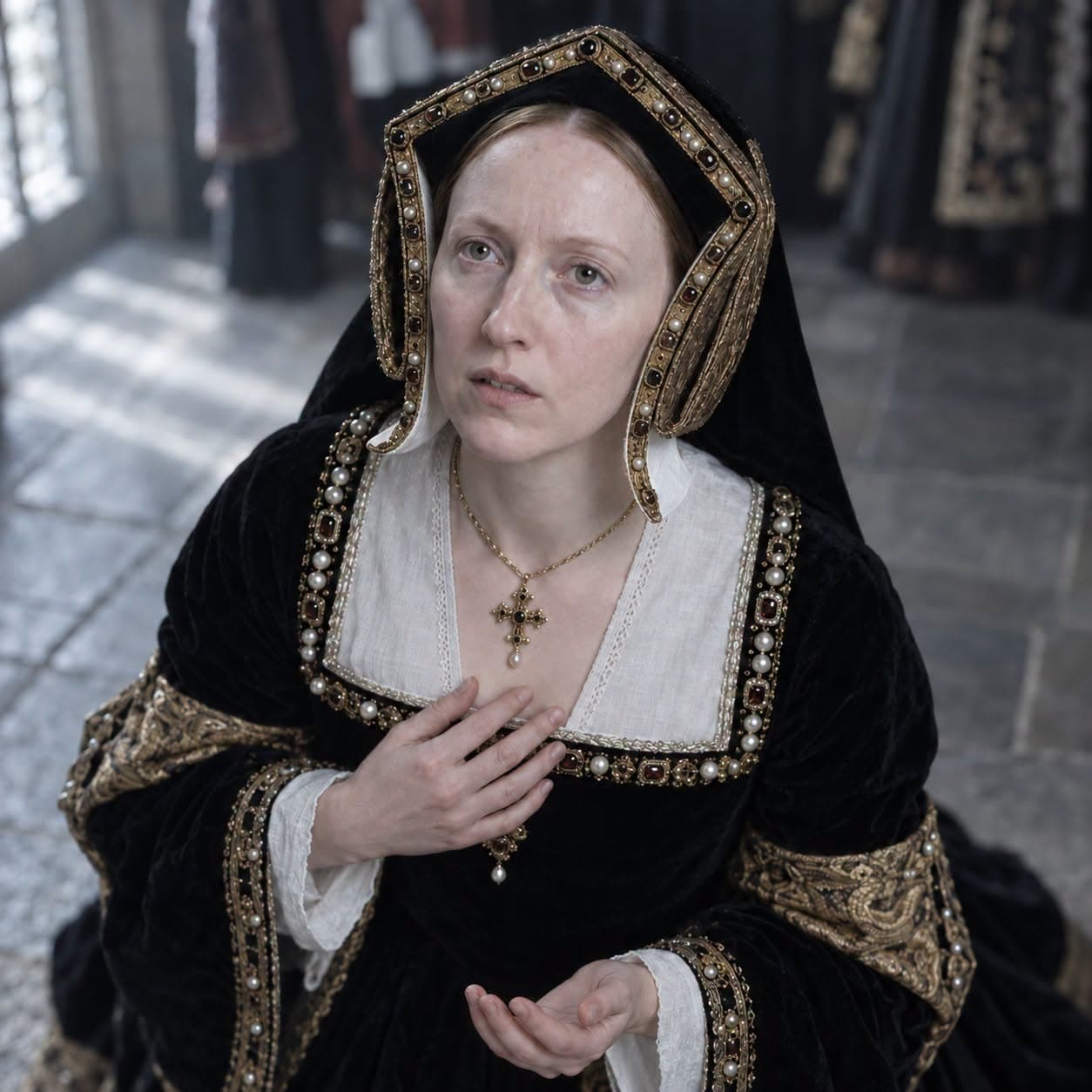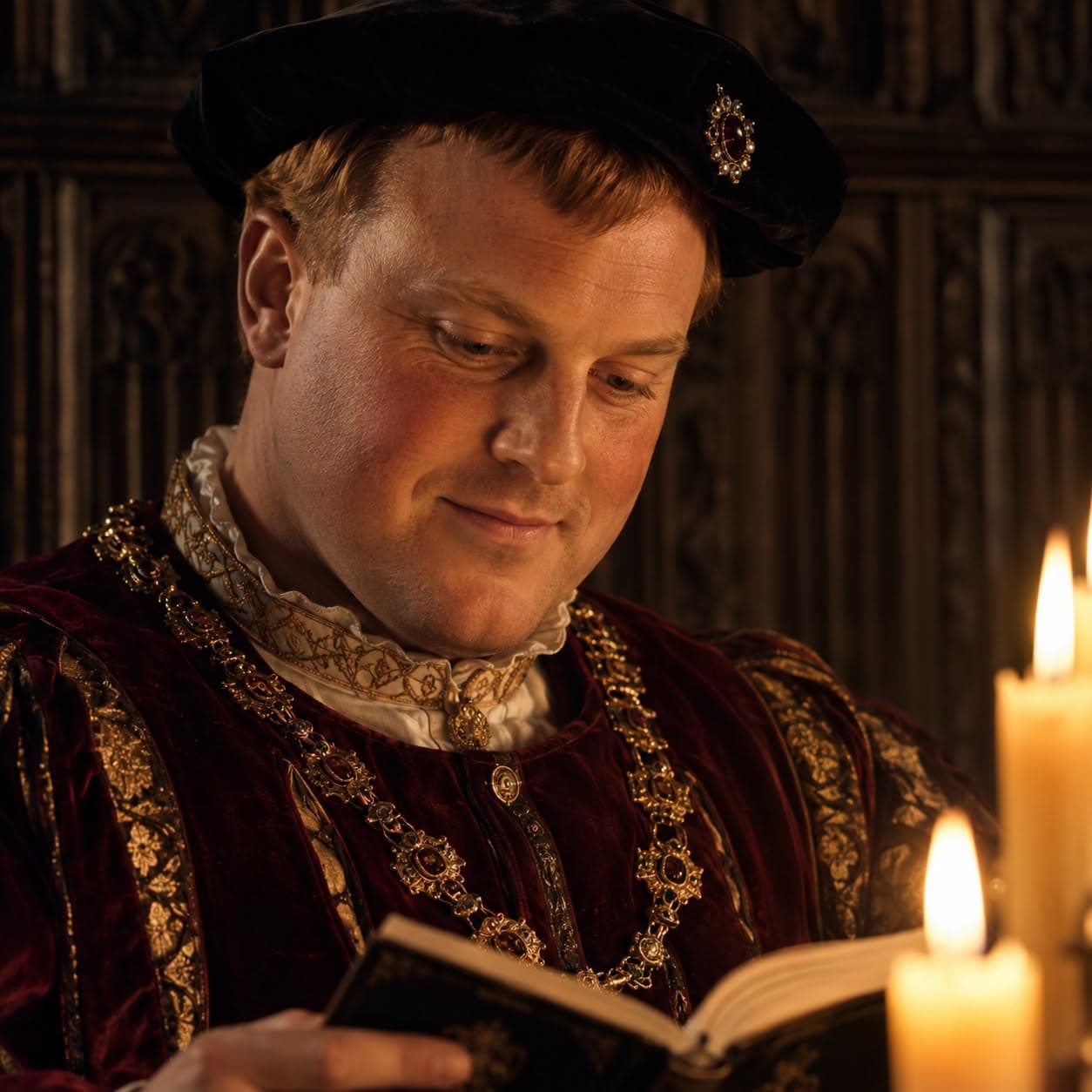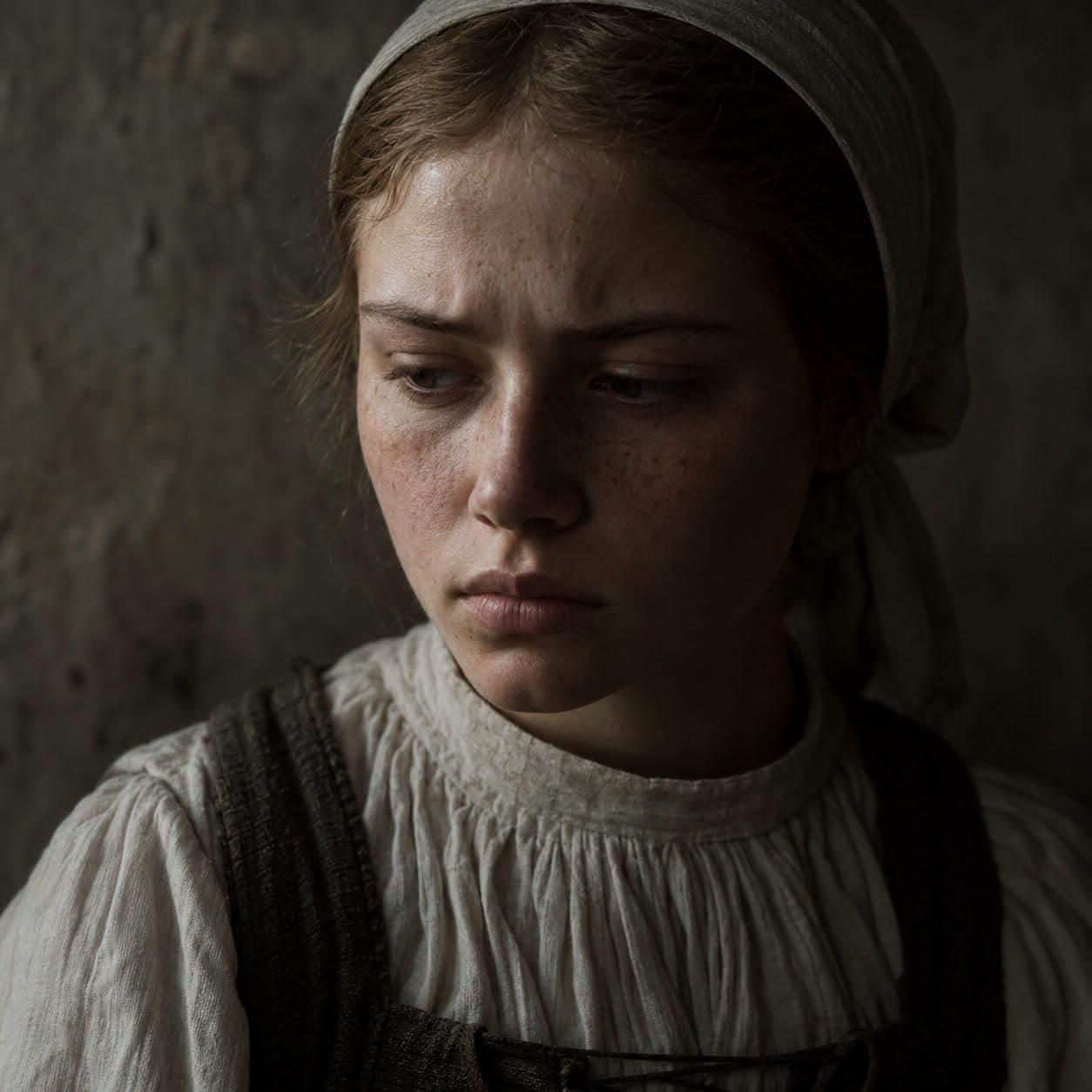
Margaret Tudor was five years old when they promised her to a king sixteen years her senior. She was thirteen, and newly motherless, when she finally left to marry him. On the eighth of July 1503 she would say goodbye to her father for the last time.
The promise had come first. In 1497, before Margaret Tudor had learned to read with any great fluency, her father contracted her to James IV of Scotland, a man already in his late twenties. The treaty confirming it was signed in January 1502, when she was twelve and he was approaching thirty. She was married by proxy at Richmond that same month, the Earl of Bothwell standing in for James, dressed in cloth of gold as though he were the king himself.
Her mother died five months before she left England. Elizabeth of York went into confinement at the Tower in early 1503, gave birth to a daughter, Katherine, on the second of February, and died of childbed fever nine days later, on her own thirty-seventh birthday. The infant Katherine did not live much longer than her mother. Within a single fortnight, Margaret had lost both a parent and a newborn sister.
In the last year of her life, Elizabeth had bought her daughter new strings for her lute and a keyboard instrument, small things bought for a girl who loved music, not knowing how little time was left to buy them in. Margaret spent the months after her mother's death being fitted and dressed and readied to leave for a country she had never seen, to marry a man she had never met, arrangements set in motion by two kings before she was old enough to have any say in them.
She left Richmond with her father at the end of June 1503. Henry VII rode north with her himself. His wife had died five months earlier. His newborn daughter had died with her. Now his eldest surviving daughter was leaving too.
They travelled together as far as Collyweston, her grandmother Margaret Beaufort's house, arriving in early July. On the eighth of July, within days of arriving, he had to stop, and she did not. Whatever words passed between a widower king and his thirteen-year-old daughter at that parting were not written down. He turned back toward the only family he had left.
She continued north, toward a stranger.
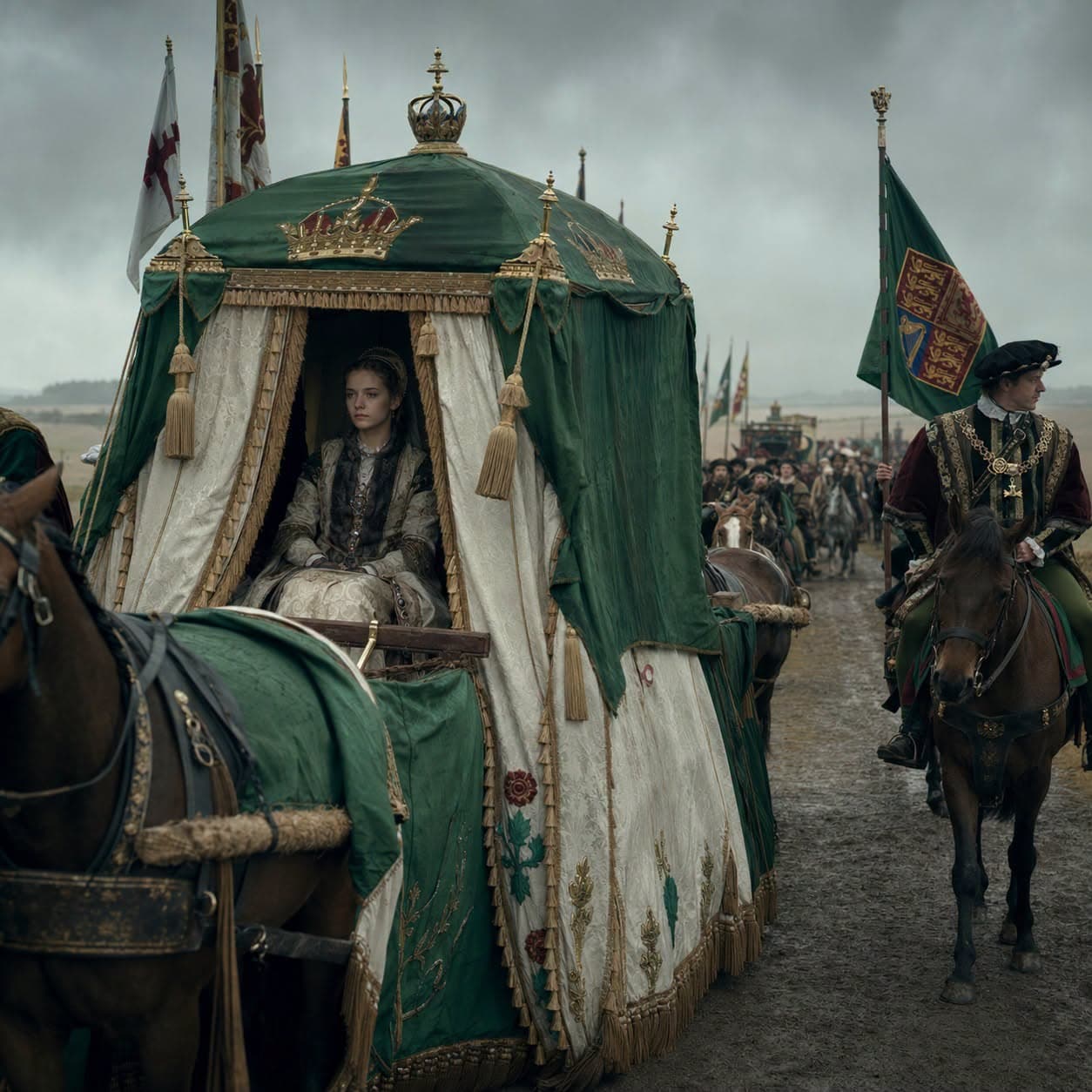
The journey that followed was built to look like triumph. Her litter was covered in Tudor green and white, bearing the joined arms of England and Scotland, and towns along the route rang bells and staged displays as she passed. She crossed into Scotland at Berwick on the first of August, met James for the first time at Dalkeith two days later, and married him at Holyrood on the eighth of August 1503. She did not have her first child until 1507, four years on, an interval her grandmother and mother had fought for years earlier, insisting she was too young to survive childbirth any sooner.
Margaret Tudor's great-grandson would inherit the English throne exactly a century later. The line she had left behind in London had died out entirely.