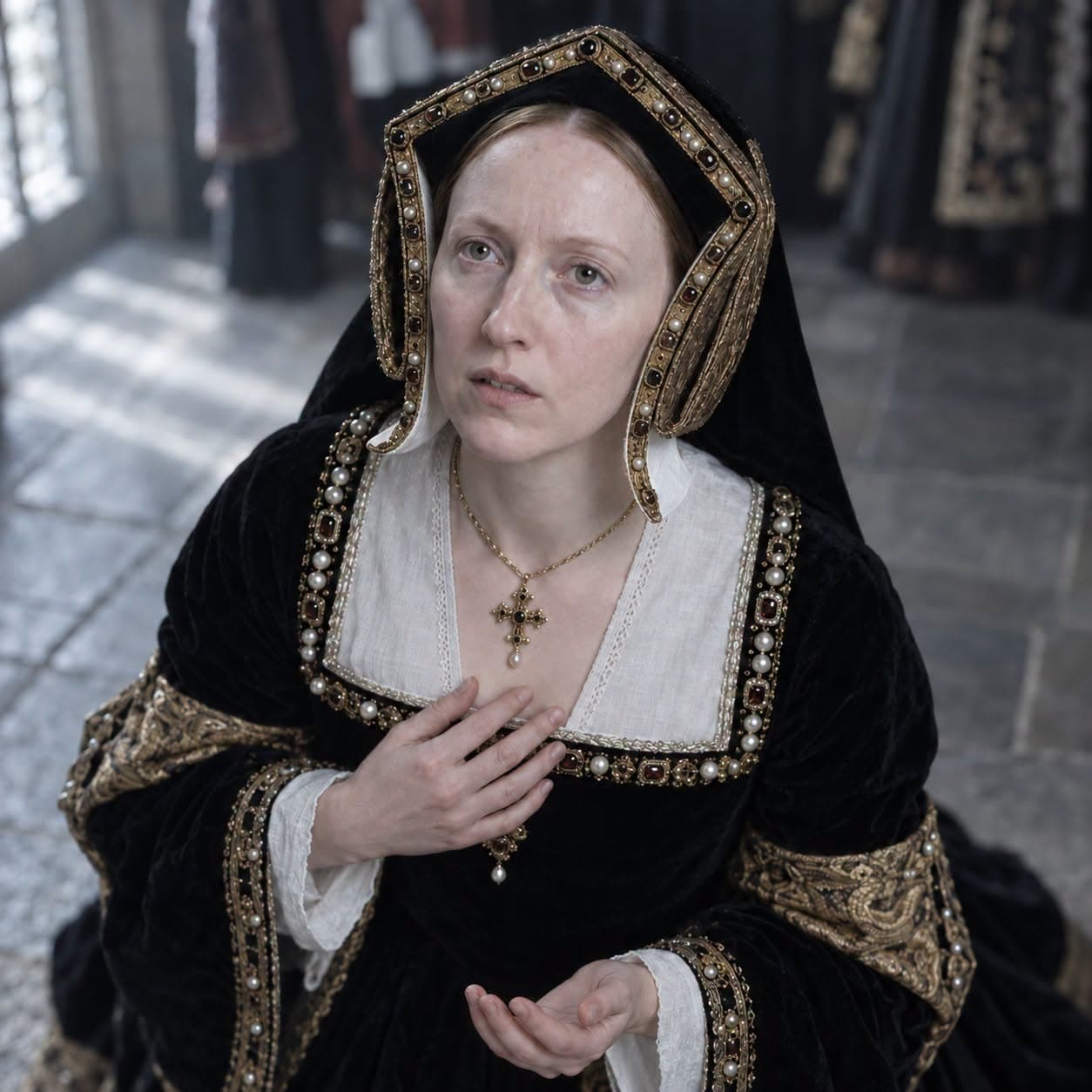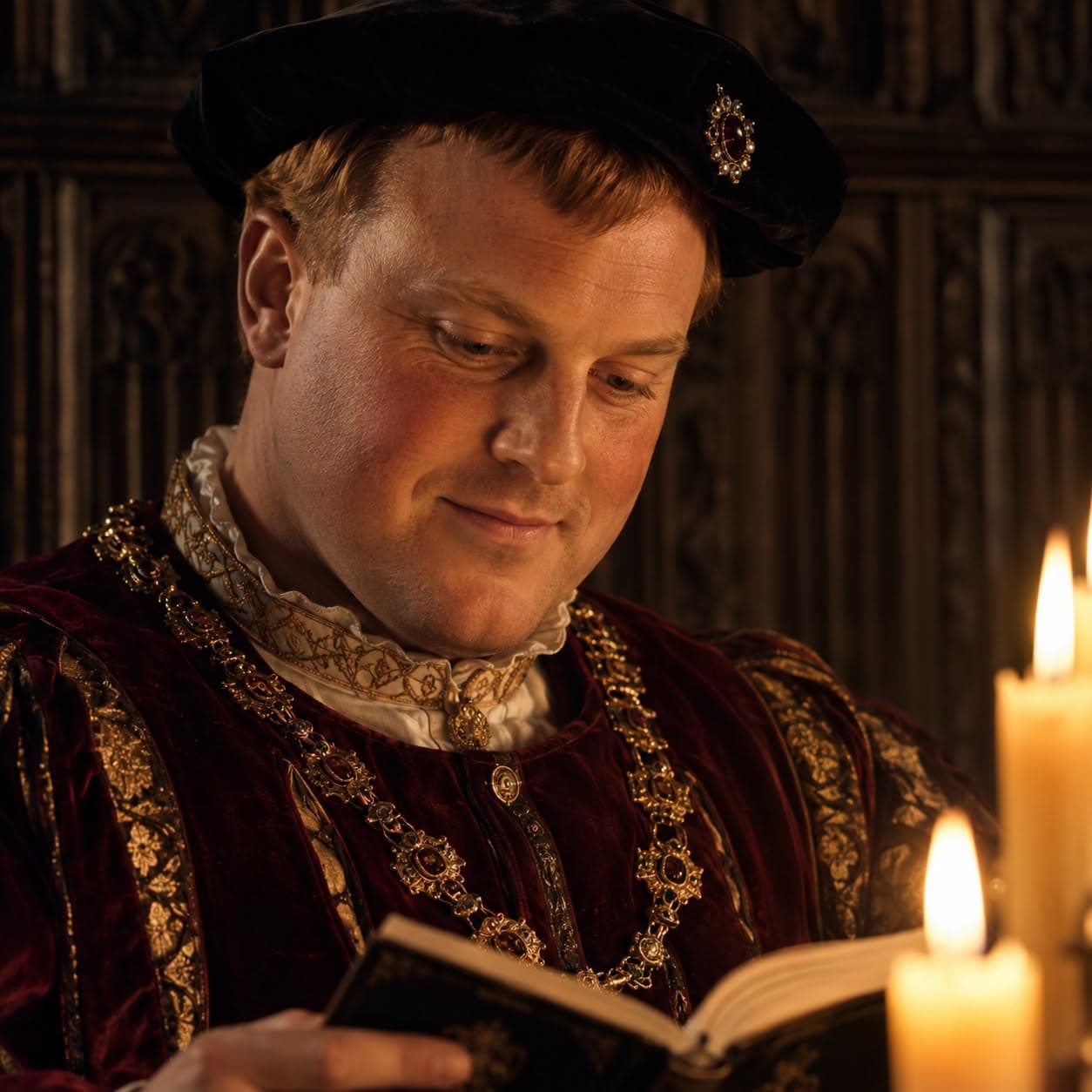
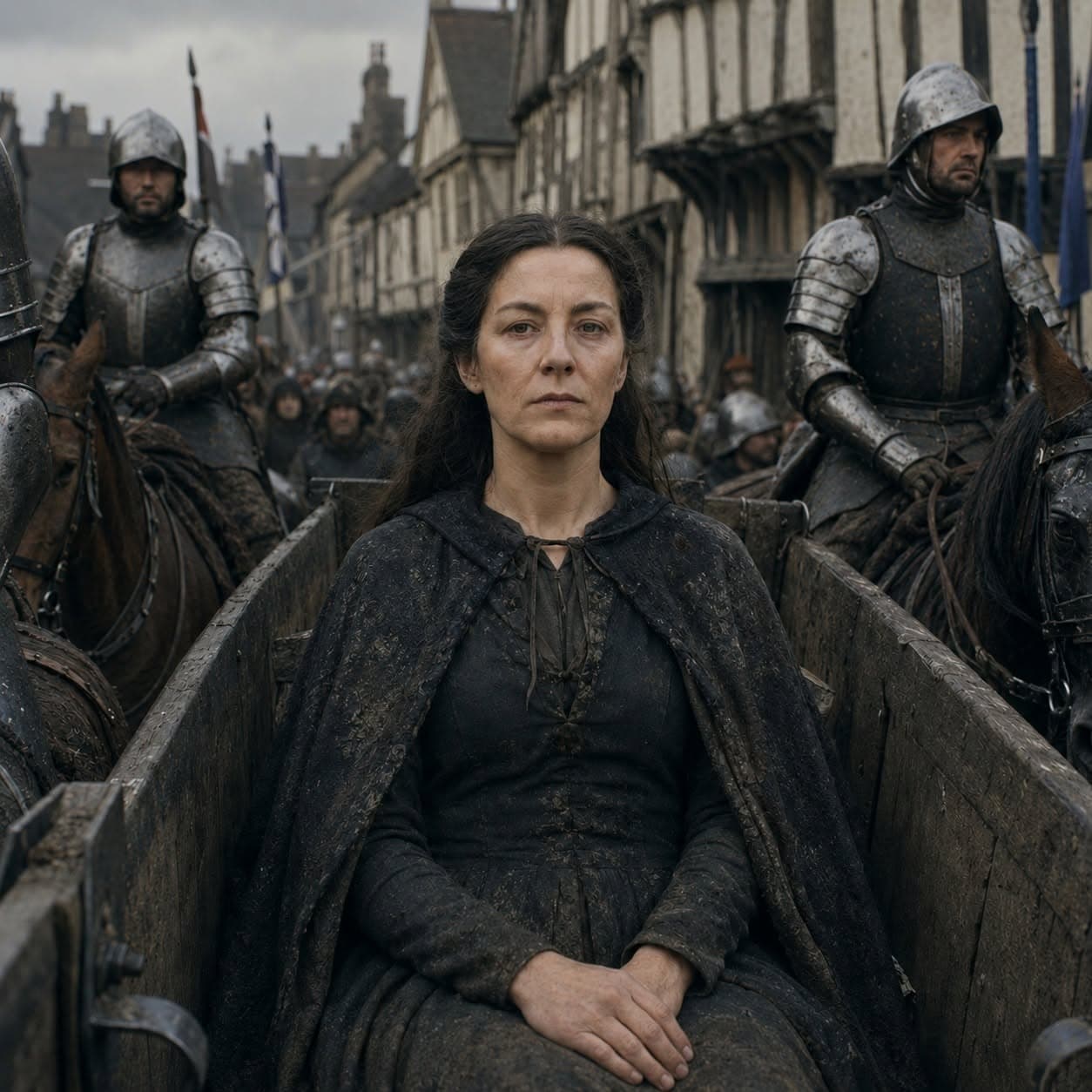
She fought for his crown harder than he ever did. He was buried in an unmarked grave. She was ransomed like cargo and sent back to France to die in poverty.
Margaret of Anjou was born on the twenty-third of March 1430 at Pont-à-Mousson in the duchy of Lorraine, the second daughter of René of Anjou and Isabelle of Lorraine, and she arrived in England in April 1445 as the fifteen-year-old bride of Henry VI, King of England, Lord of Ireland, and claimant to the throne of France, a king whose grip on all three was already, at the moment of their marriage, less secure than anyone in either court was prepared to say aloud.
Henry was twenty-three years old, devout, gentle, entirely unsuited to the business of being a medieval king, and he had inherited a war in France that was going badly and a court that was fracturing along lines of faction and appetite that no amount of piety was going to hold together. Margaret had been sent to seal a truce. She had no dowry of consequence. She had no powerful English connections. She had her face, her intelligence, her considerable force of will, and a husband who would increasingly need all three on his behalf because he was not going to supply them himself.
She bore him one son. Edward of Westminster was born in October 1453, and his arrival was noted at court with the specific unease of people who understood what it meant, because Henry VI at the time of his son's birth was two months into a catatonic stupor that would last for more than a year, unresponsive, unaware of his surroundings, unable to acknowledge the child that was placed in front of him. The paternity of the Prince of Wales was questioned immediately and publicly, because in the absence of a conscious king there were men at court who needed the succession to be uncertain, and uncertainty was easy to manufacture.
Richard Duke of York was one of those men. He had governed England as Protector during Henry's collapse, had tasted what proximity to the crown felt like, and was not disposed to return to the outer rooms now that Henry had recovered. Margaret understood what York represented with a clarity her husband did not share, and she spent the years that followed doing what queens were not, by convention, supposed to do: building a military and political faction, raising funds, securing alliances, and preparing for a war that Henry's court preferred not to acknowledge was coming.
It came.
The first battle of St Albans in 1455 opened the conflict that history would call the Wars of the Roses, and what followed over the next sixteen years was a sequence of battles, reversals, captures, recoveries, and catastrophes that Margaret of Anjou navigated with a persistence that had no precedent among English queens and has rarely been matched since. She lost battles. She won others. She fled to Scotland with her son and negotiated military support from the Scottish court by ceding Berwick to the Scots. She came back. She always came back.
In 1461 Edward of York crushed the Lancastrian forces at Towton in a battle fought in a snowstorm that left tens of thousands of men dead in the fields of Yorkshire, the bloodiest battle ever fought on English soil, and Henry VI was deposed and Edward became Edward IV and Margaret and her son escaped to France with nothing.
She spent nine years in exile. She negotiated with Louis XI of France, with the Earl of Warwick, who had made Edward IV and was now prepared to unmake him, with anyone who would listen to a queen without a kingdom. She made alliances with men she despised because the alternative was to stop. In 1470 Warwick put Henry VI back on the throne and Margaret prepared to return. She landed in England in April 1471 on the same day that Warwick was killed at the Battle of Barnet.
She fought on. At Tewkesbury on the fourth of May 1471 the Lancastrian army was destroyed. Her son Edward, Prince of Wales, eighteen years old, was killed in the battle or immediately after it. The manner of his death is disputed. What is not disputed is that she was told, and that the world she had spent twenty-five years holding together by force of will ended in that moment on a Gloucestershire field on a May afternoon. Henry VI died in the Tower of London three weeks later, almost certainly murdered. Margaret learned of it in captivity. She had lost her son, her husband, and the throne she had bled to defend inside a single month. The sources do not record what she said. Some losses are too large for recorded speech.
Margaret was held in England for four years. Edward IV kept her in comfortable captivity, which was a calculation rather than a kindness, because a living Margaret of Anjou was a symbol he controlled and a dead one was a martyr he did not need. In 1475 Louis XI ransomed her for fifty thousand crowns. She signed away her rights to her father's lands in France, the last thing she had left, as a condition of her release.
She lived out her remaining years in Anjou in poverty that contemporaries described as genuine and humiliating for a woman of her station, dependent on a small pension from Louis that was frequently late, without income, without the son she had raised for a throne he never reached, without the husband she had held on a throne he could not hold himself.
Margaret of Anjou died on the twenty-fifth of August 1482 at the Château de Dampierre near Saumur. She was fifty-two years old.
Her dogs were taken by her creditors before her body was cold.