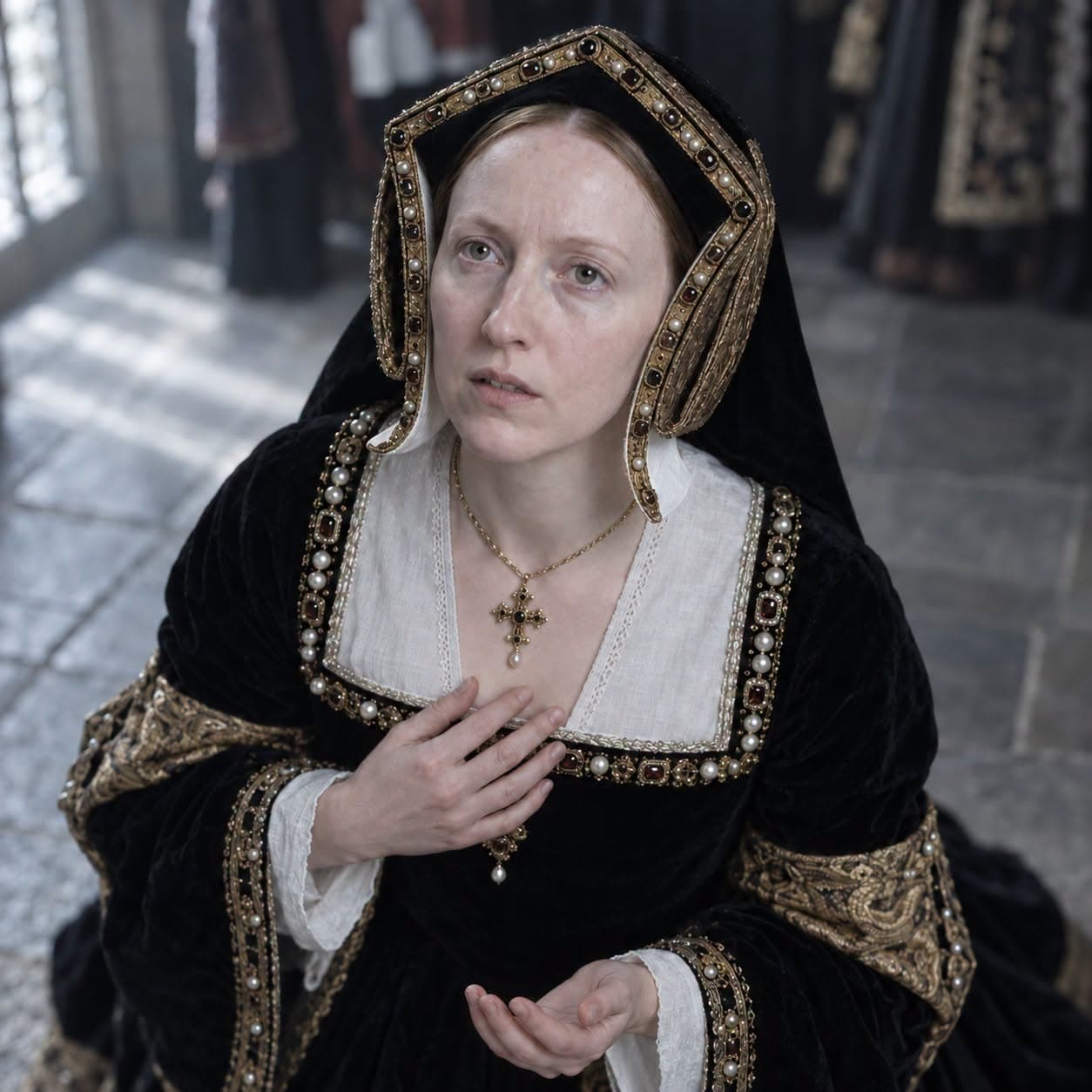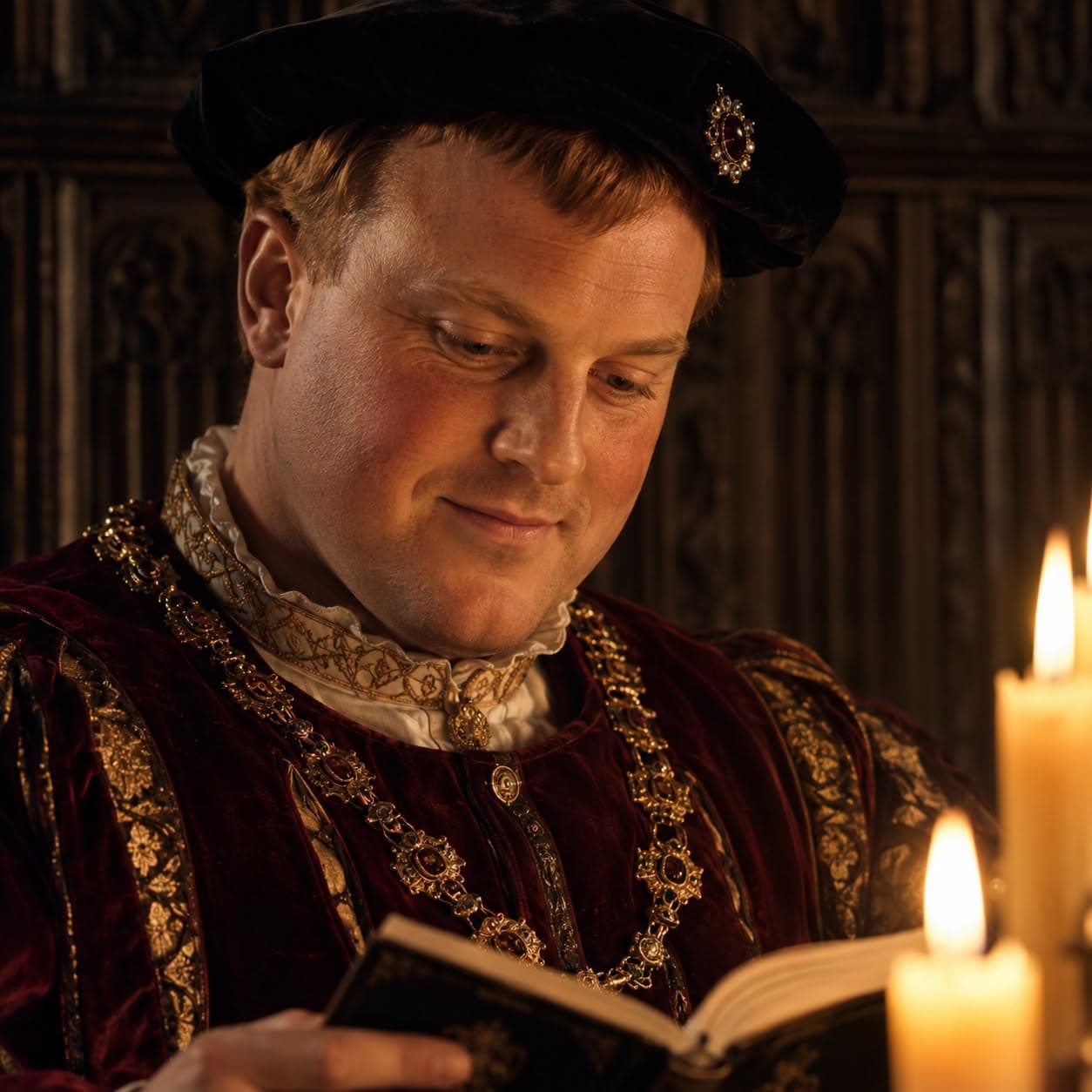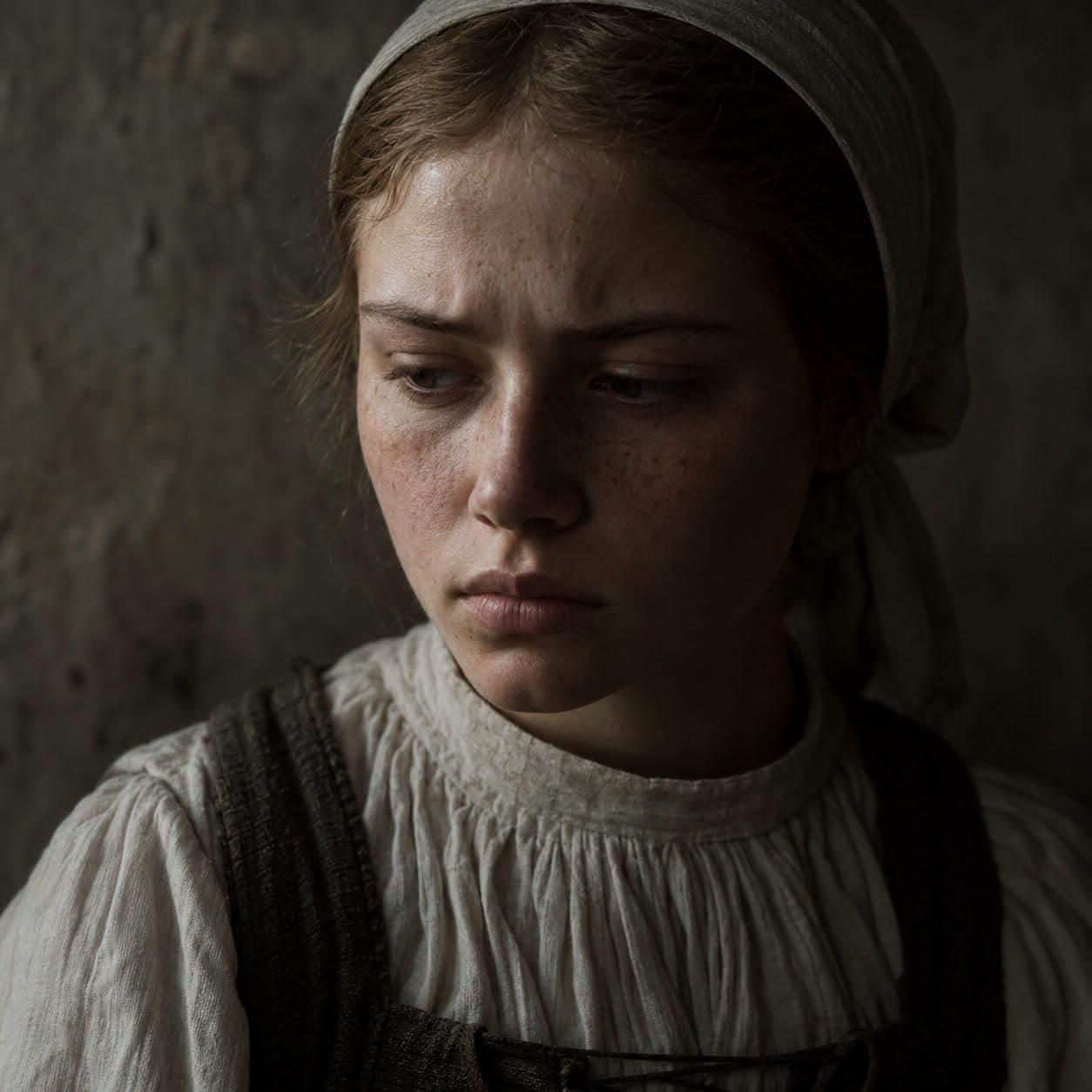

She exchanged rings with a man in secret and Henry VIII put him in the Tower. He died there. She walked out and went back to court and spent the next forty years reaching for the crown that had killed him.
Margaret Douglas was born on the eighth of October 1515 at Harbottle Castle in Northumberland: her mother Margaret Tudor had fled Scotland in political crisis, gone into labour on the road, and delivered her daughter in a border fortress because there was nowhere else available.
Her mother returned to Scotland in 1528 and left her behind. Henry VIII collected his niece and brought her to court, positioned her in the royal household, and watched her with the specific attention of a man who understood that a Tudor girl of her proximity to the succession was an asset requiring careful management.
She was thirteen when she arrived. She was twenty when she fell in love.
Lord Thomas Howard was a younger son of the Howard household, charming, with no title of his own and no particular future, and by the end of 1535 he and Margaret had secretly betrothed themselves without asking the king's permission. Henry discovered it in July 1536, in the weeks immediately following Anne Boleyn's execution, at the precise moment when his daughters had been bastardised and Margaret stood uncomfortably close to the line of succession. An act of attainder was passed. Both were sent to the Tower.
They were in the Tower together and both fell ill. Margaret was transferred to Syon Abbey in the autumn. On the thirty-first of October 1537, Lord Thomas Howard died in the Tower. He was approximately twenty-five years old. She had been in custody for over a year. She was twenty-two. She had watched Henry's court take a man for the crime of loving her and keep him until he was dead.
She went back to court.
The seven years between the Tower and her marriage are not years that left many records, because Margaret Douglas spent them ensuring they would not. She appeared at the correct ceremonies. She wore the correct expressions. She accepted New Year's gifts from her uncle the king and wrote him letters of gratitude and attended his court and watched his wives come and go: Jane Seymour dead in childbed, Anne of Cleves annulled and pensioned, Catherine Howard, her friend, arrested and taken to the Tower and executed.
She filed every piece of intelligence away and she said nothing that could be used against her and she waited. She served as chief mourner at Jane Seymour's funeral in 1537 with the composed efficiency of a woman who had learned, in the Tower, the precise cost of visibility. She had been twenty-two when they released her. She was approaching thirty and she had not yet made a single mistake.
In 1544 she married Matthew Stewart, fourth Earl of Lennox, at St James's Palace, in the presence of Henry himself: the first marriage of her life conducted with the king's knowledge, earned through seven years of calculated patience.
Matthew was Scottish, Catholic, of royal blood, in exile from a Scotland that had turned against him, and he needed what Margaret had: Tudor proximity, English backing, the credibility that came from standing next to power. She needed what he had: a name, a title, a legitimate path to the succession that a woman alone could not walk. They appear to have been genuinely fond of each other. In the register of Margaret Douglas's life that is a detail worth noting.
They had children. Most died. Two sons survived: Henry, Lord Darnley, born 1545, and Charles, born 1555.
She raised them with an intentionality that was visible to everyone who encountered them. Languages: Latin, French, Italian, the languages of courts and treaties, not merely of conversation. Music, because a prince without accomplishment was a prince who could not command a room. Deportment, bearing, the management of appearance in spaces where appearance was read as statement.
She taught them their genealogy the way other mothers taught catechism: carefully, repeatedly, because she needed them to understand, before the world had occasion to tell them, exactly what they were. They were great-grandsons of Henry VII through their mother. They were of royal Scottish blood through their father. They had a claim to the English throne that no act of parliament had entirely extinguished. She had spent thirty years learning what that kind of claim was worth and she was not going to let her sons arrive at adulthood without understanding it.
She watched Edward VI reign and die. She watched Mary Tudor burn her Protestants and die without an heir. She watched Elizabeth come to the throne in 1558 and understood, with the precision of a woman who had been reading successions since girlhood, that Elizabeth would never name an heir willingly and that the question of who came after her was the most valuable question in England.
In 1565, Henry Lord Darnley married Mary Queen of Scots. Margaret had arranged it. The marriage put her bloodline on two thrones simultaneously. Elizabeth was furious. Margaret was sent to the Tower.
In February 1567 they told her Darnley was dead.
He had been murdered at Kirk o' Field in Edinburgh, the house destroyed by an explosion in the night, his body found in the garden outside, the specific violence of it still unexplained and still debated and entirely final.
He was twenty-one years old. He had been king consort of Scotland for less than two years. Margaret was in the Tower without her husband, without access to Scotland, without any practical means of learning more than the messenger had brought her, and the messenger had brought her the information that the child she had spent twenty years constructing into a dynastic instrument was dead in a garden in Edinburgh and she had not been there and she would not be able to bury him.
Margaret Douglas sat in the Tower and she received that information and she did what she had always done. She calculated.
Mary Queen of Scots had already borne Darnley’s child when he died. His name was James. Margaret came out of the Tower and denounced Mary for her son's murder with the full ferocity of a mother who had kept her fury under control for thirty years and was briefly done keeping it. Then she was reconciled with her. Because James was alive. Because the board still had a move on it.
Matthew was assassinated in Scotland in 1571. In 1574 Margaret was sent to the Tower for the last time, her son Charles having married without the queen's permission. She was sixty years old. She had been in the Tower four times now, by two different monarchs, for the same offence: wanting too much.
She was released in 1577. Charles died the same year. She died on the ninth of March 1578 at Hackney, in her own house, in her own bed. She was sixty-two years old.
In 1603 her grandson James VI of Scotland rode south and was crowned King of England. He was the great-great-grandson of Henry VII. He was exactly what Margaret Douglas had been building toward since the morning she walked out of the Tower and Thomas Howard did not.
She had missed it by twenty-five years. It arrived precisely on schedule.