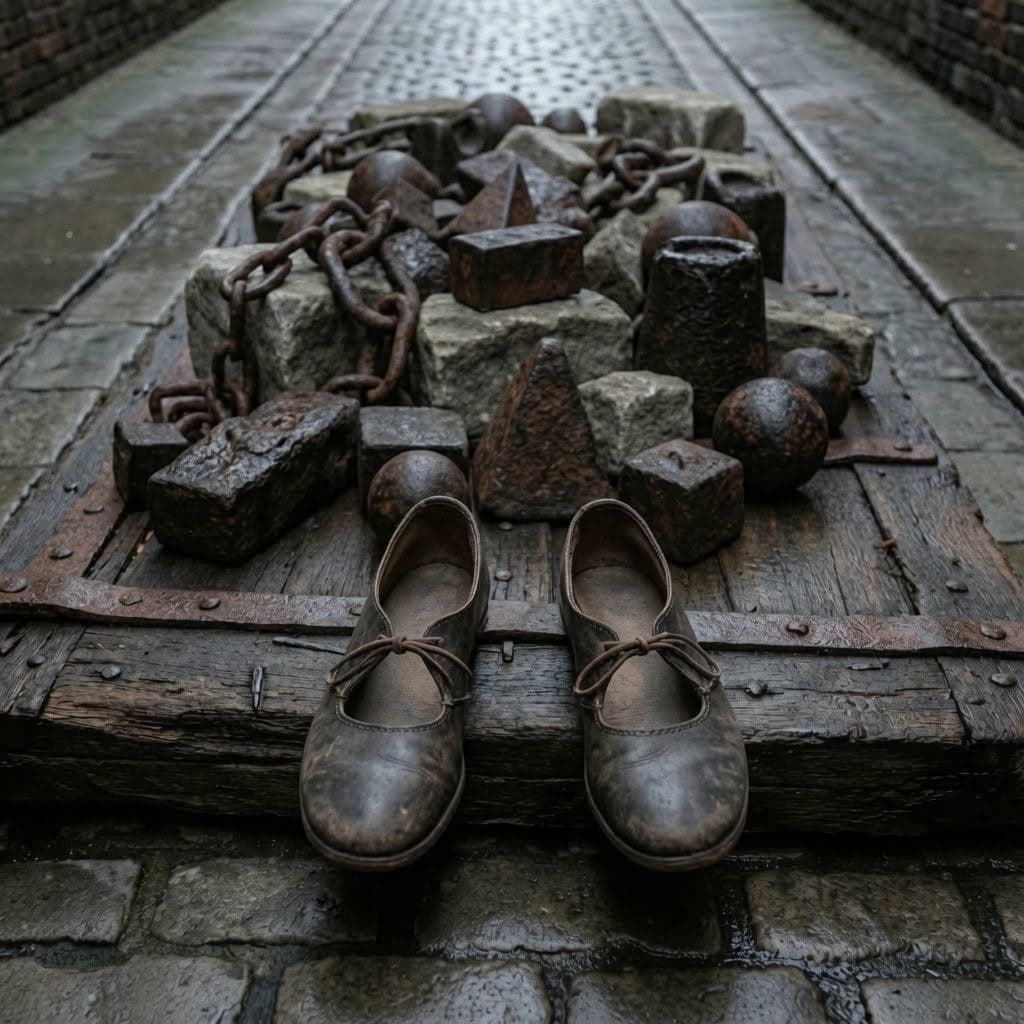
On the morning they killed her, Margaret Clitherow sent her shoes and stockings to her daughter Anne. She walked the last stretch of her life on bare stone.
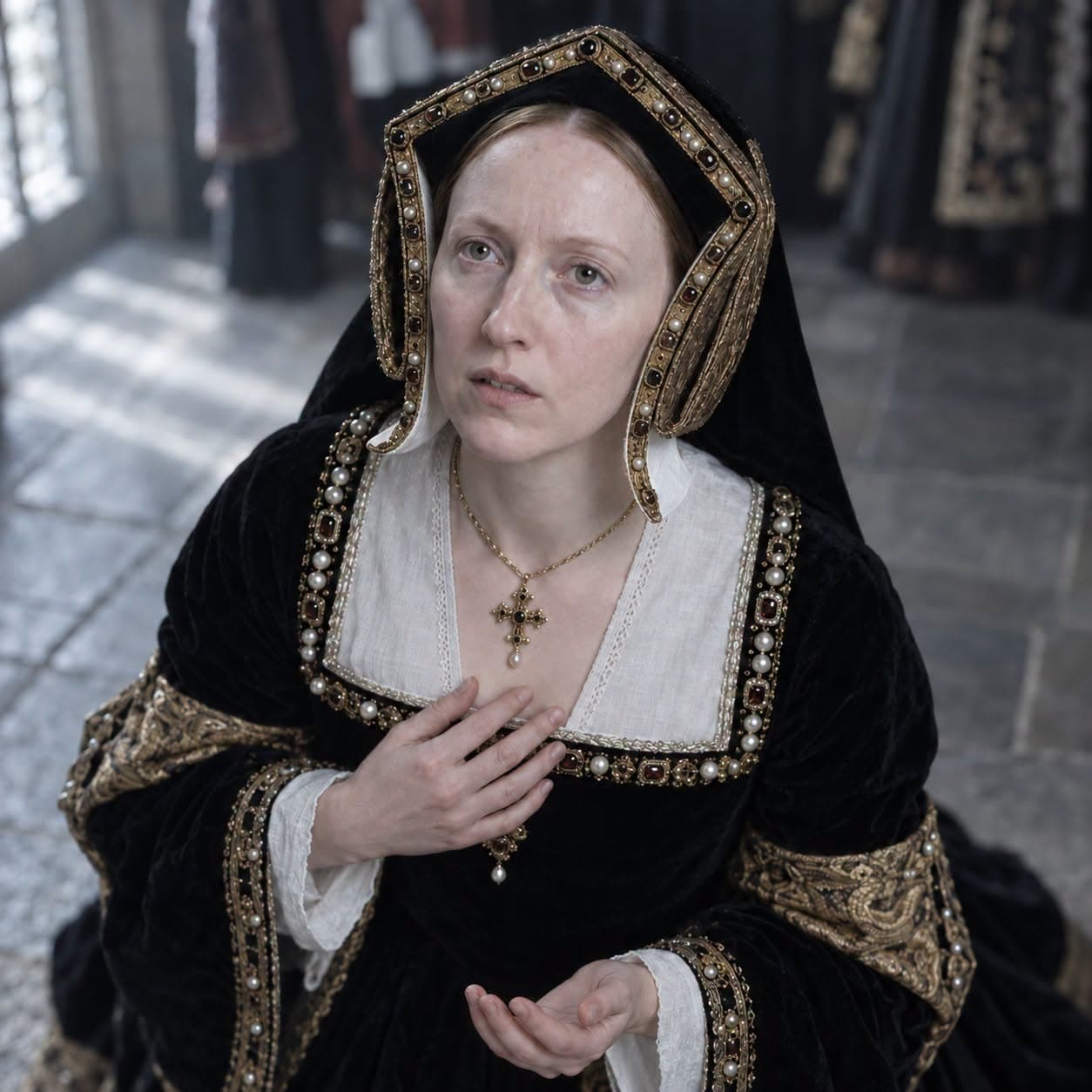
Margaret Clitherow was a butcher's wife on the Shambles in York, one of the most ordinary addresses in England. She had converted to Catholicism after her marriage and turned a hidden room in her home into a priest hole, concealing vestments, wine, and bread for Mass and sheltering Catholic missionary priests at a time when the law of England made that a capital offence. She had been arrested before. She had served time in prison, where she taught herself to read and write. She went home each time and continued.
In March 1586 a ten-year-old boy was threatened by the authorities until he told them where the priest hole was. Margaret was arrested and taken to the Guildhall in York to be arraigned. The charge was harbouring Jesuits and seminary priests. The judge asked her how she would plead.
She said nothing.
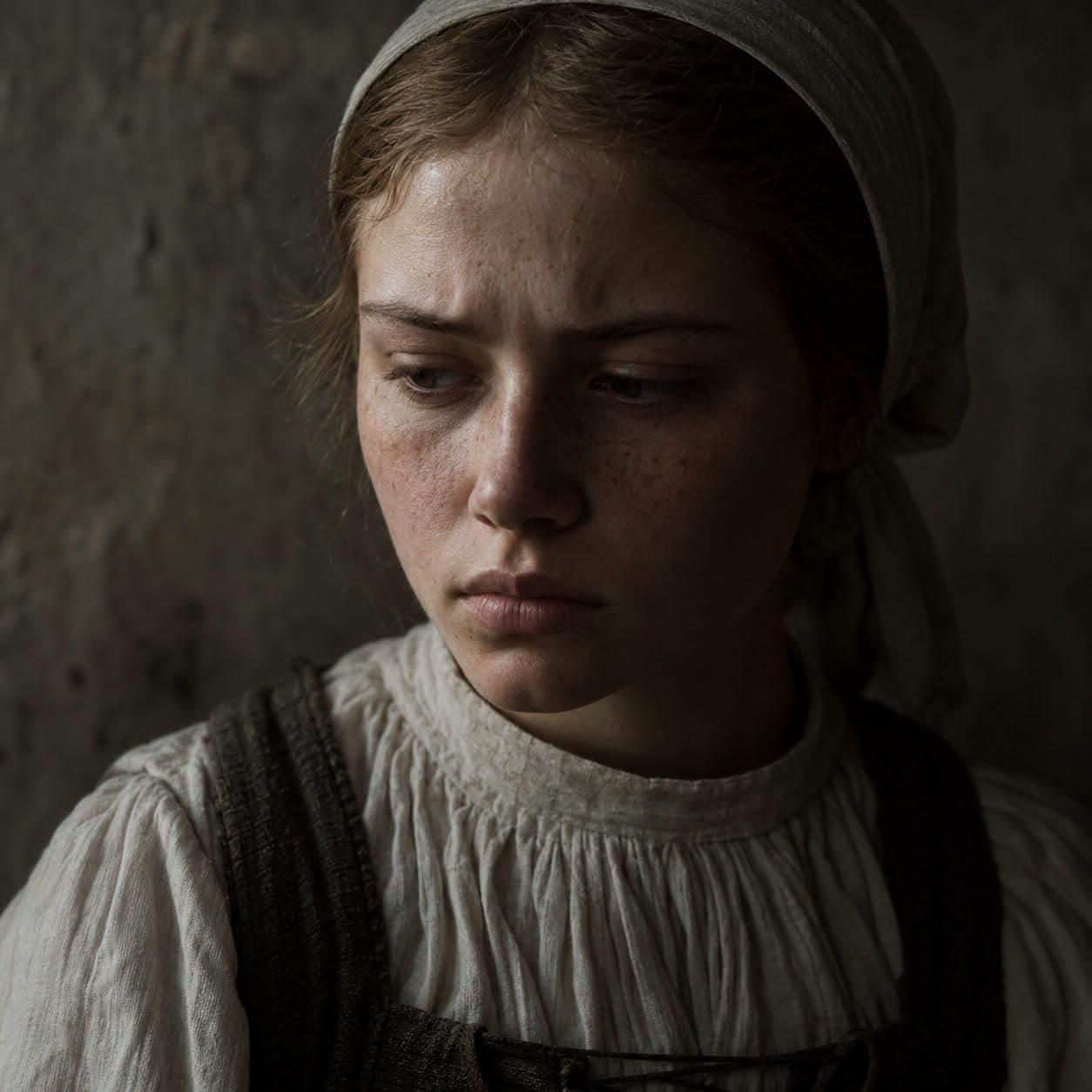
Refusing to enter a plea meant the court could not convene a jury trial. It also meant an automatic sentence of peine forte et dure, death by pressing. She knew this before she walked into the room. When pressed to explain herself she was precise: the only witnesses against her would be her own children and her servants. She would not have them carry the guilt of her death. She would take everything onto herself.
Her family told the judges she was pregnant with her fourth child. Margaret would not confirm it. The judges proceeded. A prominent Puritan minister told them publicly that proceeding was wrong before God. They proceeded. Her own stepfather, Henry May, was the Lord Mayor of York. He was present throughout. After her death he called it suicide.
On Good Friday, the twenty-fifth of March 1586, she was led barefoot through York to the tollbooth on Ousebridge. She was stripped and laid on the ground. A sharp stone the size of a man's fist was placed beneath her back. Her arms were bound to posts in the shape of a cross. A door was placed over her body. The two sergeants assigned to carry out the execution refused. They paid four beggars to do it in their place. Between seven hundred and eight hundred pounds of irons and stones was loaded onto the door. She died in fifteen minutes. Her last words were the name of Christ, repeated three times.
The law that killed her had been passed by Elizabeth's Parliament five years earlier.
Her son Henry became a priest. Her son William became a priest. Her daughter Anne travelled to Louvain and entered the convent of St Ursula.
Margaret Clitherow was canonised by the Roman Catholic Church in 1970. Her right hand is preserved at St Mary's Convent in York. The rest of her body has never been found.
The shoes are not in the record. Only the fact of their sending.