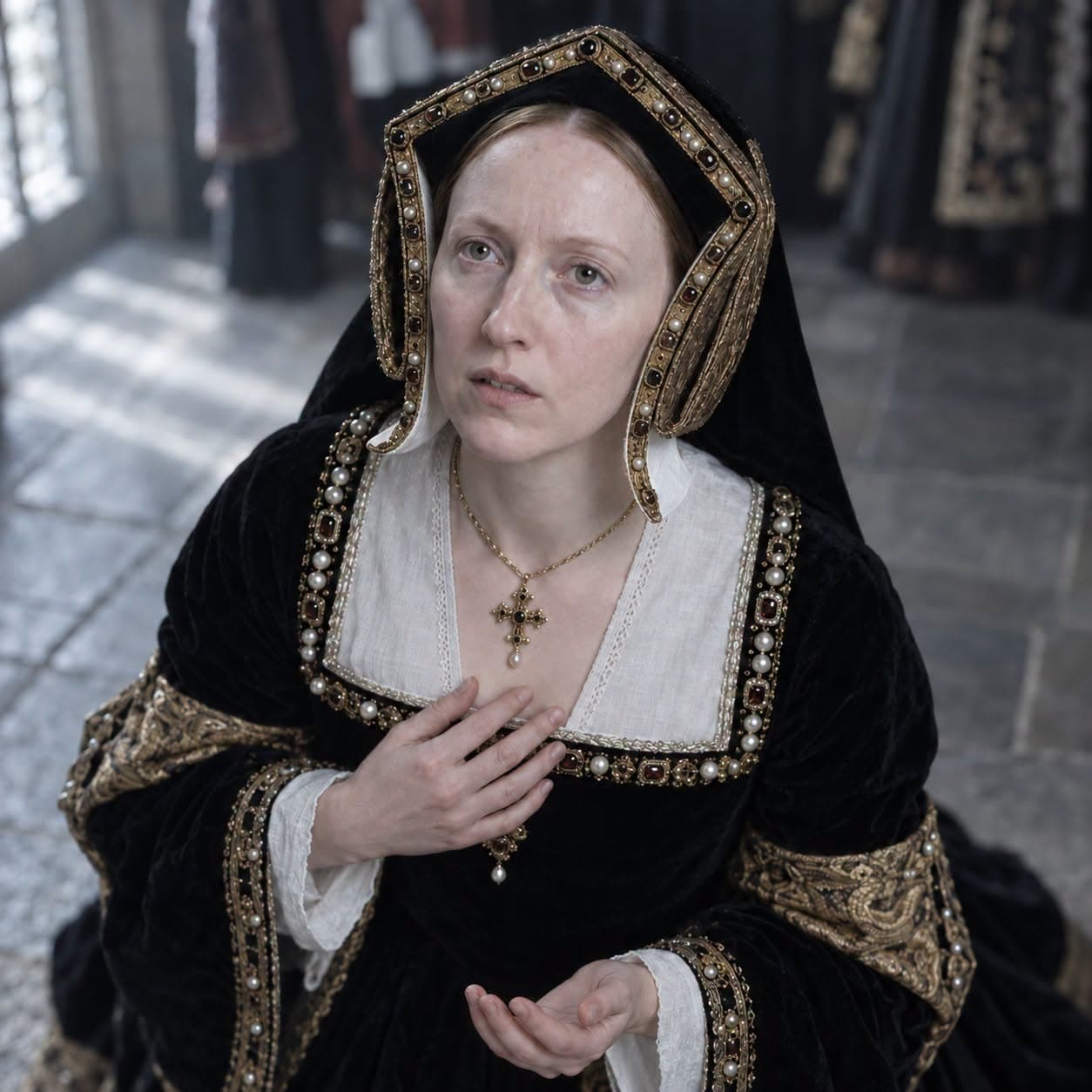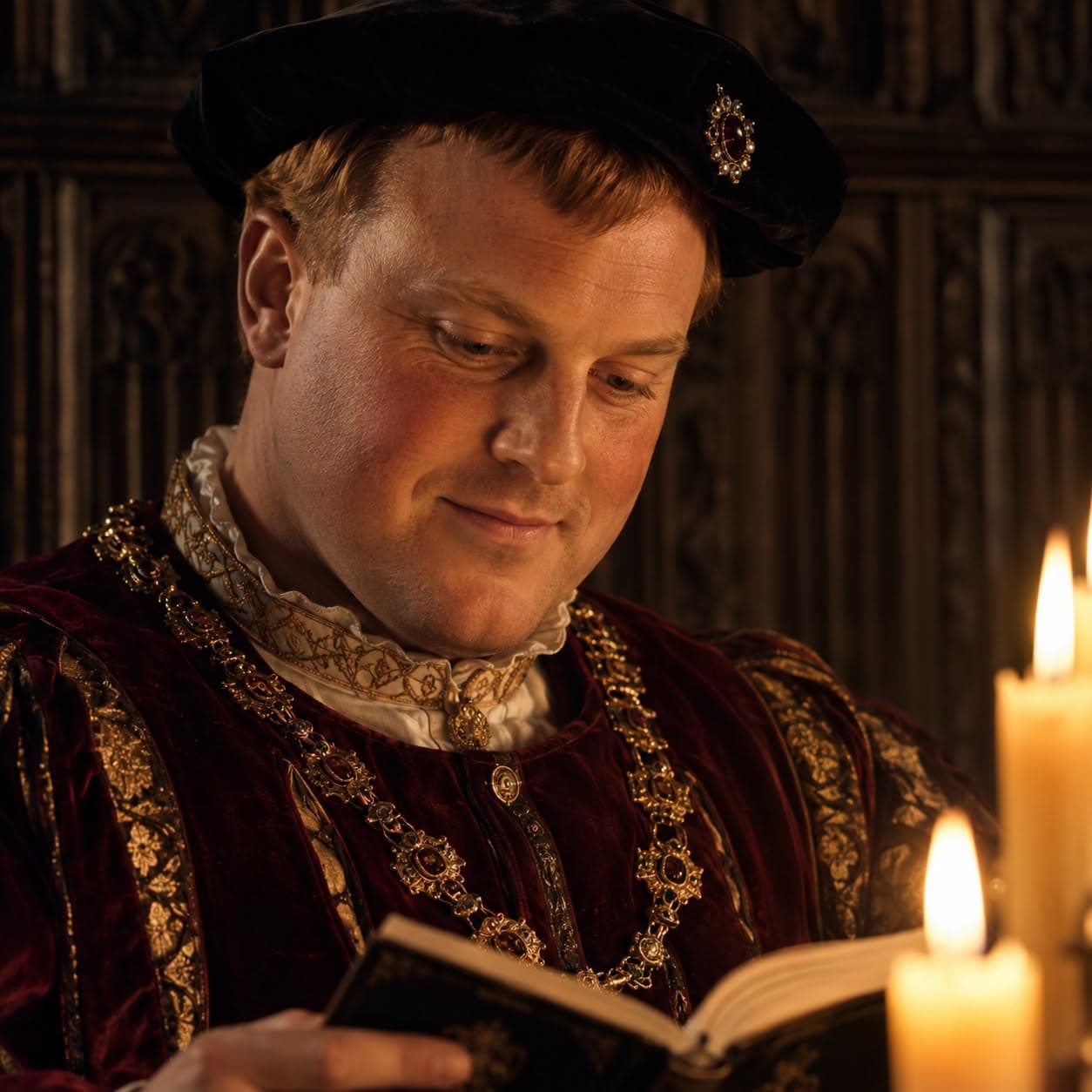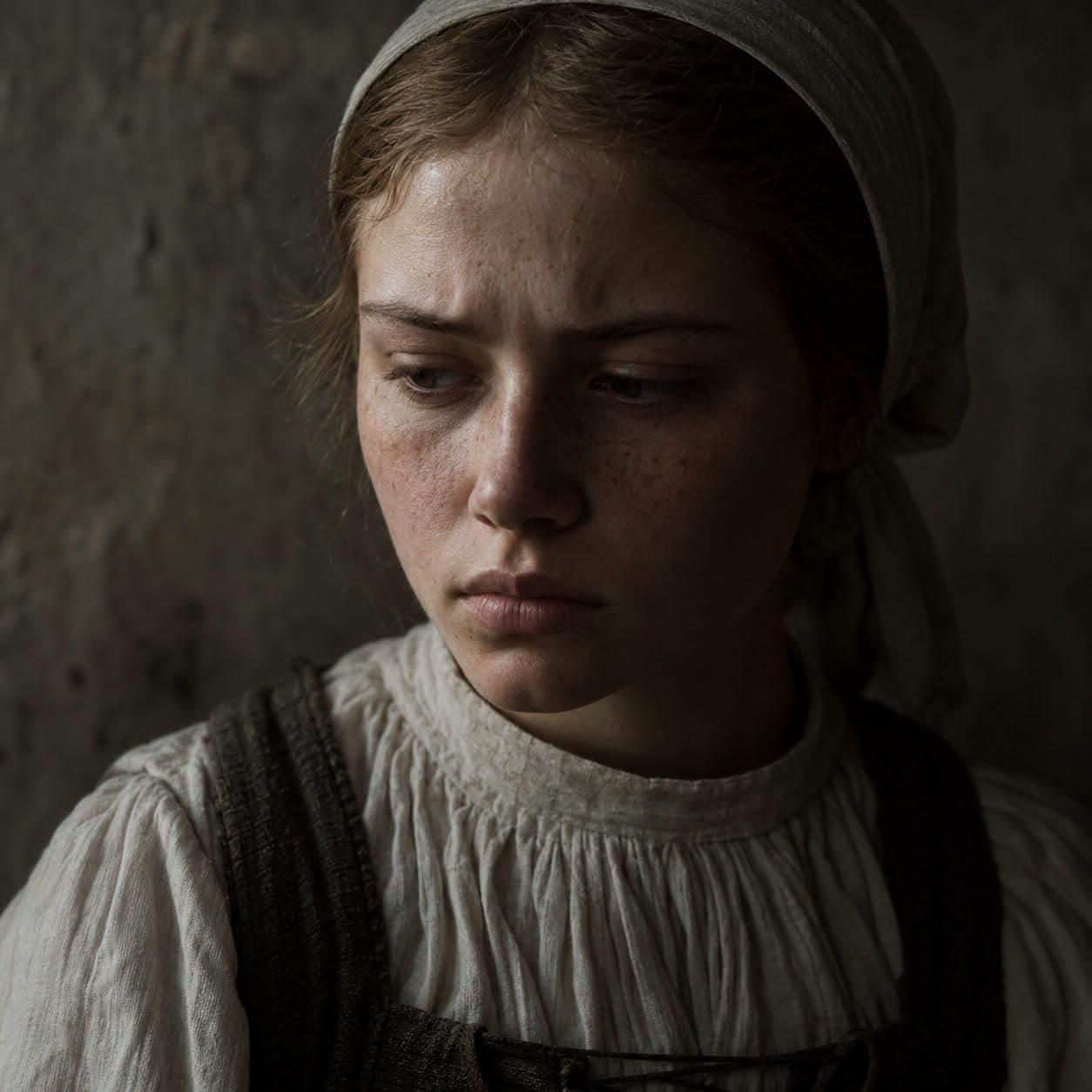
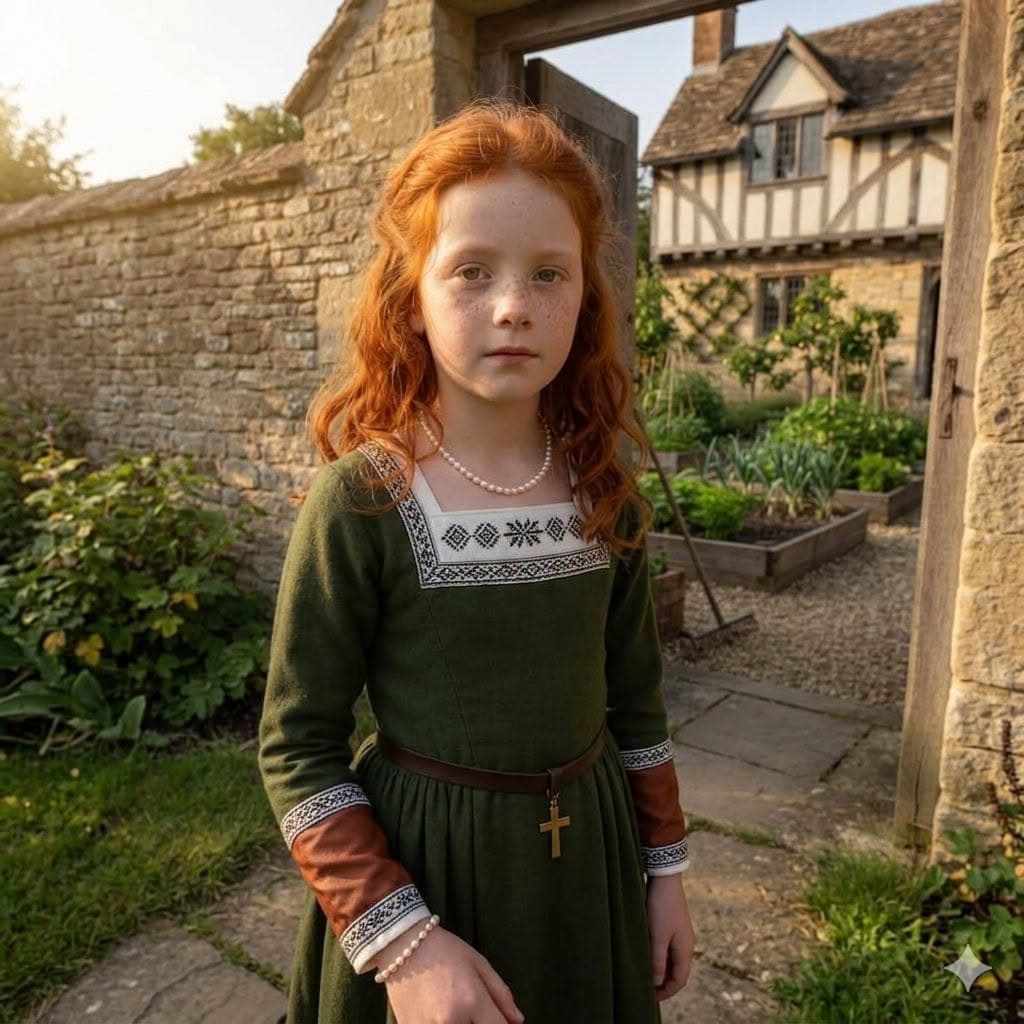
Lettice Knollys, the eldest daughter of Francis Knollys and Catherine Carey, was born on the 8th of November 1543 at Rotherfield Greys in Oxfordshire, and she inherited from her mother's side of the family two things that would define the entire shape of her life. Tudor red hair, and a connection to the English crown that everyone could see and nobody was permitted to discuss.
Her grandmother was Mary Boleyn. Her mother was Catherine Carey, chief lady of the bedchamber to Elizabeth I, whose parentage was the most carefully avoided subject at the Elizabethan court. Which made Lettice Knollys, from the moment she was old enough to be presented at court, a woman whose face raised a question that the queen had spent her reign deciding not to answer.
Elizabeth looked at Lettice Knollys and saw, by every contemporary account, something that made her deeply and durably furious. The Tudor court had considerable experience with inconvenient resemblances. It had no established protocol for this one.
Her childhood was shaped by religious upheaval in the specific way that Protestant gentry families of the 1540s and 1550s experienced it, which is to say by sudden reversals of fortune tied directly to which monarch was currently on the throne and what they required of their subjects. Her parents were committed Protestants. When Edward VI died in 1553 and Mary I took the throne and began the restoration of Catholicism, Francis Knollys refused to conform and took his family into exile in Europe, where they lived for five years in the displaced Protestant English community of Frankfurt and Strasbourg.
Lettice was ten when they left and fifteen when Elizabeth's accession in 1558 brought them home. She had grown up between two countries, in a community of English exiles who discussed scripture and politics with equal intensity, raised by parents who had chosen displacement over compromise.
She arrived at Elizabeth's court at fifteen with the Protestant formation of the exile years sitting underneath the copper hair and the striking face, and the court noticed the face first. The face was always what the court noticed first.
She became a gentlewoman of the privy chamber in the early 1560s and married Walter Devereux, later Earl of Essex, in 1565. It was an appropriate match, well-managed, producing five children including the Robert Devereux who would become Elizabeth's last favourite and die on the scaffold in 1601.
In 1565 none of that had happened yet and Lettice was simply a beautiful young countess in the queen's household, moving through the court with the particular confidence of a woman who has grown up understanding that she belongs there. What developed between her and Robert Dudley, Earl of Leicester, the man Elizabeth had wanted since they were children in the Tower together, the man the entire court understood was the queen's in every way except formally, was conducted with a discretion that lasted until it didn't.
They married secretly in 1578. Elizabeth found out. What followed was one of the very few moments in Elizabeth's long reign when her composure failed completely and publicly. She screamed at Dudley. She threatened to send him to the Tower. When she finally came face to face with Lettice, she slapped her. A crowned queen, in front of witnesses, slapped her cousin across the face. Lettice did not fall down. She was not that kind of woman.
Dudley died in 1588, the year of the Armada, and Elizabeth's grief at losing him was the second great public loss of her composure, the first having been caused by his marriage to the woman now widowed by his death. Lettice eventually married twice more, outliving both subsequent husbands, outliving her son Robert on the scaffold, outliving Elizabeth herself by decades.
She died in 1634 at approximately ninety years old, born in the reign of Henry VIII and dead in the reign of Charles I, having watched the entire arc of the Tudor dynasty from childhood to extinction and out the other side. She reportedly read the Bible every day in her final years and walked in her garden and was, by all accounts, entirely formidable until the end.
Lettice Knollys spent sixty years being the woman Elizabeth Tudor could not forgive for the crime of having everything Elizabeth wanted. The red hair, the freedom to marry for love, the man Elizabeth had decided was hers. Whether the original offence was the face or the marriage or the fact of her grandmother's history with the king, nobody ever said directly. Elizabeth never explained it. Lettice never apologised for it.
The girl in the Oxfordshire garden grew up to be the only woman in England who made Elizabeth I lose her temper in public, twice, in thirty years, and she outlived her by thirty-one years to prove that the queen's fury, however magnificent, was not the final word.