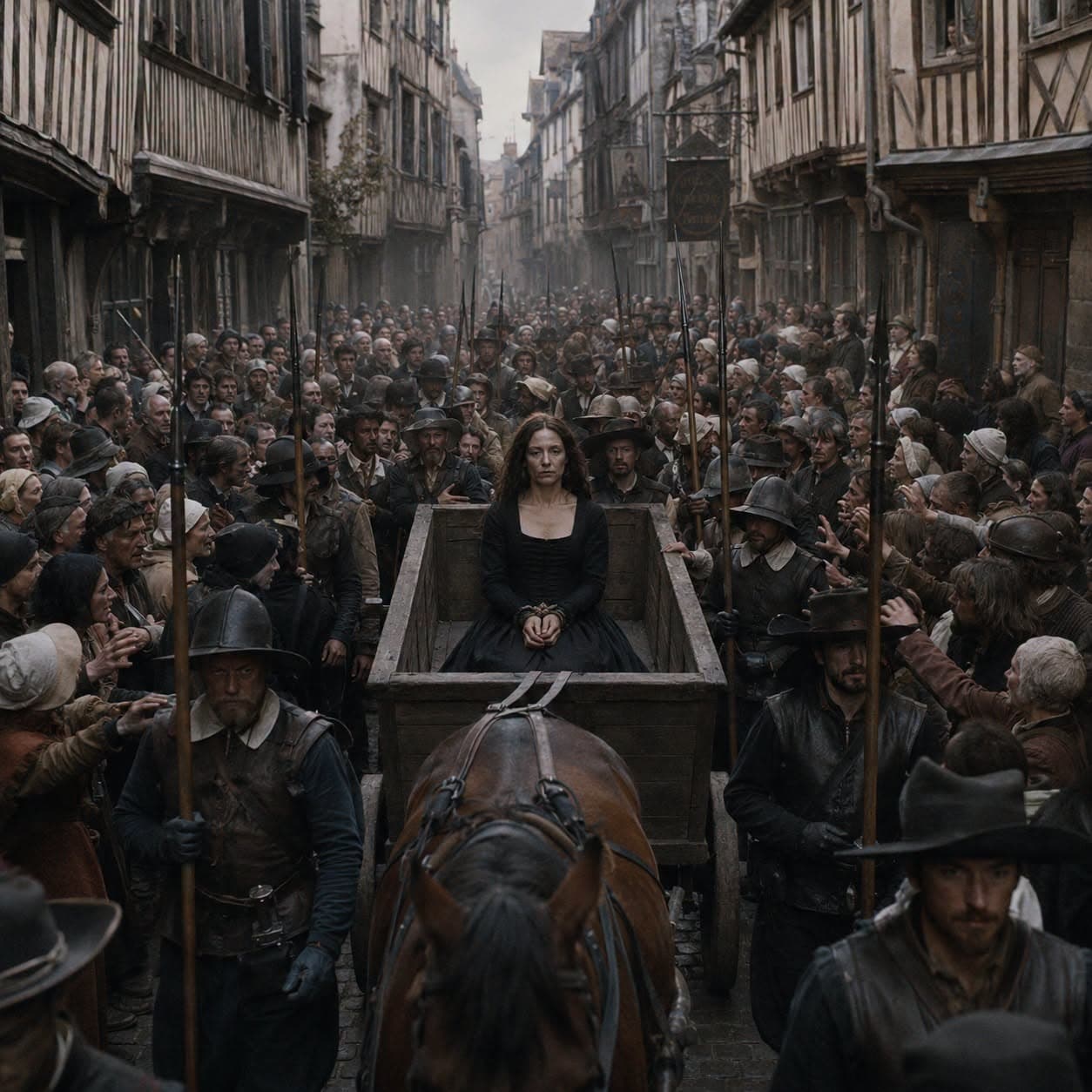
On 8 July 1617, a cart rolled into the Place de Grève in Paris with a woman inside it. She had spent thirty years within reach of the French queen’s hand. The crowd was there to watch a witch die.
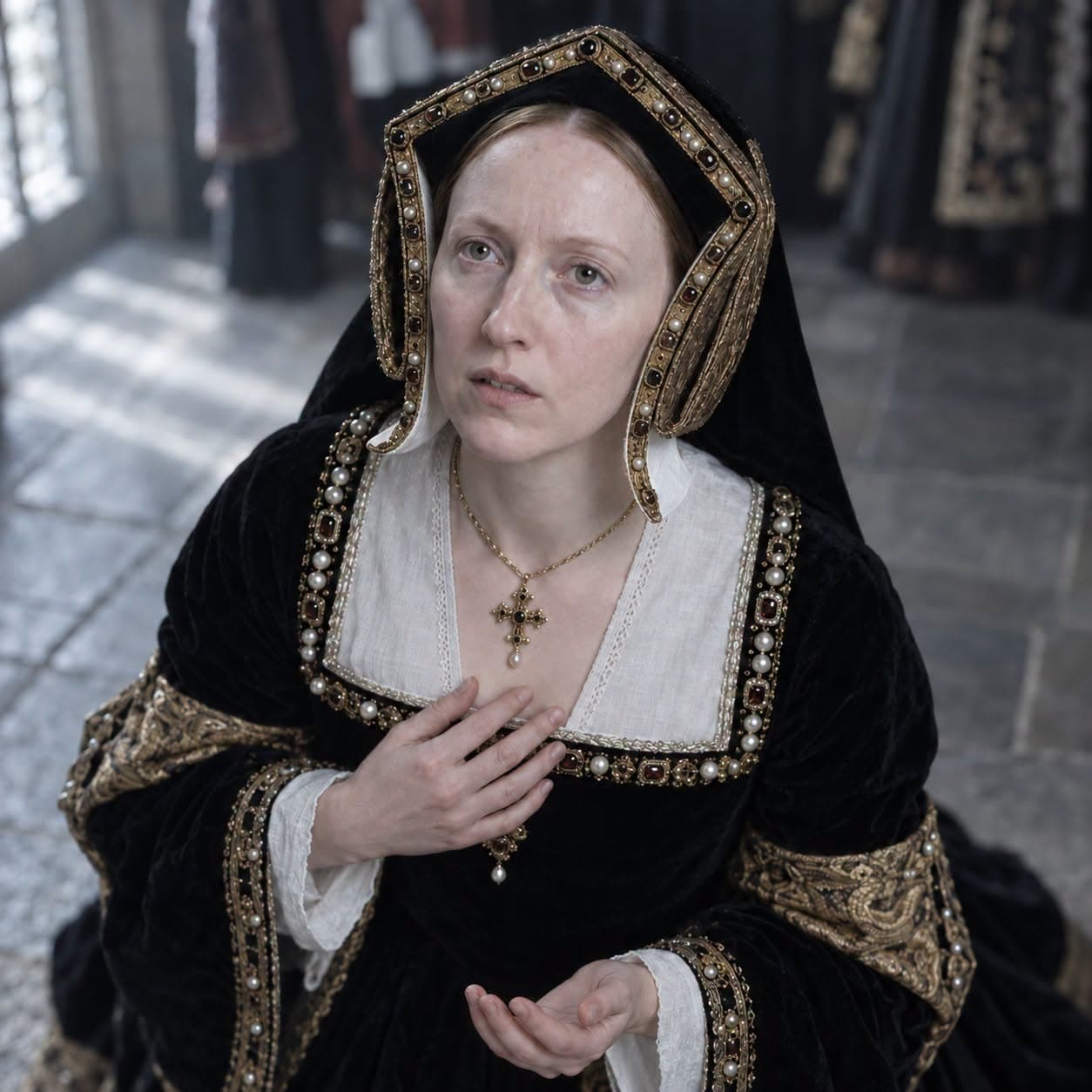
Leonora Dori was born in Florence in 1568, the daughter of a carpenter and a woman who worked as a wet nurse at the Medici court. Her parents were not noble. Her father bought an adoption into the poor but titled Galigai family so his children could carry a name that opened doors. Marie de’ Medici grew up in the grand ducal palace, a lonely princess promised to a crown she had never seen. Leonora, seven years older, was brought into her service as a maid. One girl was promised to be queen. The other was hired to make her laugh.
They grew up in the same rooms. Marie’s life began to revolve around prophecies and alliances, predictions that she would be Queen of France and dreams of the court that would follow her there. Leonora’s life revolved around more practical things: fabrics, jewels, how to soothe a frightened child when thunder cracked across the Arno and earthquakes shook Florence. When Marie finally set off to marry Henri IV of France, Leonora went with her. The queen rode in a gilded coach. Leonora followed in the train, close enough to hear her breathing.
In France their paths tangled completely. Marie became queen and then, after Henri IV’s assassination in 1610, regent for her son Louis XIII. Leonora rose with her. She became a lady of the bedchamber, keeper of the wardrobe, the woman who chose what the queen wore and who stood close enough to pin rubies at her throat each morning. She married Concino Concini, another Tuscan in Marie’s service, and together they used their position to build a fortune, buying and selling offices, placing their clients in posts and pulling them out again. Old French nobles watched two foreigners move through the Louvre as though it belonged to them.
Leonora’s own body gave her enemies more to work with. She suffered spasms and collapses that doctors could not easily explain, attacks that twisted her muscles and locked her limbs. The court called them possession. Priests were summoned to exorcise her, prayers were shouted over her while she lay rigid and helpless, and when the attacks did not stop she paid a fortune for them, desperately funding her own failed exorcisms. The woman they would later accuse of summoning demons had spent years being treated as a victim of them.
By 1617, Louis XIII was fifteen and tired of being a child in a palace ruled by his mother and her favourites. On 24 April he set the end in motion. Concini was lured into the Louvre courtyard and shot by men loyal to the king. His body was buried, then dug up again. The crowd dragged it through the streets, beat it, stoned it, hanged it by the feet, tore it apart and burned it. As they did, they shouted the same phrase he had once used when he had told Marie her husband Henri IV was dead. "L'hanno ammazzato" - "They killed him". The Italian words he had used on a murdered French king were thrown back at his own corpse.
Leonora was left alone. Marie was pushed into exile at Blois, held away from Paris by her own son. Leonora was arrested and taken to the Bastille, no queen between her and the men who wanted someone to pay for the past seven years. They charged her not only with treason against the crown but with crimes against God: witchcraft, black magic, practising a forbidden faith, bewitching the regent. Her seizures and exorcisms, which had once been treated as illnesses to pity, were now listed as proof that she had trafficked with demons.
At the trial, the judges asked her the question they thought mattered most. How had she bewitched the queen? How had she bent Marie’s will to hers? Leonora answered that the only charm she had ever used was the power that strong souls have over weak minds. It was the closest thing she ever gave them to a confession.
She was not claiming spells. She was claiming character.
The answer did not save her. The verdict was that she had offended divine and human majesty. The sentence was death by beheading and burning. On 8 July, the cart took an hour to force its way through the crowd to the scaffold at the Place de Grève. People pressed forward to see her face, a woman who had once chosen which jewels a queen wore now led out in plain clothes for the axe. She knelt. The headsman struck. Her body, stripped of the head that had supposedly held such dangerous thoughts, was thrown into the flames.
Marie de’ Medici lived on in exile and would fight her son again for power in the years to come. The Tuscan favourites were gone. The accusations of sorcery and possession hung in the air where her words had been. Leonora had told her judges that all she had used was the advantage a strong mind holds over a weaker one.
They killed her as if that had been magic.