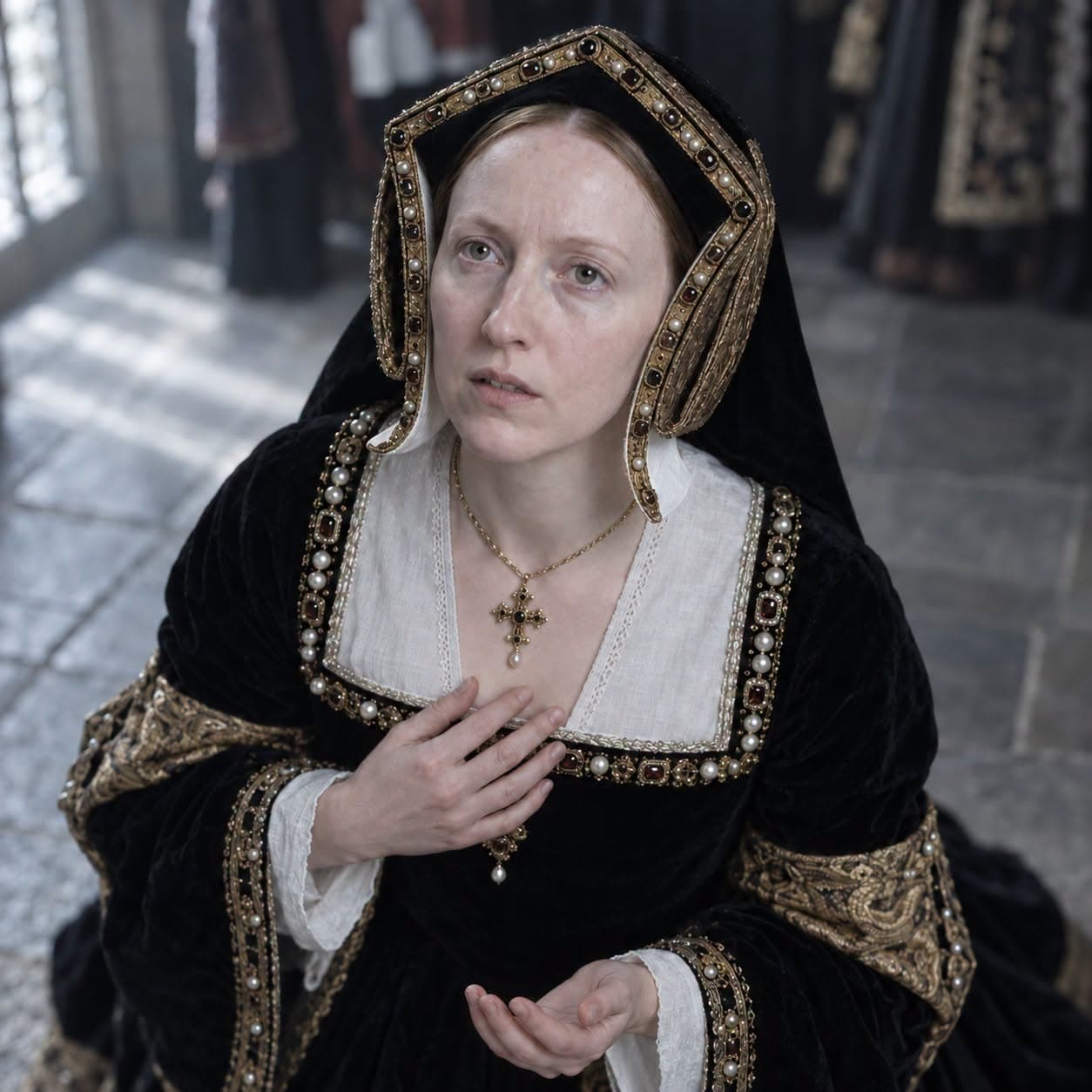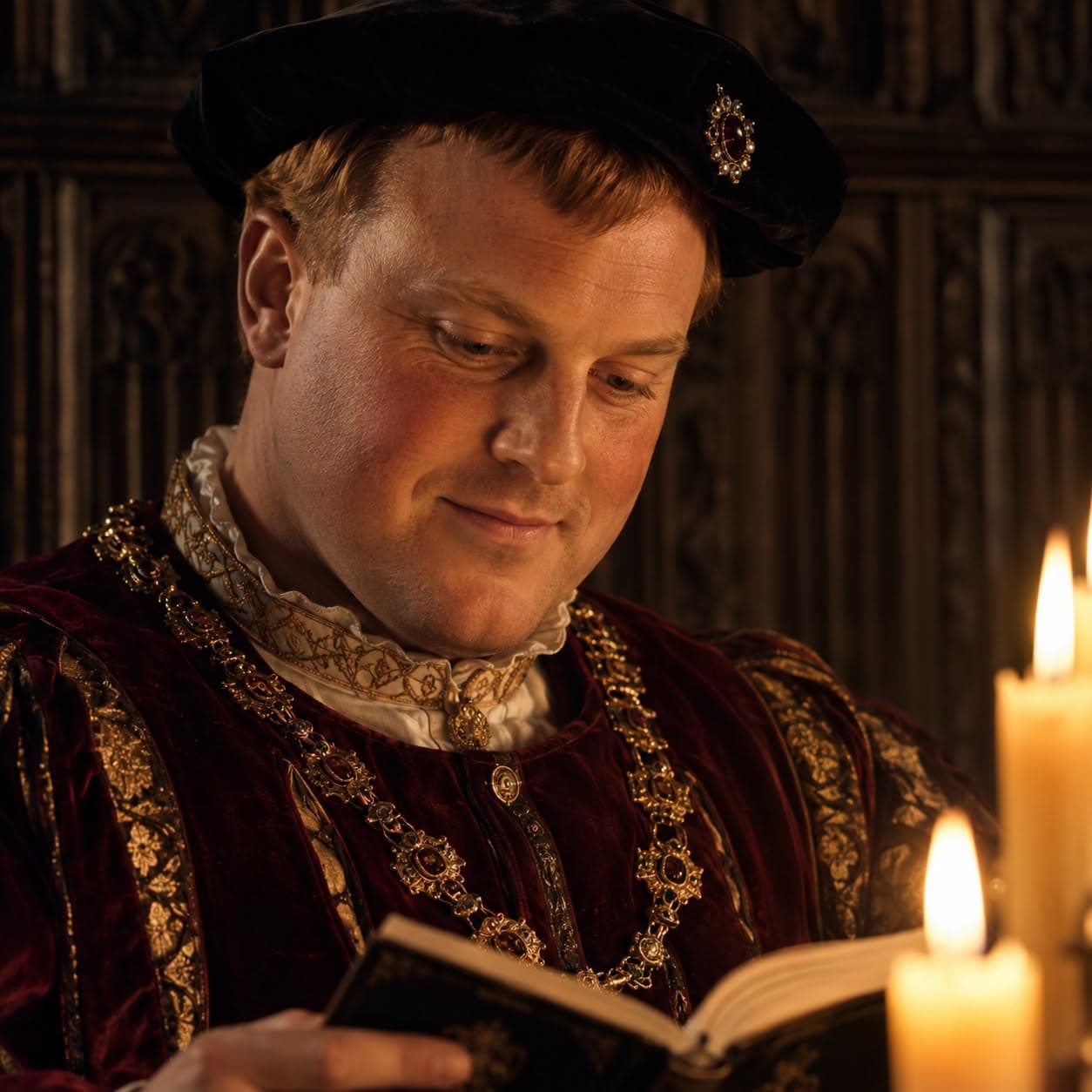
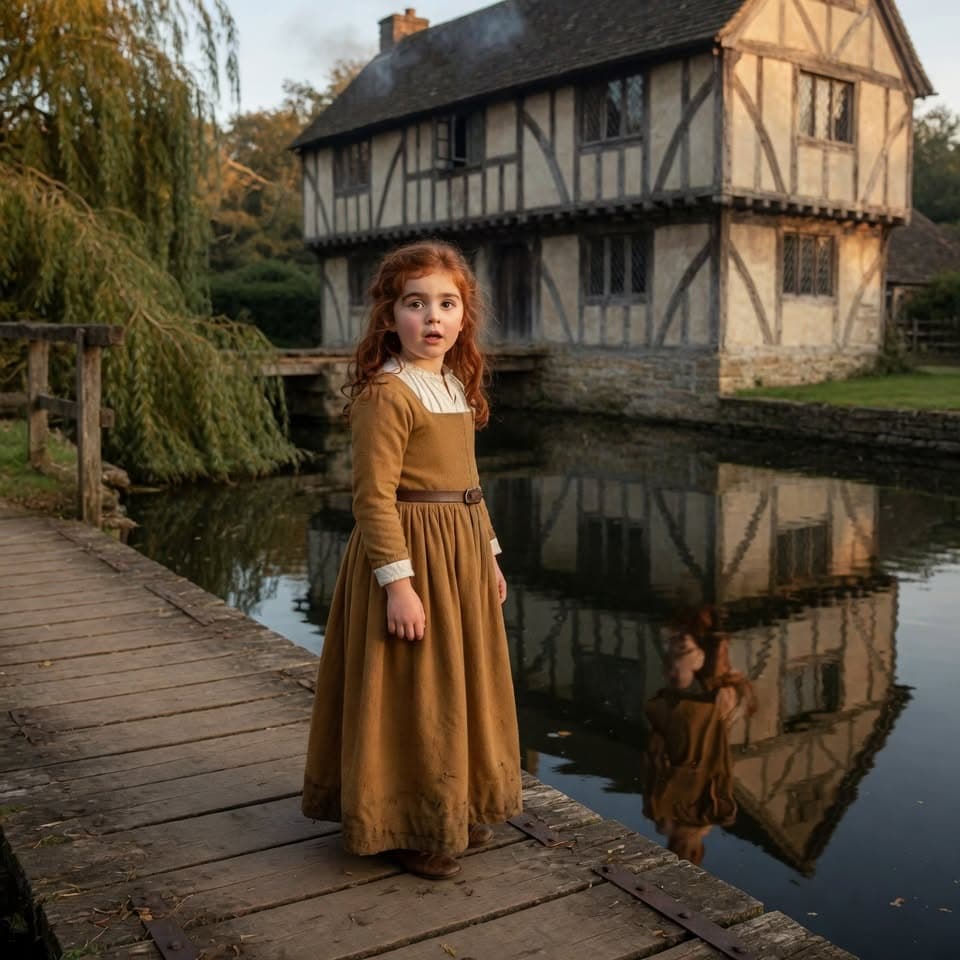
Katherine Howard was born around 1523, the daughter of Lord Edmund Howard and Joyce Culpeper, into a family that had the right surname and almost none of the resources that surname was supposed to guarantee. Edmund Howard was the younger brother of the Duke of Norfolk, which made him well-connected in the way that younger brothers of powerful men are always well-connected, adjacent to consequence without any of its material benefits.
He was perpetually in debt. He wrote begging letters to Thomas Cromwell. He had ten children and no reliable means of supporting them, and when his wife Joyce died around 1528 leaving Katherine at approximately five years old, the Howard family did what the Tudor aristocracy always did with inconvenient children. It redistributed her.
She was sent in 1531, aged approximately eight, to the household of Agnes Tilney, the Dowager Duchess of Norfolk, who managed large establishments at Chesworth House in Horsham and Norfolk House in Lambeth and ran them with the attention to detail of a woman responsible for too many people and not enough hours.
The Dowager Duchess's household was full of young wards and attendants, children of relatives deposited there by families who understood that proximity to the Howard name was worth something even if nothing more specific was being provided. Katherine lived in this household for approximately nine years.
She received no formal education. She learned to dance. She was by every account charming and lively and entirely without the kind of adult protection that a girl in the sixteenth century required as a structural necessity rather than a luxury. The household at night was insufficiently supervised. Everyone who investigated later agreed on this. Nobody had investigated before.
Her music teacher was a man called Henry Manox. She was approximately nine or ten years old when he began paying her particular attention and approximately twelve or thirteen when the attention became something that required a name. He later told investigators that he had known her body intimately without completing what the sixteenth century considered the full act, a distinction Manox apparently considered meaningful and that historians have spent decades examining without arriving at a verdict that helps Katherine Howard in any direction.
A young man in the household called Francis Dereham followed. He called her his wife. He gave her gifts. The other young people sleeping in the same dormitory rooms were aware of what was happening. The Dowager Duchess was eventually told, beat Katherine, and changed the sleeping arrangements.
She did not remove Dereham from the household. She did not tell Edmund Howard. She did not tell anyone who might have complicated the question of Katherine's future marriageability, which was, the Dowager Duchess understood perfectly, the only significant asset Katherine Howard possessed.
In 1539 the Howard family placed her at court in the household of Anne of Cleves, with the deliberate intention that Henry VIII would notice her. He was forty-nine, obese, suffering from an infected leg ulcer, and recently humiliated by the business of marrying Anne of Cleves on the basis of a portrait that the real woman had conspicuously failed to resemble.
He noticed Katherine Howard immediately. He called her his rose without a thorn. He annulled the Cleves marriage in July 1540 and married Katherine three weeks later. She was somewhere between sixteen and seventeen years old. He was thirty-one years older.
She had been placed before him by her family like a solution to a problem she had not been consulted about, carrying a history her family had decided he did not need to know. The thorn was always there. The rose had simply been instructed not to mention it.
She was queen for sixteen months. The investigation into her past began in November 1541 and moved with the speed of a process that had already decided its conclusion. Manox gave evidence. Dereham gave evidence and then was tortured and gave more. Katherine was stripped of her title, imprisoned in Syon House, and attainted by act of Parliament, which meant she could be executed without the inconvenience of a trial, a legal instrument Henry had found useful before.
She was executed on the 13th of February 1542 on Tower Green. The night before, she reportedly asked for the block to be brought to her room so she could practise placing her head upon it correctly. She wanted to die well. She had been taught almost nothing in her short life and she taught herself this on the last night of it.
The girl on the drawbridge at Chesworth had nobody looking for her, and the Tudor court found her only when it had a use for her, and when the use expired it disposed of her by act of Parliament. She was at most nineteen years old. Henry VIII called her his rose without a thorn. He had not looked at the roots.
The roots were the whole story, and every adult responsible for this child had seen them clearly and said nothing, and that silence was the thing that killed her long before the block did.