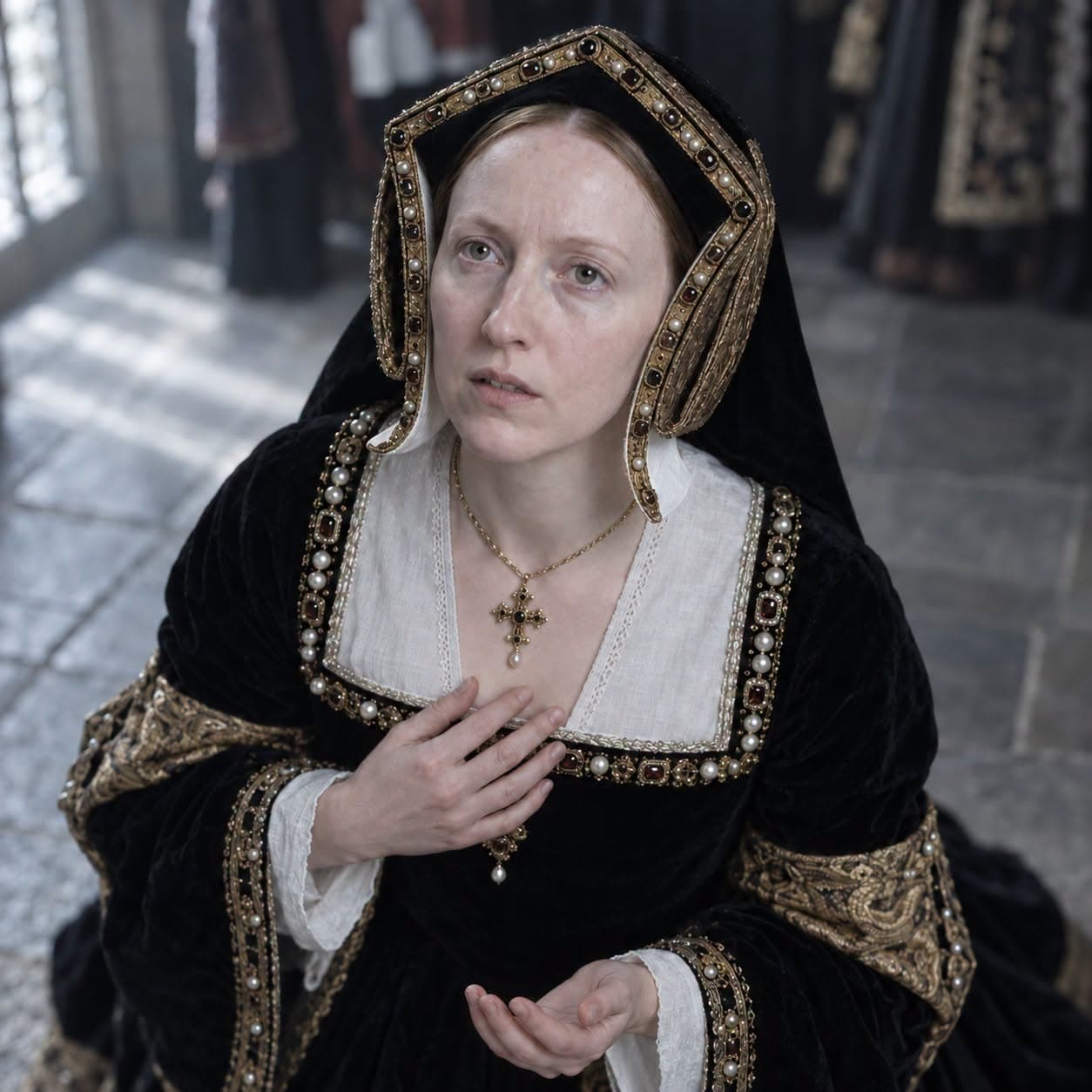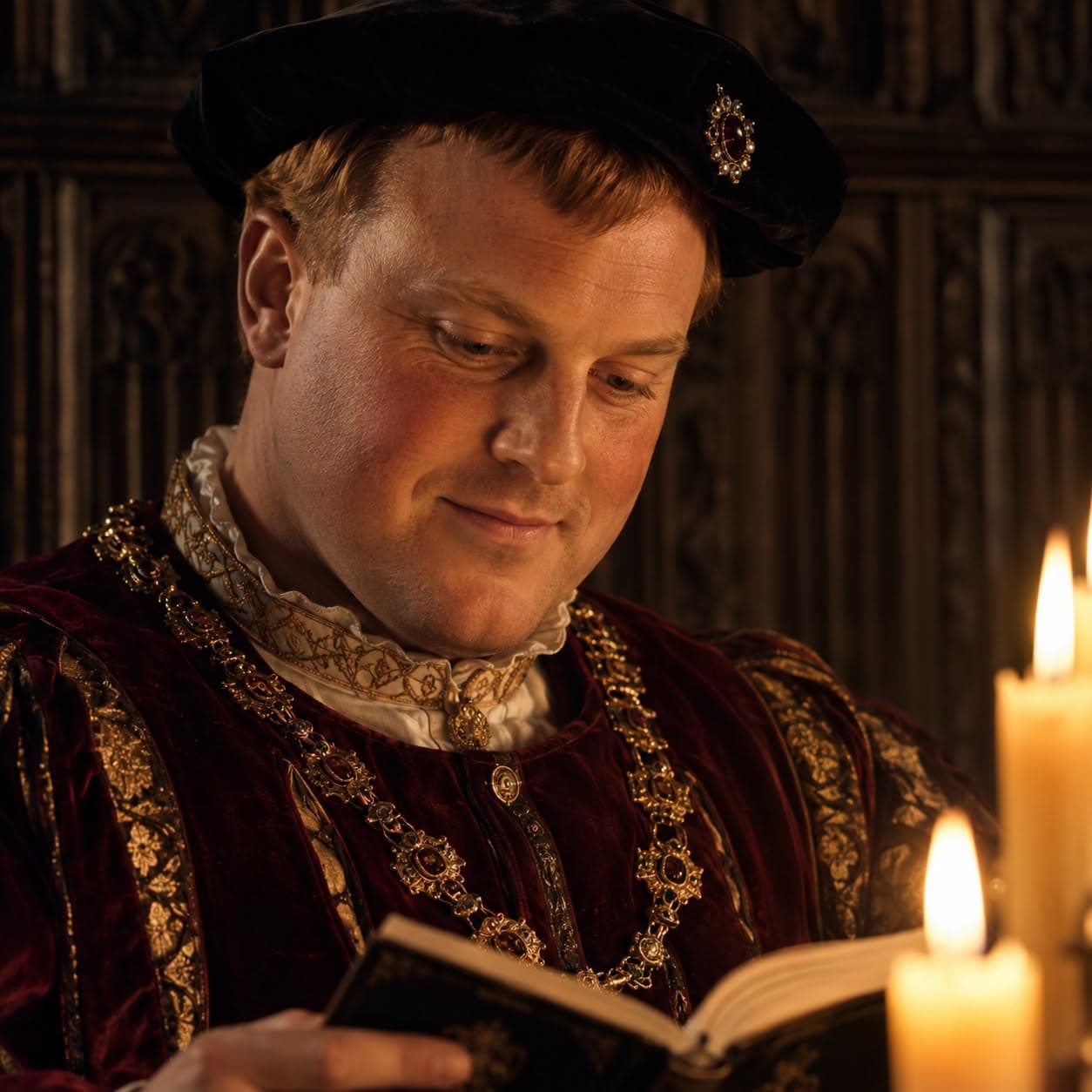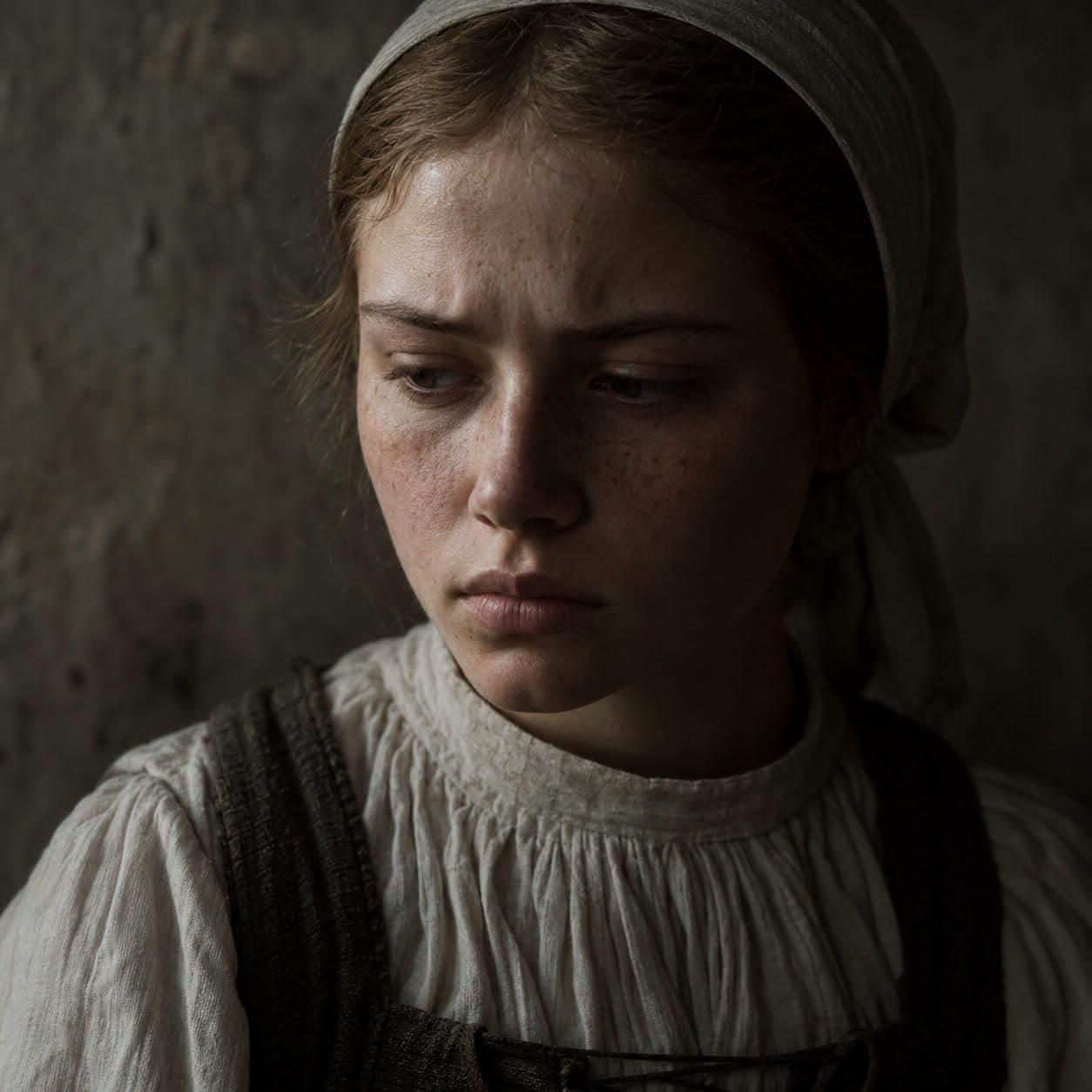
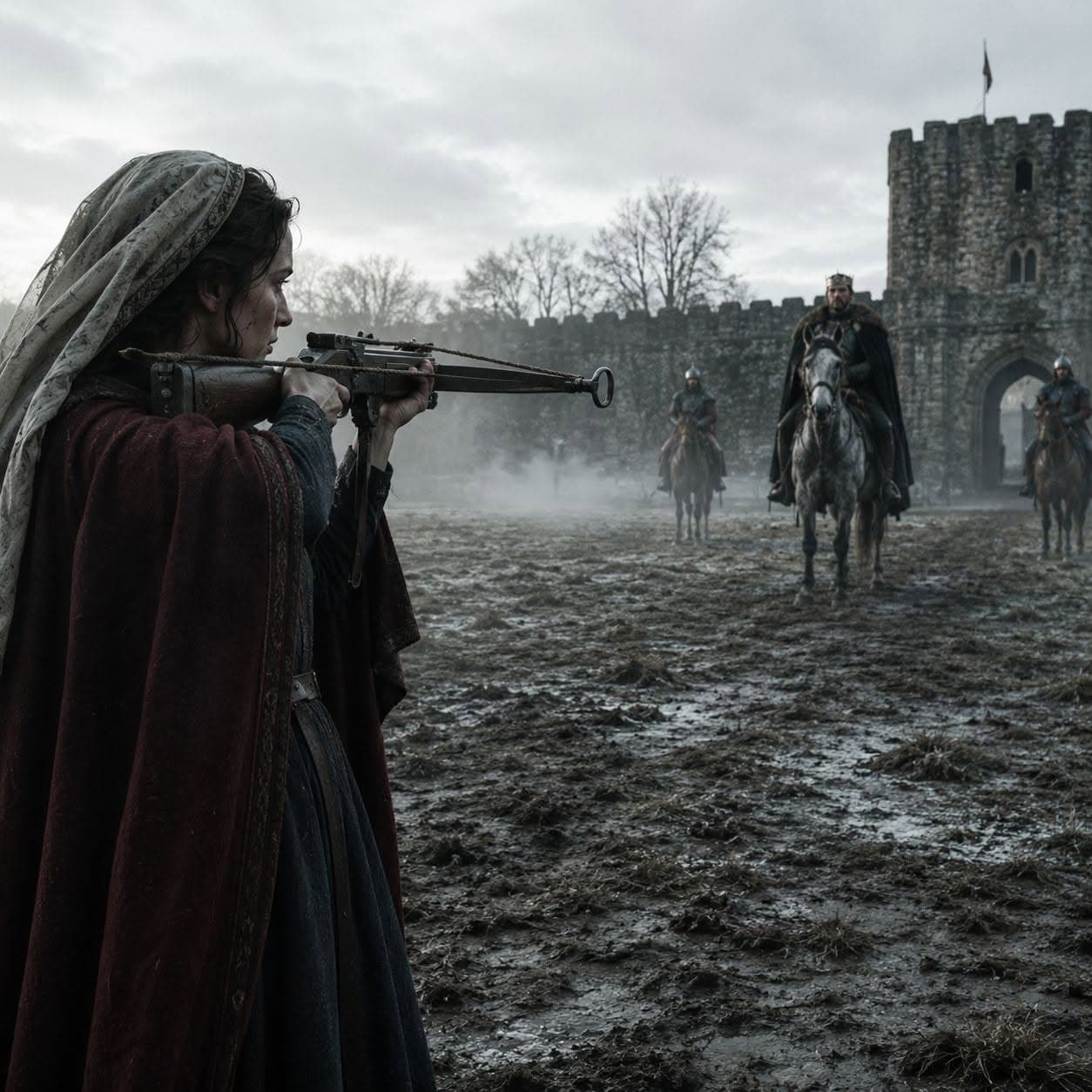
She raised a crossbow and aimed it at the King of England.
The king was her father.
She missed. But she had her reasons.
This is the story of Juliane de Fontevrault. An illegitimate daughter of Henry I of England. A woman history barely remembers. A woman whose daughters it does not remember at all.
Juliane was one of roughly twenty-two illegitimate children Henry I acknowledged during his lifetime — more bastard children than any English king before or since. Being acknowledged was not nothing. It meant a degree of protection, a place at court, the possibility of a politically useful marriage. Henry arranged one for Juliane around 1103. She was married to Eustace of Breteuil, a Norman lord with lands and a castle at Ivry. The marriage was a transaction, as all such marriages were. She understood that. She made a life within it.
She had two daughters. Their names were never recorded. That detail will matter later.
In 1119, a land dispute over the castle of Ivry between Eustace and a man named Ralph Harnec escalated beyond the point of negotiation. The medieval solution to such disputes was hostages — human guarantees of good behaviour exchanged between parties. Juliane and Eustace sent their two young daughters to Henry as surety. Ralph Harnec sent his son to Eustace.
Eustace blinded Ralph's son and sent him back mutilated.
Henry I was furious. He was also a king who understood political mathematics above almost everything else. Ralph demanded justice. Henry calculated his response.
He handed his granddaughters to Ralph Harnec.
Ralph blinded them both. He cut off the tips of their noses. Then he returned them to their parents.
Henry I had two blind, mutilated granddaughters and considered the account settled.
Juliane did not consider the account settled.
She organised the defence of the castle at Breteuil. She raised a rebellion against her own father. She held the castle while Henry's forces besieged it. At some point during the siege she requested a parley — a face to face meeting with the king under the conventions of war, the kind of meeting that was supposed to be safe for both parties.
Henry rode out to meet his daughter.
She had a crossbow. She raised it. She fired.
She missed.
The chronicler Orderic Vitalis, who recorded this in his Historia Ecclesiastica within living memory of the event, does not record whether Henry flinched. He records that the bolt missed.
He recorded that Henry had her arrested.
He recorded that she was forced to surrender the castle.
Then he records what happened next.
Henry released her.
He stripped her of her lands and her position. He humiliated her publicly. But he let her go. A woman who had just attempted to assassinate the King of England walked out of that siege alive. Whether that was mercy or calculation or something a father felt in spite of himself, the record does not say.
She made her way to the River Avre in winter. The castle gates were shut behind her. She jumped into the moat to escape, in the cold, with nowhere to go.
She eventually found her way to Fontevrault Abbey in Anjou. She spent the rest of her life there as a nun. Some historians believe her blinded daughters may have been sent to the same abbey. That she chose Fontevrault not in defeat but to be near the children her father had destroyed.
The record does not confirm this. It is the kind of detail history chose not to preserve.
Henry I died in 1135. He had two grandchildren who never saw another sunrise because of a decision he made. History has considerably less to say about that.
Juliane's daughters had names. No chronicle thought to write them down. No record preserves them. Two children, blinded and mutilated at their grandfather's order, who lived out whatever life remained to them in the dark.
Their mother picked up a crossbow.
She missed.
But she picked it up.
Her name was Juliane de Fontevrault. History barely remembers her. It never bothered to remember her daughters at all.