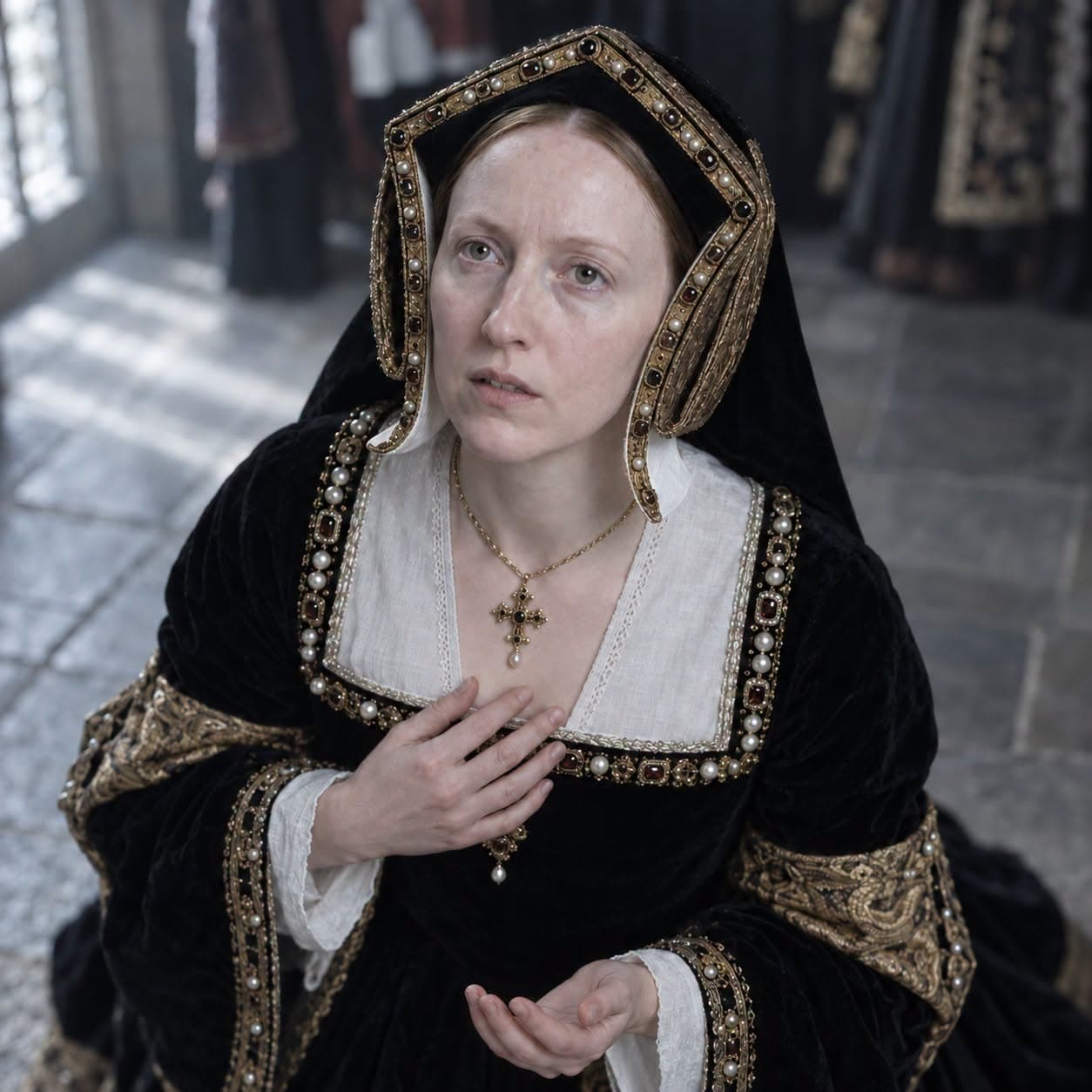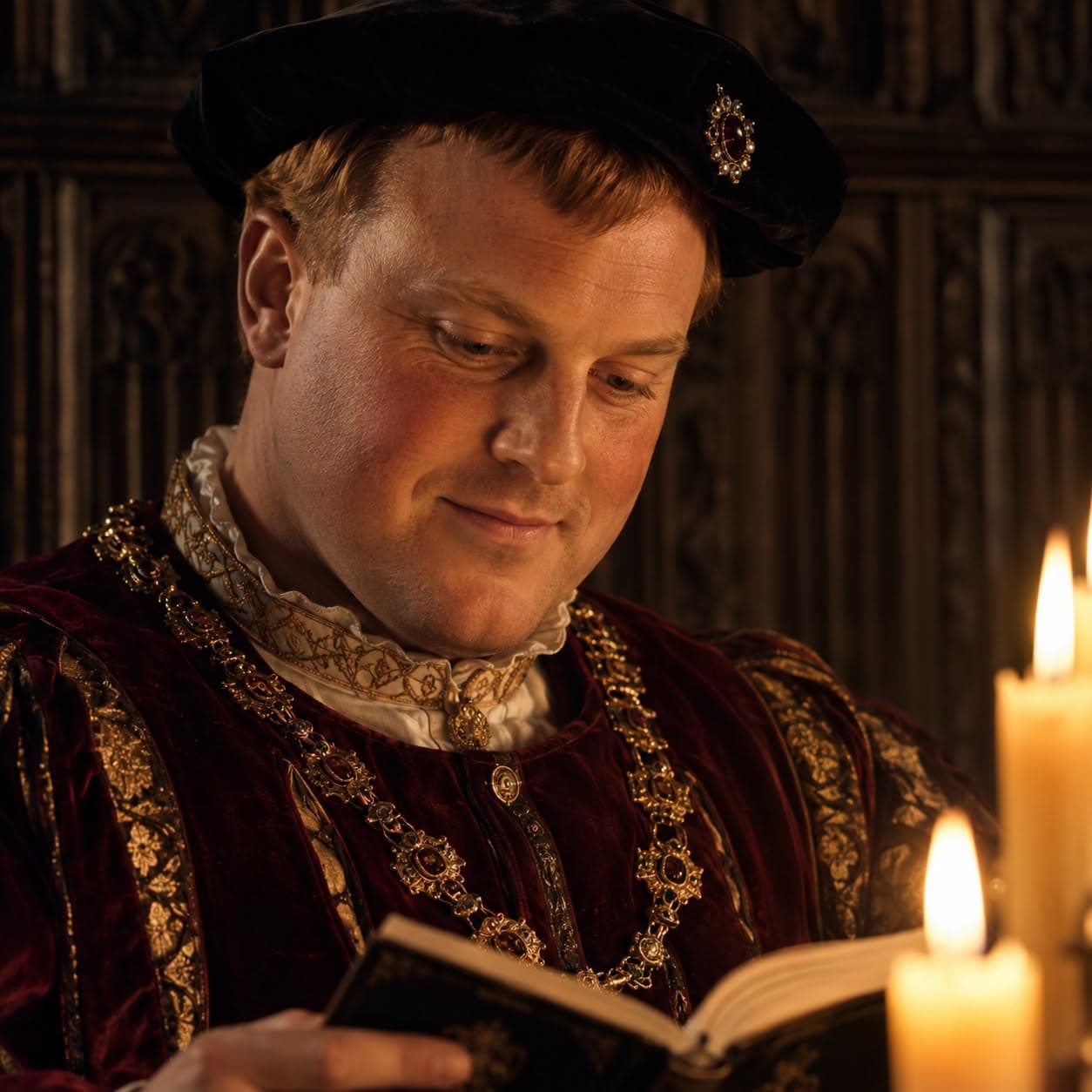

The Pope made him a Cardinal to save his life. Henry VIII said he would send the hat to Rome without a head to wear it. On the twenty-second of June 1535 he kept his word.
John Fisher had known Henry since the king was a boy. He had served Henry's grandmother, Lady Margaret Beaufort, as her confessor and closest advisor, and when the old king died and the young one came to the throne Fisher had been among the most celebrated churchmen in England. Henry had called him my Rochester.
Fisher had helped him draft his Defence of the Seven Sacraments against Martin Luther, the book that earned Henry the title Defender of the Faith from a grateful pope. They had been, in the most direct sense available, on the same side. That was before Henry decided the side needed to move.
When Henry began his campaign to dissolve his marriage to Catherine of Aragon in 1527, Fisher had become her most vocal public defender among the English clergy. He wrote books defending the marriage's validity. He preached in her cause in London. When Parliament assembled to confirm the royal supremacy over the English church, every other bishop signed.
Fisher did not.
He was arrested in April 1534 and placed in the Tower, where he spent the next fourteen months in conditions he described himself in a letter to Cromwell: without adequate clothing, without a shirt fit to wear, without sufficient food, without a priest. A contemporary who later saw him on the scaffold wrote that he had become a long, lean, slender body, nothing in a manner but skin and bare bones, so that most who saw him marvelled that any man could be so far consumed and still be living.
In May 1535 Pope Paul III made his move. He named Fisher a Cardinal, calculating that even Henry would not risk the political catastrophe of executing a prince of the Church. Henry's response was immediate and specific. He would send Fisher's head to Rome, he said, so that the hat could be fitted there.
The red hat never reached England.
Henry wanted Fisher dead before the feast of St John the Baptist on 24 June, reportedly because he feared the parallel between Fisher and the saint who had challenged a king's unlawful marriage and died for it. The timing was not accidental. The original sentence of hanging, drawing, and quartering was reduced to beheading on the grounds that Fisher was too physically wasted to survive being dragged four miles to Tyburn.
The Catholic biographical tradition, drawing on witness accounts, records that he was carried to the Tower gate in a chair for the formal handover to the Sheriff of London. When offered further assistance he refused it, telling the attendants he would shift for himself, and climbed the scaffold steps alone, carrying a New Testament. At the top he spoke to the crowd: "Christian people, I am come hither to die for the Faith of Christ's Holy Catholic Church." Then he laid his head on the block.
His body was stripped on the scaffold and left there until evening, then carried on pikes to All Hallows Barking and thrown naked into a rough grave without funeral prayer or ceremony. His head was set on a pole on London Bridge. Contemporary accounts record that it drew unusual crowds because it refused to look like a dead man's head, its colour remained fresh, its expression composed, as if the man were still watching.
After a fortnight it was removed. Thomas More was executed on 6 July 1535 and his head took the same pole. The two men had refused together, been imprisoned together, and in death their heads occupied the same place in sequence.