Margaret Beaufort’s first husband was born on 27 September 1442. Seven years later, he married her. She was likely only six years old. The pope only gave his blessing afterwards.
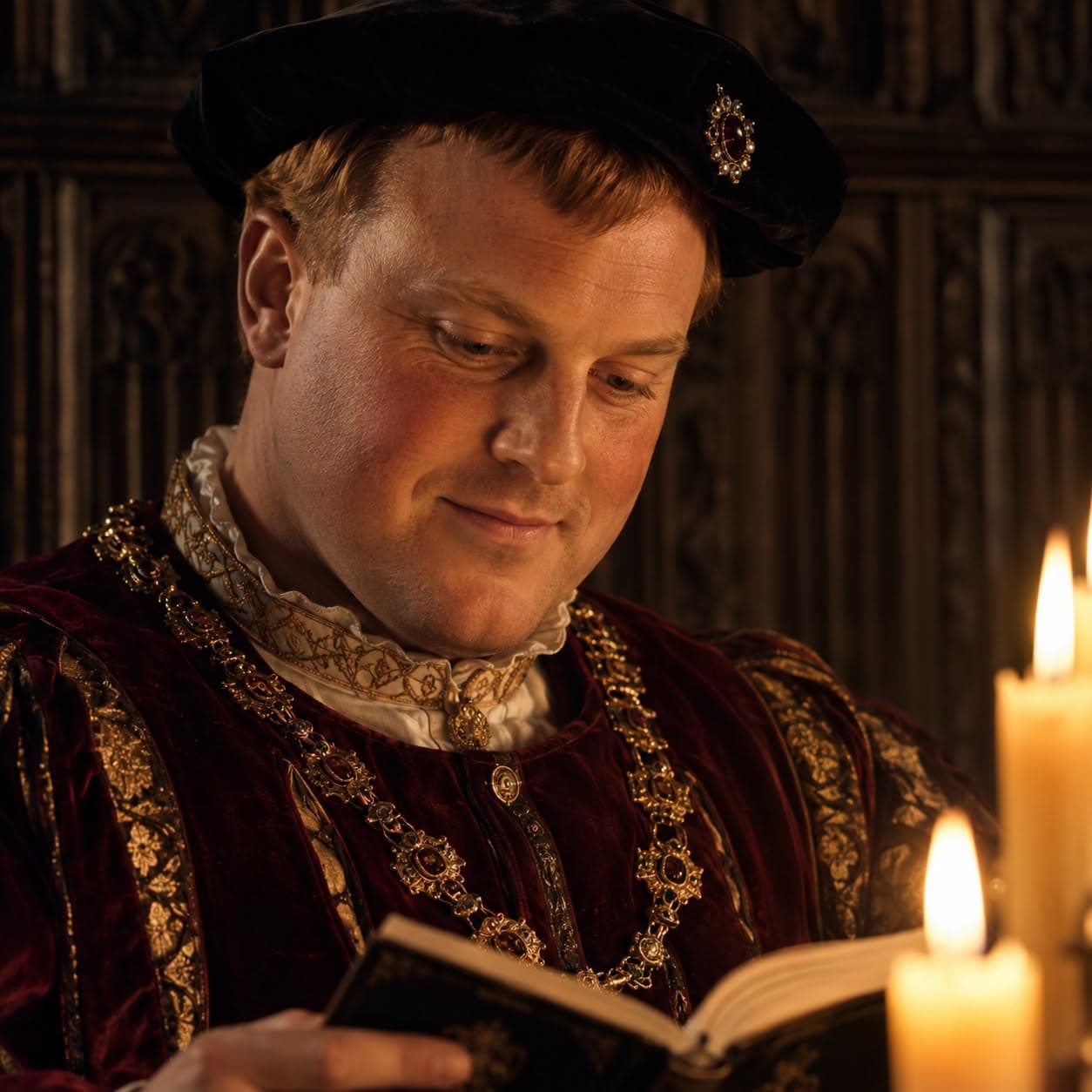
John de la Pole was the only son of William de la Pole, Duke of Suffolk, one of Henry VI’s most powerful ministers, and Alice Chaucer, granddaughter of the poet Geoffrey Chaucer. Before John was old enough to govern his inheritance, carry a sword into battle or choose where he would live, his father had found him a wife.
Her name was Margaret Beaufort.
Margaret was the only child of John Beaufort, Duke of Somerset, and a great-granddaughter of John of Gaunt. Her father died while she was still an infant, leaving her heir to valuable estates and the bearer of royal blood. In medieval England, those things made a fatherless child exceptionally valuable. The Crown controlled the wardship and marriage of an heiress so young. Whoever held that wardship could administer her lands during her minority and help determine where her inheritance, and her loyalties, would eventually pass.
Henry VI granted Margaret’s wardship to William de la Pole. William then chose his own son as her husband.
The marriage probably took place in late January or early February 1450. John was seven. If Margaret was born in 1443, as now seems most likely, she was six. Even if the earlier birth year sometimes given for her is accepted, she could have been no more than eight.
The two children were related. Margaret descended from Katherine Swynford, while John descended from Katherine’s sister Philippa, wife of Geoffrey Chaucer. A papal dispensation was therefore required before the Church could recognise their union. It was not issued until 18 August, several months after the ceremony.
Somewhere in England that winter, a marriage was contracted between a little boy and a little girl. The surviving record does not tell us where it happened, or even whether John and Margaret were brought together for it. What it does preserve is the work of the adults around them: the joining of bloodlines, the control of lands and the shaping of lives that neither child could yet comprehend.
Rome’s permission finally came. On 18 August, a papal dispensation recorded that John and Margaret had already been married through lawful words of present consent. It allowed them to remain together despite their kinship and declared any children of the union legitimate.
This was not a marriage in the ordinary domestic sense. Margaret and John did not begin a shared household, and the union was never consummated. It was a legal and dynastic arrangement made for them, one that could still be set aside before Margaret reached the canonical age at which her consent to marriage became binding.
Its architect did not live long enough to enjoy its possible rewards.
By the time of the ceremony, William de la Pole’s political power was collapsing. He was blamed for England’s failures in France and accused of corrupting the king’s government. Henry VI sent him into exile, but William never reached it. His ship was intercepted in the Channel, and on 2 May 1450 he was killed at sea. His severed head was left beside his body on the sands near Dover.
John, still only seven, inherited his father’s titles and the wreckage of his political fortunes.
Three years later, his marriage to Margaret was annulled. Henry VI transferred her wardship to his own half-brothers, Edmund and Jasper Tudor, removing the Beaufort heiress from one family and placing her future in the hands of another.
The little girl had not changed. Her inheritance had not changed. Only the men empowered to decide what happened to both were different.
Margaret herself did not later count John de la Pole as her first husband. In a will made in 1472, she referred to Edmund Tudor in those terms, passing over the childhood union entirely. Her marriage to John had left no children and no shared married life. It had briefly joined two names on parchment and then disappeared.
Her marriage to Edmund Tudor would be very different.
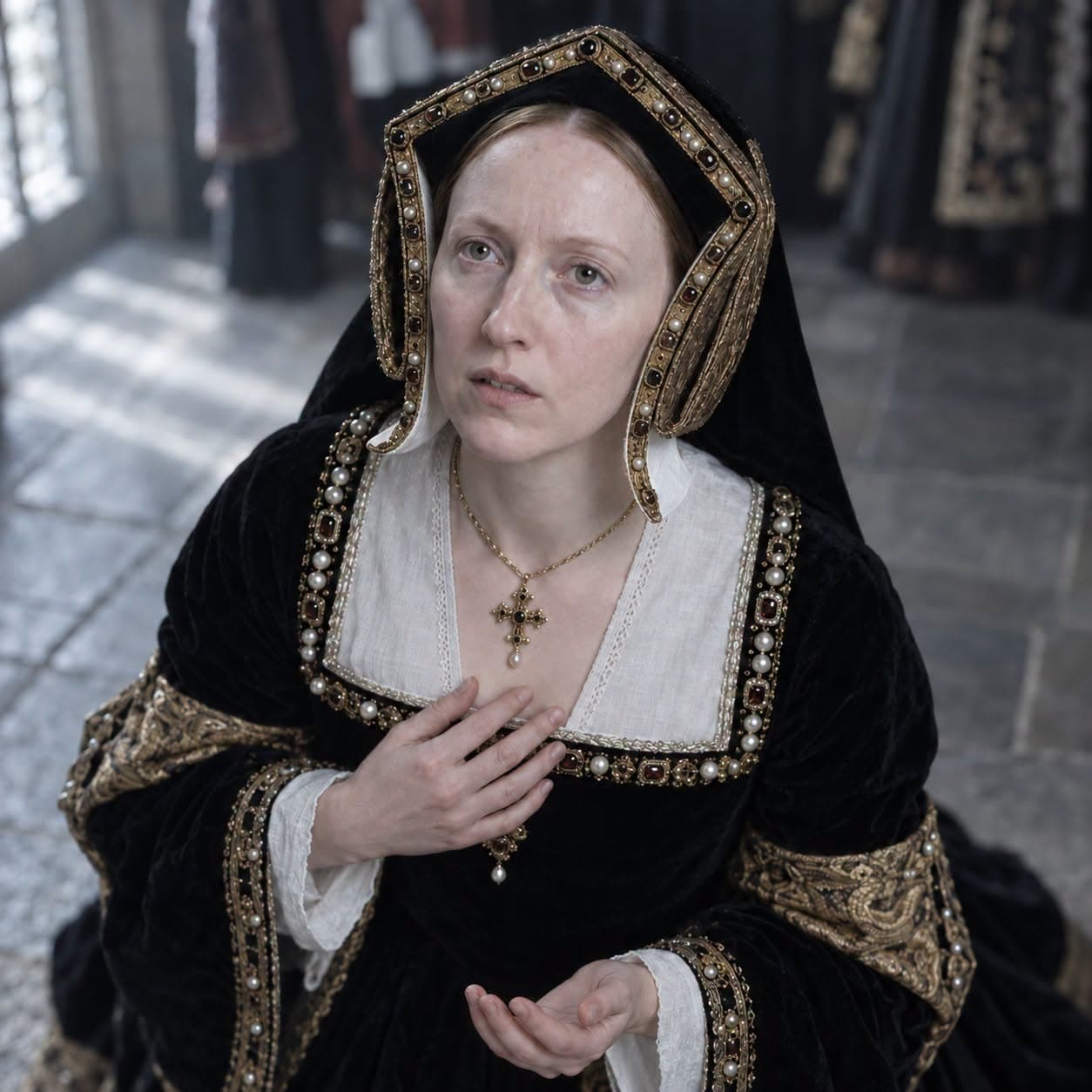
Margaret married Edmund at Bletsoe on 1 November 1455. She was twelve; he was about twenty-four. Twelve was the age at which a girl could legally consent to marriage, but it did not follow that every such marriage was immediately consummated. Noble families often allowed a young bride more time to mature, knowing that pregnancy and childbirth presented particular dangers to a body that had not finished growing.
Edmund did not wait. Margaret became pregnant while she was still twelve.
Less than a year after the wedding, Edmund was captured by Yorkist forces and imprisoned at Carmarthen Castle. He died there in November 1456, probably from plague, leaving his young wife several months pregnant. Margaret travelled to Pembroke Castle, where Edmund’s brother Jasper could offer her protection.
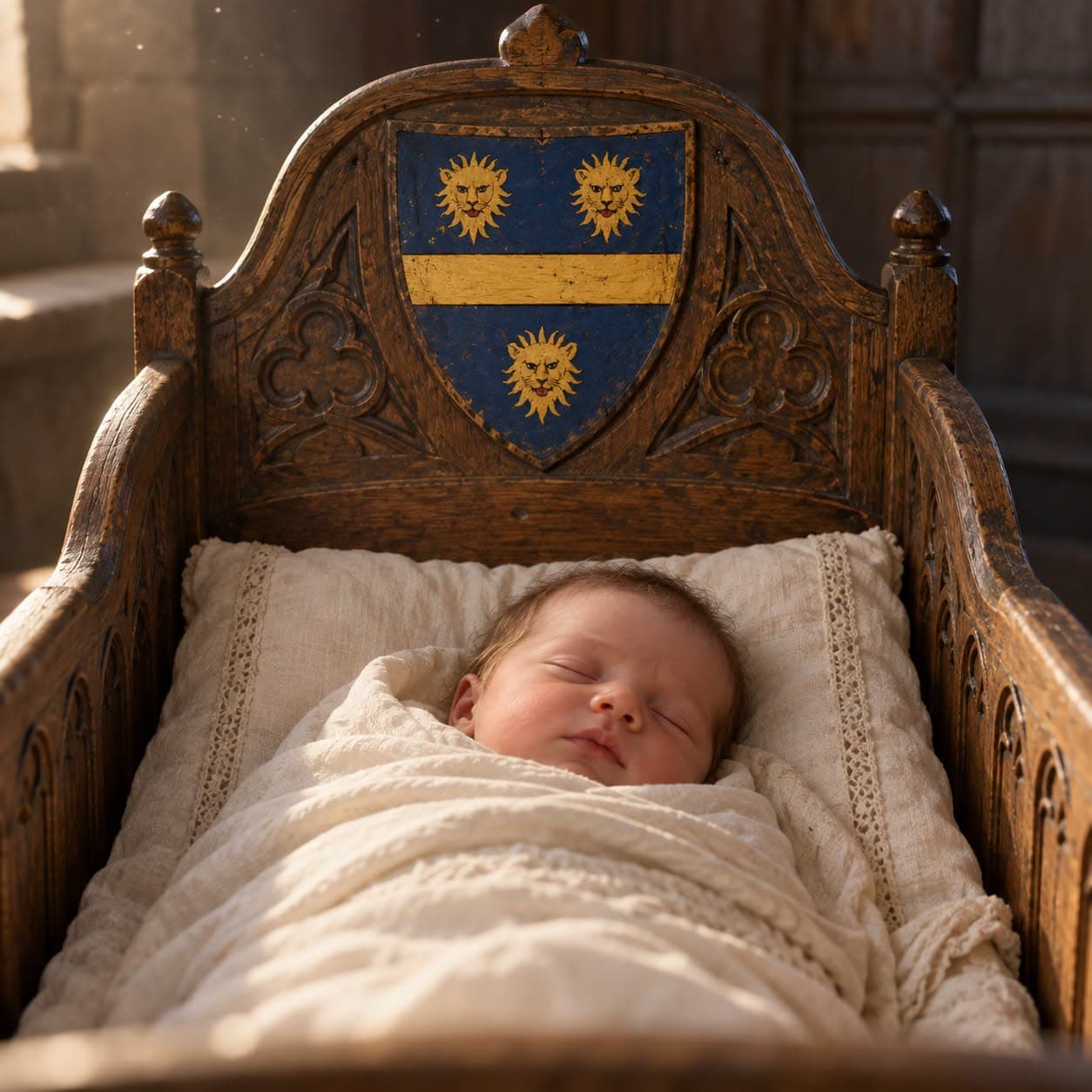
On 28 January 1457, she gave birth to a son. She was thirteen years old.
Years later, a Latin oration probably delivered by John Fisher before Henry VII recalled how slight Margaret had been. She was not a woman of great stature even in adulthood, Fisher observed, and had been smaller still at the time of the birth. That someone so young and so small in body could have delivered such a child had seemed almost miraculous.
The baby survived and was named Henry. Margaret survived too, but although she married twice more and lived for another fifty-two years, she never bore another child. We cannot know with certainty why. The belief that the birth permanently injured her is an inference rather than a recorded medical diagnosis, but Margaret herself appears to have understood the dangers of premature consummation all too well.
Nearly half a century later, another young Margaret was promised to a king. Henry VII’s daughter Margaret Tudor was to marry James IV of Scotland. Her mother, Elizabeth of York, and her grandmother, Margaret Beaufort, opposed sending her north too soon. They feared that James would not wait before consummating the marriage and would injure the girl and endanger her health.
The words were reportedly Henry VII’s, but the anxiety behind them belonged partly to his mother. The woman who had been married at six or seven, made a wife in earnest at twelve and become a mother at thirteen did not want her granddaughter’s body subjected to the same danger.
John de la Pole, meanwhile, had made another marriage. In 1458 he married Elizabeth of York, daughter of Richard, Duke of York, and sister of the future kings Edward IV and Richard III. The boy once joined to a Beaufort heiress became the husband of a Yorkist princess. Together, John and Elizabeth produced a large family whose closeness to the royal house would eventually make their sons dangerous.
Their eldest surviving son, also named John, became Earl of Lincoln. Under Richard III, Lincoln stood close to the throne and appears to have been regarded as his uncle’s probable heir after the death of Richard’s only legitimate son. When Henry Tudor defeated Richard at Bosworth in 1485, Lincoln initially submitted to the new king.
Two years later, he rebelled.
Lincoln joined the conspiracy formed around Lambert Simnel, a boy presented as a surviving Yorkist prince. He crossed to England with an invading army and met Henry VII’s forces at Stoke Field on 16 June 1487. The fighting was fierce. Lincoln died on the battlefield; Margaret Beaufort’s son remained king.
The elder John survived his son’s rebellion and died in the early 1490s. Other sons continued to trouble the Tudors. Edmund de la Pole inherited the Yorkist claim and was eventually executed during the reign of Henry VIII. Richard de la Pole carried that claim into exile and died fighting at Pavia in 1525.
The marriage arranged between John and Margaret in 1450 had vanished from law before either child reached adolescence. Margaret herself omitted it from her account of her married life. Yet the two children once placed beside each other grew into the parents of competing dynastic futures.
Her only son founded the Tudor monarchy. His sons spent decades trying to bring it down.