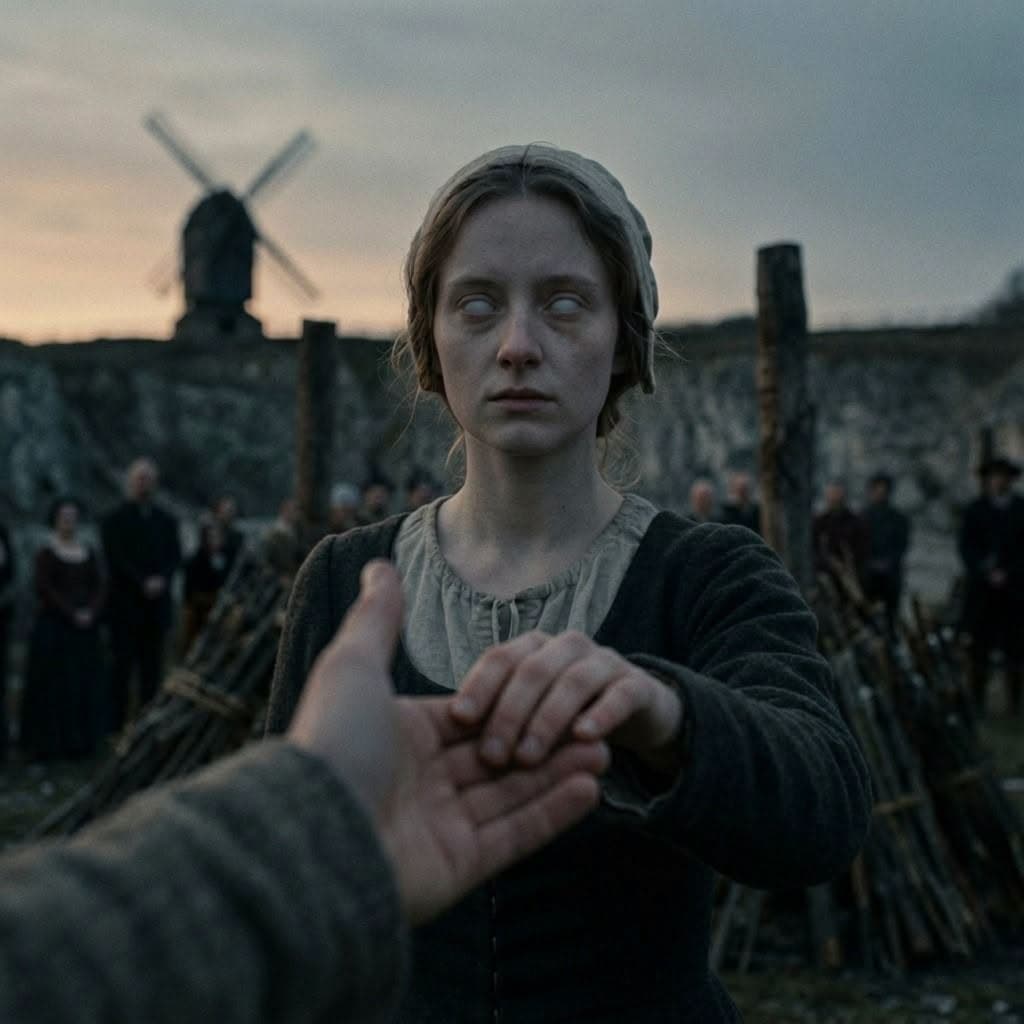
The last thing Joan Waste did before the fire was let go of her brother's hand. Roger had walked with her from the town to Windmill Pit on Burton Road. They had been born together, blind and sighted, in the same moment in 1534. He had been beside her for all twenty-two years of her life. At the edge of the pit she held his hand for a time, and then she released it, and they tied her above the fire.
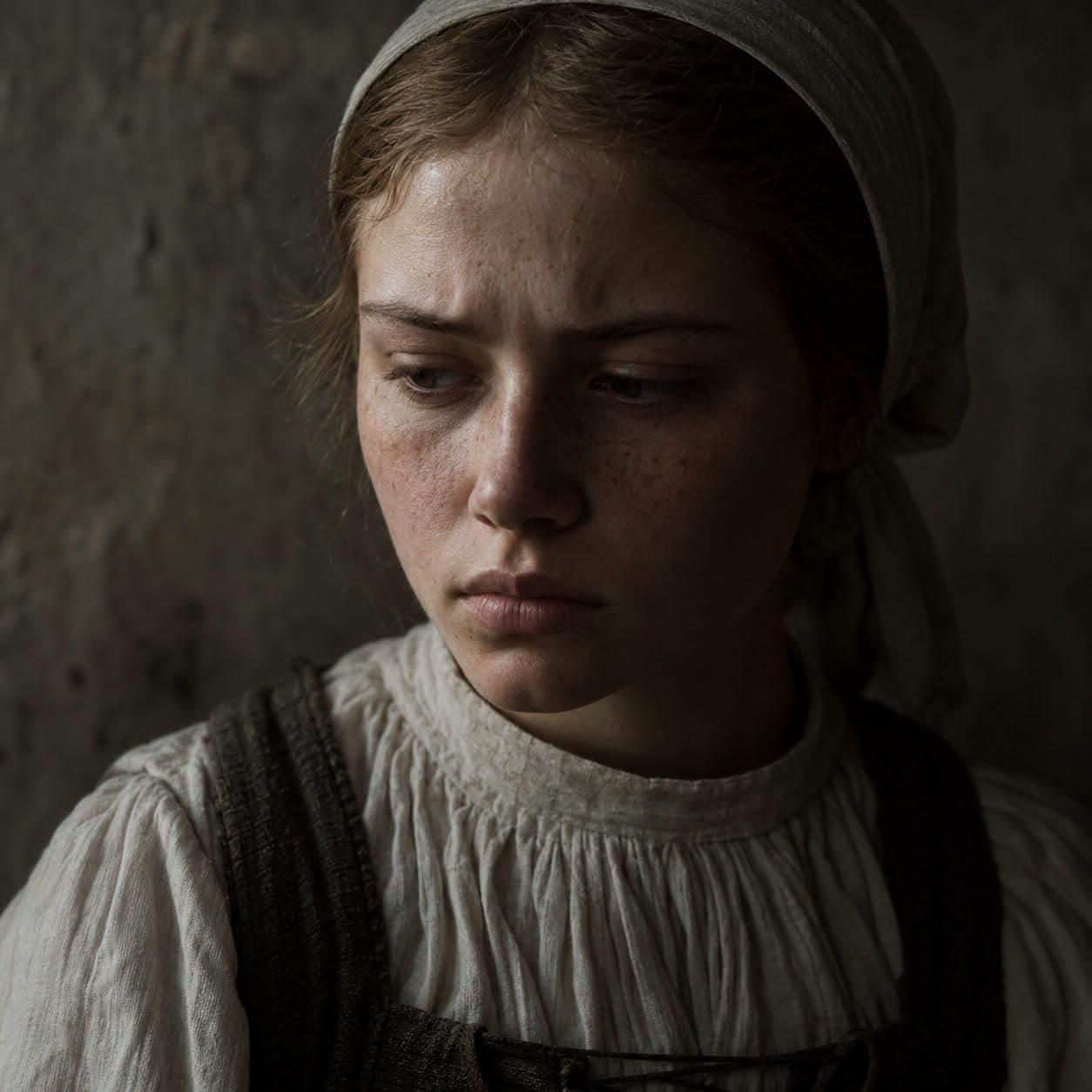
Joan Waste was the daughter of a Derby barber who made rope on the side. She learned to knit to help support the family. She was ordinary in every way the world could measure. Poor, working, blind from birth, unknown beyond her own street.
During the reign of Edward VI, the church services in Derby were conducted in English. Joan heard scripture read aloud in her own language and it changed her entirely. She saved money from her knitting, penny by penny, until she could afford a New Testament. She could not read it herself. So she paid her neighbours to read it to her, a penny at a time, and she memorised what she heard, passage by passage, until large portions of it lived inside her.
When Mary I came to the throne in 1553 and restored the Catholic faith, the English Bible became a dangerous object. The heresy laws were reinstated in 1555. Joan Waste, who owned a New Testament and refused to accept the Latin Mass, was brought before Anthony Draycot, chancellor to the Bishop of Lichfield.
Draycot and the Bishop put the doctrine of transubstantiation to Joan, the Catholic teaching that the bread and wine of the Mass literally become the body and blood of Christ. Joan said she would accept the doctrine on one condition. She asked the Bishop to personally guarantee its truth before God at the Day of Judgment, as other preachers had promised their own congregations.
The Bishop agreed. His chancellor Draycot immediately reminded him that he could not answer before God for a heretic. The Bishop withdrew his word.
Joan told them plainly that if their own consciences would not allow them to stand before God and answer for the truth of what they were demanding she believe, she would answer no more questions. They had nothing to say to that. So they condemned her.
She was burned on the first of August 1556, under the authority of the Marian heresy laws, on the orders of Anthony Draycot.
Before the fire was lit, a sermon was preached over her. A formal religious ceremony, conducted in full, for a woman whose only crime was taking religion seriously enough to die for it. Then they hanged her above the fire on a rope. She prayed aloud throughout, calling on the crowd to pray with her, calling on Christ, until the rope burned through and she fell into the flames.
Two hundred and eighty people were burned for heresy under Mary I between 1555 and 1558. Most were ordinary weavers, farmers, apprentices, and servants. Joan Waste was among the poorest and most defenceless of them. She owned one book she could not read. She had memorised it anyway.
Roger stood and watched his twin sister die. Anthony Draycot went home to his dinner.