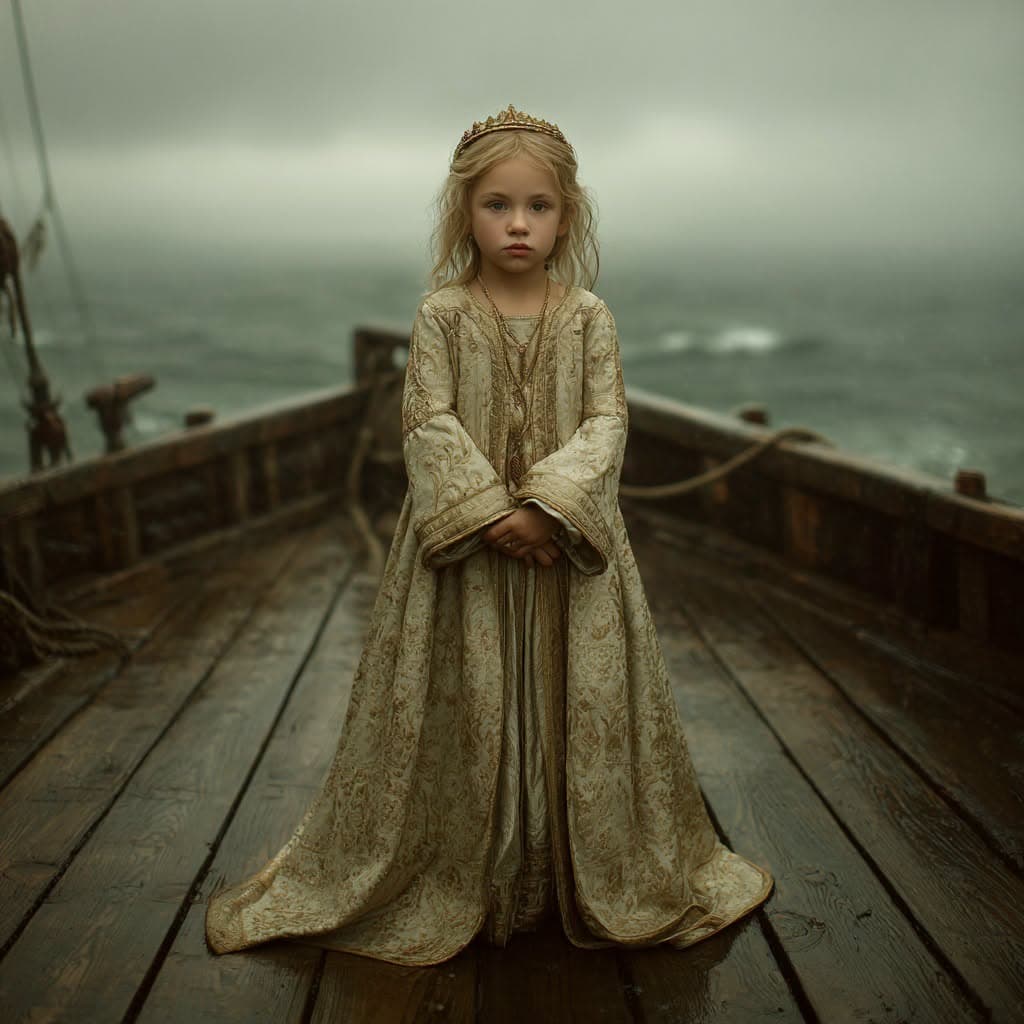
She was four years old when they sent her to France to live with the thirty-one year old man she was going to marry. Six years later her mother married him instead. Then they sent her to Scotland.
She was born in 1210, the eldest daughter of King John of England and Isabella of Angoulême, and she had been a diplomatic instrument before she was old enough to understand what diplomacy was. At four years old she was betrothed to Hugh X of Lusignan and sent to live at his court in France, a child deposited in a foreign household as a guarantee of her father's intentions. The Lusignans kept her not as a cherished future bride but as insurance. If King John broke his promises, they had his daughter. Joan grew up in a court that valued her as a hostage and waited for her to become useful as a wife.
In 1216 King John died. Joan remained at the Lusignan court while her mother Isabella made her own calculations. Isabella had been twelve years old when she married John. She had borne him five children and endured his reign and felt no particular obligation to remain in England now that he was dead. She returned to France, to her own county of Angoulême, and she renewed her acquaintance with Hugh X, the young man who had been waiting years for the daughter she had brought into the world. In 1220 Isabella married Hugh herself. The man Joan had been sent to France at four years old to marry became her mother's husband instead.
Hugh and Isabella understood their leverage precisely. They refused to release Joan to her brother's custody until Henry III met their financial demands, the dower Isabella was owed as dowager queen, the lands and money promised to Hugh as part of the original betrothal agreement. Henry agreed. He was already negotiating a treaty with Scotland and the treaty required a bride for Alexander II. Joan was the bride. She was packed up and sent north.
She married Alexander at York in June 1221. She was ten years old. He was twenty-three. Henry paid for several days of celebrations attended by nobles from both courts and Alexander escorted his new queen back to Scotland, and Joan began the process of learning a third court, a third set of expectations, a third version of the life she had been given without consultation. She had spent her childhood in France. She would spend her adult life in Scotland. England, the country she had been born in, was the place she passed through in transit between other people's requirements.
The marriage produced no children. Alexander had granted Joan dower lands in Scotland whose income was meant to support her household, but the record suggests she was given little real control over those lands or over anything else. What influence she had came through her brother. She corresponded regularly with Henry, passing on information her husband shared with her, functioning as the diplomatic thread between two crowns that her marriage had been arranged to provide. She was useful to both of them. She was just not useful in the way the arrangement had required.
The chronicler Matthew Paris noted, in the years before the end, that Joan and Alexander had become estranged and that Joan wished to spend more time in England. Henry responded quietly and practically. He granted her manors at Driffield in Yorkshire and Fen Stanton in Huntingdonshire, properties in her own country that gave her an independent income and a place to be that was not Scotland. He did not make a diplomatic incident of it. He simply made sure his sister had somewhere to go. The record shows a brother building his sister an exit from a life she had not chosen. It does not say what that life had become. It does not need to.
By 1237 Alexander was pressing Henry for Northumbria and the two kings met at York to resolve it. Joan was there, moving between her husband and her brother as she had done for sixteen years, the diplomatic thread the marriage had made her. The meeting ended with Alexander dropping his claim in exchange for other concessions. Then Joan left her husband at York and traveled south with her sister-in-law Eleanor of Provence and they went to Canterbury.
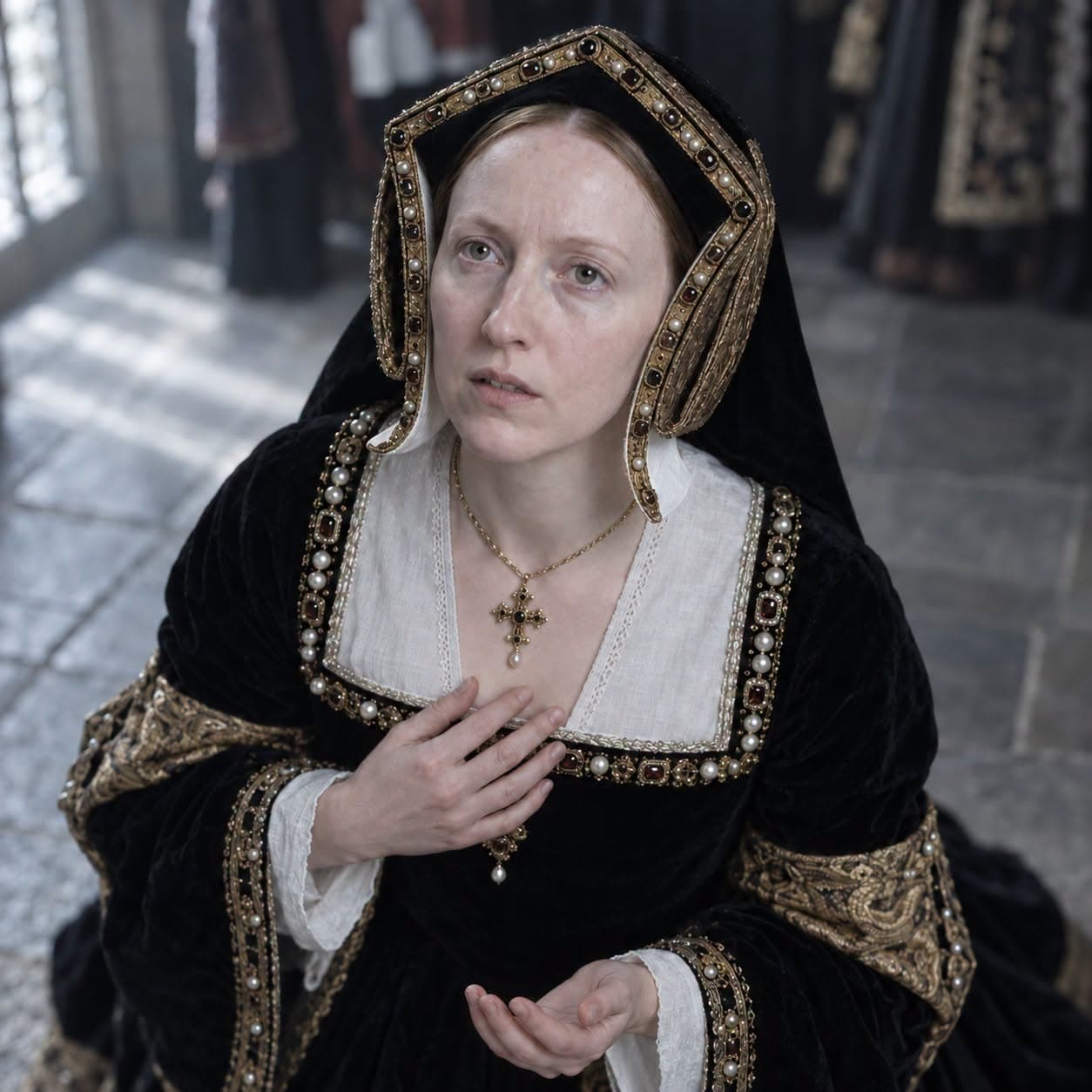
The record states that they went. It does not say in plain terms why. But Canterbury in 1237 was where women went when they had run out of other explanations for problems they could not solve alone. Joan had been Queen of Scotland for sixteen years. She had arrived at ten years old and she had given Alexander's court everything it asked of her except the one thing it could not ask her to provide by arrangement or instruction or political negotiation.
She and Eleanor knelt in the same cathedral and the record preserves that they were there and nothing else. What Joan carried into that building, sixteen years of a foreign court, a childhood spent in another foreign court before that, a mother who had taken the life that had been arranged for her and used it for herself, the record does not say. It is enough that she went. It is enough that she knelt.
Joan spent Christmas in England with her family. She did not go back to Scotland. She fell ill in early 1238 and died on the fourth of March at Havering-atte-Bower with her brothers Henry and Richard at her side. She was twenty-seven years old.
Alexander remarried within two years. His second wife gave him a son, the future Alexander III.
Joan was buried at Tarrant Crawford Abbey in Dorset. A Cistercian priory of women, in the country she had been born in, among the women of her own blood. The abbey no longer exists. Her mother Isabella outlived her by almost a decade, in France, with Hugh, surrounded by the nine children that second marriage produced.
Joan left none.