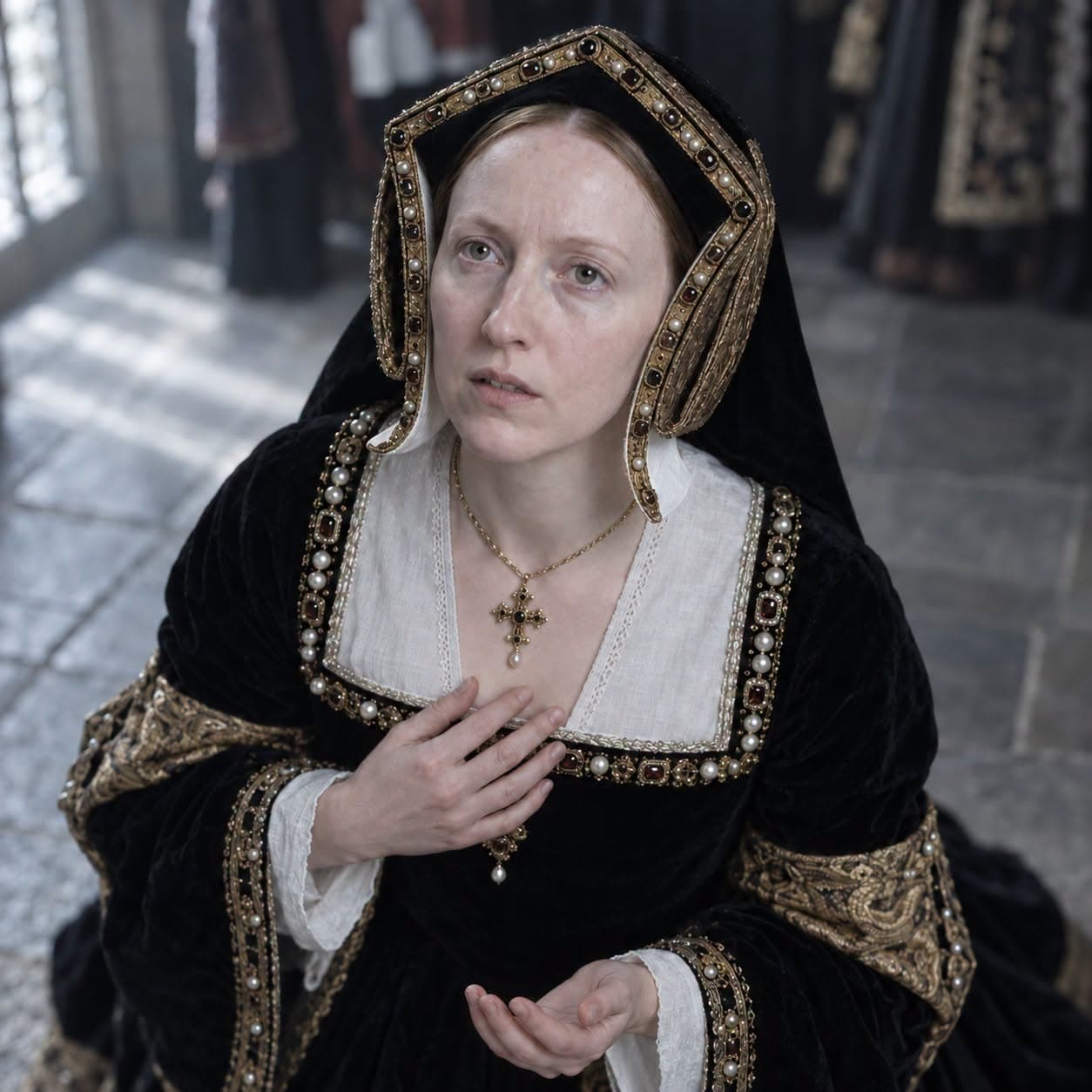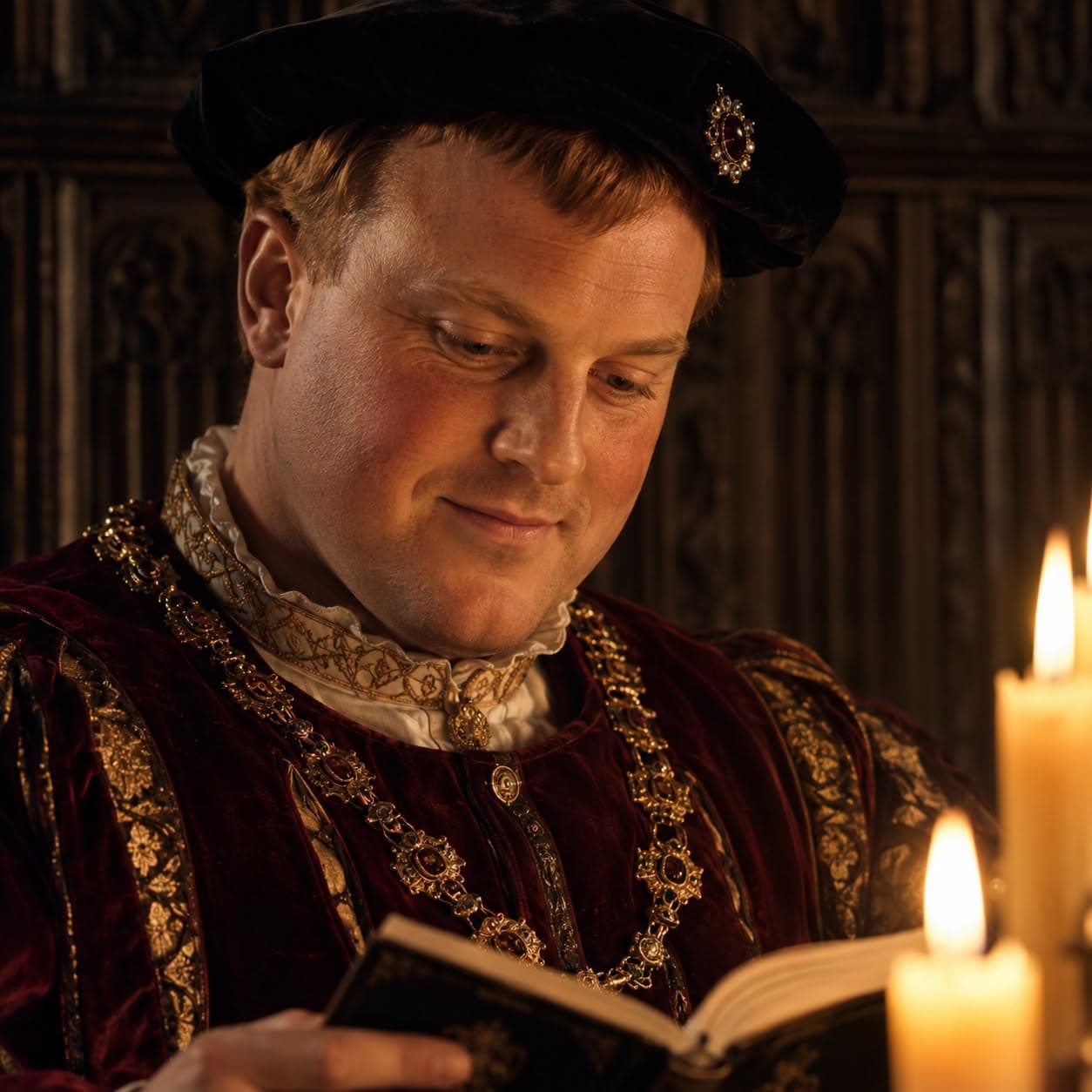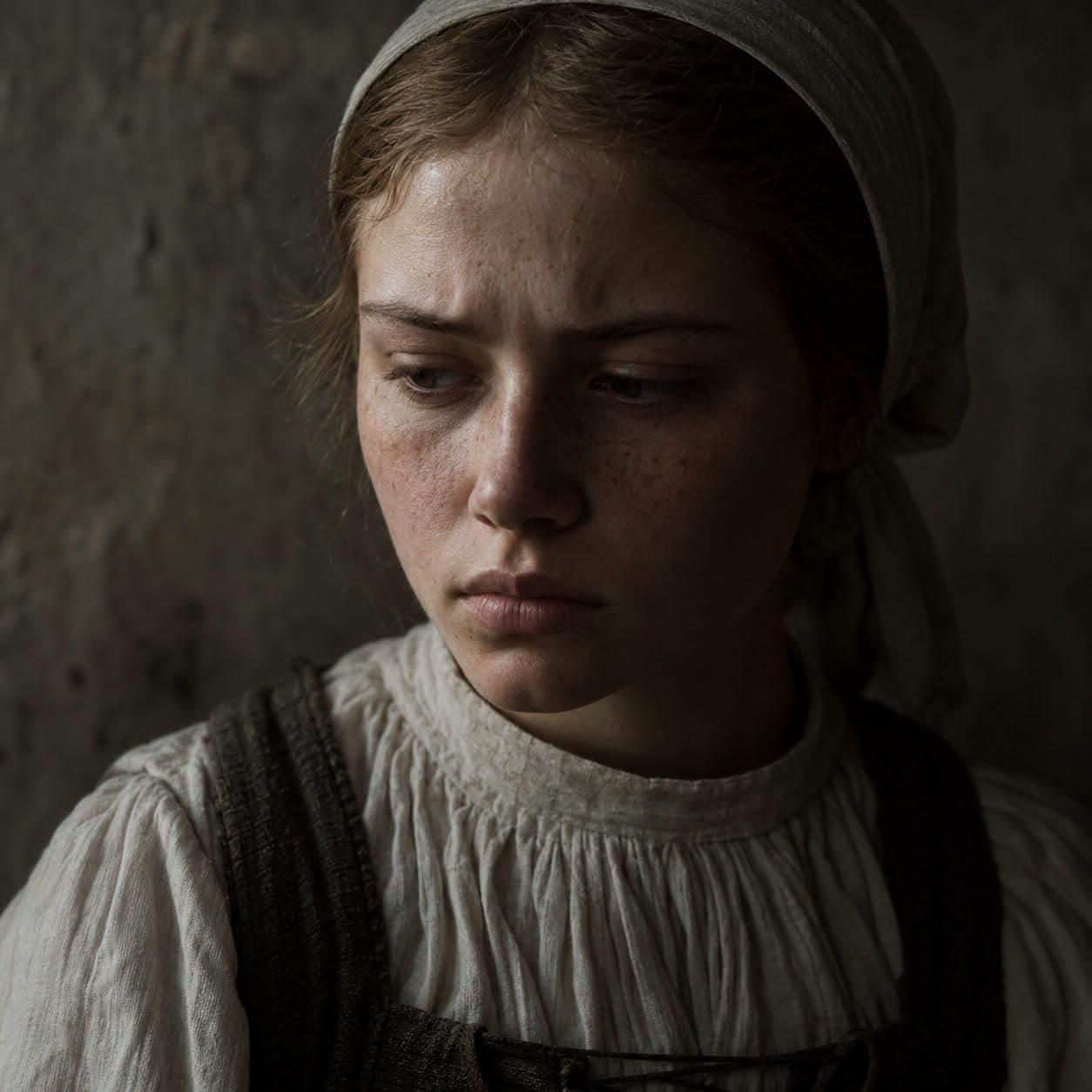
She was born in the Tower of London. Six years later her mother had her father murdered. A year after that, she was given away. She was seven years old.
Joan was the youngest child of Edward II and Isabella of France. Her father's weakness and his devotion to his favourites, first Piers Gaveston and then Hugh Despenser the Younger, had already turned her mother against him by the time Joan could walk. When Joan was four years old, men she had never met were discussing what marriage might be arranged for her, weighing her against treaties and borders in rooms she was not permitted to enter. No one recorded what she thought of any of it. No one asked.
Isabella allied herself with Roger Mortimer and invaded England in 1326. Edward II's government did not survive the year. He fled toward Wales, was caught in November, and forced to give up the crown in January 1327. He was murdered at Berkeley Castle that September. Joan was six years old when it happened. The man who oversaw her father's death was her mother's lover. The woman who arranged it was her mother, and within a year that same mother would decide what became of her daughter next.
The Treaty of Edinburgh-Northampton was signed in 1328, ending the war with Scotland and recognising the independence England had spent decades refusing to grant. The English called it the Shameful Peace. Her brother, the young Edward III, was so ashamed of it that he would spend years trying to undo it. Joan was the seal that made it binding, a seven-year-old girl standing in for a kingdom's surrender.
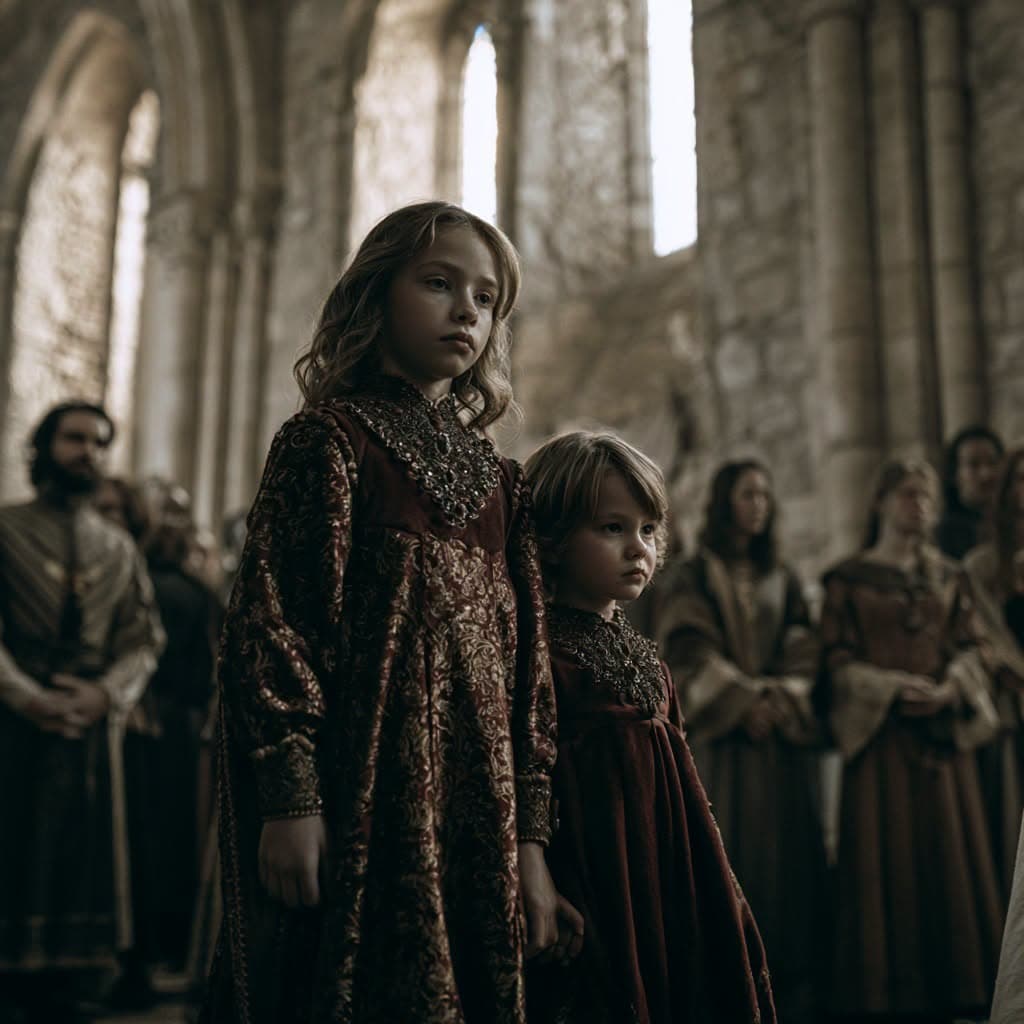
She was married on 17 July 1328, in the church at Berwick-upon-Tweed, to David, son of Robert the Bruce. She was seven years old and twelve days. He was four years, four months, and thirteen days old, a child too young to understand the ceremony he stood inside. Her mother was there to watch it happen. Her brother was not. Robert the Bruce sent word that he was too ill to travel, though he lived for another year after the wedding he did not attend.
Two thousand five hundred pounds was spent on the festivities that followed, on feasting and music staged for a church that held two children neither of whom could reach the altar rail without being lifted. Her English ladies stood at the back of that church throughout the ceremony, the last people present who had known her before any of this began. Within days they were sent home. She did not see England again for years.
Robert the Bruce died the following year. David became king of Scotland at five years old, a boy ruling a kingdom he could not yet spell. Edward III, still furious over the peace his sister's marriage had sealed, used the child king's minority as his opening and invaded. At Halidon Hill in 1333 the Scots were crushed, and Joan and David fled together, reaching Boulogne in May 1334 as refugees rather than royalty. She was twelve. He was ten. They were given Château Gaillard, the castle Richard the Lionheart had built more than a century earlier, and they lived inside its walls for seven years. Nothing survives about those years. No letters. No accounts. The record simply stops until they return.
They returned to Scotland in 1341. Five years later David invaded England under the old alliance with France, and at Neville's Cross on 17 October 1346 he was captured. He was taken first to the Tower of London, the fortress that had given his wife her name and her first sight of the world, and then to Odiham Castle in Hampshire, where he remained a prisoner for eleven years. Joan was permitted to visit him occasionally inside the Tower. She crossed back into the building where she had been born to sit with a husband who could not leave it. She visited him there across eleven years of his captivity, and did not become pregnant in all that time.
David was ransomed in 1357 for one hundred thousand marks. He returned to Scotland at once. He brought with him a mistress, a woman named Katherine Mortimer. Joan did not go with him.
Her mother had been under house arrest since 1330. For twenty-eight years Isabella lived confined for the murder that had shaped the whole of Joan's childhood, while Joan lived out everything that murder had set in motion, the marriage at seven, the exile in France, the visits to a husband who could not leave the Tower, the childlessness that followed him home to another woman. In 1358 Isabella fell into her final illness, and it was Joan who came to nurse her through it. She died in her daughter's care.
By the time the plague reached her at Hertford Castle in September 1362, Joan had already outlived most of what had been done to her. She had been born in a fortress and married in a border town before she could read. She had spent seven childhood years behind the walls of a French castle that kept no record of her. She had crossed back into the building of her own birth to sit with a husband imprisoned there, year after year, and carried nothing away from it. Joan had watched him go home without her and she had nursed the mother who had arranged all of it through to the end.
Joan died on 7 September 1362, aged forty-one, in a marriage that had lasted thirty-four years and left no children behind it. Her brother had once called her Joan Makepeace. He had meant it as an insult.
She chose to remain in England after David was released. She was buried beside her mother at Christ Church Greyfriars, in the same church where Isabella lay buried with the heart of the husband she had murdered.