She has been a villain for five hundred years. History was covering for someone else.
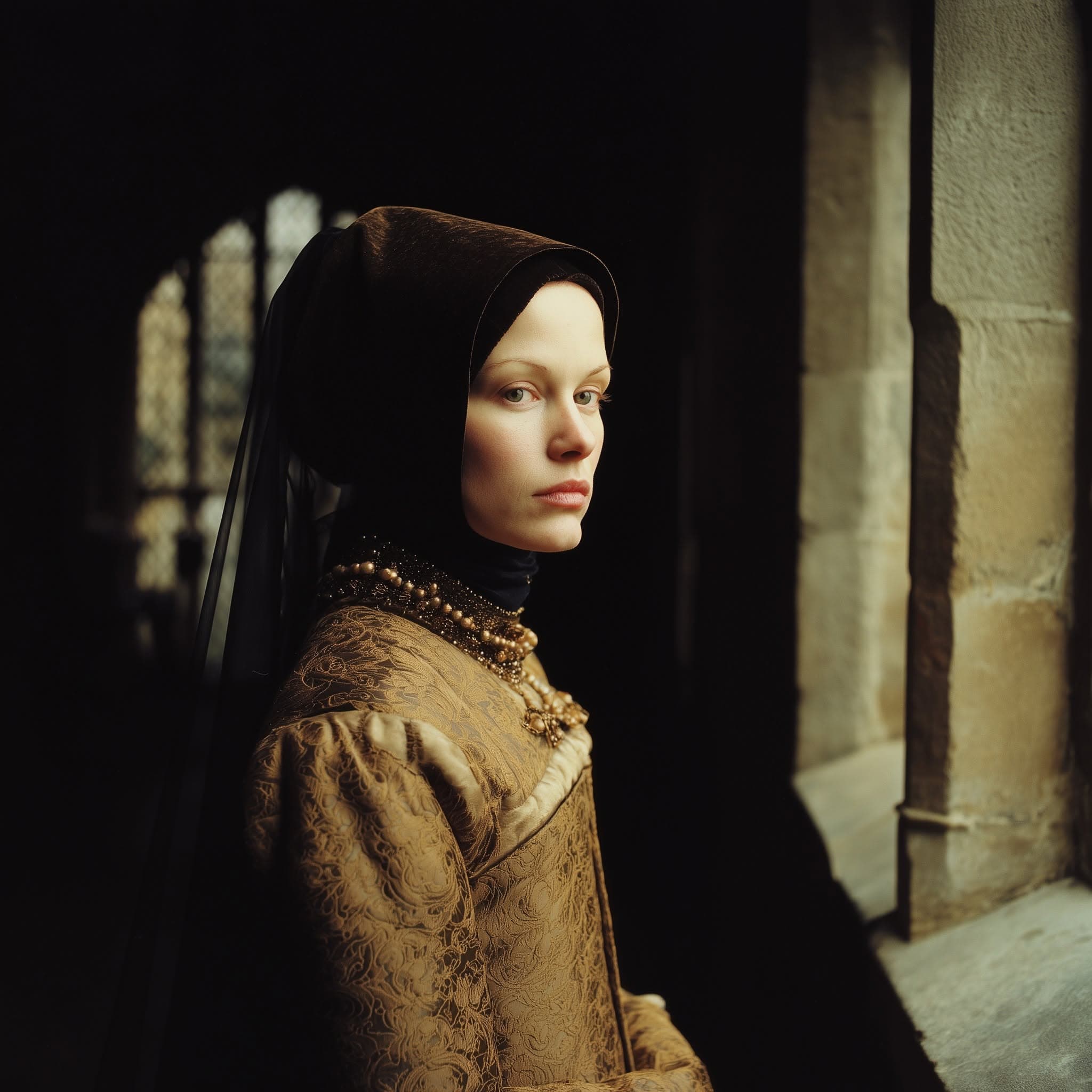
Jane Parker was born around 1505 into a family that orbited the court without ever quite commanding it: respectable enough to matter, not powerful enough to be safe. Her father was Henry Parker, Baron Morley, a scholar and courtier who understood that proximity to Henry VIII was both the family's greatest asset and its most reliable source of danger.
Jane grew up watching men calculate. She learned to do it herself. She had no other option. The court was the only world available to her, and the court rewarded the quick and destroyed the careless, and she was not careless.
She married George Boleyn sometime around 1524. He was handsome, clever, the king's favourite companion, a poet of real ability and a diplomat trusted with delicate missions abroad. He was also a man who moved through the world as if it belonged to him, which was the exact kind of man who flourished in Henry's court and the exact kind of man who was terrifying to be married to.
What their marriage was, what it felt like from the inside, from Jane's side of it, the record does not say. It does not say because no one asked. What it shows is a decade of shared life in the most volatile court in Europe, both of them watching the same machinery, both of them learning its rhythms, one of them with considerably less room to manoeuvre than the other.
She learned, across those ten years, what it cost to be standing next to a man the king had chosen to notice. She learned it the way women in that court learned most things. By watching what happened to the ones who forgot it.
Her sister-in-law was Anne Boleyn. She watched Anne's rise from inside it: the years of waiting while Henry dismantled his marriage to Katherine of Aragon, the great constitutional rupture of the break with Rome, the coronation, the pregnancies, the slow shift in Henry's attention that everyone at court could feel and no one could say aloud. She served in Anne's household. She knew the rooms, the routines, the temperature of a queen's favour and how quickly it could change.
She had watched one queen discarded. She knew what discarding looked like.
In the spring of 1536 Cromwell moved. The charges he constructed against Anne were extraordinary: adultery with five men, one of whom was her own brother. George Boleyn was arrested on the second of May. Anne was arrested on the same day. The trial was held on the fifteenth. No witnesses were called. The Imperial Ambassador Chapuys, who attended and who loathed Anne, noted this in his dispatches with visible discomfort. No witnesses were produced against either the queen or her brother, as was usual, particularly when the accused denied the charge.
They denied the charge. They were convicted anyway. They were executed on the seventeenth of May.
Jane was a widow at thirty. Her jointure, the financial settlement that was supposed to sustain her, was in dispute. The family whose name she carried was in ruins. She spent the months that followed doing what women in her position did: navigating the legal channels available to her, writing letters, pressing her claim, trying to recover what the law theoretically said was hers. She succeeded. She returned to court.
This is the part the villain narrative cannot accommodate. A woman who had conspired to destroy the Boleyns for personal gain would not have spent the following months fighting creditors and managing accounts. She would have been rewarded. She was not rewarded. She was a widow with a disputed estate and a dead husband's attainted name, and she went back to work because there was nothing else to do and nowhere else to go.
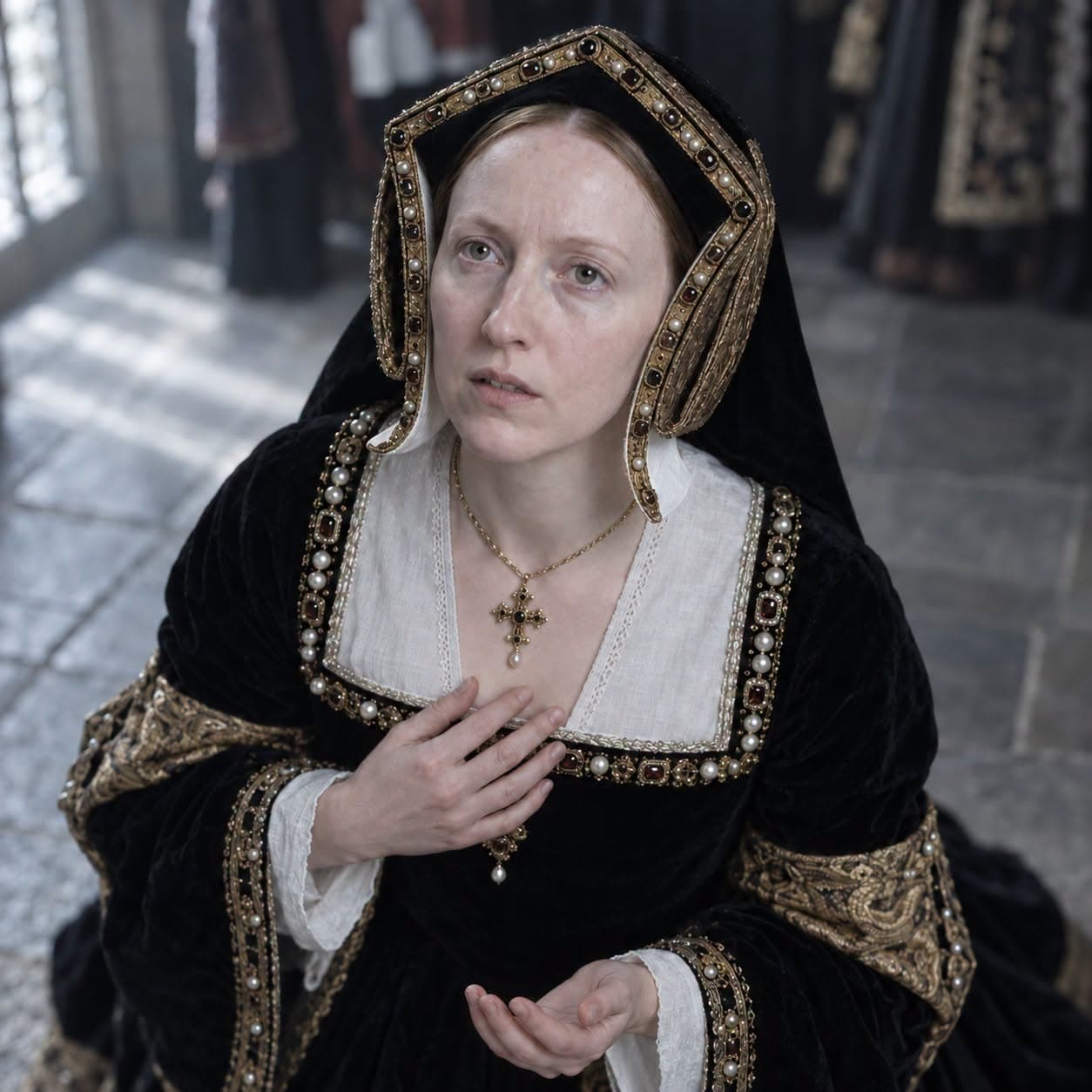
She served Jane Seymour. She served Anne of Cleves. She served Catherine Howard, the teenager Henry married in 1540 when Jane had been navigating his court for fifteen years. Catherine was seventeen or younger. Jane was thirty-five. She had watched two of Henry's queens go to the scaffold. She had watched two more be quietly discarded.
She had spent fifteen years learning exactly how the machinery worked and exactly what it did to young women who did not understand it, and now she was sitting beside one of them, watching her make the calculations that would kill her, and there was nothing she could do. She could not warn her. She could not protect her. She could only watch, as she had always watched, from the inside of a situation entirely controlled by men who would punish her whatever she did.
She arranged the meetings because Catherine asked her to, or because Catherine was the queen and refusal was its own kind of danger, and the machinery that had taken her husband and her sister-in-law was already in motion before any of them understood it had begun.
When the investigation came she was taken to the Tower. She broke down so completely that Henry sent his own physicians to assess her, not out of mercy but because the law did not permit the execution of a person who had lost their mind. He passed a special act of parliament. He executed her on the thirteenth of February 1542, alongside Catherine Howard, on Tower Green. She was approximately thirty-seven years old.
The story that hardened in the decades after her death was precise and useful: Jane had gone to Cromwell in 1536 and whispered of incest, sent her husband and her queen to the scaffold out of jealousy and spite. Elizabeth I needed her mother rehabilitated as a Protestant martyr and needed someone to blame for her fall. Jane was dead, childless, defenceless.
The hostile accounts were written after her death, shaped by the political requirements of a regime that needed her guilty to make Anne innocent. Her supposed scaffold confession, the document that cemented her reputation, is now believed to be the invention of a seventeenth-century Italian writer with a documented habit of fabricating sources. It was published a century and a half after the execution it describes.
She had been a villain for a hundred and fifty years before anyone thought to invent the evidence.
What the record shows is a woman who spent twenty years making the calculations that survival in Henry's court required. She watched. She served. She kept her counsel and her position in rooms where both were constantly at risk. She made it further than most. She served more queens than anyone. She was given a villain's ending and a villain's legacy by people who found her useful that way, and the reputation settled over her like a sentence, and it has held for five centuries.
She kept her head until they took it.