She was about ten when they crowned her. The question of whom she would marry remained in other hands.
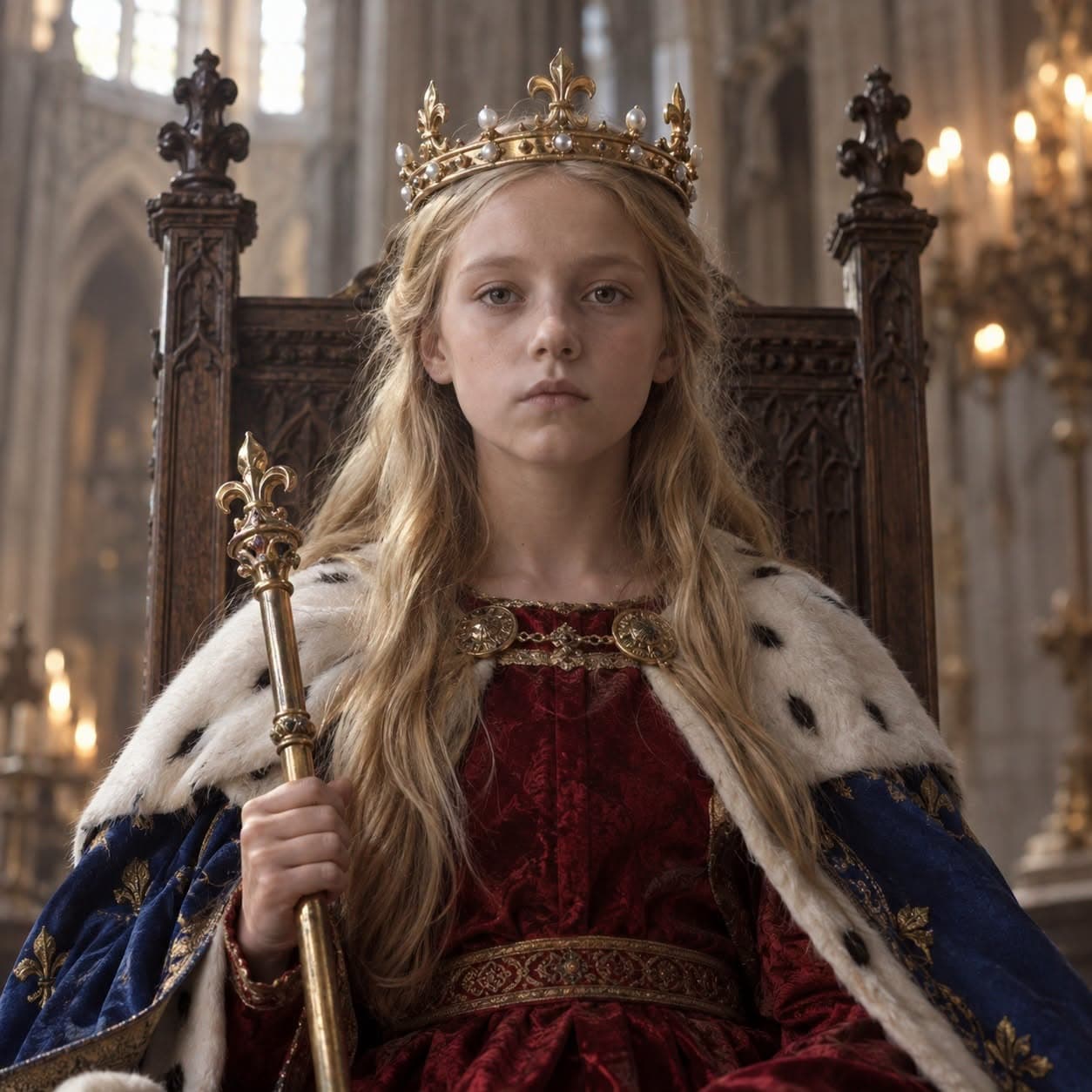
On 16 October 1384, in Wawel Cathedral in Kraków, the daughter of Louis of Hungary and Elizabeth of Bosnia was crowned as Poland's sovereign. She was crowned as king, with the authority of a ruler in her own right, although her documents called her queen. There was no husband beside her from whom that authority came. There would soon be considerable negotiation over who should stand there.
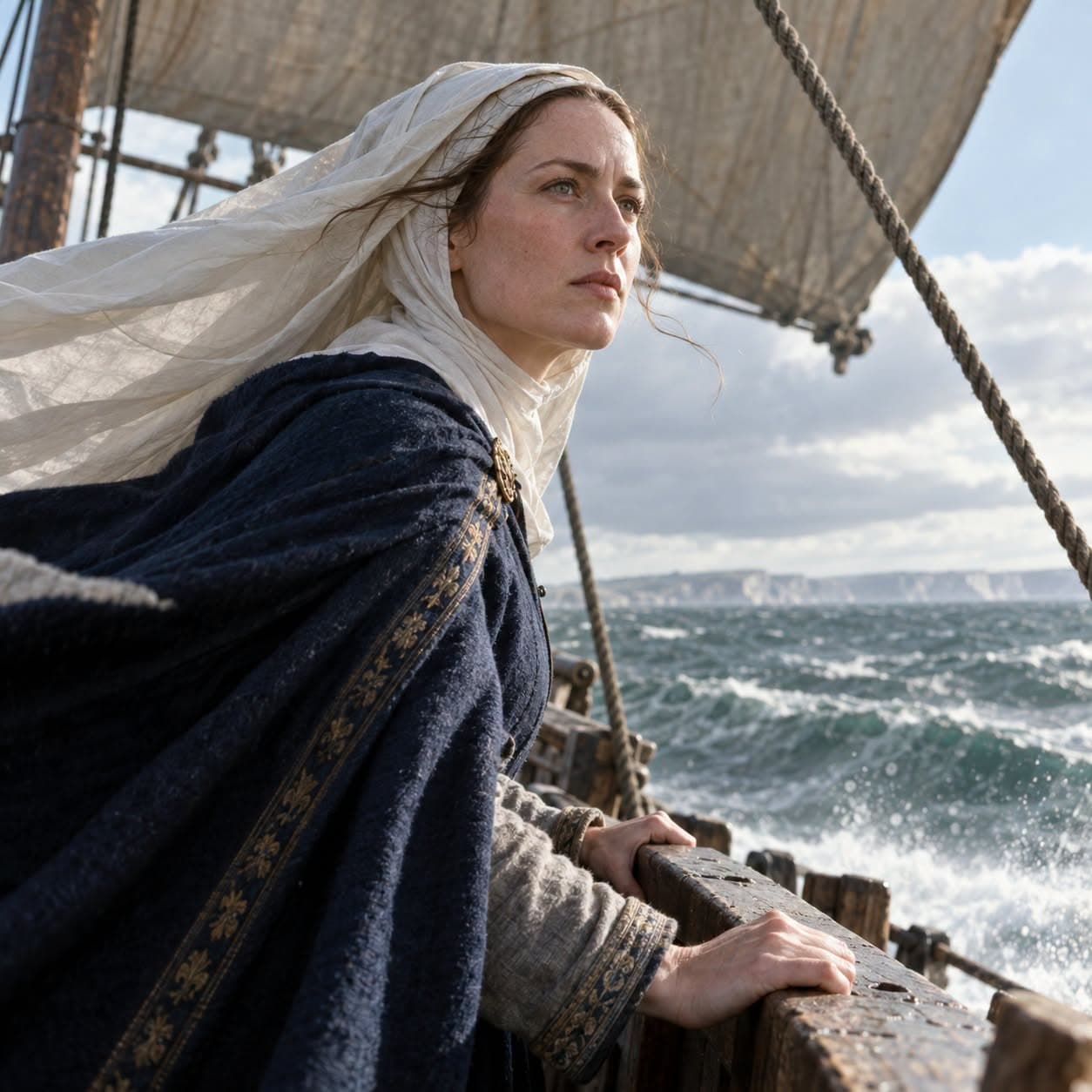
Her father had ruled both Hungary and Poland and had no sons. In such a family, a girl's inheritance and her marriage could scarcely be discussed separately. Jadwiga's elder sister Mary became ruler of Hungary after Louis died. Jadwiga was sent to Poland, where the nobles wanted their sovereign to live among them. She arrived with a royal claim and a future marriage already arranged.
William of Habsburg had been chosen for her in childhood. A ceremony had joined the two children years before, in preparation for a marriage to be completed when they were old enough. It was an arrangement made by their families for their families. By the time Jadwiga had a crown of her own, the men advising her had found a different use for her marriage.
They wanted Jogaila, Grand Duke of Lithuania.
Lithuania offered an alliance against the Teutonic Order, whose power threatened both countries, and a way through disputes over neighbouring lands. Jogaila was still pagan. His marriage to a Catholic sovereign offered the prospect of his baptism and the Christianisation of his Lithuanian subjects. William could bring a Habsburg connection. Jogaila could bring a country.
The terms were negotiated while Jadwiga was still a child. Her mother was consulted; Polish lords pursued the agreement. William's earlier arrangement was set aside. Jogaila was baptised in Kraków, taking the name Władysław. On 18 February 1386, about twelve years old, she married him in the cathedral where she had been crowned. He was a grown man, substantially older than his bride. After the wedding she publicly renounced the childhood ceremony that had once joined her to William. In March her husband too was crowned King of Poland.
Her marriage had helped to make another king. It did not unmake her.
A wax seal attached to one of her documents from January 1385 shows Jadwiga seated on a high Gothic throne, her long hair falling to her shoulders, a sceptre in her right hand resting against her shoulder and an orb in her left. Angels stand in niches beside the throne. A child sovereign needed to look settled in majesty, and on the seal she does. As she grew older, there was work behind the image: correspondence, negotiations, grants and the patient business of keeping claims alive when other people would rather let them lapse.
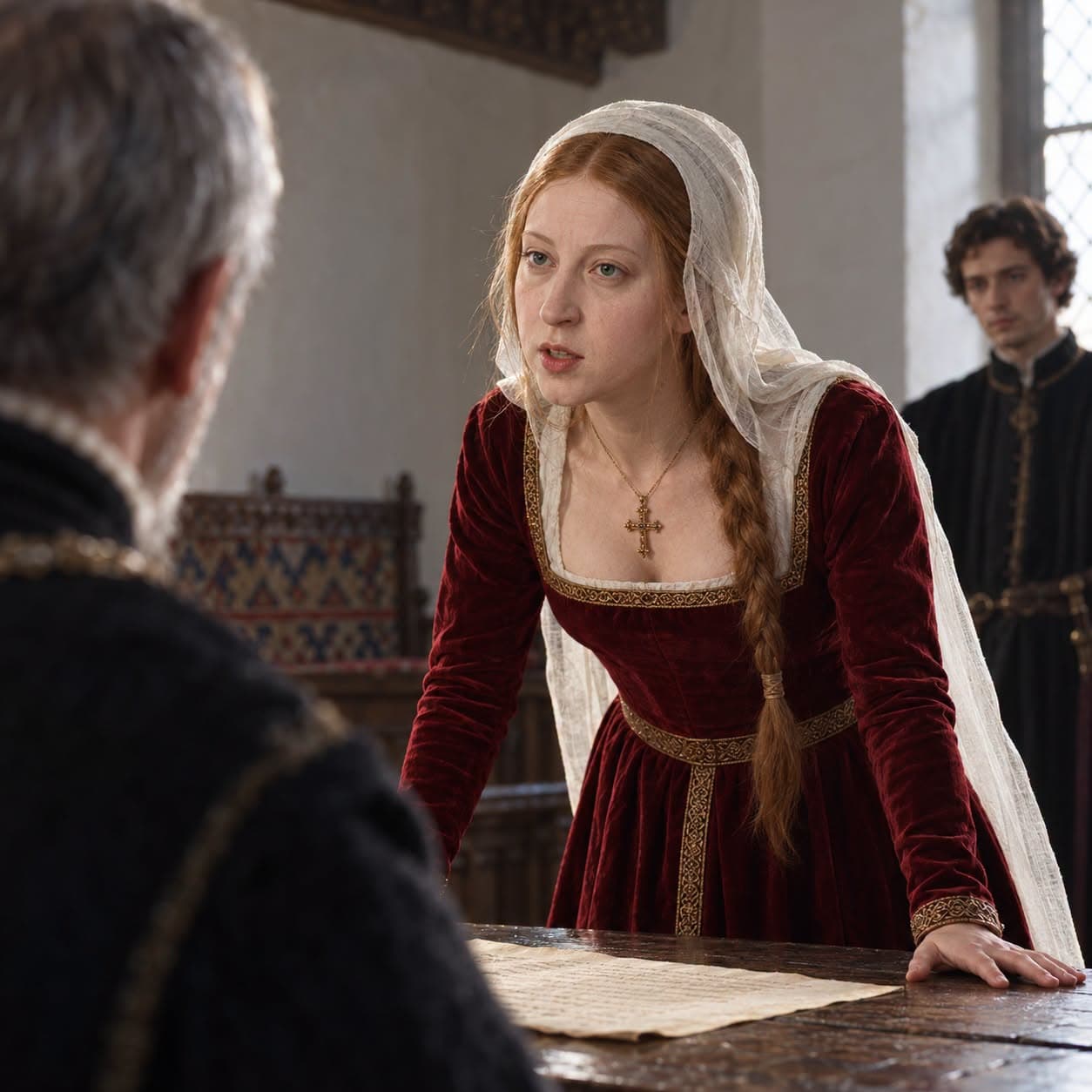
She negotiated with the Teutonic Order over the return of Dobrzyń, a territory which had been pledged to it. She met its grand master at Włocławek, and when they parted without agreement she pursued the matter in letters. The girl whose marriage had been negotiated by others was conducting negotiations herself. She had a household and a chancery of her own, and a position her husband's coronation had not absorbed.
Her interest in learning took a practical form. Kraków's university had been founded by Casimir the Great before she was born, but its activity had faltered after his death. Restoring it required money, premises and permission. Jadwiga worked for its renewal, and in 1397 she and her husband secured papal approval for a theology faculty. Permission was one thing. Premises cost money.
By the end of 1398, she was expecting a child. The marriage had lasted more than twelve years without one. Now the courts of Europe received invitations to a royal christening. Pope Boniface IX agreed to be godfather through a representative, and to lend his name to the baby. The preparations were for a child whose birth concerned two realms, just as her mother's marriage had done.
The baby was a girl, born on 22 June 1399. They named her Elżbieta Bonifacja.
For three weeks, the sovereign who had inherited a kingdom as a child had a daughter of her own. Elżbieta died on 13 July. Jadwiga was herself ill after the birth. On her deathbed she gave all her jewels to the restoration of the university. On 17 July she died, four days after her baby. She was about twenty-five. There was no surviving child to inherit through her.
Her husband remained king. The connection with Lithuania remained, with its arguments and obligations, and the work of government continued. So did the university's restoration. Jadwiga had helped obtain the permission it needed; her jewels supplied money for work she would not live to see completed.
In 1400, Władysław renewed the university at Kraków. The proceeds of her gift helped buy buildings for its scholars, including Collegium Maius. Others had put the crown on her head. Her jewels she gave away herself, and they bought rooms in which other people could learn.