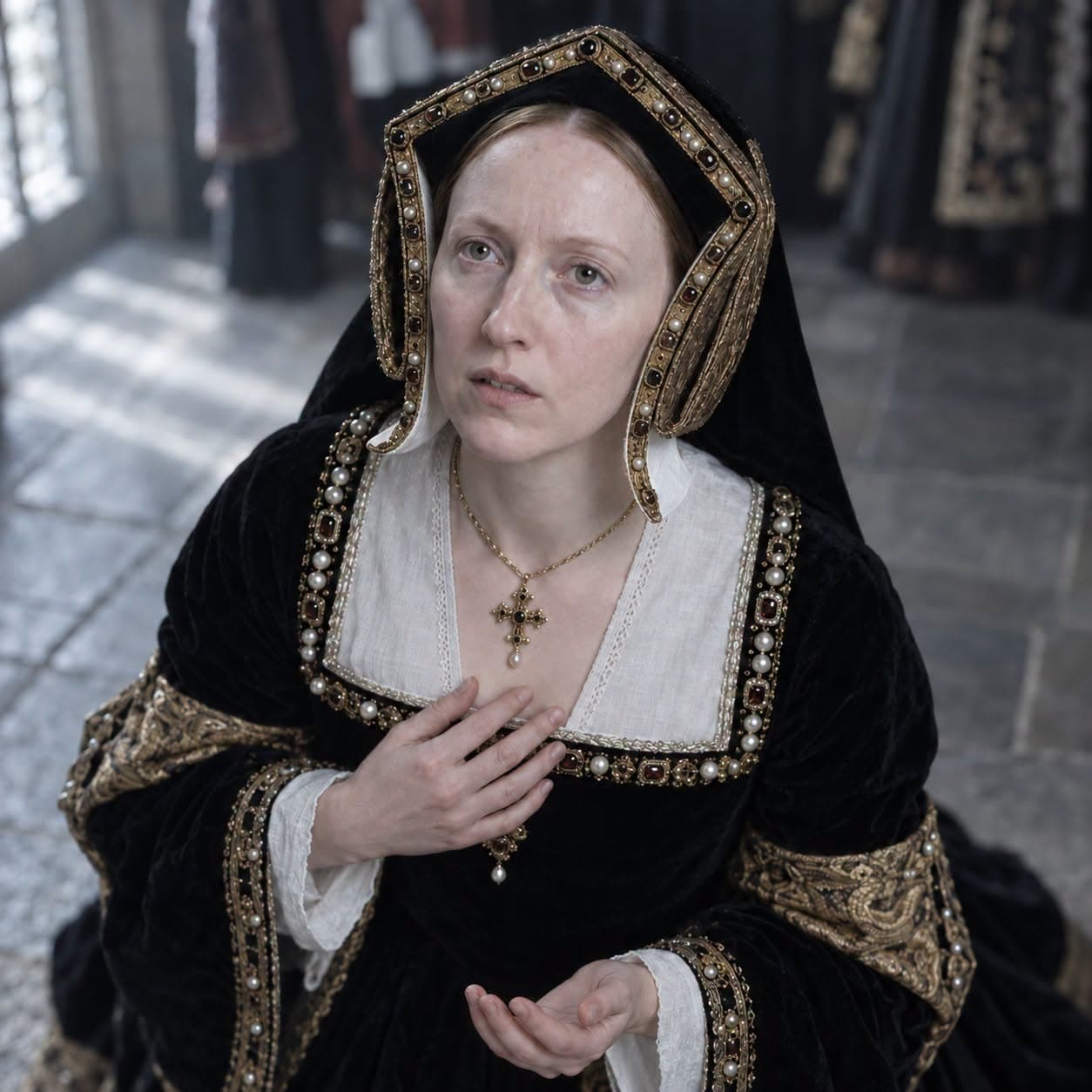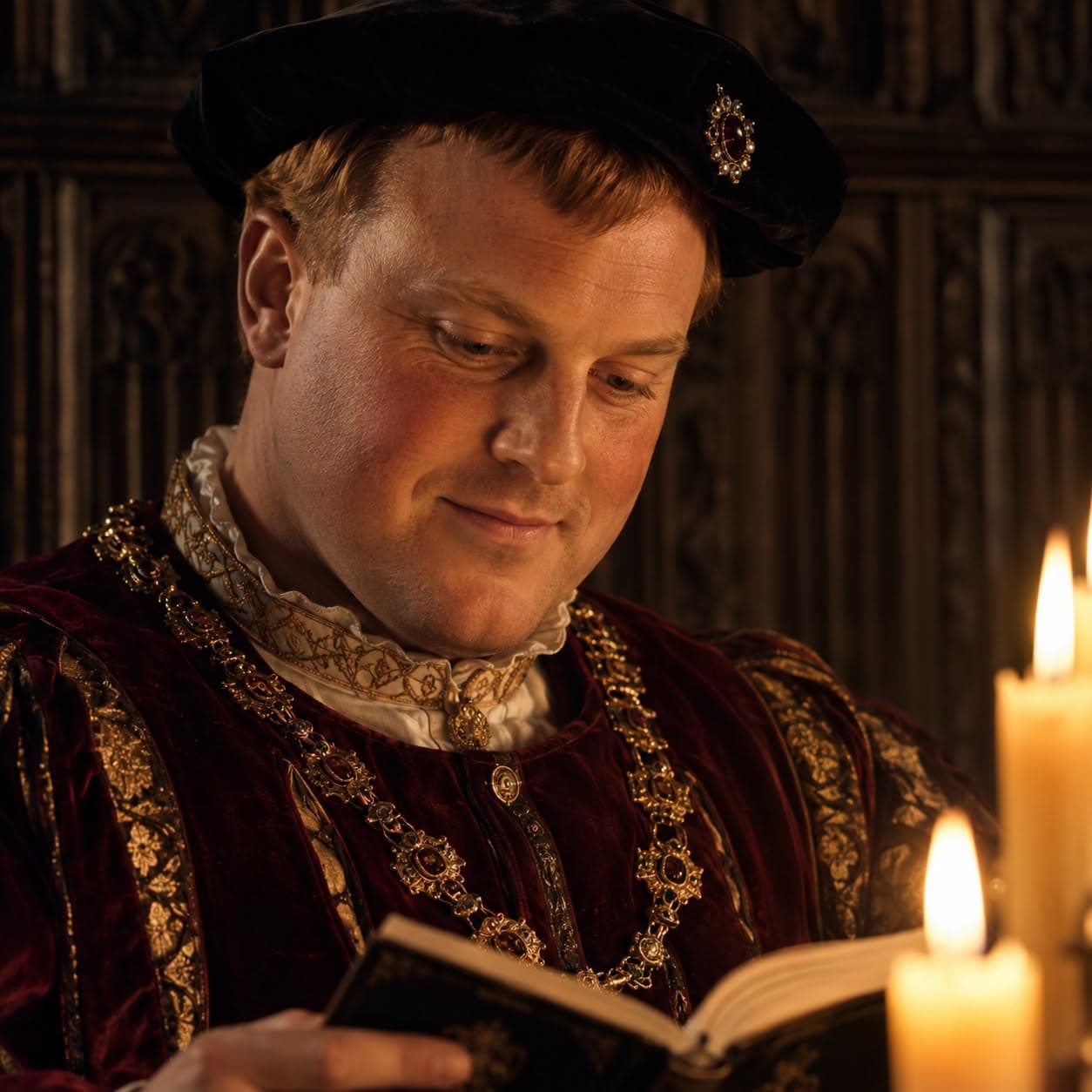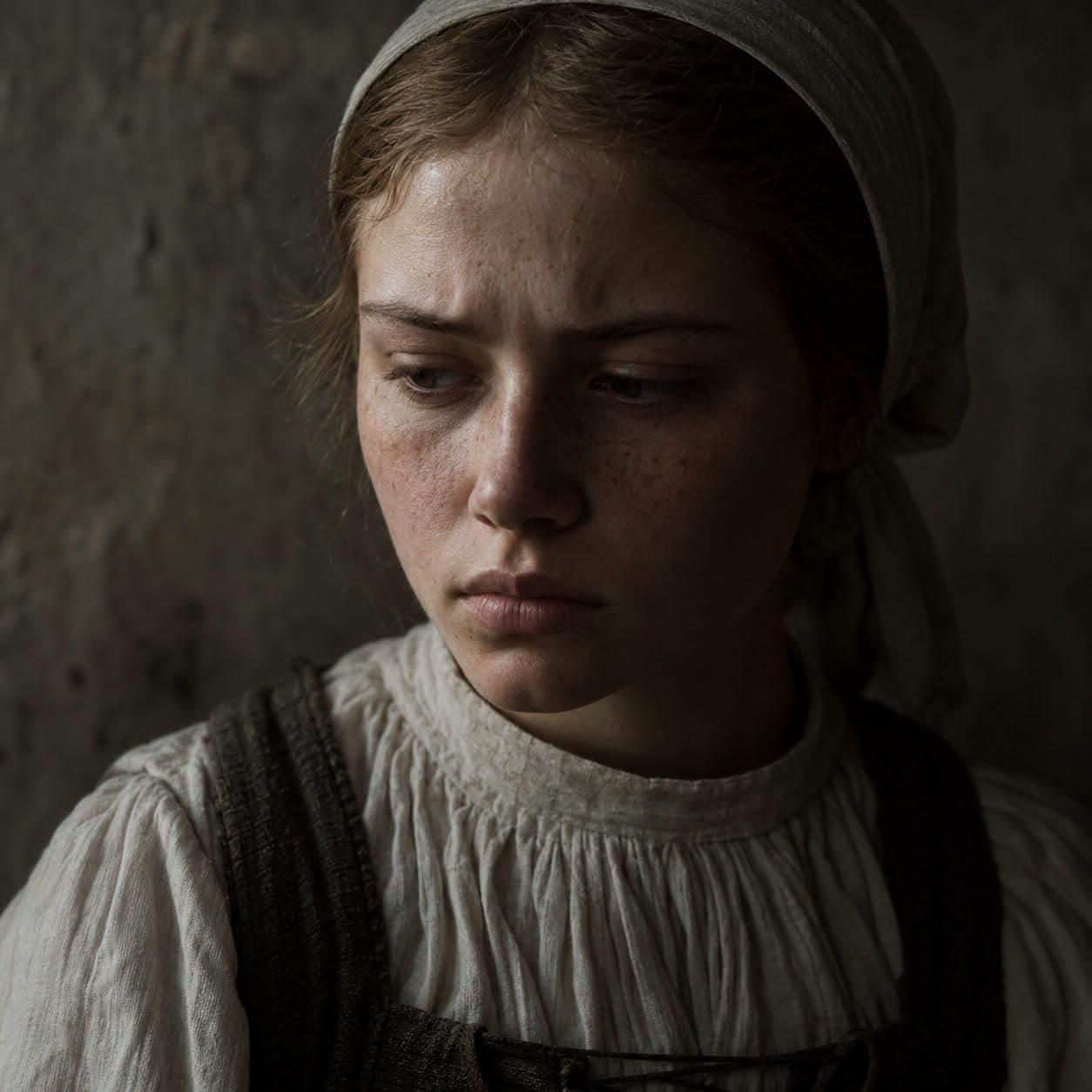
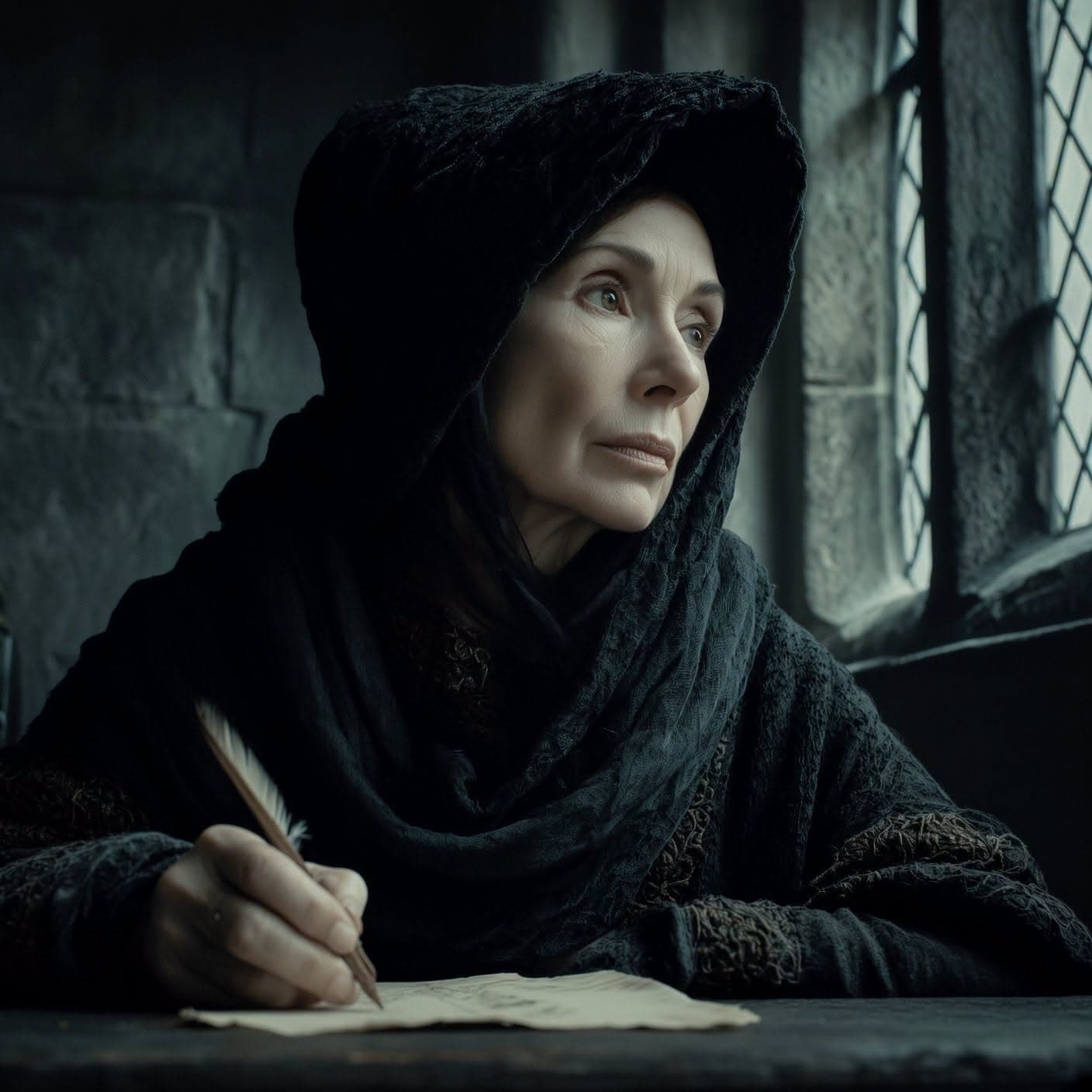
She sent Anne Boleyn a monkey. She sent Jane Seymour quails. She housed Anne of Cleves for a fortnight. She put her own daughter in the path of the king. None of it was kindness. All of it was survival. For seven years it worked. Then it didn't.
Honor Grenville was born around 1493 in Cornwall, the daughter of Sir Thomas Grenville, a Cornish gentleman of ancient family with connections to the court but no great proximity to it. She married young, as girls of her class and period did, her first husband John Basset a widower decades her senior, and she raised his children alongside her own with the efficiency of a woman who had understood since girlhood that a household was a political instrument as much as a domestic one.
Basset died. She managed. She always managed.
In 1529 she married Arthur Plantagenet, Viscount Lisle, illegitimate son of Edward IV and therefore half-uncle to Henry VIII himself, a man of royal blood and warm temperament and limited political instinct, and in 1533 Henry appointed Arthur Lord Deputy of Calais, the last English territory on the continent, and Honor went with him and the real story began.
Calais in 1533 was not a backwater. It was the gateway between England and the continent, the place where every significant diplomatic encounter was staged, where every important visitor to England passed through, where the Lord Deputy's household was the face England showed to Europe. Honor understood this immediately and completely.
She rebuilt the household from the ground up, ran it with the precision of a woman who knew that every meal served, every gift sent, every letter written was a statement about the Lisles and their relationship to power, and she began the careful work of making herself indispensable to everyone who mattered.
She was one of the noblewomen chosen to attend Anne Boleyn in Calais in 1532 for the summit between Henry and Francis I, one of the most politically charged gatherings of the decade, and she had watched Anne closely and understood what she was.
When Anne became queen Honor sent her a monkey, a gift so precisely calibrated in its strangeness that it told Anne something about Honor: that she was not a woman who sent safe presents, that she paid attention, and that she understood how to make herself memorable in a court where forgettable was the first step toward expendable.
Anne could scant abide the monkey, the records say. She kept it anyway.
Every gift Honor sent in those years was intelligence. The Anne Boleyn rosary, a gold one that Anne had worn herself, sent to Honor in 1535 as a New Year's gift, was received and noted and filed against the moment it might be needed as evidence of connection to the queen. That moment came sooner than anyone expected. Honor's London agent John Husee was writing to her in the spring of 1536 predicting Anne's fall before the charges were even public, and Honor read his letters in Calais and processed the information and wrote back carefully and waited to see which way it landed.
Anne was executed on the nineteenth of May 1536. Within months Honor was sending quails to Jane Seymour, who was pregnant and craved them, and the quails worked: Jane appointed Honor's daughter Anne Basset as a maid of honour, placing the girl inside the innermost circle of the English court. Honor wrote the letters securing the appointment with the composed efficiency of a woman filing an important document.
Her daughter was nineteen. The king noticed her. Henry sent Anne Basset a horse and saddle. Honor noted this and said nothing and kept writing careful letters to Cromwell.
Cromwell was the problem she could not solve. He had been watching the Lisles throughout the 1530s with the specific attention of a man who understood that Arthur's Plantagenet blood and his Catholic faith were liabilities that could be useful when the moment required them. He questioned their orthodoxy. He accused them of harbouring priests. He wrote letters to Calais that arrived like a cold hand on the back of the neck and required careful, deferential, precise responses that acknowledged his concern without admitting anything that could be used.
Honor wrote every one of those responses herself. She understood exactly what Cromwell was doing and she had no mechanism to stop him and she kept writing the letters anyway because the alternative was silence, and silence in a court run by Cromwell was an admission.
In the autumn of 1539 Anne of Cleves arrived in Calais on her way to marry Henry, and Honor's household hosted her for a fortnight while storms kept the Channel crossing unsafe. She wrote to her daughter that the new queen was gentle and easy to serve, modest and well-mannered, and the letters have the tone of a woman taking careful notes rather than forming opinions. She had been taking notes for seven years.
Anne of Cleves left Calais, crossed to England, married Henry in January 1540, and by July the marriage was annulled. By then Cromwell was in the Tower. By then the ground under the Lisles had shifted in ways that Honor had perhaps sensed but could not have fully predicted, because the fall of Cromwell did not save them. It simply changed who was doing the destroying.
Arthur was arrested in London on the nineteenth of May 1540, and by twilight the following day, the Council arrived at the Staple Inn in Calais for Honor. They came for Arthur on charges of treason, accusations connected to a plot Honor knew nothing about or knew too much about depending on which interrogation you believed. They separated Honor from her daughters, placing them in different rooms across the town, and the household she had built across seven years was dismantled before the candles had been lit for the evening.
She was placed under house arrest. Her possessions were inventoried by the Treasury of Calais. Her correspondence was seized. The letters she had written across a decade, to queens and ministers and agents and family, the extraordinary archive of a woman who had been at the centre of everything, were taken as evidence of exactly the kind of careful political navigation that had kept her alive and were now reframed as proof of something darker.
Arthur was held in the Tower for nearly two years. Henry dropped the charges, eventually, the accusations too thin to support a conviction even by Tudor standards. On the third of March 1542 Arthur Plantagenet was released from the Tower. He died of a heart attack within the walls of the Tower that very night, before he could pass through the gates. He never saw Honor again. He did not reach her. She was informed in whatever room they had left her in.
She was released shortly after his death, but she was a woman whose world had been hollowed out. She spent the next years fighting to claw back enough of her inheritance to live. Then she went to Cornwall and she stayed there, and she watched from a distance as the world that had consumed her rearranged itself around new names and new catastrophes.
Katherine Howard was executed. Henry VIII died. Edward VI reigned and died. Mary burned her Protestants. Elizabeth came to the throne and Honor's Protestant friends came back from exile and the England they had all been waiting for finally, narrowly arrived, and Honor Grenville, Viscountess Lisle, was sixty-six years old and in Cornwall and no one was writing letters to her anymore.
She died on the twenty-seventh of April 1566. She had spent seven years at the centre of Tudor power managing every relationship, every gift, every letter, every daughter with the precision of a woman who knew that survival required everything she had and then a little more.
She had sent a queen a monkey and a queen quails and hosted a queen in her house and put her own child in the king's path. None of it was enough in the end, because nothing was ever enough in the end, and the only real lesson the Tudor court had to teach was that the machinery did not stop and the only question was how long you could keep your name off the list.
She had kept her name off it longer than most. In the end that is what she had. It was not nothing. It was also not enough.