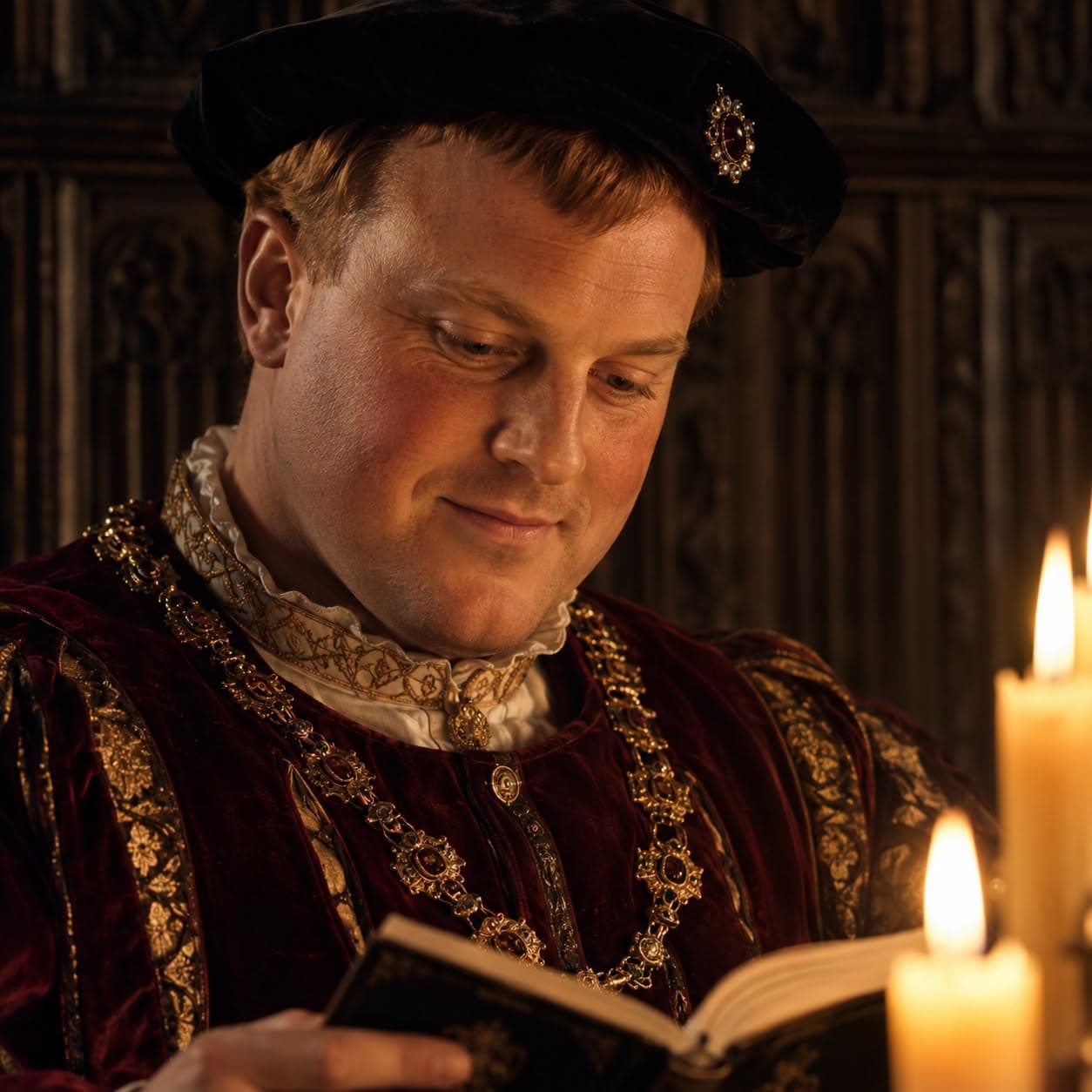
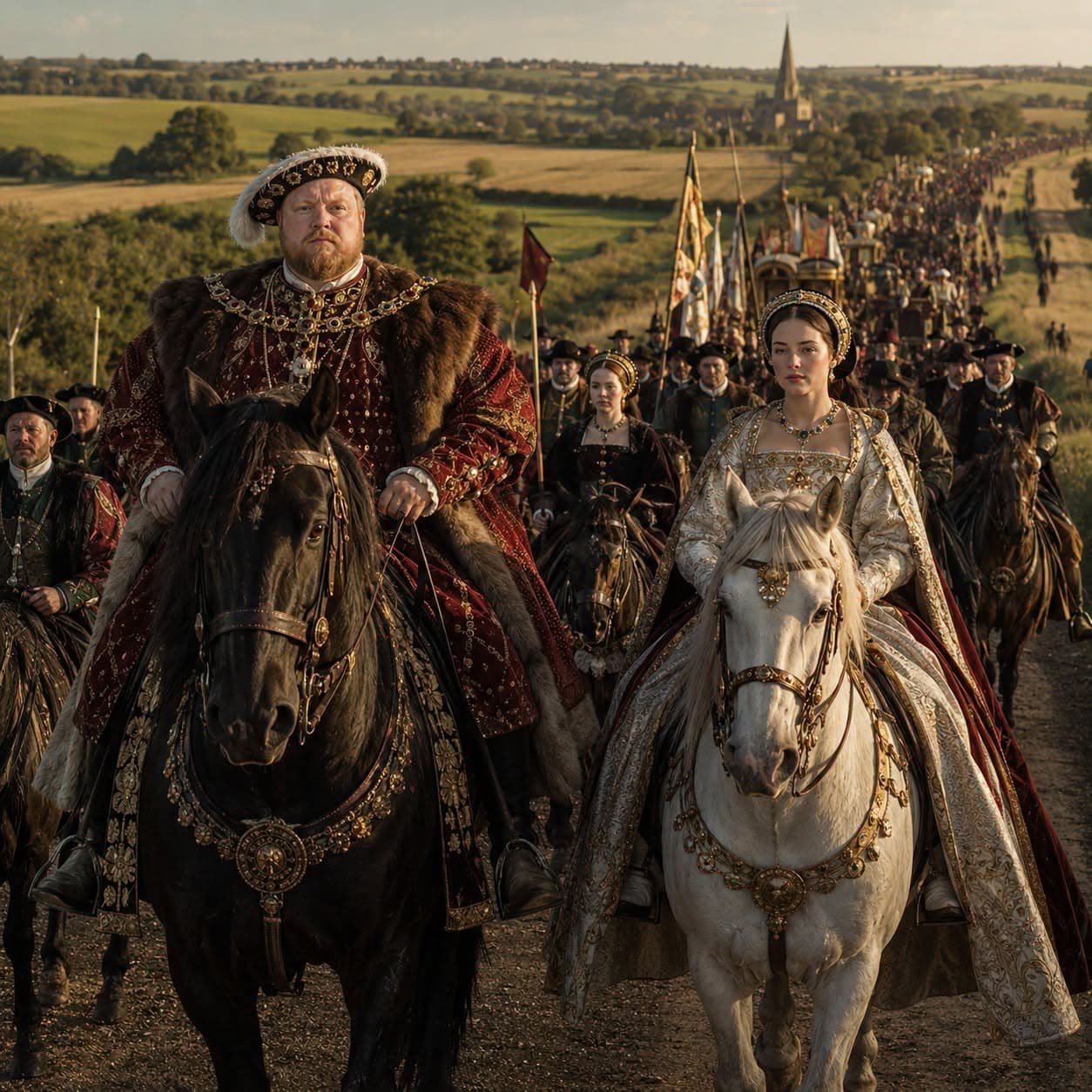
Henry had travelled north intending to demonstrate his absolute power. His wife accompanied him. So did her lover.
The progress that departed London on the thirtieth of June 1541 was the longest of Henry's reign. Its official purposes were two: to receive the submission of the northern lords who had risen in the Pilgrimage of Grace five years earlier, and to meet James V of Scotland at York, where the two kings had agreed to confer. Henry travelled with a retinue of five thousand people. His fifth wife Catherine Howard, still a teenager, rode beside him. His daughter Mary, the future queen, was part of the travelling party. The spectacle was enormous and deliberate. Henry intended the north to understand exactly what it had challenged and failed to defeat.
At Lincoln in early August the first of the documented meetings between Catherine and Thomas Culpeper took place. Culpeper was a gentleman of the king's privy chamber, travelling with the court in close proximity to the king he served. The outer door to Catherine's chamber was left ajar during one of his visits. A passing watchman closed it. Culpeper's own servant had to pick the lock to let him out. The queen of England and a member of the king's household were conducting their assignations with a picked lock between them and discovery. Hall's chronicle records that Catherine gave Culpeper a chain and a rich cap during the progress. Physical objects, exchanged in a travelling court where nothing went unobserved for long.
At Pontefract in late August a different danger presented itself. Francis Dereham, a man from Catherine's past, appeared and manoeuvred his way into her household. The relationship between them predated her marriage to Henry. Dereham knew what he knew and used it. He effectively coerced his way into a position in her household, installing himself inside the court as insurance against her reporting him. Catherine now had two men to manage simultaneously: one through recklessness and one through coercion.
The court reached York in September. Henry had been expecting James V of Scotland. James did not come. Henry waited eleven days in the city for a king who never arrived, and the progress continued as though nothing had been expected. Culpeper was there too.
The court returned to Hampton Court in late October. On the second of November 1541, All Souls' Day, Henry attended mass and gave thanks to God for the good life he led and trusted to lead with his queen. He commissioned a letter of gratitude to be prepared. Hours later, the same day, Archbishop Cranmer placed a document in his hand containing an account of everything. Henry left the chapel. He did not return to Catherine.
She was executed on the thirteenth of February 1542. She was probably seventeen years old.