He had been her first love. He sentenced her to death. Then his wife claimed he had confessed they were never truly married, because Anne had been his all along.
In 1523 Henry Percy was a young nobleman in the household of Cardinal Wolsey, and Anne Boleyn was a lady at court. George Cavendish, who was there, recorded what grew between them: "there grew such a secret love between them that at length they were ensured together intending to marry." Wolsey discovered it and summoned Percy before his colleagues, humiliating him publicly for presuming to attach himself to a woman the king had other plans for.
Percy's father came to London and called his son "proud, presumptuous, and unthrift waster." Anne was sent back to Hever. Cavendish records that the people who watched Wolsey's procession through the streets afterward wept and asked God to send vengeance on him for what had been done to her. Percy was dispatched north with the match destroyed and the thing was considered settled.
It was not settled.
In 1524 Percy married Mary Talbot, the daughter of the Earl of Shrewsbury. The marriage was wretched from its beginning and did not improve. In 1529 Mary was at her father's house, having left Percy, and there she delivered a stillborn child. She did not return to him. By the early 1530s the marriage had effectively collapsed, and it was in the ruins of it that Mary made her claim.
According to Eustace Chapuys, writing to the Emperor Charles V in July 1532, Mary Talbot had told her father that Percy had confessed to her in a quarrel that he was not truly her husband, because he had already been pre-contracted to Anne Boleyn. The Earl of Shrewsbury told the Duke of Norfolk. Norfolk told Anne. Anne told Henry. Percy was summoned before the King's council and denied everything.
What followed in 1536 was the attempt to use the pre-contract against Anne herself. If Percy and Anne had been genuinely contracted before her marriage to Henry, the marriage to Henry was invalid before it began. Thomas Cromwell wrote to Percy seeking his confirmation.
Percy refused.
The letter he sent in reply on the thirteenth of May 1536 survives. He swore "that the same may be to my damnation if ever there were any contract or promise of marriage between her and me." He staked his immortal soul on the denial. He had done the same in 1532.
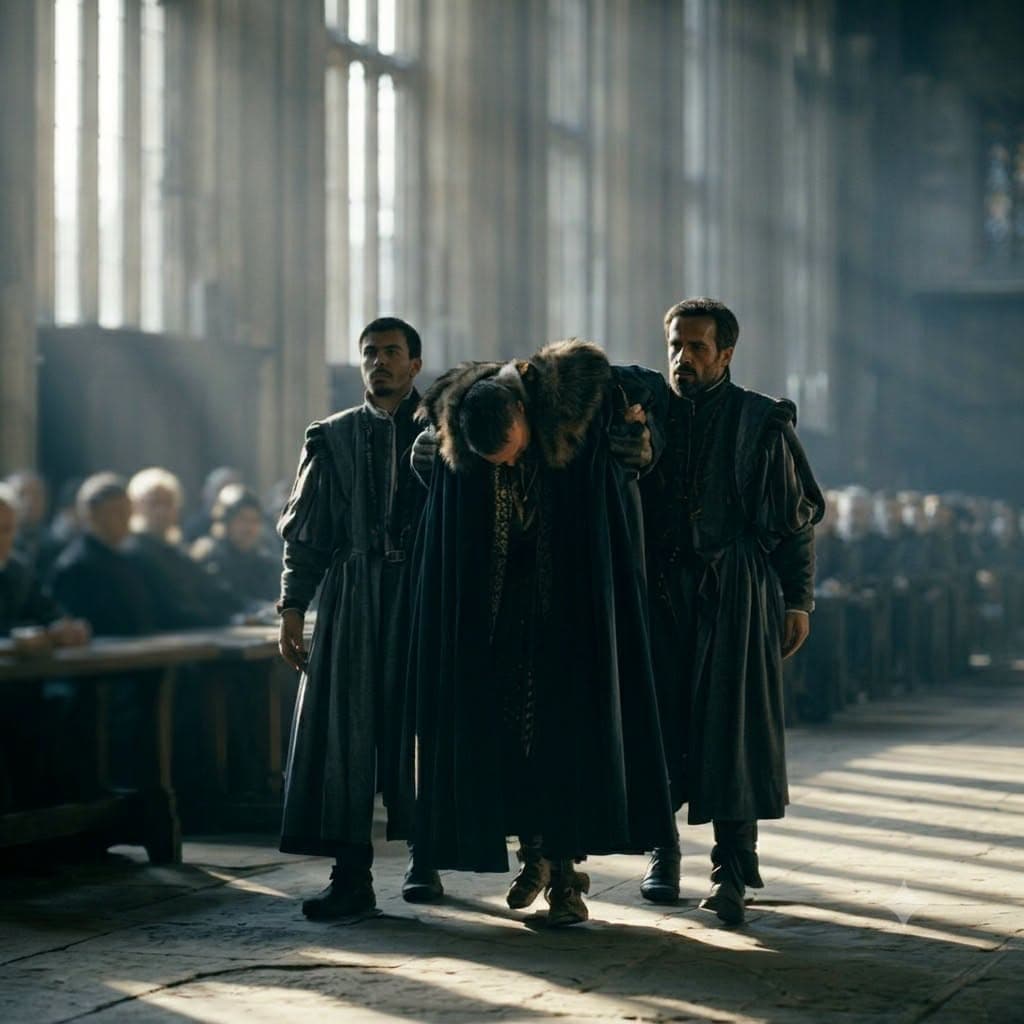
Two days after writing that letter Percy sat among the twenty-six peers appointed to judge Anne Boleyn at her trial. He voted guilty. When the death sentence was pronounced he collapsed and had to be carried from the room in a blanket. He was effectively absent from the proceedings regarding George Boleyn later that same day and never gave any public account of what had overcome him.
He did not recover. His brothers had become entangled in the Pilgrimage of Grace; one was executed, one imprisoned in the Tower. His health continued to fail. In June 1537, his mind going and his body worn down, he surrendered his estates to the crown unconditionally. He had no heir.
He had sworn on the Blessed Sacrament that he was damned if he had ever been contracted to Anne Boleyn. His wife said he had confessed otherwise. He voted guilty at her trial and was carried from the room when her sentence was announced. If the pre-contract was real then the woman who became Queen of England had never lawfully been so, and the daughter she left behind had been illegitimate before Henry VIII ever said so.
Henry Percy died on the twenty-ninth of June 1537 taking whatever he knew with him.