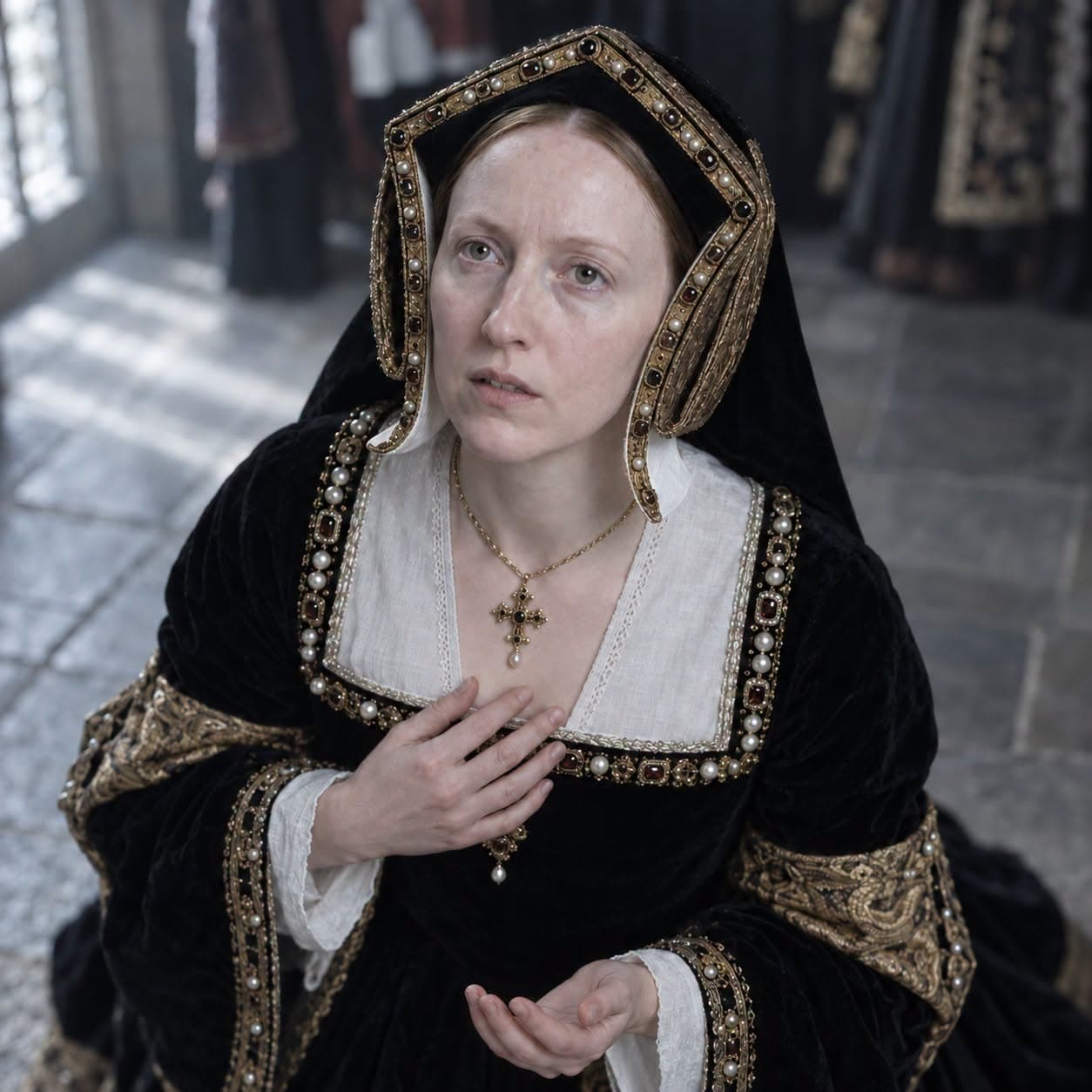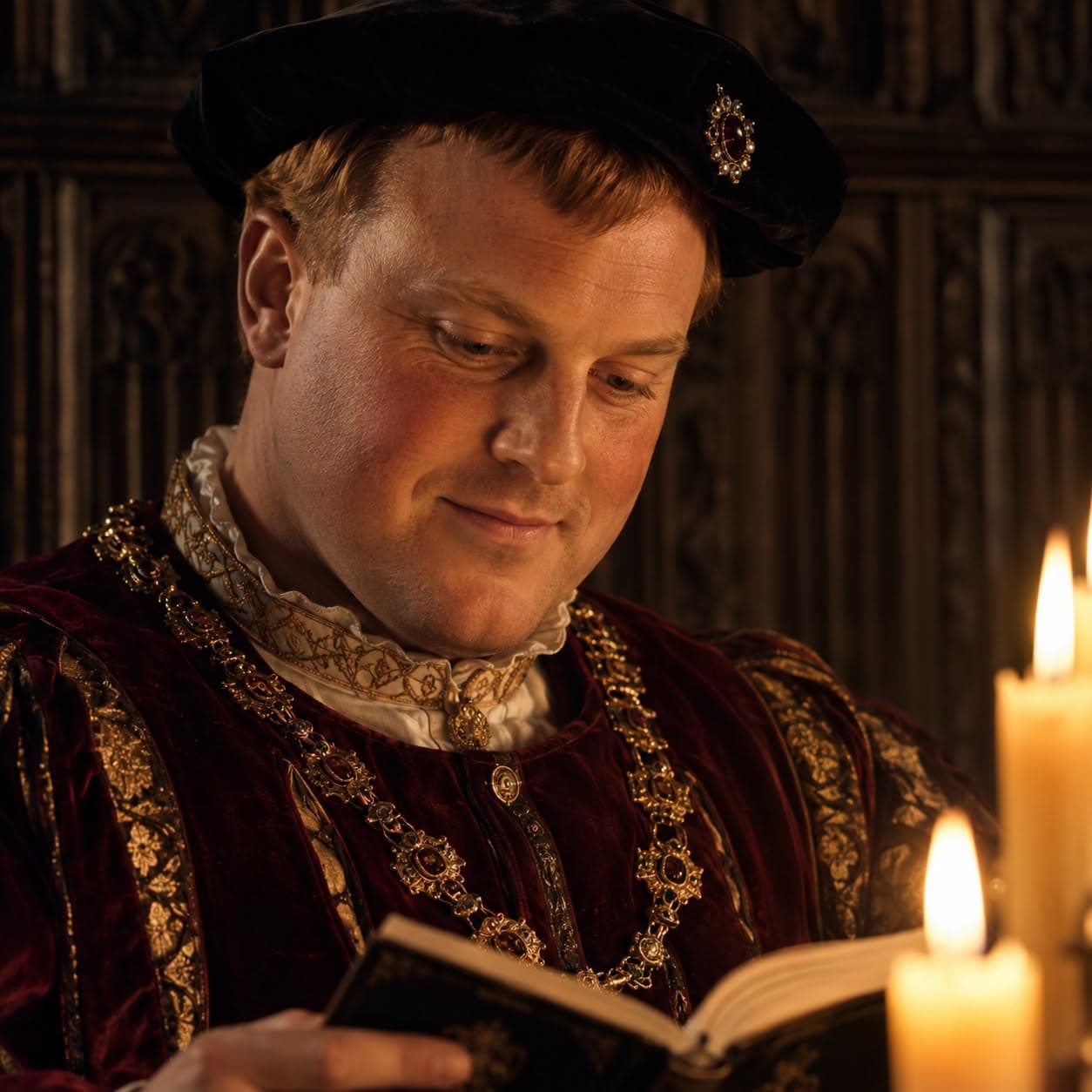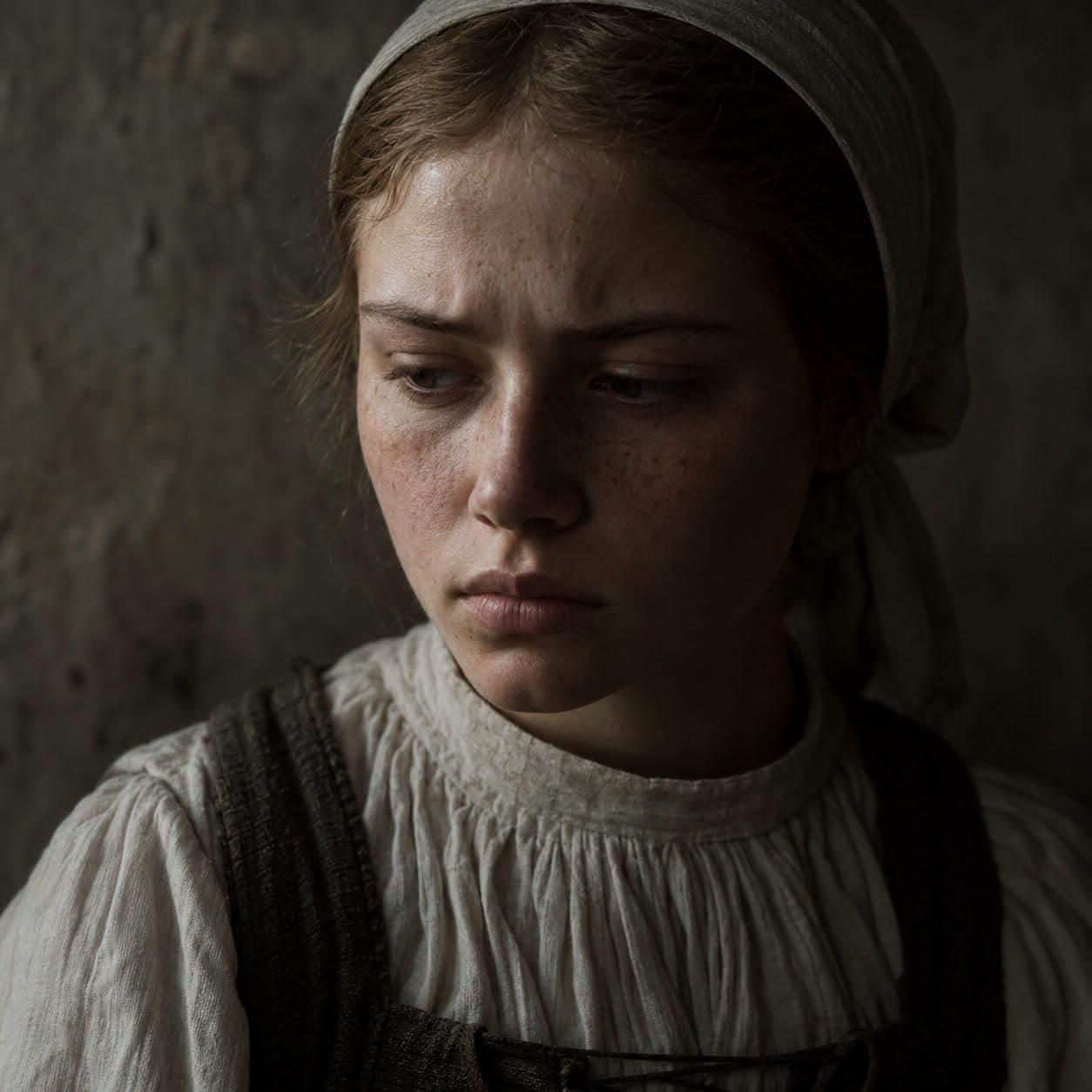
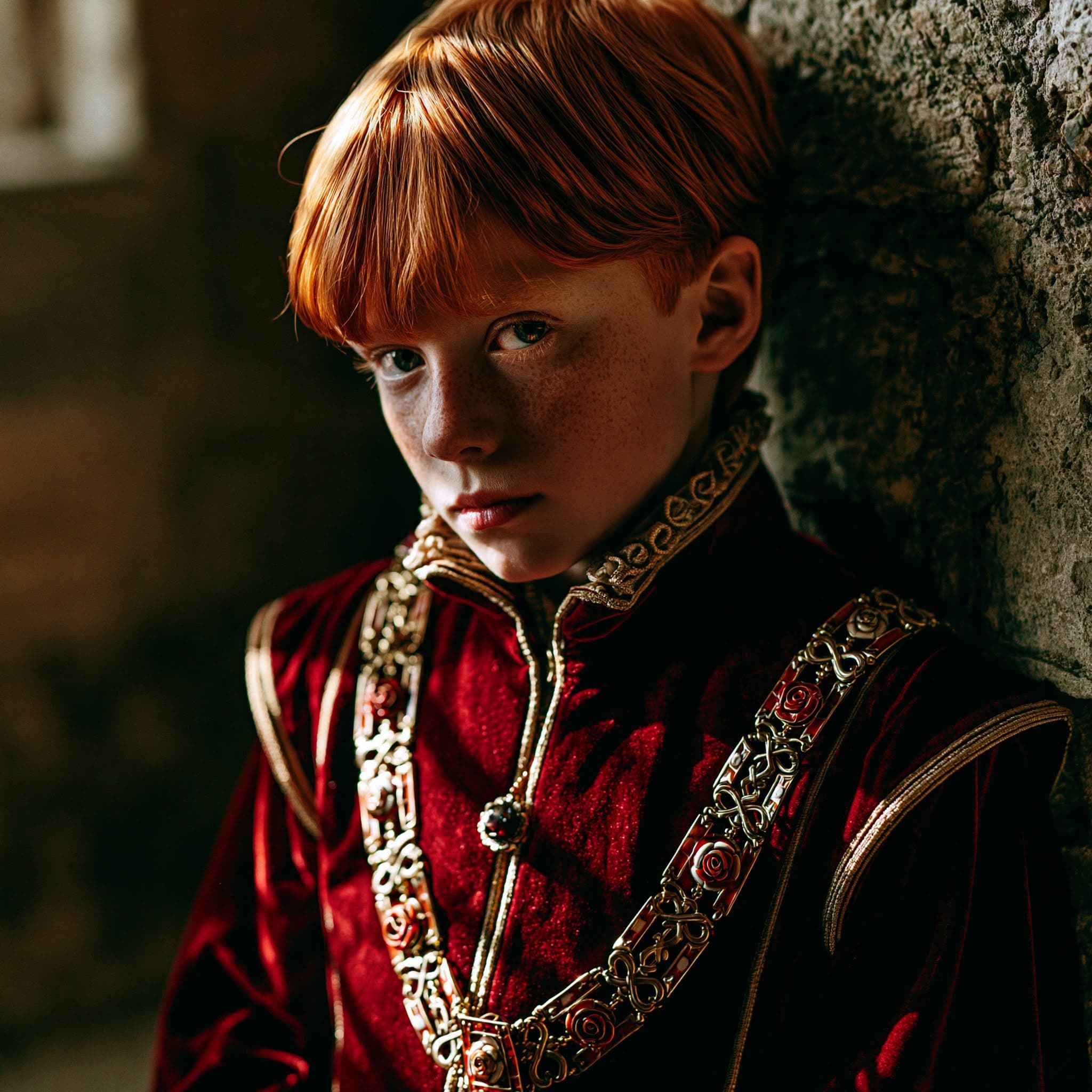
On 15 June 1519, Henry VIII finally got the son his marriage had not produced. The boy was healthy. The mother was not his queen.
Henry would make him a duke at six, place the government of northern England under his name, surround him with the ceremony of a prince, and leave open the possibility that he might inherit the throne. Seventeen years later, the king’s son was carried out of London beneath a load of straw, with two men following at a distance.
Henry FitzRoy was born at the Augustinian Priory of St Laurence at Blackmore in Essex, the son of Henry VIII and Elizabeth Blount, a young woman from the Shropshire gentry who had entered Catherine of Aragon’s household as a maid of honour. She had distinguished herself in the one arena where an unmarried woman at Henry’s court could become visible without immediately becoming dangerous. She could sing. She could dance. According to the chronicler Edward Hall, she surpassed the other women of the court in the entertainments on which Henry’s early reign ran with such determined magnificence.
Henry noticed her. By approximately 1518, while Catherine was enduring another pregnancy that would end without a surviving child, Elizabeth Blount had become the king’s mistress. What Catherine thought when Elizabeth delivered a living son is not recorded. What made this child different was what Henry did next.
He acknowledged him.
The boy was given the name FitzRoy, son of the king, and Henry made no attempt to disguise what the name announced. He was the only illegitimate child Henry VIII ever acknowledged publicly. The king called him his worldly jewel, and the Venetian ambassador reported that Henry loved the boy like his own soul. Elizabeth Blount was married to Gilbert Tailboys and provided for, while her son was removed into a different world, placed under arrangements supervised by Cardinal Wolsey and raised with the provision appropriate to royalty while possessing none of its legal security.
He was the king’s son. He was not the king’s heir. Those two facts sat beside each other for the whole of his life, perfectly clear and entirely unresolved. Catherine of Aragon had given Henry a legitimate daughter, Mary. FitzRoy gave him an illegitimate son. Mary possessed lawful birth and the wrong sex. FitzRoy possessed the desired sex and the wrong birth. Henry spent the years that followed testing which of those problems he found easier to forgive.
In June 1525, the answer began to emerge. FitzRoy was elected to the Order of the Garter, and on the eighteenth of June, three days after his sixth birthday, he entered Bridewell Palace for a ceremony that transformed him into the highest-ranking nobleman in England. Henry created him Earl of Nottingham, Duke of Richmond and Duke of Somerset. Richmond recalled the title Henry VII had carried before taking the throne, while Somerset belonged to the Beaufort inheritance from which the Tudor claim descended. Whether Henry intended the names to form an argument about his son’s future is not recorded. The people watching understood the argument anyway.
Further offices followed. FitzRoy became Lord High Admiral of England, Warden of the Marches towards Scotland and President of the Council of the North, and vast estates were assigned to support the household expected of him. Experienced officials would perform the work attached to those positions, but the authority beneath which they performed it belonged to the child. The men bowed. He was six years old.
He was sent to Sheriff Hutton Castle in Yorkshire with a household large enough to resemble a small royal court. Noblemen attended him, tutors instructed him, servants dressed and guarded him, and northern officials arrived to conduct government before a boy whose presence supplied the blood and authority around which the entire structure had been organised. He did not govern the north in any ordinary sense. He occupied the place from which government was performed, and he learned what it felt like to enter a room and have grown men rise because his father’s blood was in him.
Catherine objected to his elevation. This time the record does preserve it. The Venetian ambassador reported that the queen resented the honours given to the king’s natural son and remained deeply dissatisfied. Henry still had not named FitzRoy his heir, but he had made certain that everyone would consider the possibility.
After Wolsey’s fall, FitzRoy spent part of his adolescence at Windsor with Henry Howard, the future Earl of Surrey, who became his closest companion. Surrey remembered those years later from imprisonment, writing of Windsor as the place where he had passed his childhood with a king’s son. The wording was exact.
In 1532 FitzRoy accompanied Henry to Calais and remained in France after his father returned, living among the children of the French royal family. He was received not as an embarrassing royal by-product to be kept beyond public view, but as someone fit to be educated beside princes.
On the twenty-sixth of November 1533, at Hampton Court Palace, FitzRoy married Mary Howard, Surrey’s sister and the daughter of Thomas Howard, Duke of Norfolk. Both were fourteen. The marriage was not consummated. It placed FitzRoy inside the most powerful noble family at court and gave the Howards a son-in-law who was simultaneously the king’s child and legally outside the succession. Everything about his upbringing, his titles, his household and his marriage announced the king’s son. Everything stopped immediately before announcing the next part.
Then 1536 rearranged the succession. Catherine of Aragon died in January. Anne Boleyn miscarried a male child later that month. Henry had Anne arrested in May, accused her of adultery and treason, and sent her to the scaffold on the nineteenth. Mary had already been declared illegitimate, and Elizabeth, Anne’s daughter, was now placed beside her in the same condition. Jane Seymour married Henry within days, but she had not yet produced a child. For the first time in his reign, Henry VIII had no child recognised by law as a legitimate heir.
Parliament met in June and passed the Second Succession Act, confirming the exclusion of both daughters and granting Henry the power to determine who should inherit the crown if Jane Seymour produced no legitimate child. The act did not name FitzRoy. It did not exclude him either. During a discussion before the Privy Council, the Earl of Sussex reportedly stated the position with the bluntness the court generally reserved for things everyone understood but preferred not to say: Mary and Richmond were both illegitimate, and if the choice lay between them, the male should be preferred. Henry heard the argument and did not reject it. He had spent eleven years preparing the boy for something and had still not told England what it was.
There was no time left to decide.
FitzRoy appeared at the opening of Parliament on the eighth of June, standing physically close to the legislation that might have altered his future more completely than any ceremony at Bridewell or Sheriff Hutton had done. Within weeks he was gravely ill with what contemporaries called consumption. He died at St James’s Palace in late July 1536. He was seventeen years old. Mary Howard was seventeen and already a widow.
The funeral arrangements were extraordinary. FitzRoy’s father-in-law, the Duke of Norfolk, ordered that the body be enclosed in lead and transported secretly in a closed cart to the Howard burial place at Thetford Priory. That was not what Norfolk’s servants ultimately provided. After remaining in London for eight days, the body was placed in a wagon and covered with straw, without the royal procession, great company of mourners or ceremony proportionate to the Garter, the double dukedom, the princely household or the offices that had been placed around the boy since he was six. Two men dressed in green followed at a distance.
Henry then complained that his son had not been buried honourably, and Norfolk wrote anxiously to Cromwell protesting that he had ordered a lead covering and a closed cart and should not be blamed for the way the instructions had been carried out. Henry had arranged a secret burial and then recoiled from what secrecy looked like when applied to the body of the son he had spent seventeen years displaying before England.
He could not be given a public royal funeral without forcing the court to ask what, exactly, had died.
FitzRoy was buried at Thetford Priory, and after the monastery was dissolved his monument was transferred to St Michael’s Church at Framlingham. The tomb survives there, carrying the royal heraldry that had followed him throughout his life and could be carved safely around him only after every question attached to it had ceased to matter.
On the fifteenth of June 1519, Henry VIII had received the son he wanted. For seventeen years he made the boy look like an answer without ever allowing him to become one. Henry called him his worldly jewel. When the jewel left London, it was beneath straw, and two men in green followed at a distance.