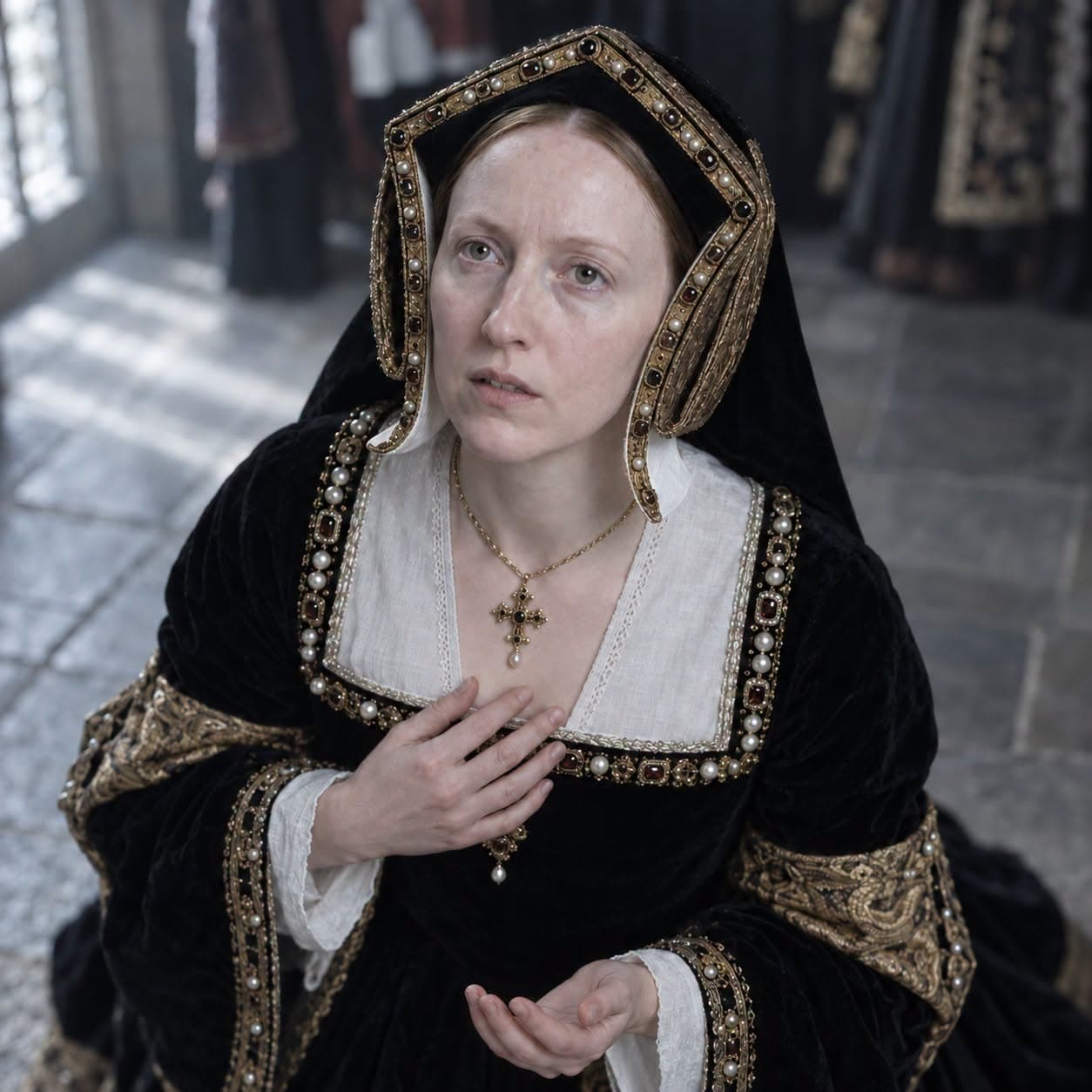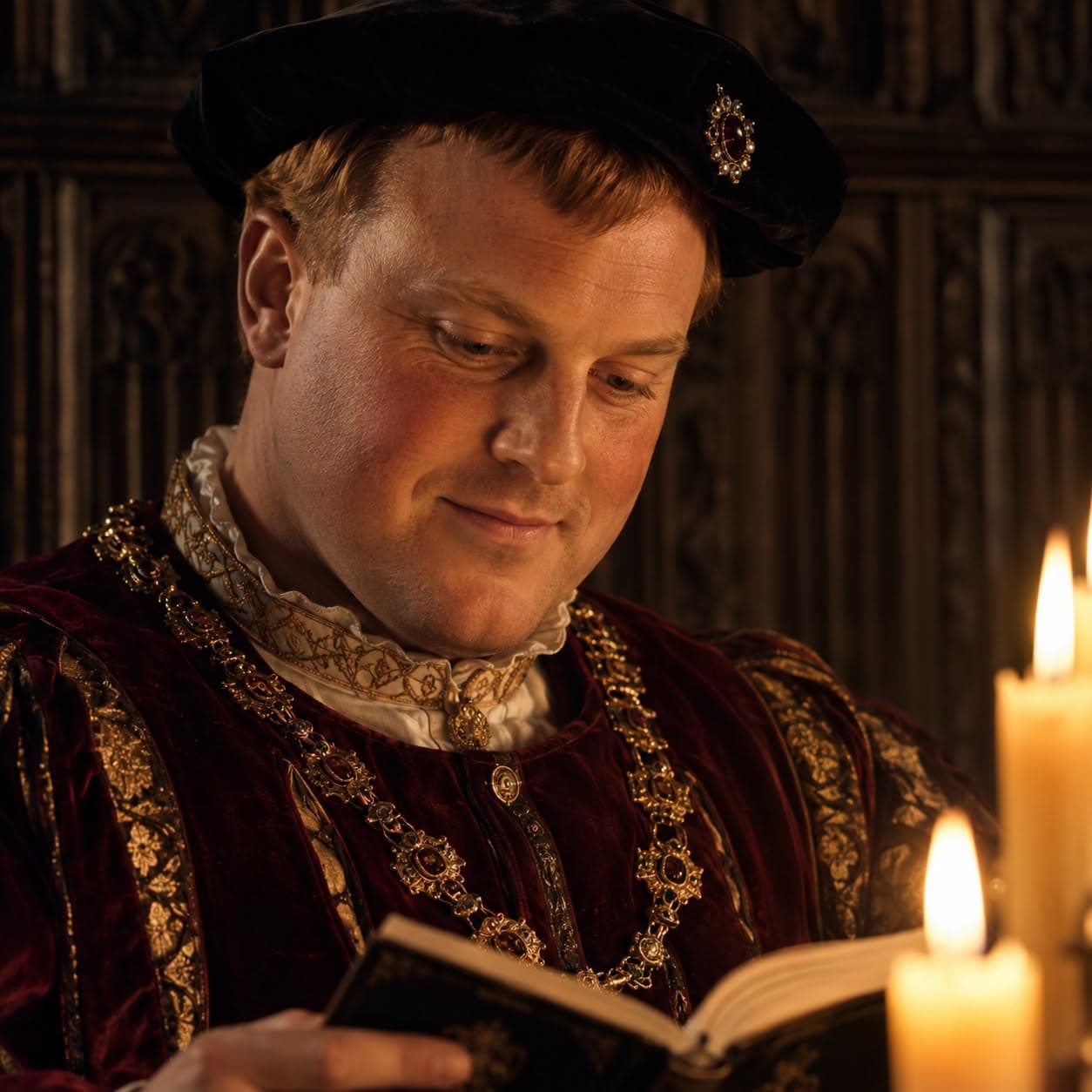

Henry Fitzroy was born on the 15th of June 1519 at Blackmore Priory in Essex, the son of Henry VIII and Elizabeth Blount, a lady of the court whose dancing the king had particularly admired, and he was acknowledged from the moment of his birth with a thoroughness that made his status perfectly clear and his legal position perfectly impossible simultaneously.
He was the king's son. He was not the king's heir. These two facts sat beside each other for the seventeen years of his life like a pair of documents that contradicted each other and that nobody in the Tudor court had the authority to resolve.
His mother Elizabeth Blount was quietly married off to a suitable gentleman shortly after his birth, as women in her position routinely were, and Henry Fitzroy was placed in a royal household and raised with the specific combination of magnificent provision and careful ambiguity that characterised his father's approach to the entire question of his existence.
In June 1525, when Henry Fitzroy was six years old, Henry VIII summoned the court to Bridewell Palace and in a ceremony of considerable pomp created his son Duke of Richmond and Somerset, Earl of Nottingham, Knight of the Garter, Lord High Admiral of England, Lord Warden of the Cinque Ports, and President of the Council of the North. He was six years old.
The titles were not decorative. They were functional, or as functional as a six year old duke could be made, which required a large supporting cast of actual administrators doing the actual work while the boy in the velvet doublet sat at the head of the table and learned to look like authority. He was sent north to Sheriff Hutton Castle in Yorkshire to preside in person over the Council of the North, which is an extraordinary thing to do to a child and which Henry VIII did without apparent hesitation because the north required a royal presence and Henry Fitzroy was the royal presence available.
Catherine of Aragon was furious. She had a daughter, Mary, who was nine years old in 1525 and whose precedence at court was directly affected by the elevation of her father's illegitimate son to a dukedom that outranked her own title. The Spanish ambassador reported her anger. Henry VIII did not adjust his plans. He was, by 1525, running out of patience with Catherine's failure to produce a living son and running short on legal options, and Henry Fitzroy was the only male child he had. The magnificent titles and the Council of the North and the Garter insignia were Henry VIII's way of keeping the option open without committing to it, which was how Henry VIII managed most of the complicated situations in his life, with results that were consistently catastrophic for everyone adjacent to the complication.
He was married in 1533, at fourteen, to Mary Howard, daughter of the Duke of Norfolk, the same Norfolk family that had produced Anne Boleyn and would later produce Katherine Howard. The marriage was not consummated, on the grounds that the parties were too young, and Henry Fitzroy died in July 1536 before that situation was resolved, of what was almost certainly tuberculosis, at seventeen years old.
He died in the same summer that Anne Boleyn was executed on Tower Green and the same summer that Henry VIII was preparing to marry Jane Seymour and was therefore, presumably, hoping that the legitimate son problem would shortly resolve itself by other means. Henry Fitzroy's death was inconvenient in the way that all Tudor deaths were inconvenient, which is to say it rearranged the calculations without resolving any of the underlying questions.
Henry VIII had his body transported secretly to Framlingham in Suffolk, wrapped in lead, in a wagon covered with straw, without ceremony or public mourning, because a public funeral for a duke of royal blood would have raised questions about his status that Henry was no longer in a position to answer usefully.
Henry Fitzroy spent seventeen years being the most elaborately titled boy in England who was not, officially, anything. His father gave him the Admiral's chain and the Council of the North and the Howard marriage and the Garter and wrapped his body in lead and covered it with straw and sent it to Suffolk in the dark.
He was the answer to a question his father spent thirty years asking and refused, in the end, to acknowledge as an answer. He was six years old when they put the gold chain around his neck in the great hall at Bridewell and told him he was the most important boy in the kingdom, and he had eleven years left, and his father never told him what he actually was.