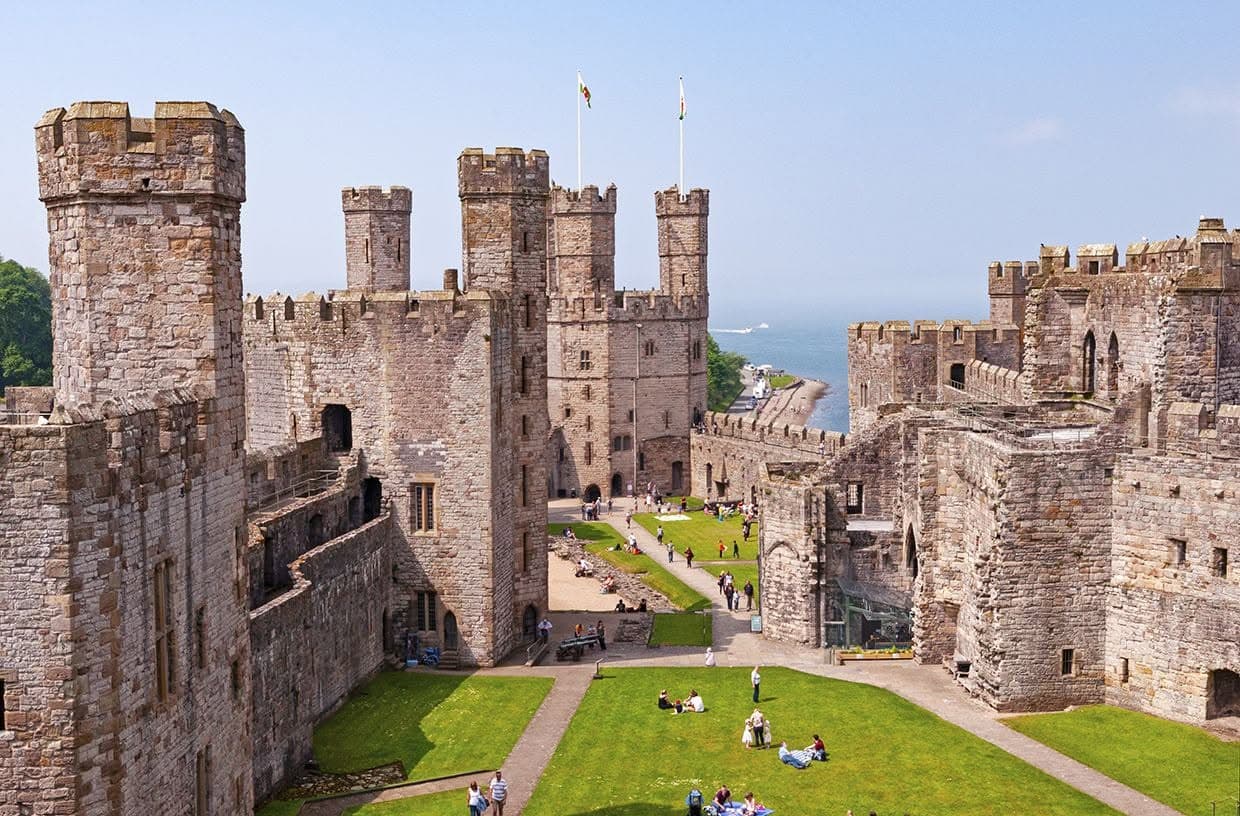
Caernarfon Castle was not built to be beautiful. Edward I of England began it in 1283 as a statement pressed in limestone against the throat of a conquered nation, its banded stonework and eagle towers rising from Welsh earth to say, in the language of stone that kings have always preferred, that Wales was finished. The castle was the full stop at the end of a sentence Wales had not agreed to speak.
By the time its walls were rising, the last native Prince of Wales was already dead.
Llywelyn ap Gruffudd was killed on the eleventh of December 1282 at the River Irfon, cut down by a soldier who did not know who he was killing until it was done. His head was sent to London for public display, crowned in ivy in mockery of a prophecy that a Welsh prince would one day be crowned in that city. His body was buried by Cistercian monks at Cwm Hir. His wife Eleanor had died six months before him, in June 1282, giving birth to their only child at Abergwyngregyn on the northern Welsh coast.
Eleanor de Montfort had waited eleven years to marry Llywelyn. She had been captured at sea by Edward's men in 1275 while sailing to Wales, held in England for three years, and finally permitted to marry the man she had been promised to, with Edward himself paying for the wedding at Worcester Cathedral in 1278 as a calculated act of generosity that cost him nothing and demonstrated everything. She had four years of marriage. She died before she knew that the world her daughter was born into would not last the year.
The child's name was Gwenllian.
She was born in June 1282, the only legitimate heir of the last Prince of Wales and through her mother the great-granddaughter of King John of England. The blood in her veins connected two royal houses and made her, in the cold calculation of a king who had just spent a decade dismantling Welsh sovereignty, the most dangerous infant in Britain. She was six months old when her father was killed. Her uncle Dafydd took guardianship and continued the resistance for six more months before he was betrayed, captured, hanged, drawn and quartered at Shrewsbury in the summer of 1283. Gwenllian was taken with the remnants of his household.
She was one year old.
Edward I wrote to the Prior and Prioress of Sempringham Priory in Lincolnshire in November 1283, pitying, he said, her sex and her age, that the innocent might not atone for the iniquity of the wicked. She was sent there by sea, the sea route chosen perhaps to prevent any attempt at rescue. Sempringham was remote, Gilbertine, enclosed, its nuns kept behind high walls at all times and largely hidden from the world.
Edward's reasoning required no great elaboration: if Gwenllian could not marry, she could not produce heirs, and if she could not produce heirs, the line of the Princes of Wales ended with her. The innocent would not atone, as he had written. She would simply disappear.
She spent fifty-four years at Sempringham.
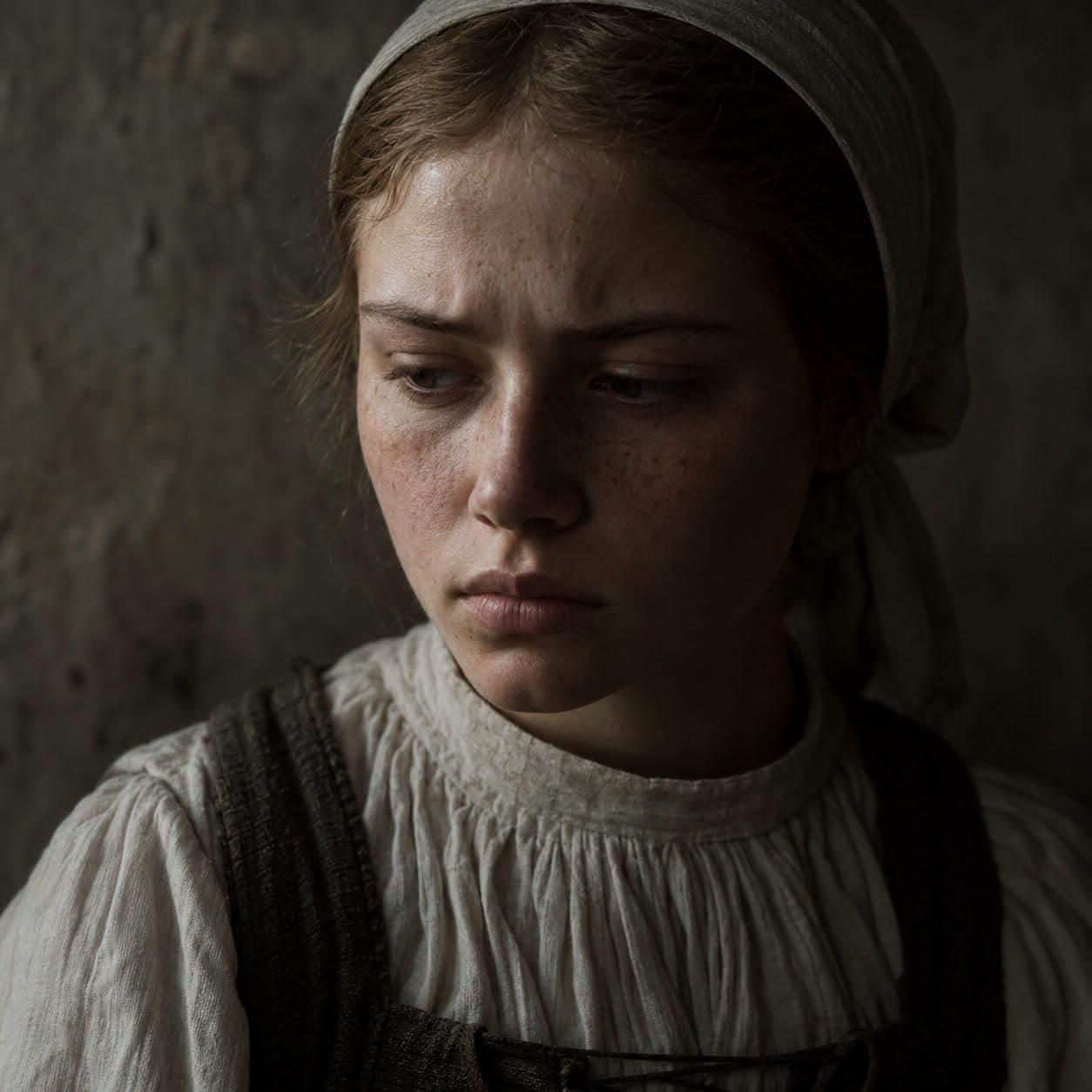
She grew up speaking English, in an English priory, surrounded by English women, in a Lincolnshire fenland with no mountains and no sea. She had been taken from Wales before she was old enough to learn Welsh. When documents from the priory refer to her in her later years, they spell her name Wentliane and Wencilian, the Welsh sounds gone from the record, flattened into something the English scribes could write. She could not say her own name correctly. She almost certainly did not know how.
In 1284, the year after Gwenllian arrived at Sempringham, Edward I's wife Eleanor of Castile gave birth to a son at Caernarfon, in the tower that still stands at the castle's northern end. The child was named Edward and would become the first English Prince of Wales. The title that had belonged to Gwenllian's father was given to this boy seventeen years later, at a parliament in Lincoln, and the giving of it was itself a kind of sentence. Eleanor of Castile did not live to see it. She died in 1290, eight years after the son whose birth had made the transfer of that title possible, and Edward I grieved her with the specific visible devastation of a man who had not expected to feel it that completely. He erected a stone cross at every place her funeral cortège stopped on the road from Lincoln to London. Twelve crosses for twelve stopping places, each one precisely carved, each one a public monument to private loss. Eleanor of Castile was mourned with crosses of carved stone across the length of England. Gwenllian of Wales was mourned by no one, in a priory in Lincolnshire whose walls she was not permitted to leave.
She died on the seventh of June 1337, a few days before her fifty-fifth birthday. The priory's chronicler recorded her death. She was buried in the priory grounds. When Henry VIII dissolved the monasteries two centuries later, Sempringham was gutted, its stones scattered and its records lost, and Gwenllian's grave went with it. There is no longer a church at Sempringham. There is a field, and at the edge of it a memorial stone of Welsh blue slate, placed there in 1993 by a campaign that raised the money through public subscription, because no one in authority had thought to do it before.
The inscription reads: In memory of Gwenllian, daughter of the last Prince of Wales. Born at Abergwyngregyn, 12 June 1282. Died at Sempringham, 7 June 1337. Having been held prisoner for fifty-four years.
Caernarfon Castle still stands on the Menai Strait, its eagle towers intact, its walls the colour of old bone in winter light. A million tourists visit it each year. In 1969 the investiture of the Prince of Wales was held within its walls, broadcast to a global television audience, the pageantry elaborate and the symbolism deliberate. The castle Edward built to announce the end of Welsh Wales was dressed for the occasion in red and gold.
Gwenllian never saw it. She never saw any of it. She grew up in a flat English county speaking a language that was not her own, and she could not have found Wales on a map, and she died there, and her grave is gone, and on a mountain in Snowdonia that she never stood on, they have placed her name.
It is the only Welsh soil that has her name on it. It will have to do.