In June 1520 Henry VIII built a palace out of wood and canvas, filled a fountain with wine, and invited the King of France to watch him joust. It cost England nearly half the crown's annual revenue. The fountain ran dry. The cloth of gold was packed away and sold.
Two queens sat through eighteen days of this and said nothing that was recorded. They were the most interesting people in the field. History has spent five centuries watching the kings.
The valley of Balinghem, between Guînes and Ardres in northern France, was transformed between April and June 1520 into the most spectacular temporary structure in the history of European diplomacy. Henry VIII's team erected a palace of timber and canvas 328 feet on each side, with real glass windows imported from England, brick foundations, and a gatehouse surmounted by a statue of a man that contemporaries noted bore a resemblance to Henry himself.
The great hall was hung with cloth of gold, which gave the event its name. The kitchens were built to feed several thousand people three times a day for nearly three weeks. A fountain in the courtyard ran continuously with red wine, white wine, and water, so that any visitor who approached it could drink at will. Stands were constructed for jousting. A chapel was furnished with relics. An artificial tree of hawthorn and raspberry, wrought in gold and silver, was erected as a centrepiece. The whole structure was designed to be assembled, used, and dismantled, a city built to last less than a month, raised at a cost that would have built a permanent fortress that stood for centuries.
Francis I of France arrived with a retinue of approximately twelve thousand people. Henry arrived with approximately six thousand. The two courts occupied opposite ends of the valley and the space between them became, for eighteen days, the most watched stage in Europe.
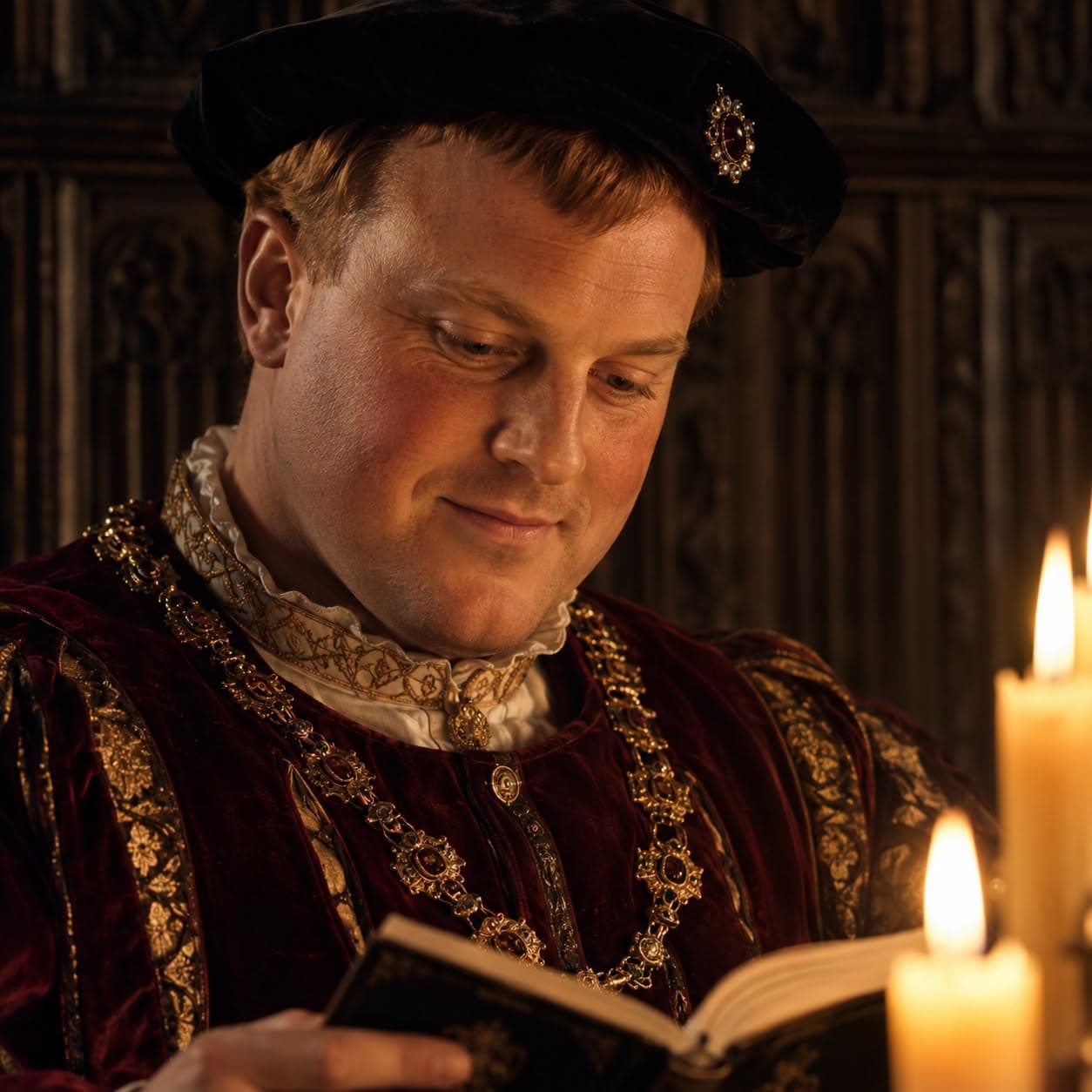
Henry VIII was twenty-eight years old, six feet tall, and at the physical peak of a reign that would eventually consume everything around him. He jousted. He wrestled. On one occasion, according to the accounts, he grabbed Francis I by the collar mid-conversation and challenged him to a wrestling match on the spot, a spontaneous act of competitive aggression that the diplomatic record skirts around with considerable delicacy. He feasted. He processed. He performed the role of the greatest king in Christendom with the relentless energy of a man who understood that performance and power were, at this level, the same thing.
Francis I matched him point for point. Taller, darker, equally vain, equally competitive, a king who had been raised to understand that the court was a theatre and the monarch its permanent leading player. The two men embraced publicly and called each other brother. Their courts mingled, danced, competed in tournaments, and ate at each other's tables. The diplomatic language of the event described it as a meeting of equals bound by mutual affection and shared Christian purpose.
Henry signed a treaty with the Holy Roman Emperor Charles V at Gravelines within three weeks of the final farewell.
Both kings had known this was coming before the first tent was erected in the valley of Balinghem. The Field of the Cloth of Gold was not a failure of diplomacy. It was diplomacy performing itself at full spectacle while the actual business was conducted elsewhere by different people in quieter rooms. The fountain ran with wine. The treaty was already being drafted.
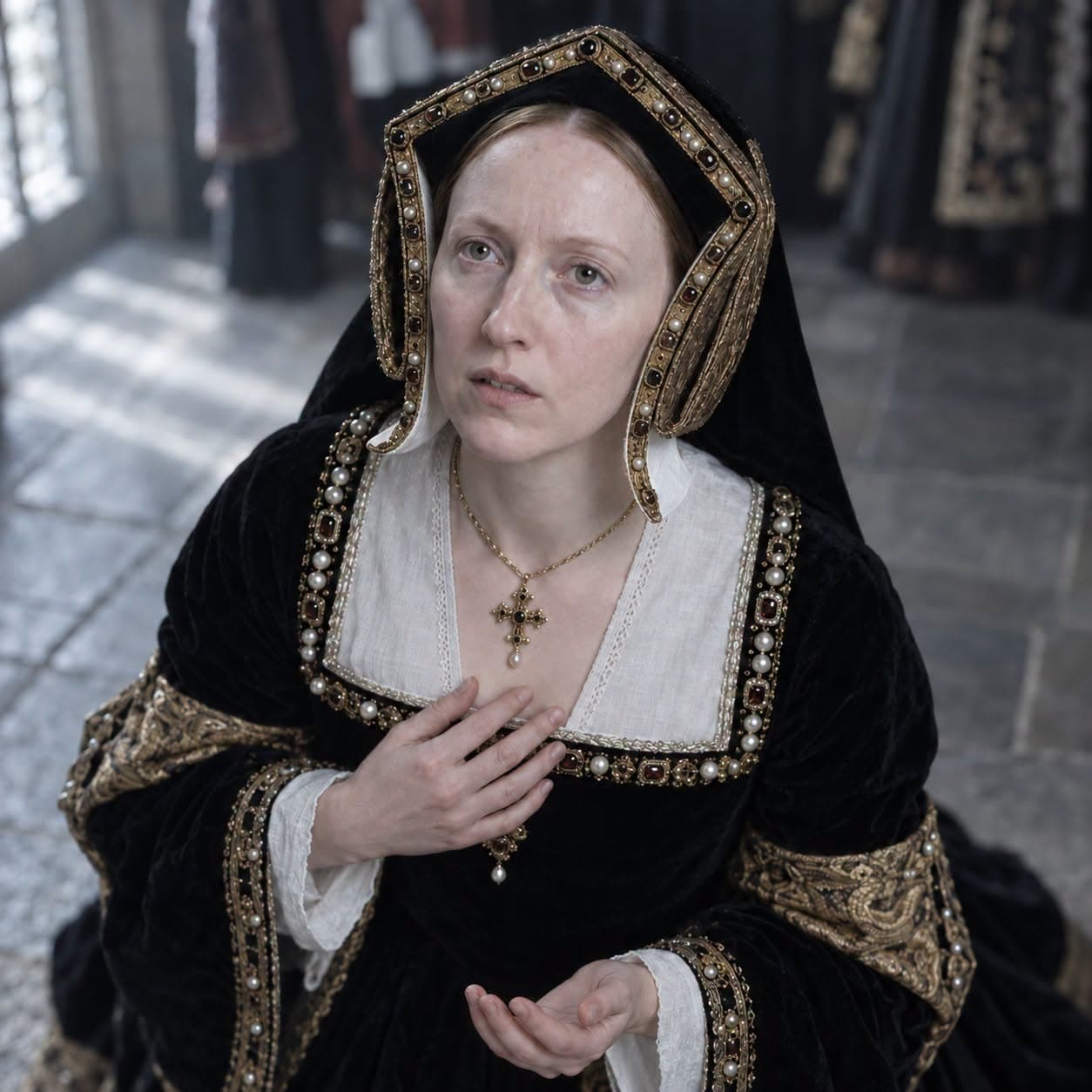
Catherine of Aragon was thirty-four years old and had been Queen of England for eleven years. She was the daughter of Ferdinand of Aragon and Isabella of Castile, the two monarchs who had unified Spain, expelled the Moors, and funded Christopher Columbus. Her mother had commanded armies in the field. Catherine had grown up watching a woman rule a kingdom in her own right, which was an education available to almost no one else at the English court.
In 1513, while Henry was campaigning in France, she had served as regent of England, raised troops, and written to her husband from the field after the English army defeated the Scots at Flodden. The letter survives. It is not the letter of a decorative consort. It is the letter of a woman who understood war, logistics, and political consequence from the inside.
She was also Charles V's aunt. The Emperor whose treaty Henry was secretly negotiating at the edges of the Field of the Cloth of Gold was Catherine's nephew. She had more information about the diplomatic reality underneath the spectacle than almost anyone else on the English side of the valley. She sat through eighteen days of her husband performing eternal brotherhood with the King of France and she gave nothing away. She smiled at Francis. She danced at the banquets. She wore the clothes the occasion required. She performed the friendship with the composure of a woman who had been performing composure since she was sixteen years old and first arrived in England to marry a prince who died within months of the wedding.
Claude de France was twenty years old and had been Queen of France for five years. She was the daughter of Louis XII and Anne of Brittany, a woman who had fought to preserve Breton independence across two marriages to French kings and lost. Claude had inherited Brittany from her mother and signed it over to France on her marriage to Francis, a transaction that completed what her mother had spent her life resisting. She was quiet, pious, and by 1520 already showing the signs of the tuberculosis or the relentless childbearing that would kill her at twenty-four. She had borne four children by the time she arrived at Balinghem. She would bear three more before she died. Francis I conducted his affairs openly and without particular discretion.
Claude attended the Field of the Cloth of Gold as the Queen of France, sat through the spectacle, and returned to the French court, where she died in 1524 having never been to Brittany since the day she gave it away.
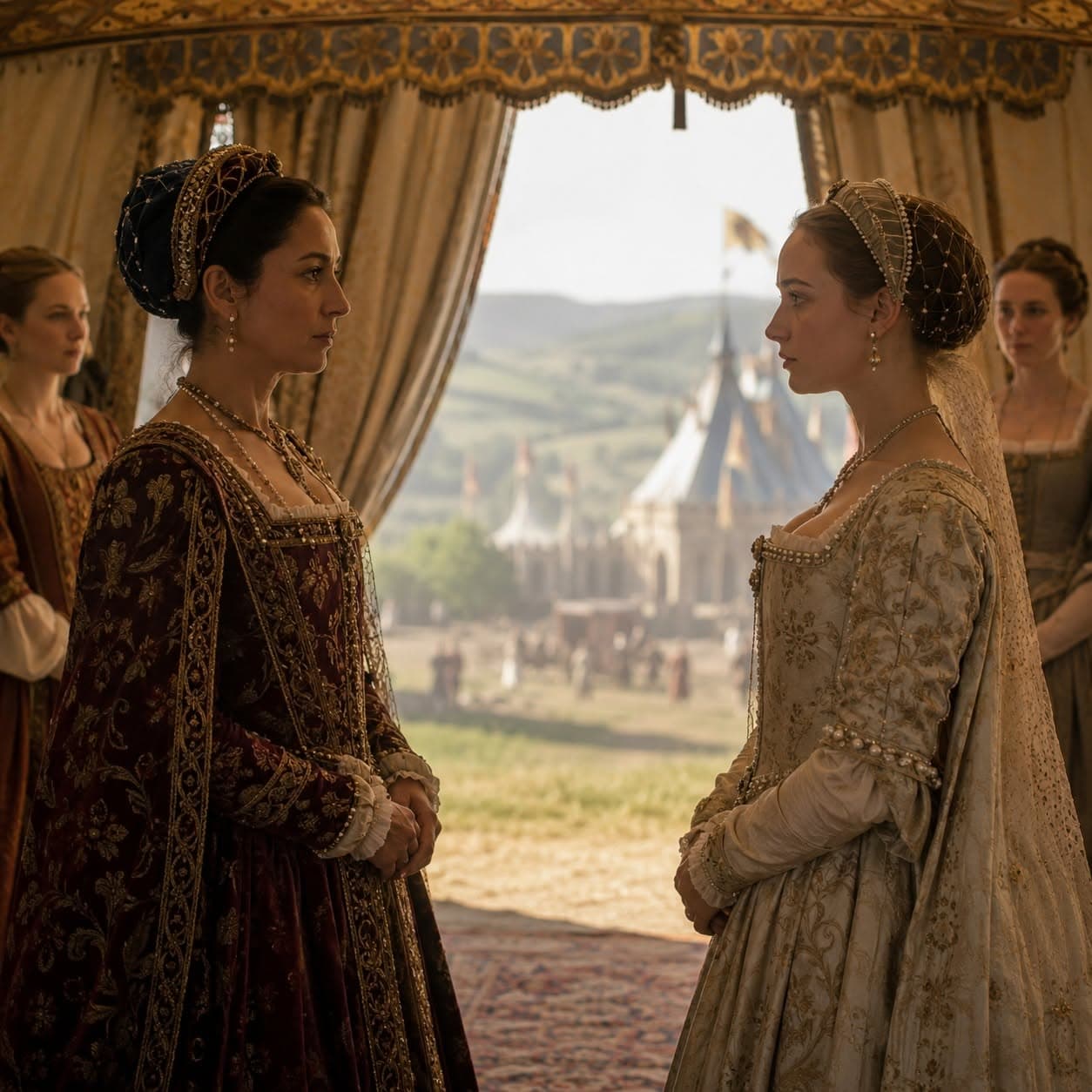
The two queens met formally on the eleventh of June 1520, in a pavilion erected specifically for the occasion. They spoke through interpreters. They exchanged gifts. The accounts record the meeting as gracious. What was actually said between a Spanish queen who knew the treaty against France was already written and a French queen who was dying slowly in the service of a husband who barely noticed has not been preserved in any form that tells the truth of it. The interpreters recorded the pleasantries. The rest went unwritten.
A fireworks display during the festivities set fire to part of the temporary structure. The fountain stopped running when the wine ran out. The two courts processed home through the summer of 1520 carrying the memory of the most spectacular performance in European history and nothing else of substance. Henry signed with Charles at Gravelines. The cloth of gold was packed away and some of it was later sold.
Catherine of Aragon was six years from the moment Henry began proceedings to annul their marriage. She would spend the decade that followed losing everything she had spent her life building, and she would refuse, with a consistency that her mother would have recognised, to concede a single point of it. She outlasted the Field of the Cloth of Gold by sixteen years.
Claude de France was dead within four years, worn through at twenty-four, she is buried at Saint-Denis with the seven children she had carried for a king who was already moving on to the next thing.