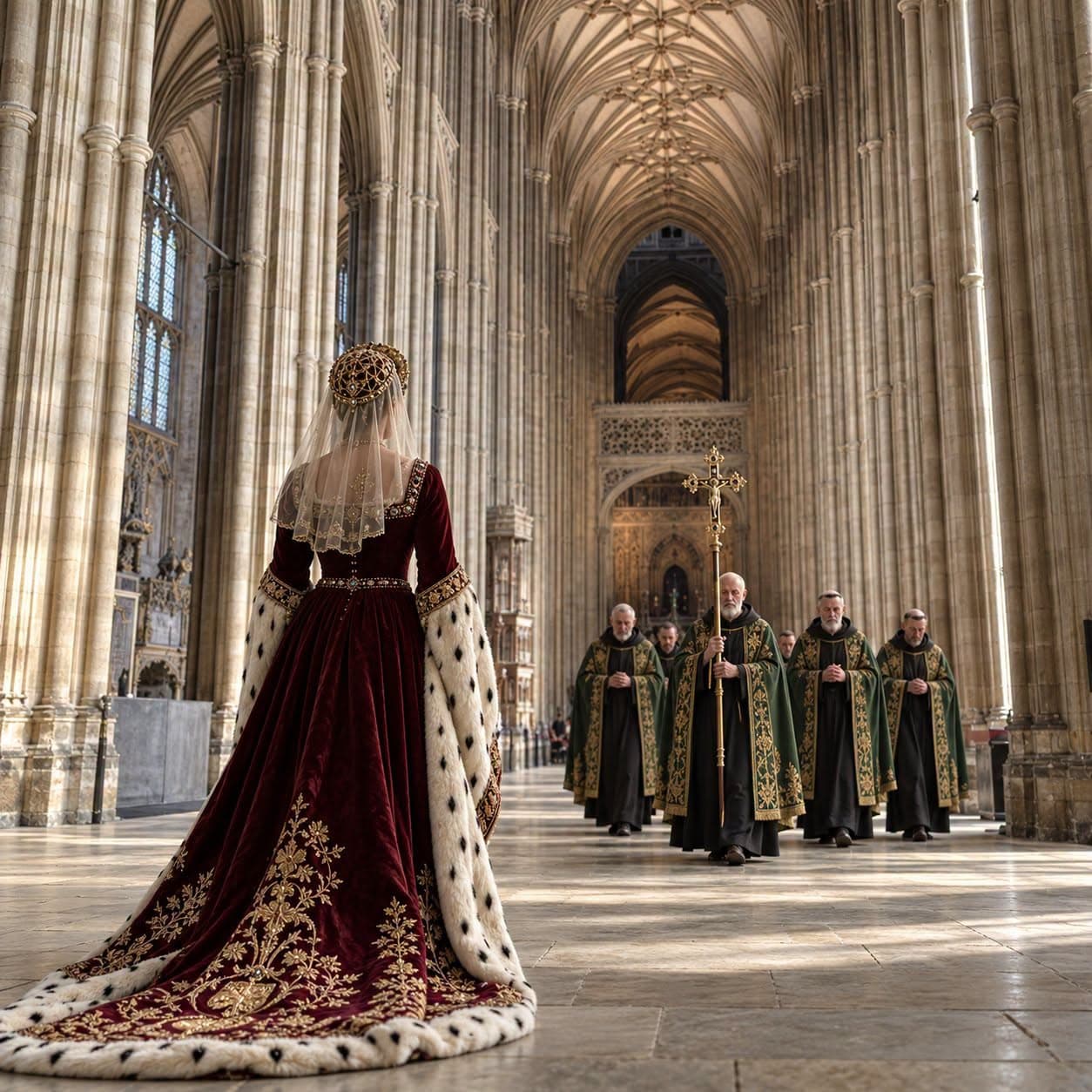
Less than a year earlier, Elizabeth Woodville had entered a great church as the pregnant wife of a deposed king seeking sanctuary. On 28 September 1471, the monks of Canterbury Cathedral came to the door to receive her as queen.
The service had already begun.
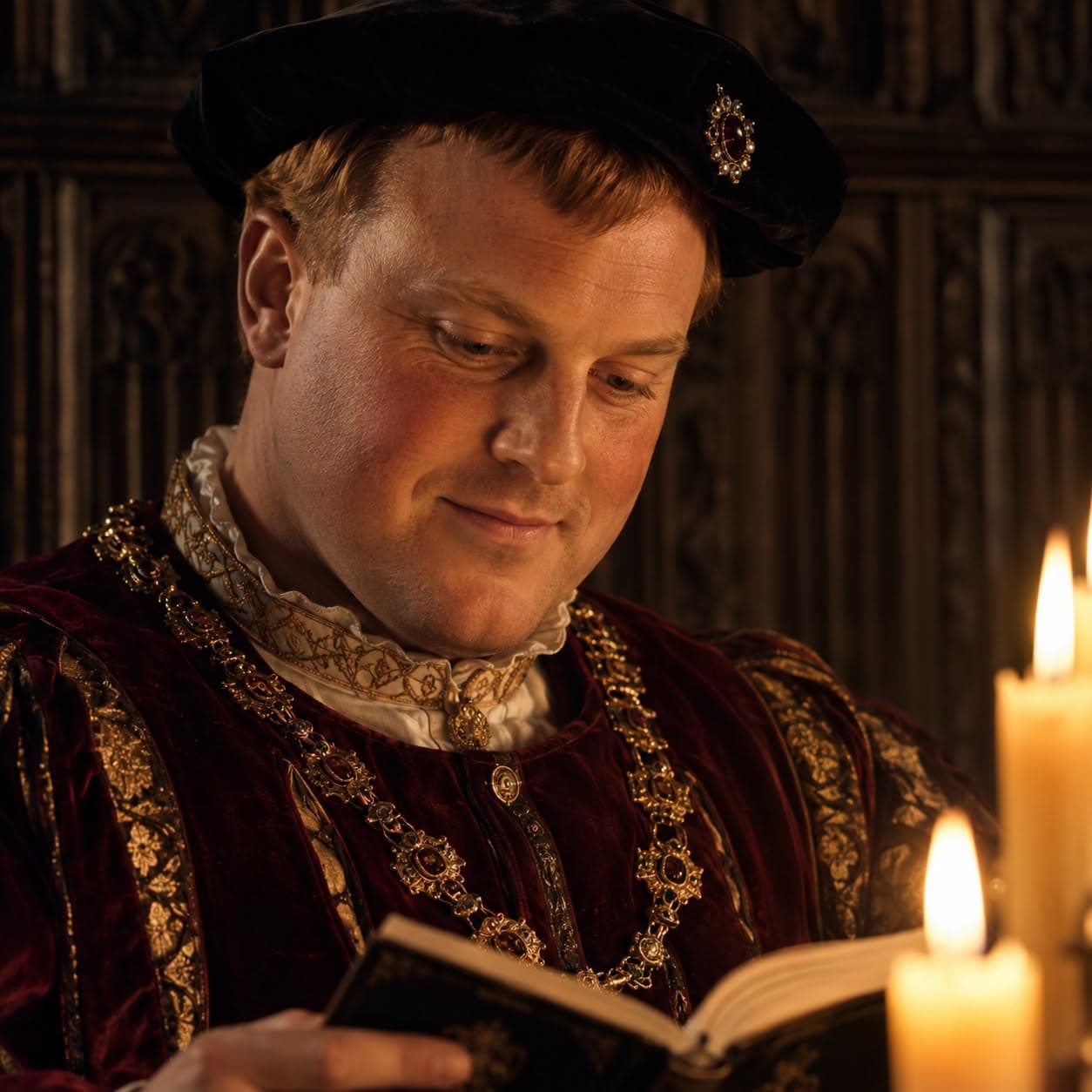
Edward IV had arrived first. Prior William Petham and the monks of Christ Church Priory received him in green copes and conducted him into Canterbury Cathedral. Edward proceeded towards the high altar, and the convent began to sing vespers. Then word came that the queen had arrived. The prior and several of the brothers left the service, crossed back through the cathedral and went to the church door to meet her.
Elizabeth entered as the restored Queen of England. Around her, the cathedral precinct and the streets beyond were crowded with pilgrims. A letter written by Sir John Paston that same day reported that the king and queen had gone to Canterbury with "much other people." Never had so many been seen together on pilgrimage before, people were saying.
It was the sort of crowd that turned devotion into spectacle. Pilgrims converged upon Canterbury to pray at the shrine of St Thomas Becket, but the presence of the royal couple gave them something else to witness. Edward had recovered his kingdom only months earlier. Elizabeth had emerged from sanctuary with the first son of their marriage. King and queen had survived the collapse of their dynasty and were appearing together before the people once more.
Yet Canterbury was not merely welcoming them. It was receiving the victorious king after having supported his enemies.
Four months earlier, in the open space outside the cathedral precinct, the city's mayor had been executed for treason.
Nicholas Faunt had backed the last attempt to revive the Lancastrian cause. After Edward's victory at Tewkesbury in May, Thomas Neville, the Bastard of Fauconberg, had raised men in Kent and marched against London. Faunt joined him and led a Canterbury contingent into the rising. For several days, Fauconberg's forces threatened the capital while Edward and his army were still returning from the west.
The attack failed. Fauconberg withdrew, and the rebellion disintegrated. Faunt was captured and brought back to Canterbury. On 29 May, he was executed in the city's marketplace beside the entrance to the cathedral precinct. Canterbury lost its liberties for supporting the rebellion and had not yet fully recovered the king's favour.
Now Edward approached the same cathedral as a pilgrim.
The royal visit therefore carried meanings that no formal proclamation needed to spell out. The mayor who had led Canterbury's men against Edward was dead. The privileges of the city had been seized. The man against whom it had rebelled had returned, and the roads were filled with people following him. Edward did not enter in armour. He came to receive an indulgence.
John Stone, a monk of the cathedral priory, recorded that purpose without explaining it further. An indulgence concerned the temporal punishment remaining for sins after their guilt had been forgiven. It was not the forgiveness of a new or unconfessed crime.
The recent dead nevertheless followed him into the cathedral.
Six months earlier, Edward had been an exile. Richard Neville, Earl of Warwick, the man once celebrated as the Kingmaker, had driven him from England and restored Henry VI to the throne. Elizabeth had been left behind with their daughters and another child growing inside her.
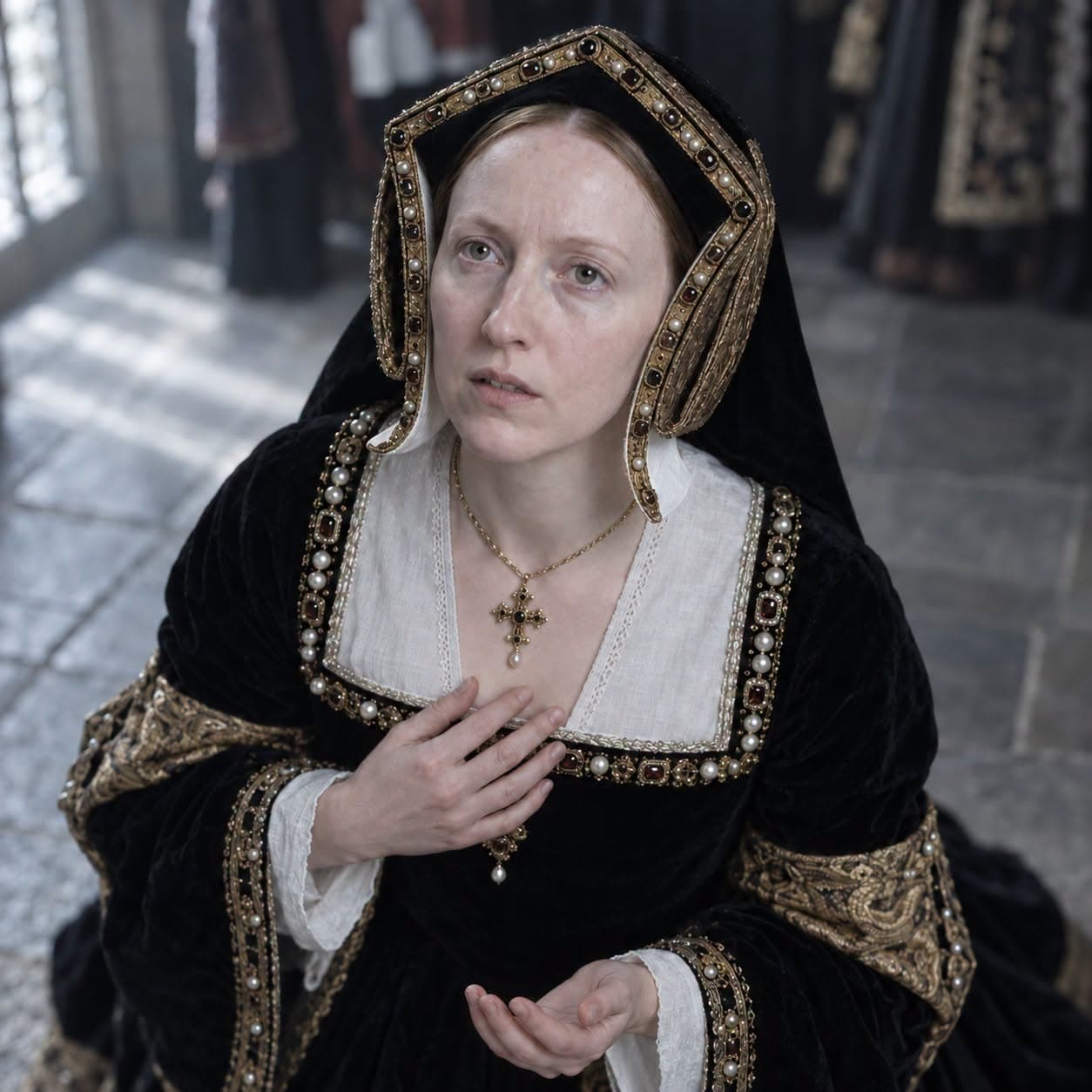
On the night of 1 October 1470, she fled the Tower of London with her mother, Jacquetta, and her three young daughters. They crossed into the sanctuary of Westminster Abbey, whose ancient privileges placed them beyond the immediate reach of the new regime. Elizabeth entered not knowing when, or whether, her husband would return.
A month later, she gave birth to a son.
There was no royal lying-in at the Tower, no court gathered to celebrate the arrival of the king's heir. The child was born within the protection of the abbey while his father remained overseas and Henry VI occupied the throne. The Abbot of Westminster provided for the family, and the baby was baptised in sanctuary. He was named Edward.
For the first five months of his life, the future Edward V knew no world beyond those protected walls.
His father returned to England in March 1471. On 11 April, Edward recovered London, secured Henry VI in the Tower and went to Westminster to find his family. Elizabeth emerged from sanctuary and presented him with the son he had never seen.
Three days later, Edward confronted Warwick at Barnet. The battle was fought in fog on Easter Sunday. Warwick was defeated and killed, but the Lancastrian threat had not ended: on the same day, Margaret of Anjou and her son landed in England to continue the struggle.
Edward pursued them west. At Tewkesbury on 4 May, his army destroyed the remaining Lancastrian force. Margaret's son, Edward of Westminster, was killed, extinguishing the direct Lancastrian succession. Several prominent prisoners, including Edmund Beaufort, Duke of Somerset, were taken from the protection of Tewkesbury Abbey and executed after summary proceedings.
When Edward returned to London on 21 May, Henry VI was still alive in the Tower. By the following morning, he was dead. The official account attributed his death to grief and melancholy, but the circumstances have always invited the conclusion that his usefulness had ended with that of his cause. Precisely how he died, and who carried it out, remains uncertain.
Within weeks, the infant born in Westminster sanctuary was created Prince of Wales. The child who had entered the world while his father was a fugitive was now recognised as heir to a restored Yorkist throne. Elizabeth, who had waited behind abbey walls while the fate of her family was decided elsewhere, became head of her son's council.
Her arrival at Canterbury belonged to that transformation.
When the prior and monks came to the cathedral door, they were not receiving a woman whose future depended upon the safety of a sanctuary. They were receiving the queen beside a husband who had defeated every immediate rival to his throne. Warwick was dead. Edward of Westminster was dead. Henry VI was dead. The mayor who had led Canterbury against Edward was dead. Elizabeth's son lived.
Inside the cathedral, those victories entered a place filled with Lancastrian memories.
Henry IV lay buried close to the shrine of St Thomas. The Beaufort family, whose fortunes were bound to the House of Lancaster, had been generous benefactors to the cathedral. Henry VI had come there on pilgrimage. Members of the priory had prayed for Lancastrian kings and their supporters, received their gifts and preserved their names among the dead. John Stone's chronicle suggests that the community's relationship with the old dynasty ran deeper than its formal accommodation with Yorkist rule.
They performed the ceremonies expected of them. Dressed in green copes, they received Edward with honour, led him towards the high altar and began vespers. When Elizabeth arrived, the prior interrupted his own participation in the service and returned to the door to welcome her.
The forms remained constant even when the dynasty changed.
Outside, the pilgrimage continued to swell. Some had come to pray before the shrine. Some had come because the king and queen were there. Many must have been drawn by both. They passed through a city that still carried the memory of rebellion and punishment, towards a cathedral in which the restored royal family enacted devotion before an audience.
Elizabeth crossed its threshold as queen. The contrast with Westminster was not complete: both churches offered shelter beneath stone vaults, the prayers of religious communities and the authority of sacred ground. But she no longer entered because walls and privilege stood between her children and her husband's enemies.
At Westminster, the church had protected her while Edward fought to recover his crown. At Canterbury, the monks left vespers to receive her because he had won it back.