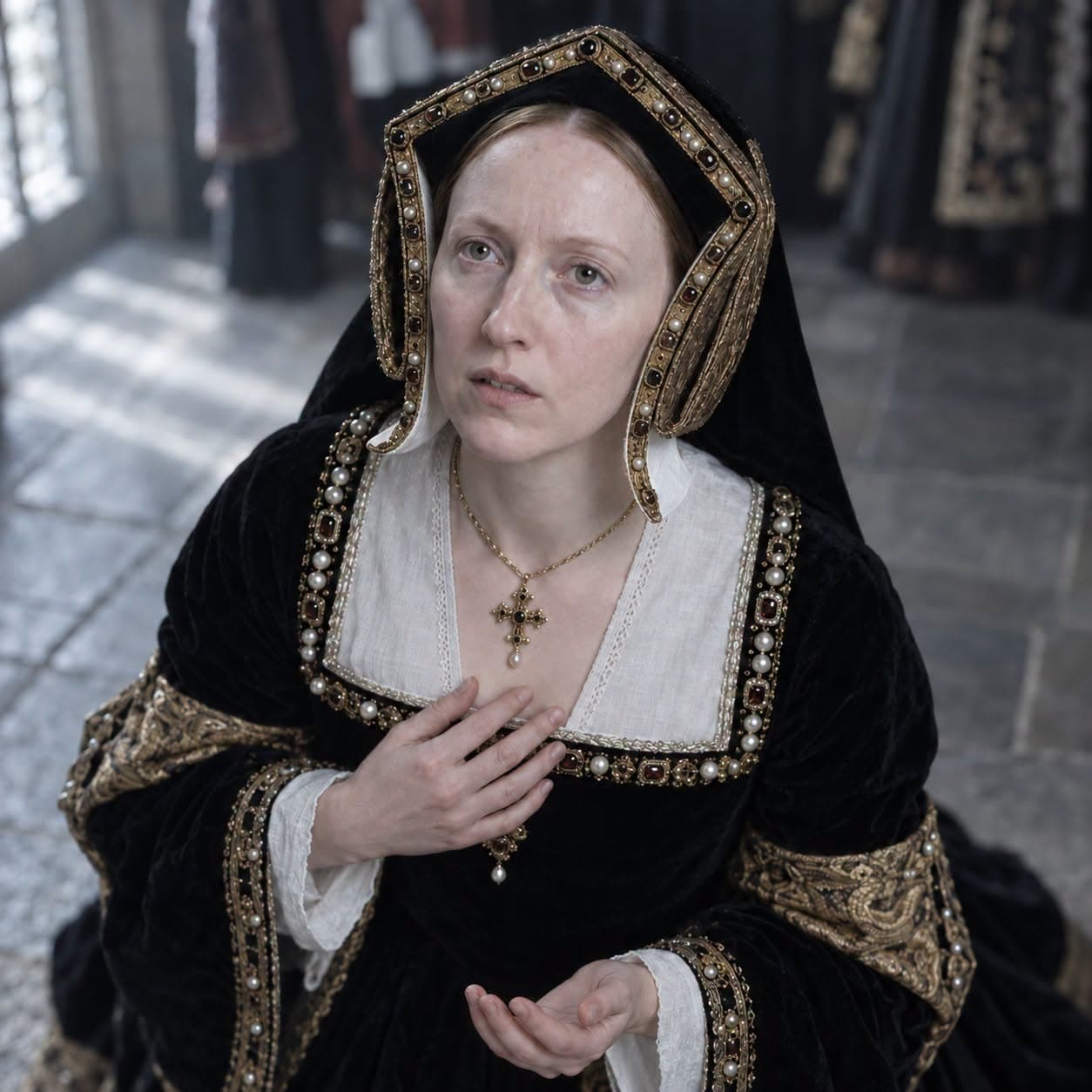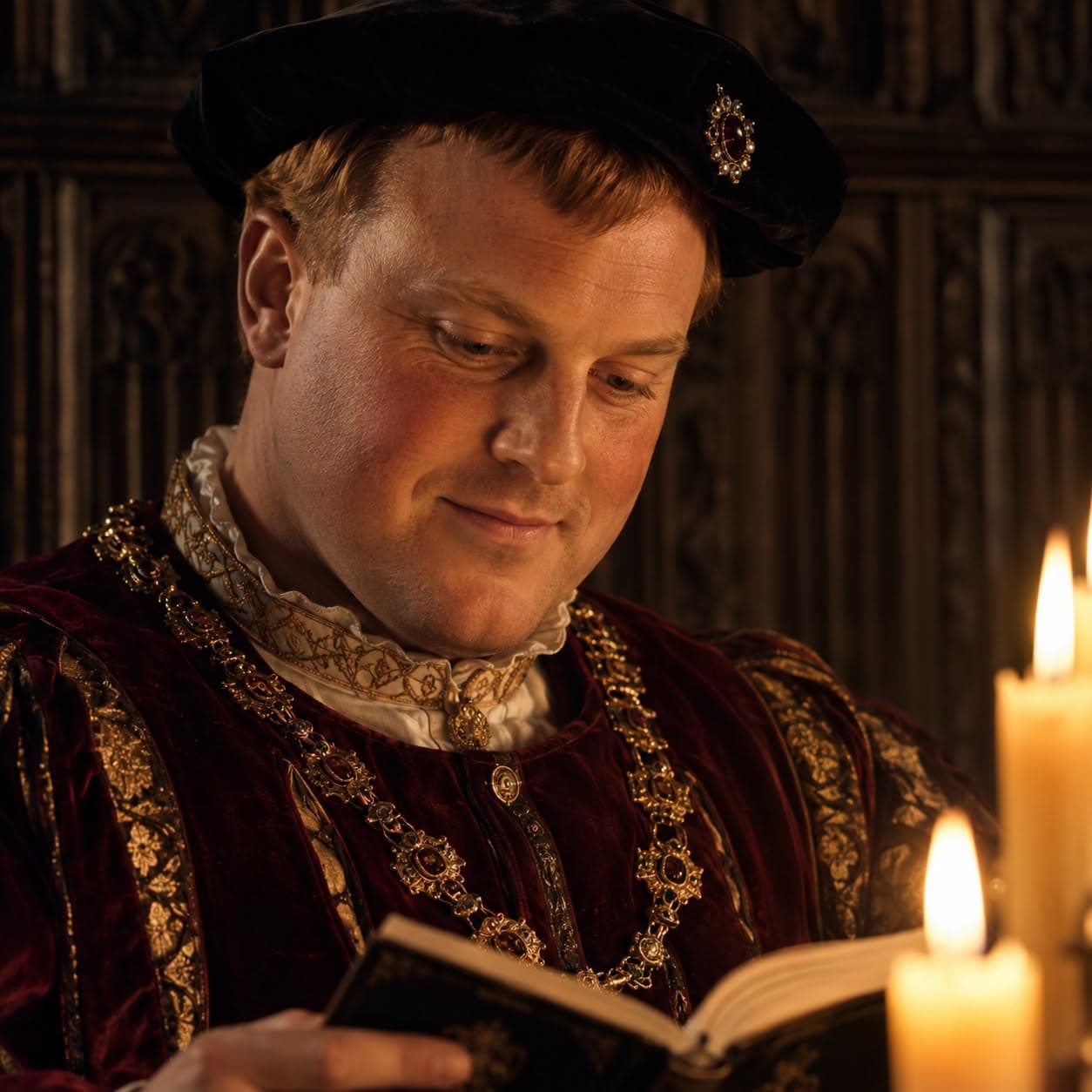
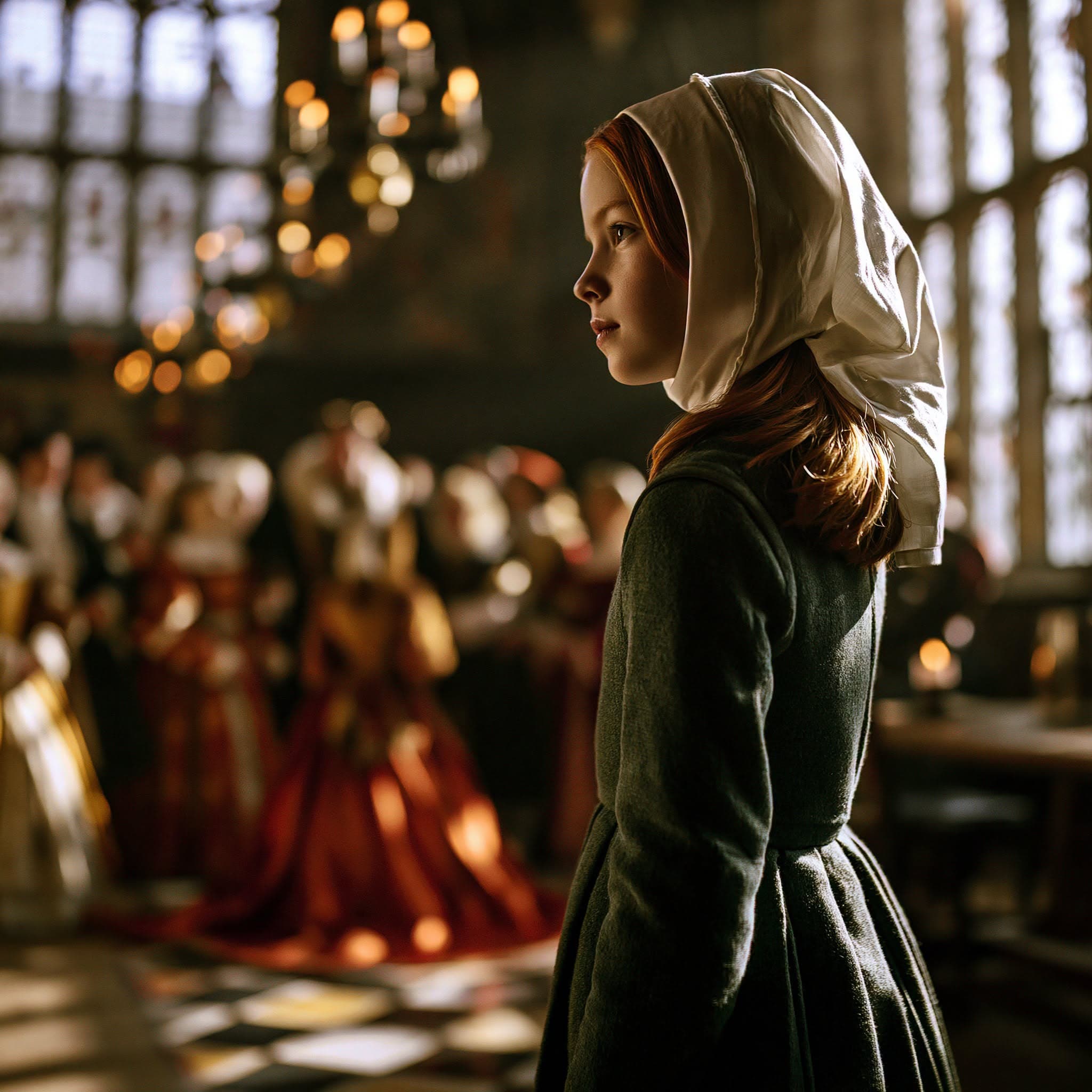
Bessie Blount gave Henry VIII a son. He gave the boy a dukedom and a name that meant son of the king. A year later she may have given him a daughter. He gave her nothing.
The son was Henry Fitzroy, born in June 1519 at a priory in Essex, acknowledged, named, and elevated to Duke of Richmond and Somerset within six years. Fitzroy. Son of the king. Henry put the acknowledgment into the name itself and left no one uncertain about what the boy was.
The girl arrived the following year, around 1520. The timing of her conception places it in the summer of 1519, in the months after Fitzroy was born, in the months the king was moving through Essex and staying at houses within easy riding distance of the priory where Bessie was living. She was registered as the daughter of Bessie's husband, Gilbert Tailboys, the man Bessie married in 1522. But Gilbert did not marry Bessie until after the girl was born. And she does not fit the pattern of the children Gilbert and Bessie went on to have together. Her siblings arrived in a sequence that makes sense for their marriage. She does not.
Her name was Elizabeth.
Henry may never have claimed her. There is no grant, no letter, no record of him ever putting his name beside hers in that way. What there is instead is a series of quiet interventions that history has taken centuries to notice. When Gilbert Tailboys died in 1530, the king personally commanded that provision be made for Bessie and the children, a direct intervention in a private inheritance matter that went beyond what courtesy required. The Tailboys family brought court cases specifically targeting Elizabeth's rights to the Tailboys estates, her own paternal grandmother treating her with a hostility that sat oddly with ordinary family grievance.
He looked after her quietly and said nothing out loud and the silence held for five hundred years.
Fitzroy mattered because Fitzroy was a son, because the line of succession ran through sons and the king had none, because acknowledging a boy cost Henry something — the admission of infidelity, the complication of the succession — but gave him something in return: proof. Proof that the failure of his marriage to Catherine was not his failure. Proof that he could make a son. The girl who may have been his daughter gave him none of that. She could not inherit. She could not prove anything. She had no value to the machinery of Tudor power that required acknowledgment in return, and so acknowledgment was withheld.
But the machinery kept moving around her in ways that are difficult to explain otherwise. When Elizabeth was old enough to marry, the match connected her to one of the most powerful families in England. When a legal dispute arose over her lands, the king involved himself before his death. When, years later, under Edward VI, her marriage to her first husband collapsed into open conflict, the Lord Great Chamberlain, the Lord Admiral, and the king's Master of the Horse sat down together to resolve it. Three of the most powerful men in England, attending to a private marital quarrel. The Privy Council did not do that for ordinary noblewomen. It did it for this one, without explanation, without record of why.
When Elizabeth's second husband Ambrose Dudley was imprisoned after the fall of Lady Jane Grey, Elizabeth petitioned for his release. Philip of Spain took a personal interest. He corresponded with her directly. He involved himself in the fate of the wife of an imprisoned English traitor with an attention that had no obvious diplomatic logic.
Henry never said what she was. But the world around her kept behaving as though it already knew.
She died in April 1563 having never been told, on record, what she was. She had outlived her possible half-brother Fitzroy by twenty-seven years. She had outlived Henry himself by sixteen. She had been there, still living, while he tore the country apart looking for a son, while he burned through wives, while he remade the church and the succession and the entire order of things, and she had watched all of it from the edges of a story she may have been at the centre of, and no one had ever said her name in that connection out loud.
Fitzroy got a name. She got silence. The difference between them was not the mother. The mother was the same. The difference was that one of them was a boy, and one of them was not, and in the England of Henry VIII that was the only difference that was ever counted.